Demountable truck campers unlock a level of versatility that no other platform can match. With four-wheel drive and the ability to tow boats, trailers, and toys, truck campers are quick to set up, cost less to own, and are easy to upgrade as your adventures grow. Here are twenty-one reasons truck campers rule.
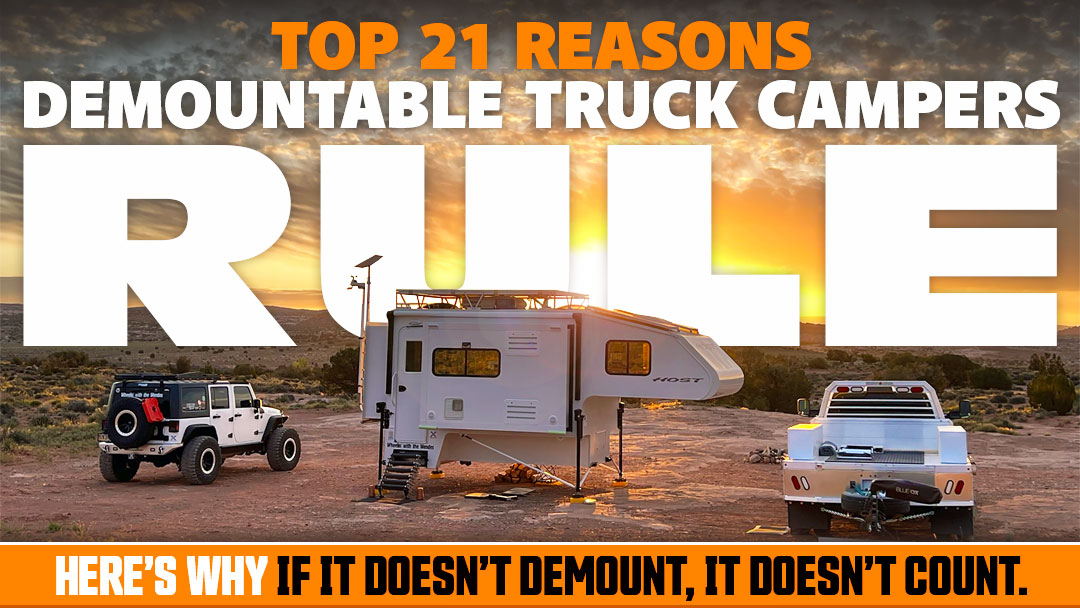
The sheer number of advantages offered by demountable truck campers can be difficult to articulate. When asked, we often resort to our “Go Anywhere, Camp Anywhere, Tow Anything” tagline, but that sells truck campers far too short. Those may be the top three reasons owners choose a truck camper, but the platform’s advantages extend far beyond that shorthand quip.
The defining advantage of a demountable truck and camper is the ability to demount. This may seem like merely the mechanics of how a truck and camper work, but that single attribute is fundamental to the real-world versatility and capabilities of the list that follows. Make truck campers non-demountable, and many of the most unique and compelling attributes of a truck and camper simply disappear.
Here’s why we not only fell in love with demountable truck campers, but have never been tempted by another RV or Overland platform. To understand this list is to understand why a demountable truck campers rule. Load. Unload. And drop the mic.
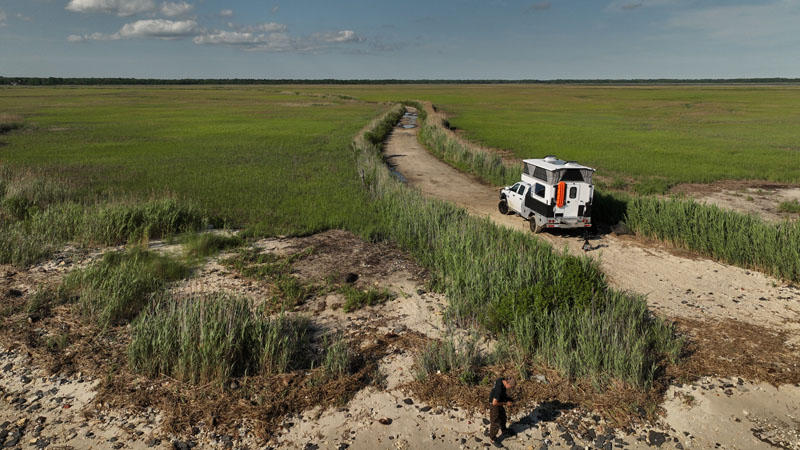
A Wild Life for Wildlife, Mauricio and Julia Handler, 2016 Ram 3500, 2022 Supertramp Flagship LT
This is huge. Where motorhomes and towables are often limited by road conditions or length restrictions, truck campers can go almost anywhere a pickup truck can go. That includes sandy beaches, desert Jeep trails, narrow Forest Service roads, and snow-packed mountain roads.
The main limits are the height of your truck and camper, how well matched and equipped your rig is for your off-road mission, and—most importantly—your driving experience and capabilities. If all of that is in alignment, and your nerves are up to the challenge, you and your truck camper rig can go darn near anywhere. Vans and trailers that try to follow may not have the best resale value.
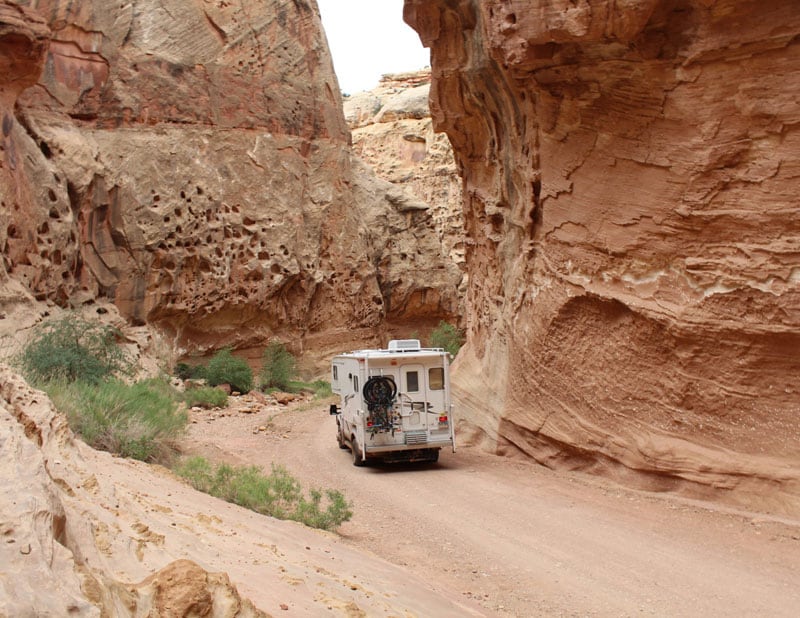
Capital Reef National Park, Chris Nagy, Ford F-350, Adventurer 106DBS
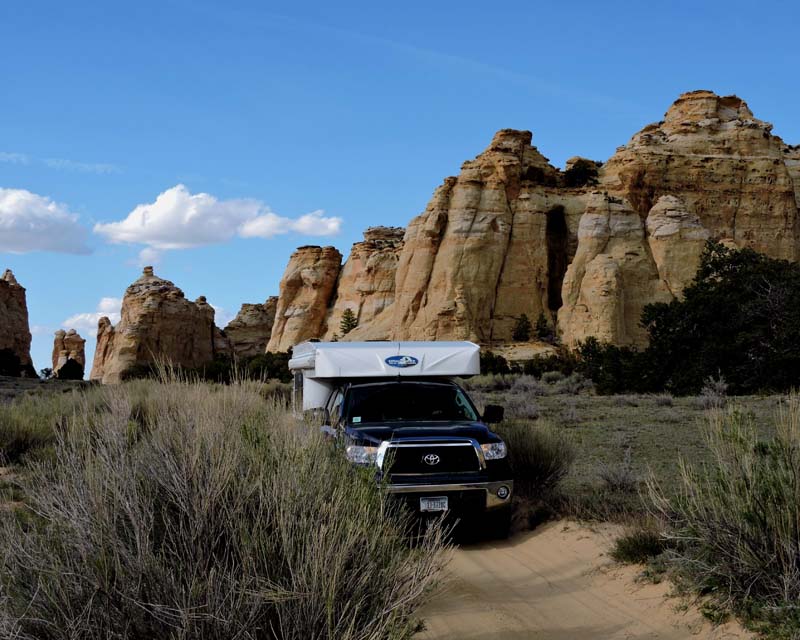
The Canada to Alaska Experience, Patrice and Ken Loucks, Toyota Tundra, Phoenix Camper
Speaking from experience, nothing says, “Stop” louder than the sense that a road or trail is getting too narrow to safely turn around. Whether it’s an off-road path in Oregon or a small town street in Maine, the confidence to continue often boils down to this key capability.
Thankfully, truck campers offer the agile maneuverability of the pickup trucks they’re mounted on. We can easily turn around darn near anywhere, and have. We also enjoy our maneuverability in day-to-day driving. Crowded fuel stations are never fun, but the compact size and turning radius of a truck camper rig make a needed fuel stop possible instead of a cold sweat to the next station.
And that national park trailhead, funky restaurant, or awesome thrift store you just passed? In a truck camper, you can simply turn around and go back.
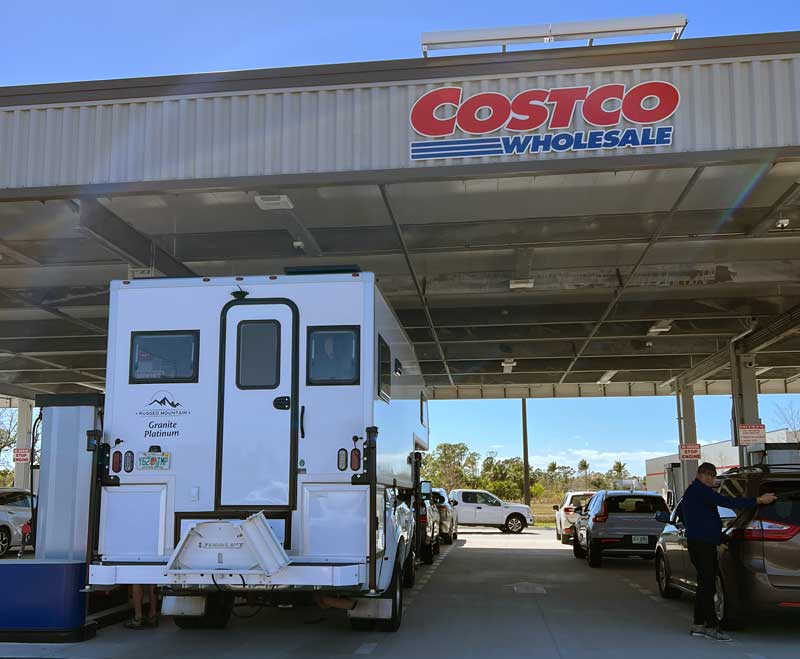
Angela and Gordon’s Ram 3500, Rugged Mountain Granite Platinum Demo at Costco Filling Fuel
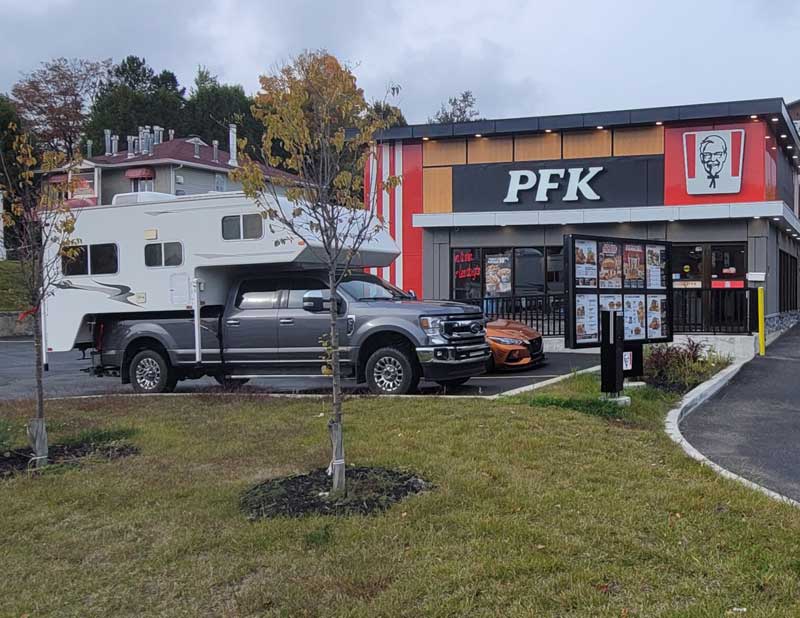
Calendar Contest Entry, Bruno Gauthier, Quebec, 2021 Ford F-350, 2005 Adventurer 100WSB
Mounted to a pickup truck with four-wheel drive, advanced traction systems, and meaningful clearance, a truck camper rig can not only go places other towables and motorhomes simply shouldn’t, but it can also get you out of a pickle.
Imagine you parked for the night on a dry grassy field only to have the skies open up with heavy rain in the wee hours. You wake up to a muddy, slippery mess. To escape your predicament, you calmly put your truck into four-wheel drive low and slowly drive out. Your buddy out there stuck in his rear-wheel drive Sprinter van? Go back and give him a tow. He’s buying breakfast.
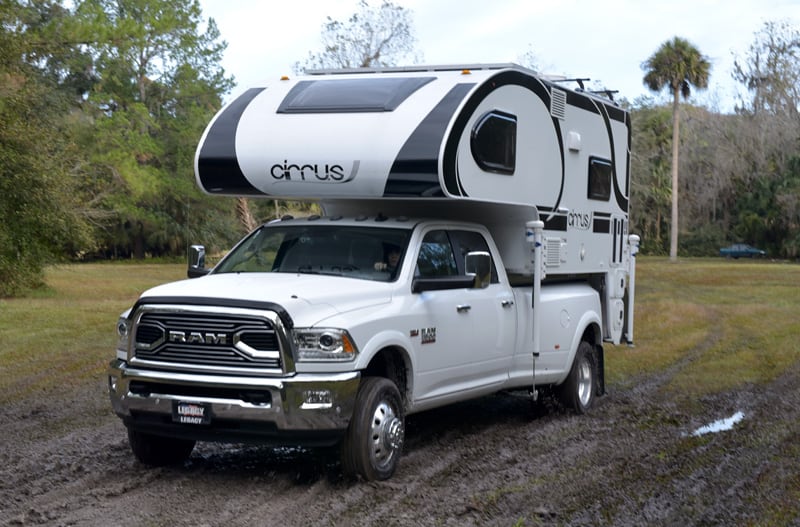
Why You Need Four Wheel Drive, Angela and Gordon’s Ram 3500, Cirrus 920 Demo
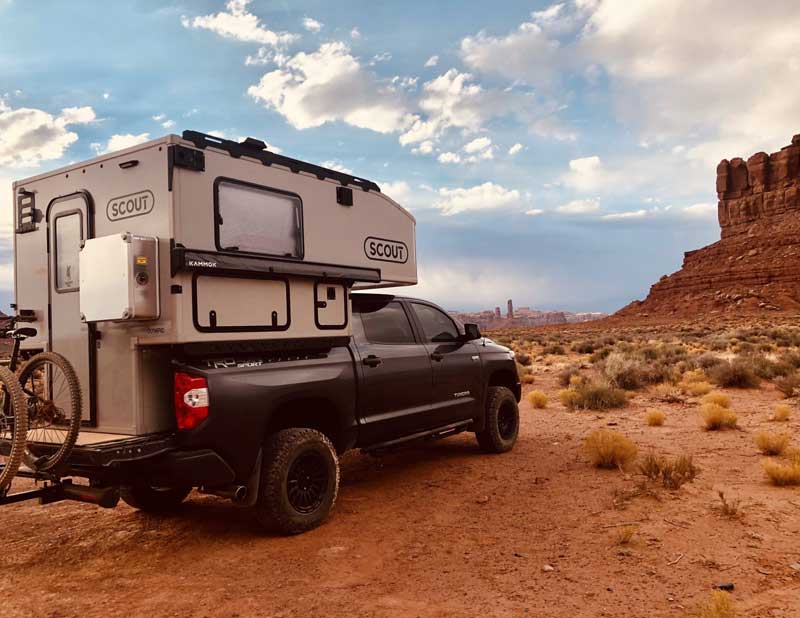
Calendar Entry, Matt Pezdek, Valley of the Gods, 2020 Toyota Tundra, 2024 Scout Olympic
There’s nothing inherently wrong with campgrounds other than they’re often obscenely expensive and overcrowded with RVs packed side-by-side like sardines in a can. That’s fine for some folks, but most truck camper enthusiasts prefer free overnight spots with nary another motorhome, trailer, tent, barking dog or belching human being in sight.
The compact size and maneuverability of a truck camper rig means getting in and out of free overnight opportunities is almost always on tap. What’s on the overnight stop-for-the-night menu? A string of nearly endless dispersed camping on Bureau of Land Management (BLM) areas, national forests, Harvest Hosts, Hip Camps, Cracker Barrels, and beyond. And once you’re arrived, many truck campers feature large holding tanks, battery and solar systems to stay for extended periods. A comfortable week or more off-grid in paradise? Let’s go, and stay.
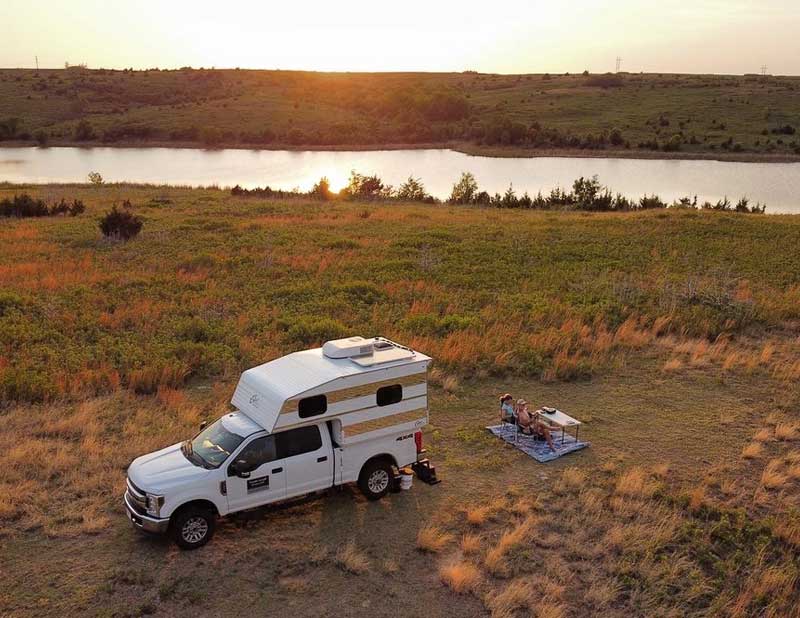
Dream Big with a Small Rig, Marcus Larson, Ford F-250, Capri Retreat
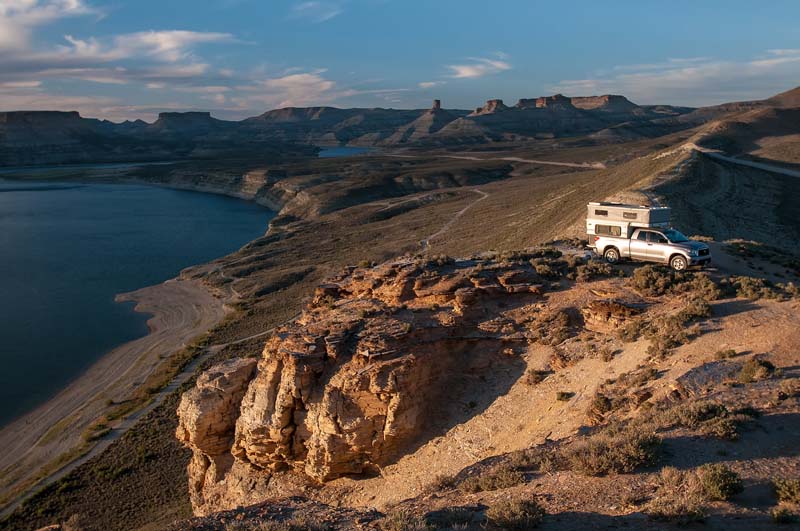
Calendar Contest Winner, Dan Gindling, Flaming Gorge NRA, Toyota Tundra, FWC Grandby
When truck camper manufacturers talk about the four-season capability of their units, they’re talking about insulation quality, thermal-pane windows, onboard heating systems, and fully-enclosed and heated holding tanks and plumbing. These features, plus the relatively compact interior volume of a truck camper, adds up to the best RV or overland choice to keep you toasty when the mercury drops.
Add to that the natural benefits of being based on a pickup—four-wheel drive, high clearance, plenty of weight over the rear axle, and a compact footprint—and the winter camping capabilities of a truck and camper take things even further. Mountain passes, winter trailheads, and ski resort parking lots? No problem. Blizzard conditions? Snowmageddon? Hunker down, turn on the propane heat, and enjoy the show. Then strap on the snowshoes in the morning and check on your van life buddies. They might need a hot chocolate.
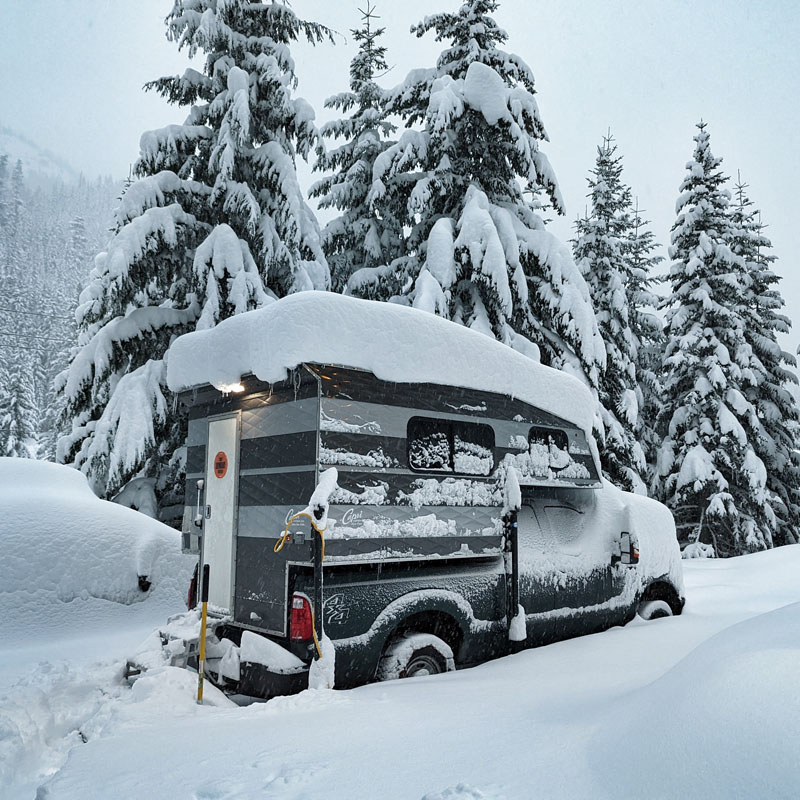
Winter Camping With Explosives, Paxton Brewer, Ford F250, Capri Retreat
The world is full of standard white-lined 9-foot-wide by 18-foot-long parking spaces. Most truck camper rigs are 8 feet wide by 20 to 22 feet long. In the real world, this means truck campers fit most standard parking spaces—with a little hangover.
Sometimes we stick our camper butt over some grass. Sometimes we let our hind living-quarters jut a bit into a parking area. Yeah, we stick out a little, but we fit! This is nothing less than transformative to life on the road, as you’re not stuck looking for an oversized lot to pull into. See a standard parking spot? Pull in, check your butt, and park.
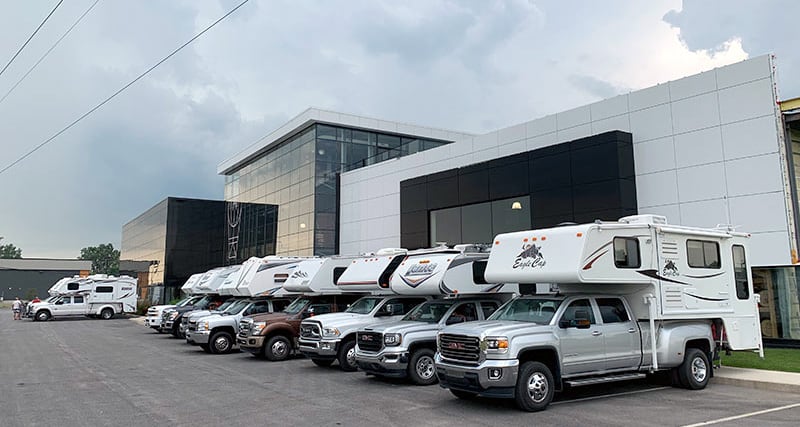
Quebec Caravan, lots of truck camper rigs in normal parking spots
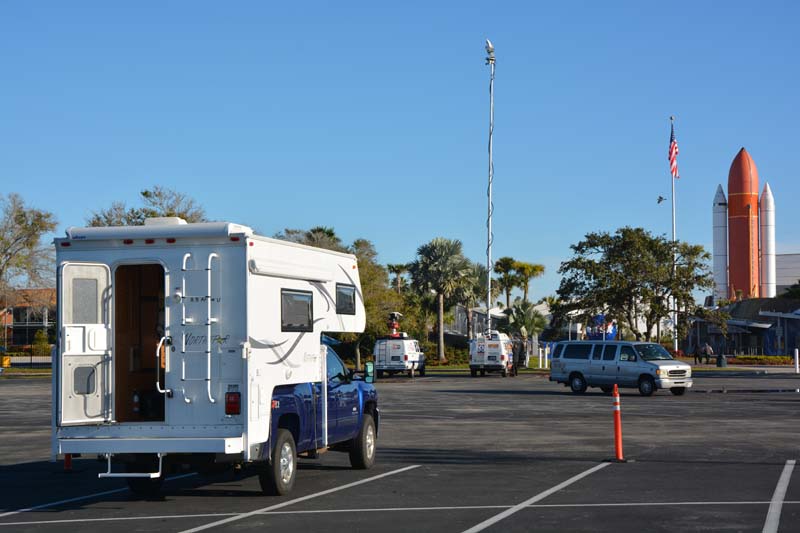
A Kennedy Space Center Experience, Gordon and Angela’s Chevy 3500, Northstar Arrow Demo
Uncle Bob lives in a normal house outside of Bozeman, Montana, with a normal two-car driveway. His street can get a little busy in the mornings, but you can pull all the way forward to allow him to park behind you for the night. Thank goodness you weren’t any longer, or towing a trailer. You might have needed to stay at a local campground or pass Uncle Bob entirely.
That would be a shame as you haven’t seen Uncle Bob in years, and he has a fantastic shower, washer and dryer, craft beer selection, and likes to serve steak for dinner. This moochdocking experience, and many others like it, are brought to you by the compact size of your truck camper. You didn’t even need to stay in his house with his yappy Dachshund, Jack. Cheers Bob. The ribeye was delicious!
If you have friends and family you want to visit on the road, nothing beats a truck camper rig. Whether they want you on the street, in their driveway, or in their backyard (we’ve done all of the above many, many times), a truck camper can handle it no sweat. And the showers, laundry, home-cooked meals, and fantastic company will make you even more appreciative of your truck camper choice. Oh, and remember to say, “No, thank you” when they ask you to stay in their guest room. You’ll be more than comfortable sleeping in your camper—home sweet home.
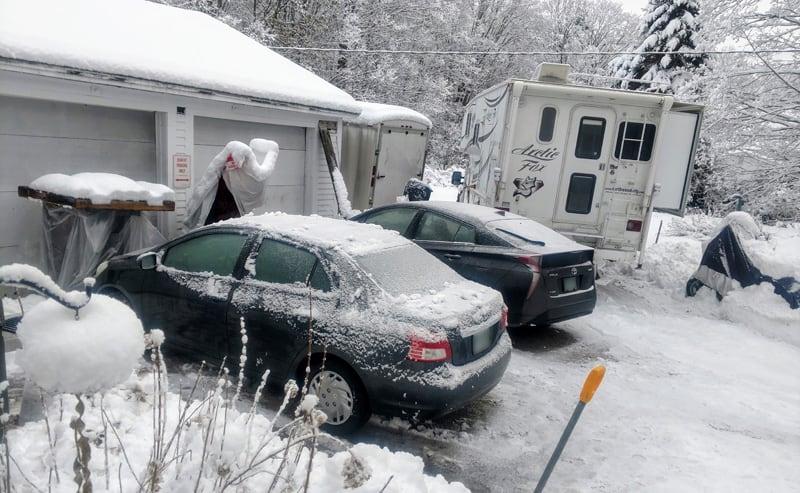
Winterized Campers Beat the Cold, Moochdocking, Brett Binns, 2014 Ford F-350, 2014 Arctic Fox 1150
A typical truck camping setup experience goes like this: pull up, unlock the camper door, and relax. If you’re in a pop-up, add unlatching and securing the roof into the camp position. If you’re in a slide-out, add pushing the button(s) to open the slide(s). If you’re off level, add leveling blocks. But that’s it.
Truck camping is practically park and play. No tents to build. No trailer to hitch. No stabilizers to deploy. The next morning, you simply put your stuff away, pull your roof or slides-in (if necessary), lock your camper door, and drive away. Easy peasy. The things we’ve watched folks in other RV and Overland camping solutions have to do—that’s another story.
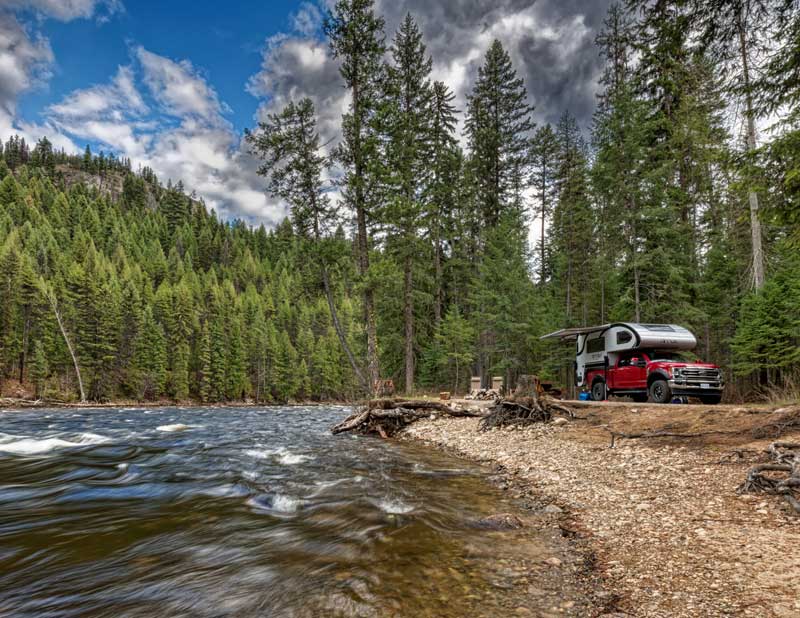
2023 Calendar Winner, Mike Tumchewics, Ford F-350, Cirrus 820
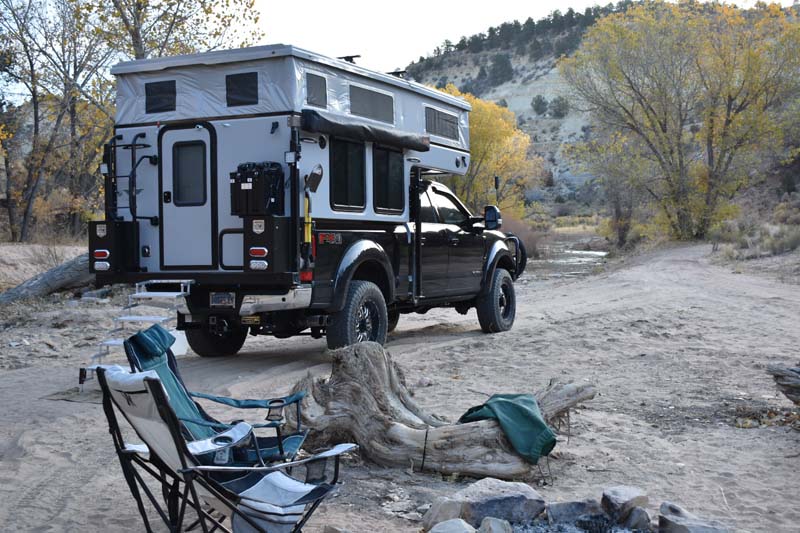
Bought A Camper submission, Mike Norman, 2017 Ford F-350, 2020 Hallmark K2
The capability to tow boats, cargo trailers, horse trailers, ATVs, jet skis, snowmobiles, and more is the number one reason why many people choose truck campers over other RV and Overland solutions. This is because truck campers never block or otherwise use the truck hitch the way towables and motorhomes often do. Want a comfortable four-season, four-wheel drive, go anywhere, camp anywhere RV or Overland solution that also lets you tow your toys? You want a truck camper.
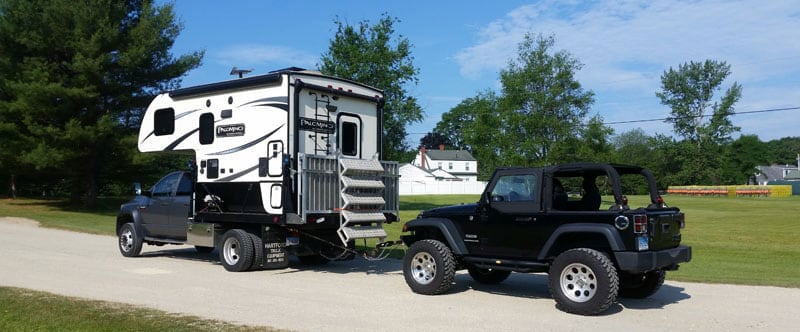
Aluminum Deck Fabrication Project, Nelson Dion, 2008 Ram 4500, 2015 Palomino HS-2910
Two years ago, we were in Wyoming and needed new front tires. As luck would have it, the only shop in town had a ten foot tall service bay. Our camper is eleven and a half feet tall to the air conditioner. Rieco-Titan remote in hand, we unloaded our camper in their front parking lot and got new tires. Don’t ask what they cost, but we were back on the road in two hours. Unload, new tires, reload, and go.
Five years ago, we were in New York and the truck’s ABS light went on. We took the truck to the closest dealer, who didn’t have an appointment until the following morning and also had a low bay door. We unloaded the camper behind the dealership, gave them the truck, and stayed in our camper overnight. We were on the road the following afternoon. Unload, sleep, reload, and go.
After more than twenty years of truck camping, we have many more stories where unloading the camper got us out of trouble and kept us rolling. Having a pickup truck also saved us time and money, as we were able to use local garages with available appointments. Don’t try that with a specialized vehicle or RV. You might have to drive (or be towed) to the nearest service center and then wait until they can help you. With a truck and camper, access to service isn’t always easy, but it’s more widely available.
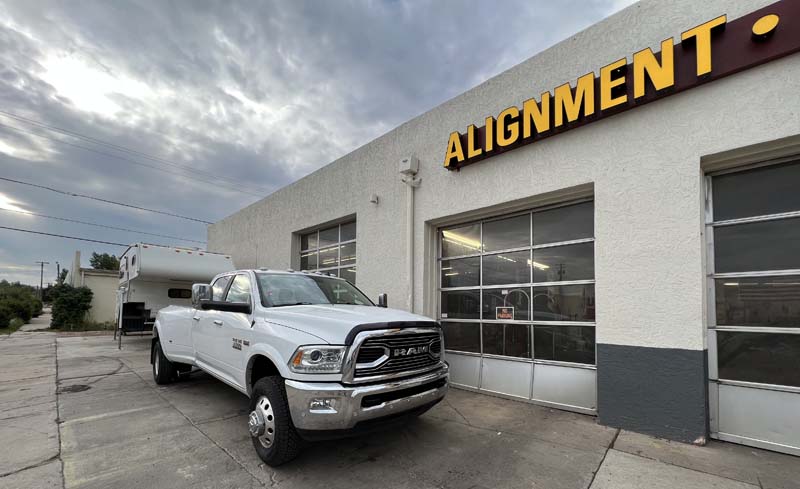
Removing the camper to get the truck worked on, Angela and Gordon’s Ram 3500, Alpenlite 1100
There are many important reasons why the ability to demount and change trucks and/or campers is essential. First, you might decide that you want or need a different truck or camper. Maybe you want more payload capacity or your truck starts acting up. Get a new truck, load your current camper, and go. Or perhaps you decide that you’d prefer a slide-out, or a pop-up, or that shiny new camper you just saw in Truck Camper Magazine. Sell your camper, load your new camper on your existing truck, and go. Don’t try that with a motorhome.
While living full-time on the road in 2018, we had the awful experience of having someone T-bone our truck. The truck was totaled, but our camper was repairable. While we got the camper worked on, we ordered a new truck. Within a few weeks, we had our old camper loaded on our new truck, and continued on our way. That’s obviously an extreme example of the advantages of a demountable camper, but it’s also a very real reason why the ability to demount is essential. Had we been driving an all-in-one Earthroamer that day, our totaled truck and home would have been behind a fenced-in holding yard by nightfall. Between demountable practical and high-end fancy, guess which we would choose?
It’s easy to overlook how demountability can impact long-term ownership costs. The financial savings from keeping either your truck or your camper are hard to calculate. For some, it might mean the difference between hanging up their keys to spare their wallet or making a change and staying with the adventure. Make no mistake about it. Demountability can save you a fortune.
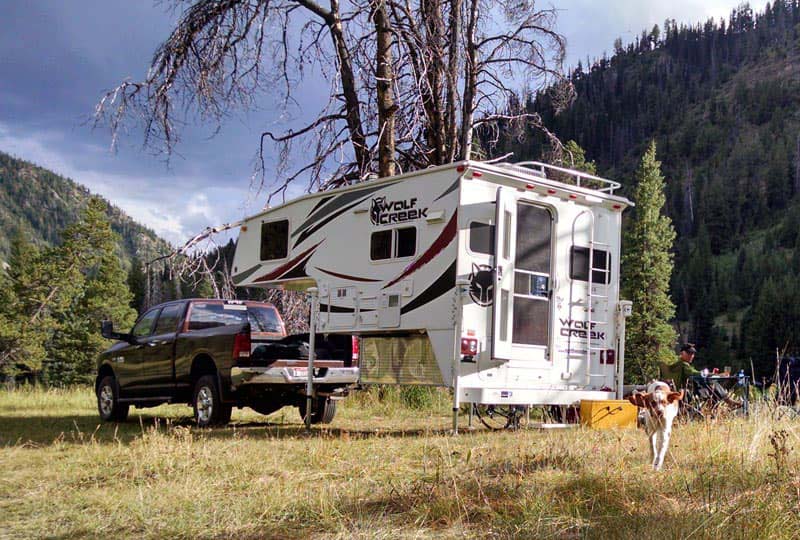
Always Ready To Go, Leslie and Bob McMichael, Ram 2500, Wolf Creek 840
While nothing beats a dirt bike or Jeep (or variations on these platforms) for the off-road lifestyle, an unloaded four-wheel drive pickup (no camper) offers some serious off-road capability.
Here’s where the demountable truck and camper rig transforms into a base camp and expedition vehicle. Without the weight and higher center of gravity created by the camper, the truck becomes an exceptional vehicle for exploring deep into the off-road wilderness. This is especially useful in areas with low clearance, or when one person wants to go fishing or capture the sunrise across the mountains at 5am and the other wants to sleep in, sip coffee, and read a good book.
We will demount our camper if we’re going to be somewhere for a while and want the truck to explore while our cat chills at base camp. The ability to demount means we can enjoy the area we’re in longer without worrying about the fur baby while we’re out exploring. And yeah, he’s spoiled.
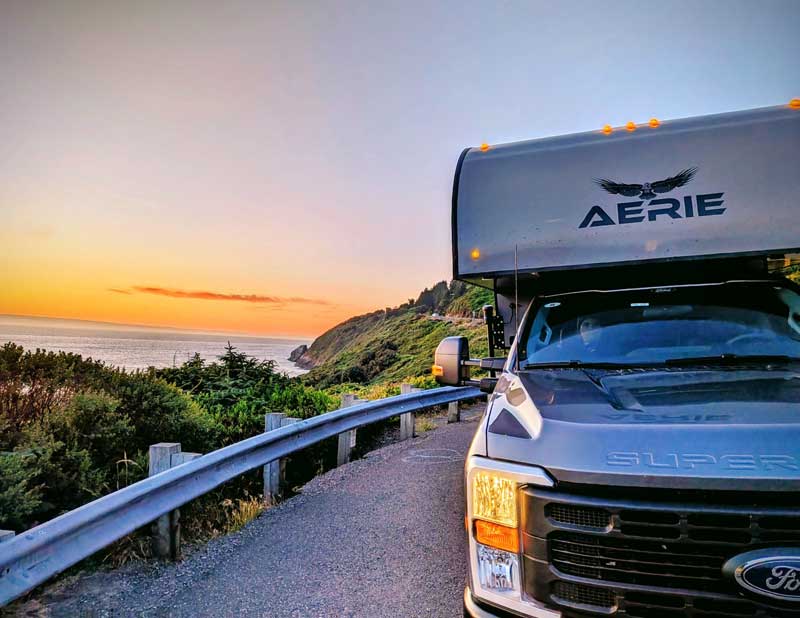
Calendar Contest Entry, Jessica Fischer, Florence, Oregon, 2024 Ford F-350, 2025 Soaring Eagle Aerie
Taking the towing ability a step further, the ability to demount the camper in the campsite and then use the pickup to launch and retrieve a boat or jet skis, or to take snowmobiles or ATVs to the trailhead, is another ridiculously huge advantage of truck campers. No other overland or RV setup offers this degree of versatility. If you need to tow and want to be comfortable on or off-grid, a truck camper is simply unbeatable. Even better, you have full visibility of your boat as you’re backing it down the launch with your best friend Skippy blatantly filming you for his YouTube channel. Yeah, that happens.
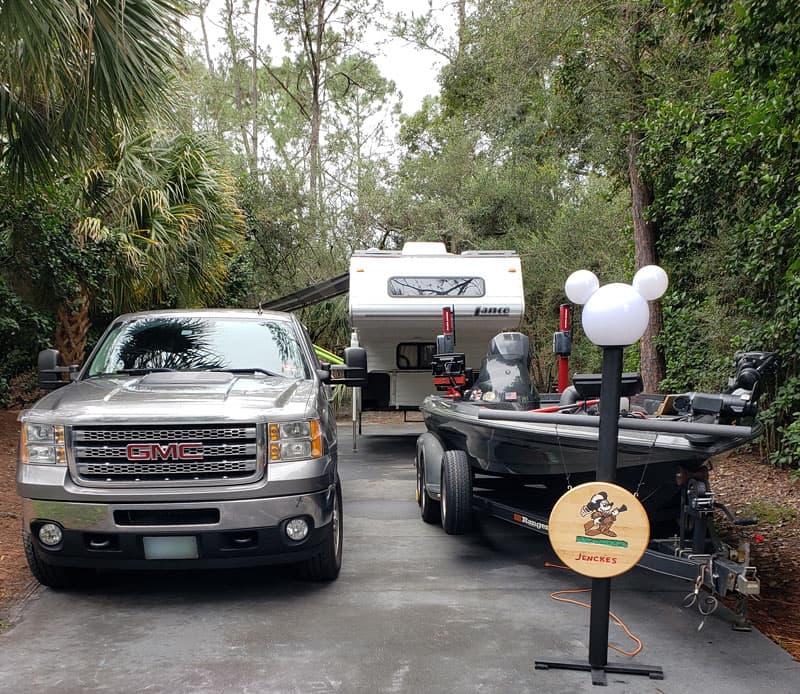
Top Boating Destinations, Fort Wilderness, FL, Kevin Jenckes, 1996 Ford F-250, 2006 Lance 820
We routinely visit fellow truck campers and almost always see their campers stored at home. Some store their campers off the truck behind a shed. Some store their campers loaded on the truck inside a purpose-built garage. Others keep their campers on their trucks all the time and park in their driveways. Rarely is a camper stored off-site or in a paid storage lot.
As relatively compact products (compared to most motorhomes and trailers), truck campers fit in more residential locations, saving their owners a ton in storage fees. If paid storage is needed, an unloaded truck camper requires less square footage, potentially opening up more affordable storage options and more convenient locations.
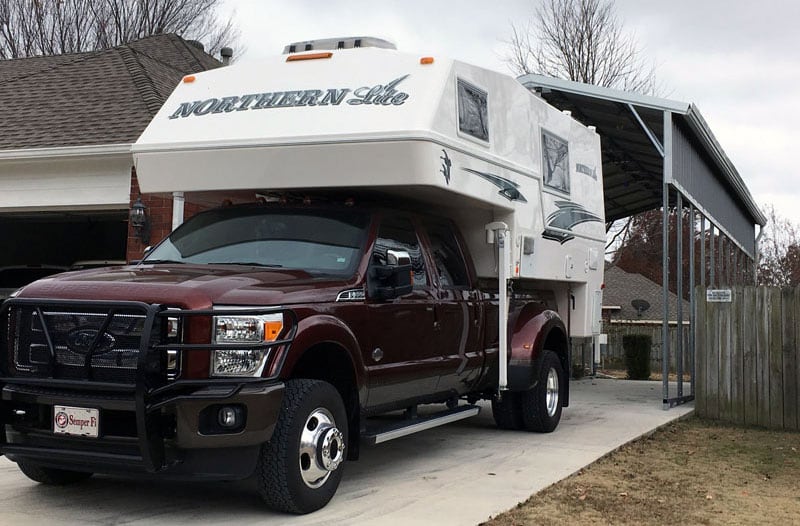
Portable and Permanent RV Shelters, Sean Engle, 2016 Ford F-350, 2017 Northern Lite 10-2
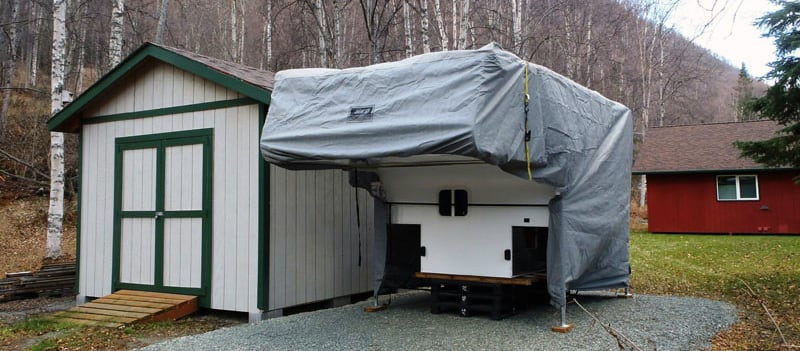
Covers for Truck Campers, Allen Jedlicki, 2012 GMC 2500HD, 2014 Wolf Creek 850SB
This advantage doesn’t apply to every camper in every location, but in the United States many states do not require separate registration or license plates for a slide-in truck camper, potentially saving the owner hundreds of dollars per year. In Canada, the situation is similar, though the rules vary by province. In most cases, a slide-in truck camper is considered cargo or an accessory carried in the bed of the truck rather than a separate vehicle, so it typically does not require its own registration or license plate.
We always recommend carrying a separate insurance policy on your truck camper, but truck camper insurance is often available through the truck’s policy, sometimes with a rider or endorsement to cover the camper’s value. In many situations, having a truck camper can save the owner a considerable amount of money in insurance compared to owning a motorhome or a towable RV.
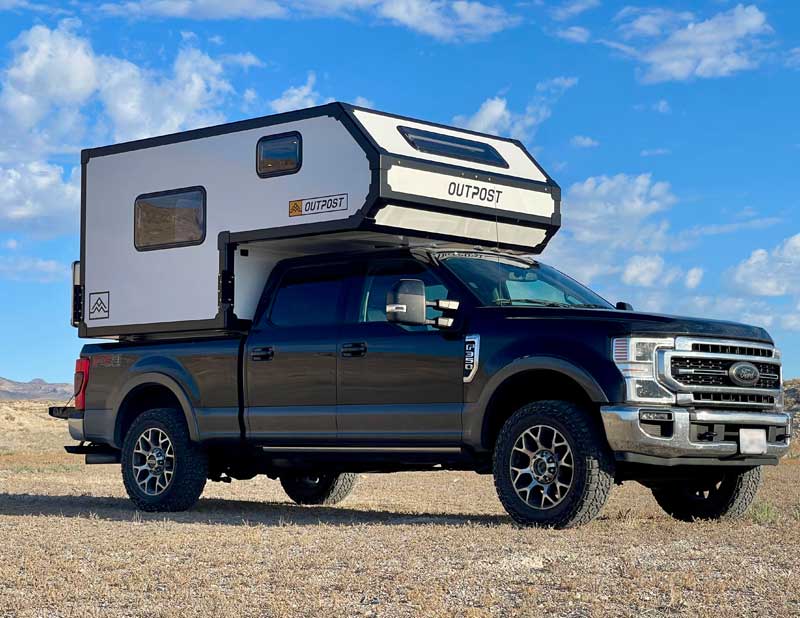
Calendar Contest Entry, Cameron Thornberry, Utah, 2020 Ford F-350, 2025 Outpost 6.5
We already covered how pickup trucks can be serviced almost anywhere, including major dealerships and independent mechanics. This creates local competition, helping to keep a lid on truck repair costs, even if sometimes shopping around for the lowest repair cost isn’t logistically possible.
The real advantage is when comparing on-the-road truck service to other RV and Overland alternatives. Think repairing your truck in Wyoming is expensive? Try it with a Winnebago or Unimog.
As a separate unit, truck campers have no axles, tires, wheel bearings, or breaking systems. That eliminates a significant number of common and expensive maintenance issues.
Most truck campers utilize widely available RV components and appliances that can be serviced or replaced at RV dealers and service centers across the country. If you’re handy, those same components and appliances are often accessible via overnight shipping or at the same RV dealers and service centers. When it comes to keeping a camper on the road, access to service and readily available parts is a huge part of the equation and another time and money-saving win for the category.
Finally, the relatively compact size of truck campers means there’s simply less square footage and surface area to inspect, seal, and otherwise maintain. That translates directly into saved time, lower costs, and less overall effort.
Maintaining a truck and camper is never going to be easy or inexpensive, but compared to larger and more complex RVs and overland vehicles, a truck camper rig offers clear advantages in both maintenance demands and long-term ownership costs.
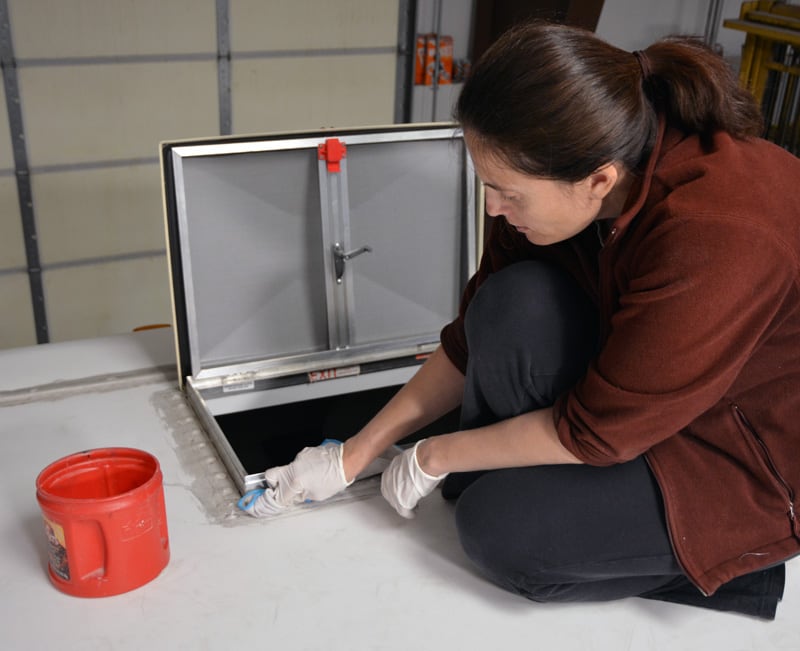
Maintaining Camper Seals, Angela cleaning and inspecting the roof seals on our Alpenlite 1100
Better depreciation is one of the most underappreciated advantages truck campers have over every towable and motorhome product. That’s a bold statement, but facts and common sense back up this claim.
First, truck campers—the units themselves—never record a mile or kilometer. Motorhomes and van odometers devour their own value with every mile and kilometer you drive. This is because motorhomes and vans have engines, drivetrains, brake systems, suspensions, wheels, and tires that wear. Truck campers have none of these items and can be matched to a new truck the moment one is needed. Think that’s no big deal? Open RV Trader and search the used motorhomes and vans. As the miles go up, the values go down.
Second, truck campers are simpler machines. Motorhomes have the aforementioned engines, drivetrains, brake systems, suspensions, wheels, and tires. Towables have brake systems, suspensions, wheels, and tires. In contrast, truck campers are simply self-contained living boxes with relatively straightforward onboard systems. This isn’t to say truck campers are simple, but they have nowhere near the complexity of their towable and motorhome counterparts. And when it comes to depreciation, the fewer opportunities there are for complex and expensive repairs, the better the resale value.
Third, the market for truck campers is smaller and more stable. When you drive past a mega RV dealership and see hundreds of towables and motorhomes, you’re looking at potential trouble for those product categories. In a downturn, all of that inventory can get liquidated, diminishing the potential value of every towable and motorhome—new and used.
In contrast, there are significantly fewer truck camper manufacturers with lower production volumes. This helps to keep the supply tighter. That means your used camper isn’t potentially competing with an endless flood of new product. If and when you put your truck camper up for sale, it might be the only used example of that make and/or model for hundreds of miles. That scarcity greatly reduces depreciation.
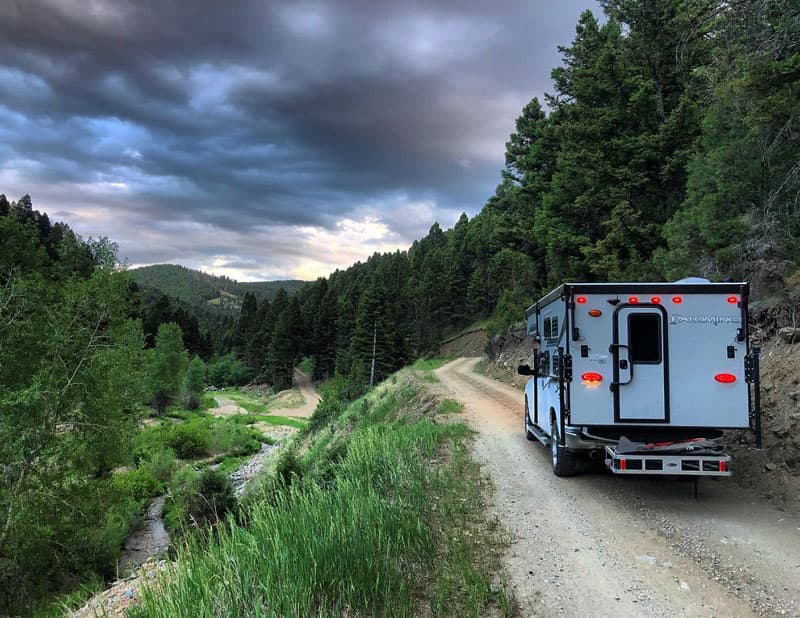
2022 Calendar Winner, Kolin Smith, Virginia City, Montana, 2019 Ram 1500, 2021 Palomino SS-1251
Fuel economy is rarely the primary reason people choose a truck camper. Most owners report between 8 and 12 miles per gallon, depending on the truck, terrain, and driving speed. Even so, truck campers can compare reasonably well with many other forms of RV travel.
Because the camper rides in the bed rather than being towed, unless you’re towing, there’s no trailer adding additional aerodynamic drag behind the truck. And unlike motorhomes, the truck itself can serve as a daily driver when the camper is unloaded. The result isn’t great fuel economy, but a truck and demountable camper is an efficient way to enjoy self-contained travel.
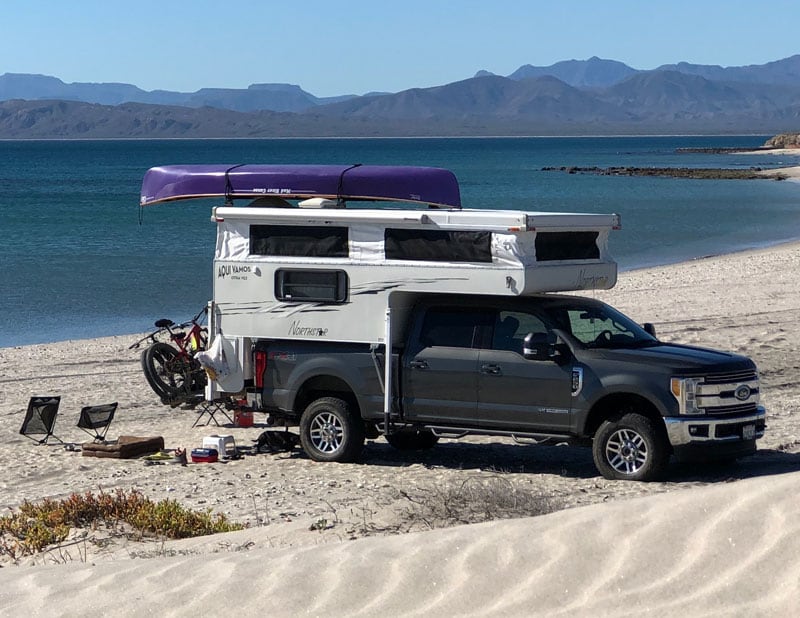
Calendar Contest Entry, Bruce Elkind, Punta Chivato, Baja, 2017 Ford F-250, Northstar 850SC
The nimbleness, simplicity, and unbeatable versatility provided by a demountable truck and camper rig unlock a free wheeling go anywhere, camp anywhere, tow anything lifestyle that’s impossible to match. And because truck campers are easy to pack, fast to launch, and painless to move, you explore more, see more, and say “yes” to more of what the road brings. And you know what the road brings when you’re wide open to anything in a truck camper? Pure road magic.
It’s hard to explain until you experience it for yourself, but a truck and camper get out of the way, allowing the adventure to unfold before you. Truck campers aren’t rolling apartments designed for sitting and scrolling. They’re purpose-built travel, adventure, and living-life-to-the-fullest machines. The mission is simple: get you to the trailhead, the fishing hole, the desert landscape, the surf break, the ski lot, or that quiet overlook where the sunset stops you in your tracks. And because the camper rides on a pickup, you can tow the boat, the dirt bikes, the ATVs, or whatever gear fuels your passions.
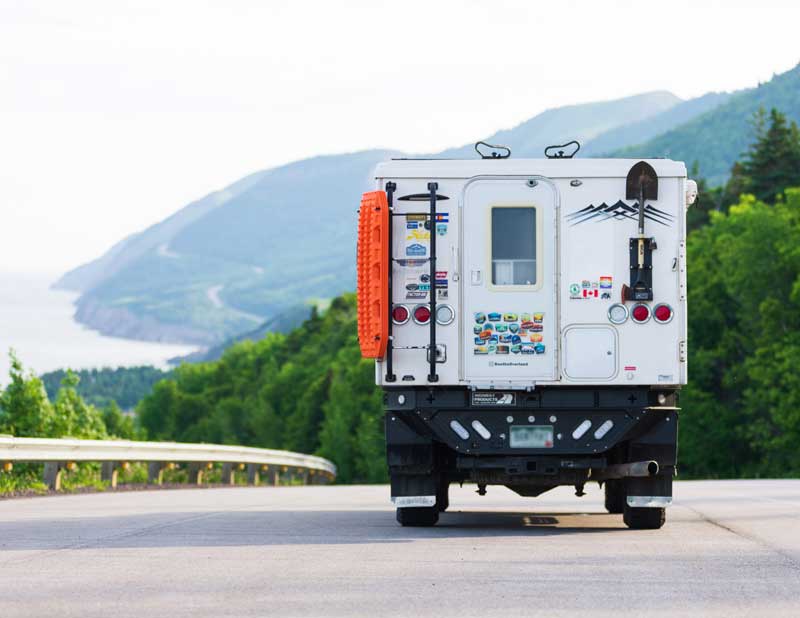
Cape Breton, Nova Scotia, Adam Zolyak, 2021 Ford F-350, 2018 Hallmark Guanella
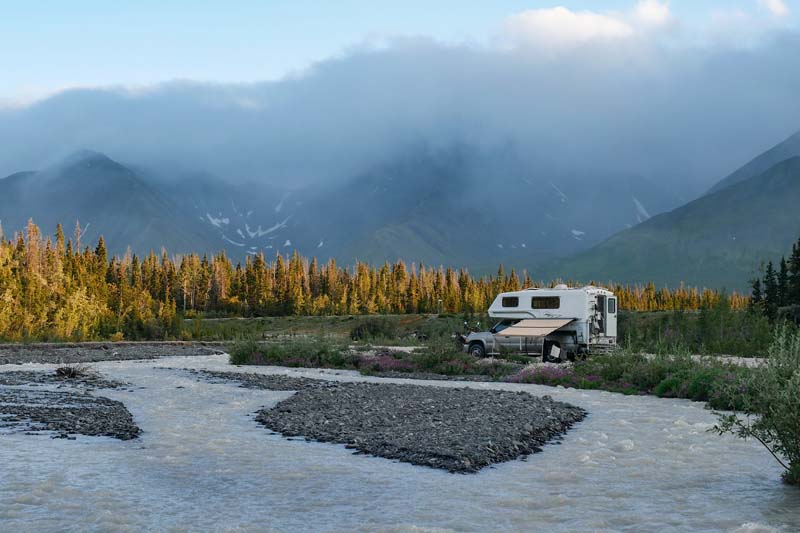 Kluane National Park, Gillian Holwerda, 2003 GMC Sierra, 1996 Bigfoot
Let me tell you a secret. Because truck campers are far less common than motorhomes and towables, truck camper enthusiasts feel an instant connection with fellow truck campers. It’s akin to what Harley Davidson or Jeep owners express when they pass each other on a twisty pass—only truck campers are far more rare. We wave across fuel islands and pull-offs. We give kudos at BLM campsites and grocery store parking lots. Oftentimes, there are no words exchanged; just an understanding and admiration.
For truck campers who want a deeper connection, the community offers a vibrant schedule of truck camper rallies and gatherings. Through these events, we’ve made countless friends and even caravanned together to discover new places and experiences. We can honestly say we’ve met more amazing friends through truck camping than any other facet of our lives. Having talked to countless fellow truck campers over the years, we’re not alone in that sentiment.
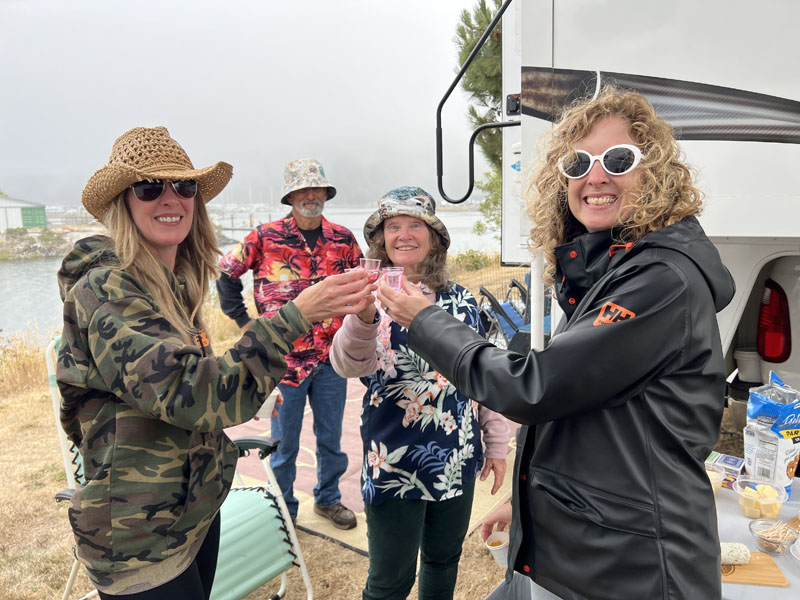
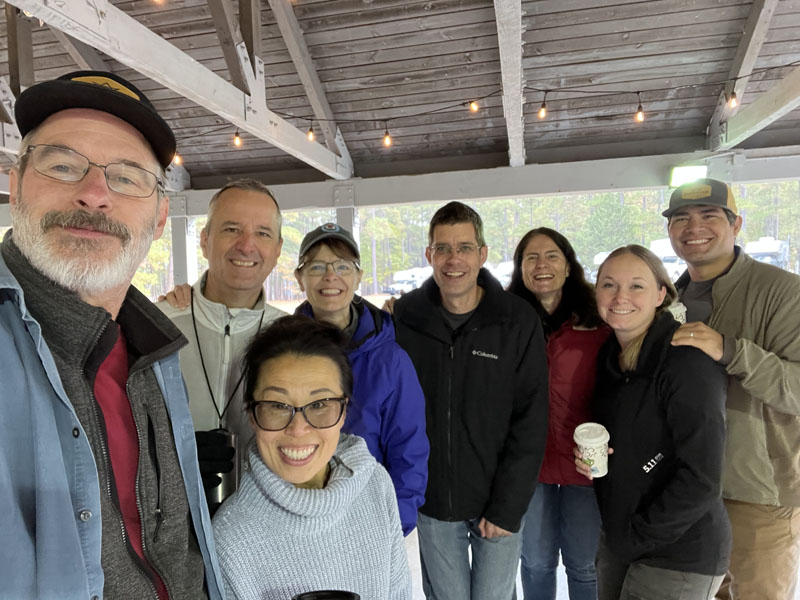
North Carolina Truck Camper Rally
Take almost everything stated above and imagine a situation where you and your family suddenly need to leave or take care of yourselves for a while. Not the most cheerful thought, I know, but it’s worth considering. A wildfire is approaching. A hurricane is on the way. An ice storm knocks out power for a week. Flooding is forecast and you live in a known flood zone. A prolonged heat wave takes the grid down. In situations like these, having a fully self-contained truck and camper with four-wheel drive, onboard power, water, and a place to live can make a real difference.
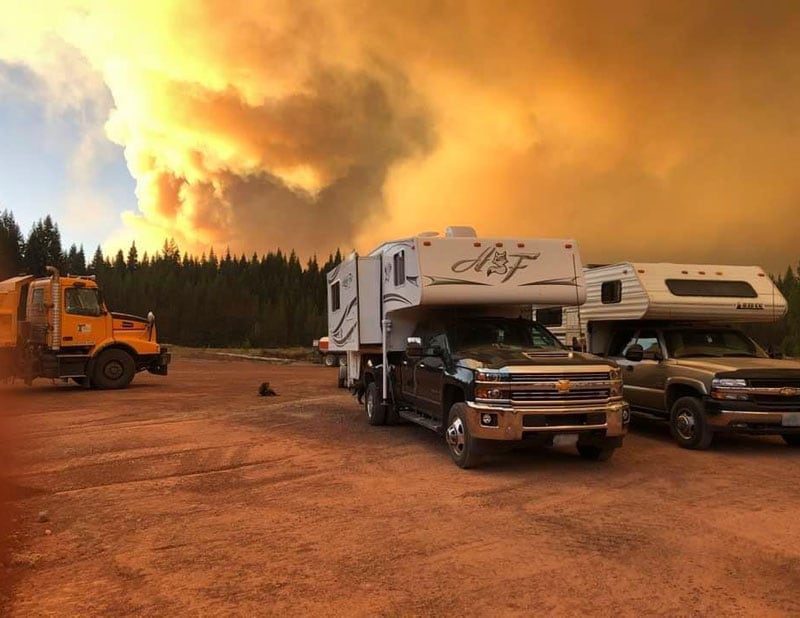
Calendar Contest Entry, Gary McNichols, forest fire near Diamond Lake, Oregon, 2018 Chevrolet 3500 HD, 2014 Arctic Fox 1140
This isn’t just hypothetical. We evacuated from a Category 4 hurricane in our camper and have talked with dozens of truck camper owners who have faced many of the situations above. In moments like that, a truck camper becomes what we like to call a Family Emergency Vehicle (FEV).
There’s another, quieter FEV benefit as well. When a family member needs help, you can show up and stay nearby—at their home, near a hospital, or wherever you’re needed. We’ve done this too. It’s not a marketing point. It’s simply another meaningful reason we choose a truck camper.