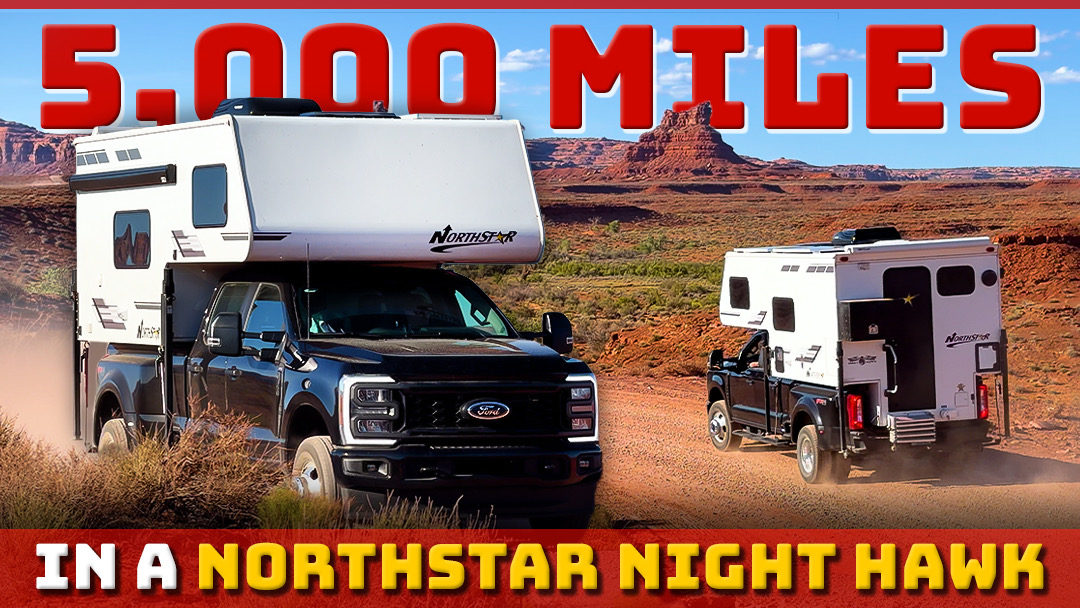
Can a Northstar Night Hawk balance comfort, productivity, and off-grid adventure for full-time remote workers? We drove it 5,000 miles, lived in it for fifty consecutive nights, and pushed it from Tornado Alley to the Rocky Mountains. Here’s what we learned.
Truck Camper Magazine has a long history of borrowing, testing, and reviewing truck campers. The more systems, floor plans, and models we experience firsthand, the better equipped we are to share meaningful insights. Plus, there’s no better way to stay on-site at truck camper manufacturers, dealerships, and rallies while living the very lifestyle we write about.
As you may have read in TCM Debuts 2026 Ford F-350, Eric and I recently purchased a truck with the intent of hauling a variety of demo campers over the coming years. For our first demo camper, we borrowed a 2026 Northstar Night Hawk. It would soon be our home for two consecutive months—the longest time we have spent in a hard side truck camper.
The route for our TCM Spring Tour carried us from Michigan to Iowa, south to Texas, across the deserts of the Southwest, through Colorado and the Continental Divide, and back home to the Midwest. Together with Gordon and Angela, we would visit twelve truck camper manufacturers and dealers, cover the largest overlanding event in the country, and keep up with Truck Camper Magazine’s consistent flow of articles, photography, and social media.
Were we excited? You bet! But it was also an undertaking that would require us to live and work from the road for several weeks. We needed more than transportation. We needed a home, an office, and a reliable base of operations that could keep pace with our jam-packed schedule. Would the Night Hawk meet our challenging demands on the road? Let’s find out.
Just a week after installing Torklift International tie-downs on our truck, Eric and I found ourselves heading west toward Cedar Falls, Iowa. The truck was packed with enough clothes, gear, and supplies to support over two months on the road. Somewhere between Michigan and Iowa, it sank in that we weren’t simply picking up a truck camper.
As we turned into Northstar’s parking lot, excitement and nerves started competing for space in my stomach. Months of anticipation led to this moment. Not to mention, we were visiting one of the industry’s founding brands.
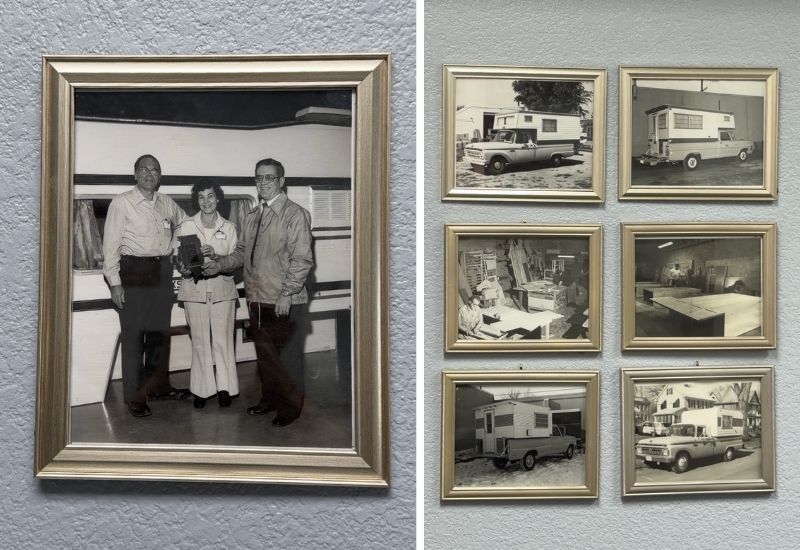
Photographs celebrating decades of Northstar Campers history
As soon as we arrived, Rex Willett, President of Northstar Campers, led us down the hard side production line. Rex is one of those people whose reputation reaches you long before you meet him. Ask dealers, manufacturers, or truck camper owners about Rex, and chances are they know him. Part of that comes from nearly five decades in the business. The rest comes from his larger-than-life personality.
This was our chance to learn firsthand how Northstar Campers are built from someone who practically grew up in the factory. Rex took us from station to station, explaining how components came together and the thought process behind their wood-frame, hung-wall fiberglass construction.
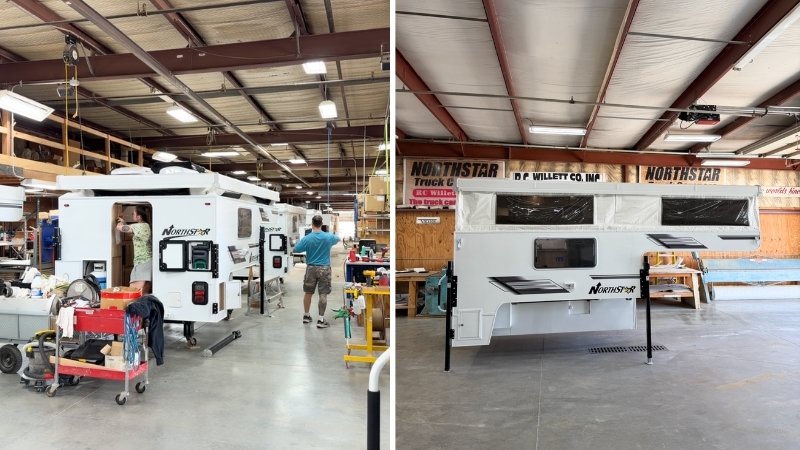
The Northstar production line (left) and a completed Northstar 850SC pop-up truck camper (right)
You can learn a lot about a company through its people. Many of the employees we met had spent well over a decade at Northstar. Doug Johnston, for example, has been with the company for 38 years. Northstar isn’t just building truck campers, but a culture people want to be part of.
No drumroll was necessary, but it would have felt appropriate. At the end of the production floor sat the Northstar Night Hawk, waiting to be installed on our truck.
To support our full-time travel and work schedule, Northstar equipped the camper with 900Ah of lithium batteries, a 3,000-watt inverter, 400 watts of solar, and dual air conditioners. On paper, it was the most capable electrical system either of us had ever traveled with.
With guidance from Rex, Eric carefully backed the truck toward the camper and into position.
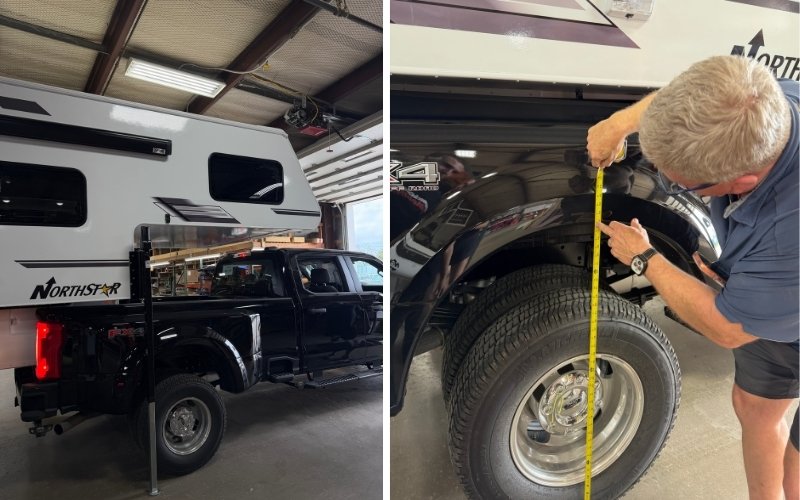
Eric backing the truck into position (left) and Rex Willett measuring ride height after loading the Night Hawk (right)
Rex measured from the floor to the bottom of our wheel well, before and after we lowered the camper into place. One of our immediate surprises was how little the truck settled under the camper’s weight. Despite the Night Hawk’s 2,370-pound dry weight, our Ford F-350 squatted only an inch and a quarter thanks to the Torklift Upper Overload StableLoads. With 6,410 pounds of payload capacity, we could have stacked another Northstar Night Hawk on top of ours and still had GVWR to spare.
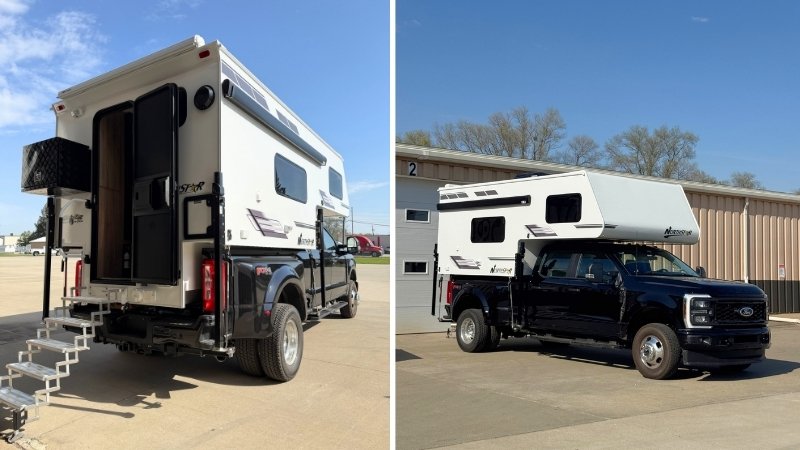
Once the camper was secured, we pulled the truck outside and stepped back to take our first look at the complete package.
The Night Hawk’s 7’6″ width was narrow enough to maintain clear visibility through the side mirrors and didn’t extend past the dually fenders. Between the fitment, graphics, and proportions, the truck and camper combination looked great.
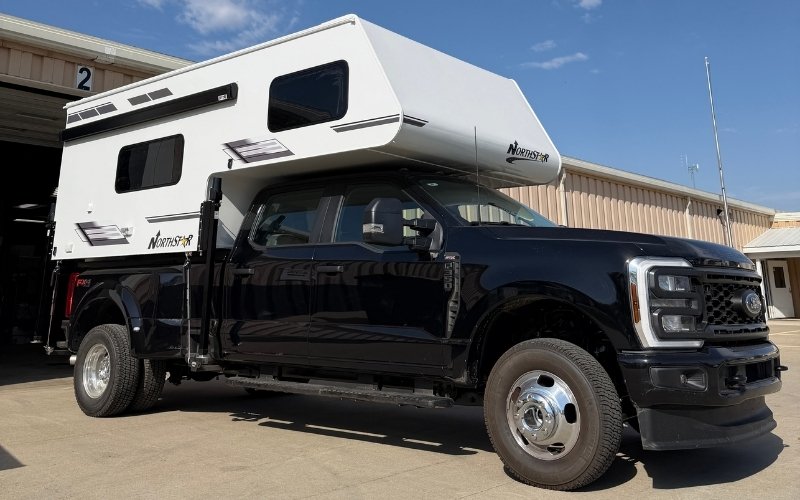
Eric and I were eager to move in and hit the road to test everything out for ourselves. Little did we know that as soon as we left Northstar, we would be the ones put to the test.
After spending the night at Northstar and capturing content the next day, we said our goodbyes, pointed south, and hit the road. Because it was tornado season, we knew that our trip to Texas could be eventful.
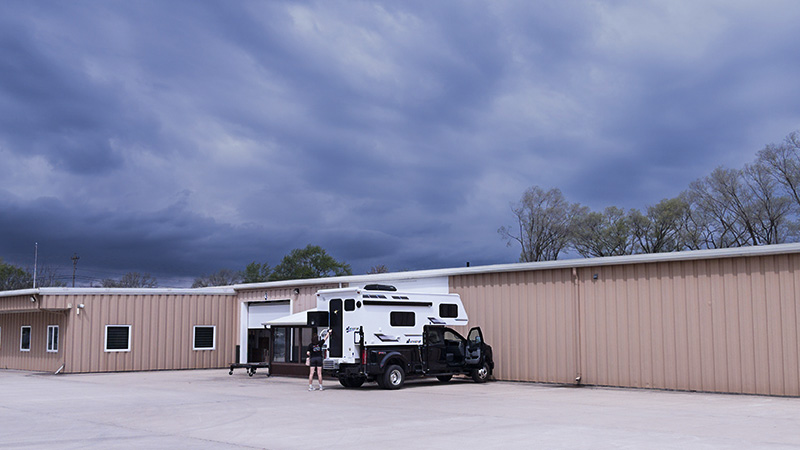
Darkening skies overhead as we finished packing and prepared to hit the road
It wasn’t an hour later before we received tornado warning alerts on our phones. Suddenly, we were driving straight into 45-mile-per-hour headwinds with gusts over 60 miles per hour. Eric had both hands firmly planted on the steering wheel while our fuel economy dropped to an uninspiring 7.5 miles per gallon.
The gusts pushed us around enough to make Eric and I exchange a glance. Neither of us said anything, but after years of traveling in pop-up campers, we were both wondering the same thing: Was a hard side the right choice?
We pulled off the highway to regroup, grab supplies, and let the worst of the weather pass. We needed to pick up a few things for the camper—holding tank treatment for the cassette, a grey water hose, and some hangers and organization items. Then we loaded up on groceries. A lot of groceries.
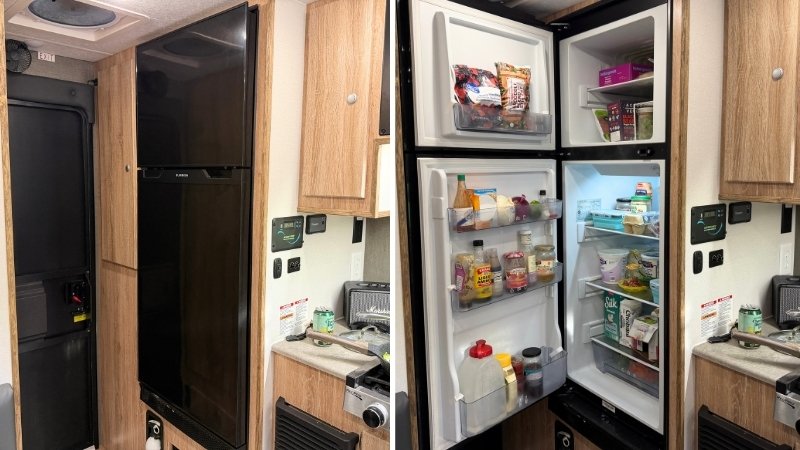
Our fridge and freezer open (left) and open (right)
When we returned to the camper with an overflowing cart, one thing became immediately apparent: the Night Hawk’s 10-cubic-foot refrigerator and freezer felt enormous. Frozen meals, smoothie ingredients, fresh produce, and snacks all disappeared inside with room to spare.
That stop proved to be fruitful for more than one reason. While we were parked, we took another look at the weather and changed course to avoid more storms. Instead of continuing to Kansas and Oklahoma, we routed through Missouri and Arkansas. As it turns out, we made the right decision.
Later, we learned that a tornado had touched down near the area where we had originally planned to camp. Thankfully, we were 200 miles east at Cuivre River State Park in Missouri. We may have avoided the twister, but we didn’t avoid the storm.
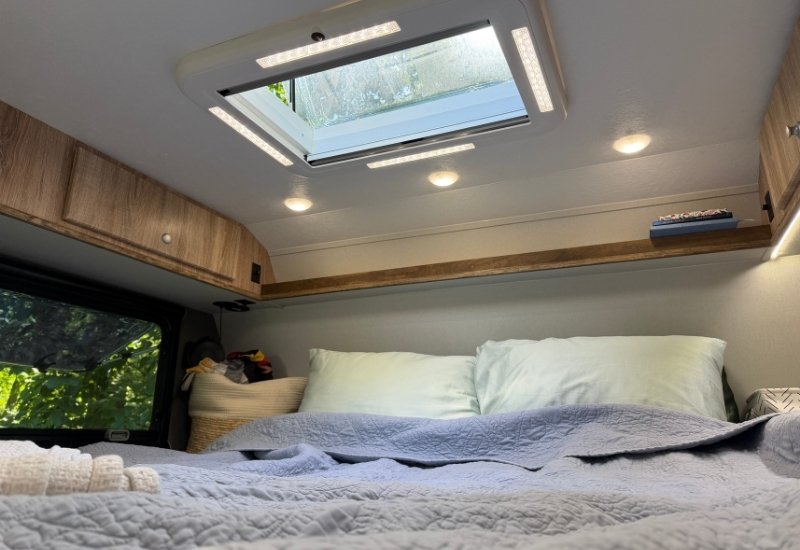
As darkness fell, the doubts I’d experienced earlier that day began to evaporate. Whatever aerodynamic disadvantages a hard side might have on the highway, its advantages become increasingly apparent once the wheels stop turning.

While the storm outside intensified, we were dry, warm, and secure inside. Thunder rattled the sky. Wind shook the trees around us. After the initial boom of thunder, the rain pattering on the roof became background noise as we settled into the camper.
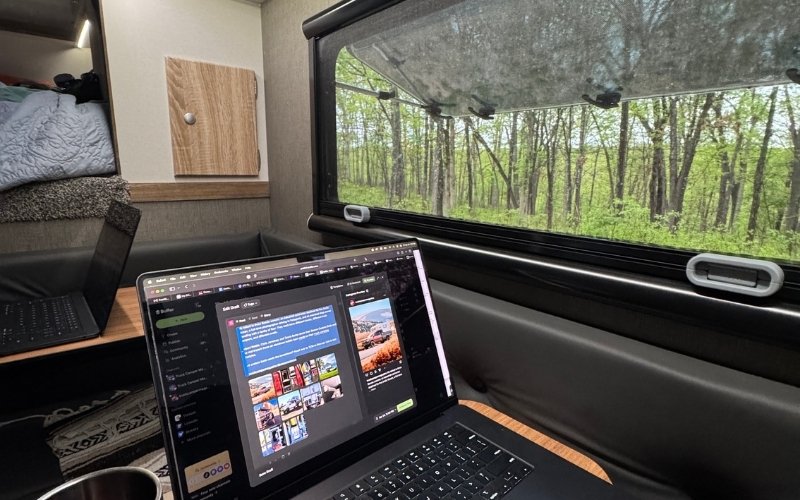
The calm after the storm, working from the Lagun tables at the dinette
Between flashes of lightning, we used our time to organize cabinets and settle into what would become our home for the next several months. Our first night in the camper wasn’t the introduction we had imagined, but it was a reassuring first test for the Night Hawk—and us.
After meeting up with Gordon and Angela in Texas, our first several weeks were spent close to towns and amenities. Our focus was on manufacturers, dealers, and keeping up with our workload. The camper’s systems were being used, but they weren’t being tested in remote, off-grid environments.
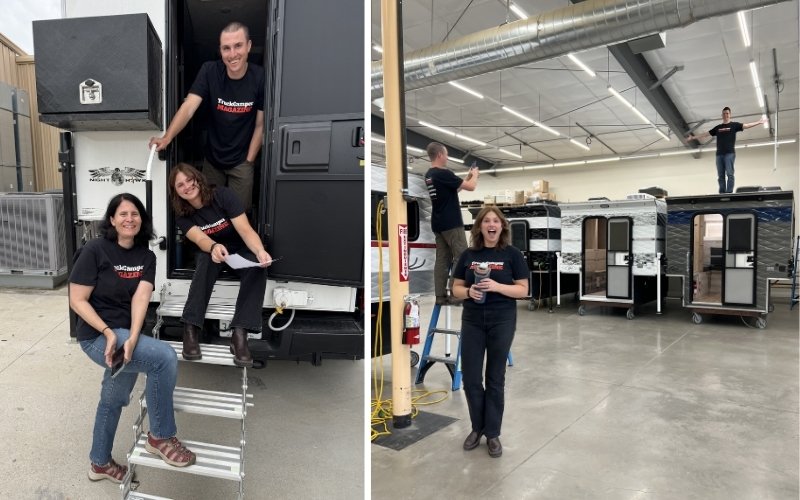
The TCM team visiting truck camper manufacturers
As we pushed west toward Overland Expo in Flagstaff and spent more time in the deserts of New Mexico and Arizona, that changed. Instead of rain, wind, and storms, we were dealing with heat, dust, and dry air. Amenities became fewer and farther between. For the first time, we had to pay close attention to our power, water, and waste levels.
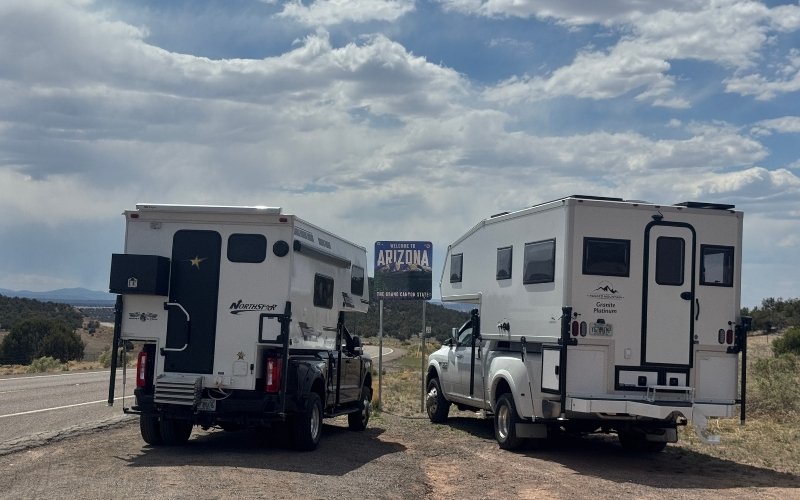
The TCM Team crossing the Arizona state line
Between the camper’s appliances, our laptops, Starlink, and the occasional blender for morning smoothies, the Night Hawk’s 900Ah lithium battery system and 400-watt solar panels easily kept up with our daily needs throughout our time in the Southwest. While we ran the Freonic air conditioner off-grid, we only used it to cut the heat for a few hours at a time before bed. We would have to wait until summer to really test it.
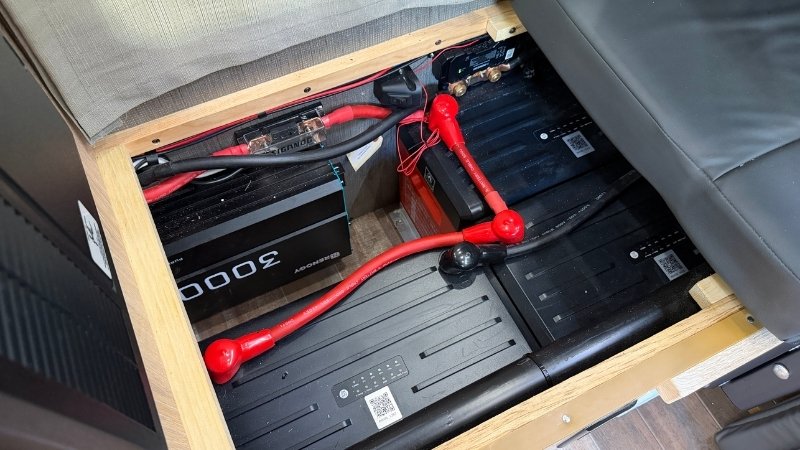
Night Hawk battery compartment upgraded to 900Ah of lithium battery capacity
Despite working from the camper every day, power was not a concern. Water and waste management, on the other hand, required a bit more attention.
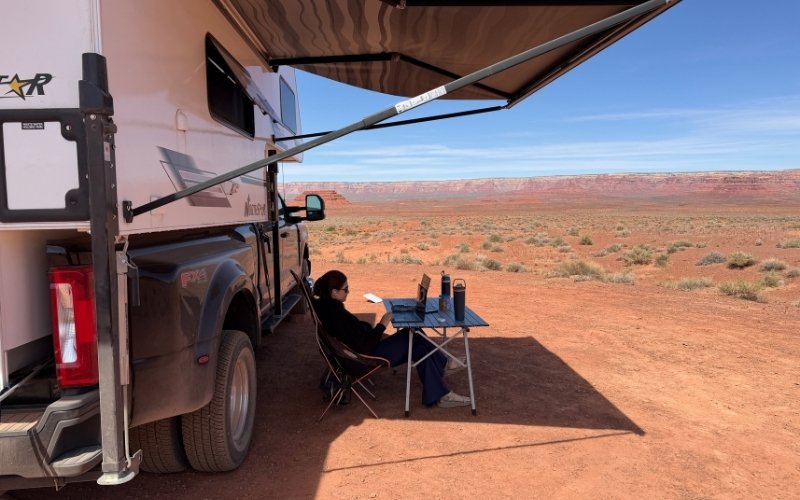
As someone who lives with eczema, the desert heat and dust made daily showers feel less like a luxury and more like a necessity. After a long day, few things felt better than washing away a layer of sweat, sunscreen, and red desert dust. I can’t express how much I have enjoyed this feature of the Night Hawk.
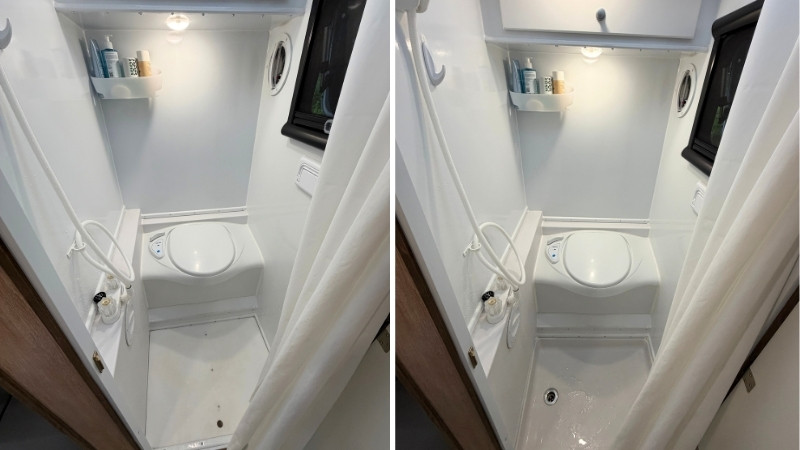
The Night Hawk’s wet bath with the false floor installed (left) and removed to reveal the shower pan (right)
My first shower experience was a bit clumsy. It took a little time to figure out the best way to set the curtain, use the showerhead while conserving water, and place my toiletries. It wasn’t long before the process became familiar.
The false floor lifts out when it’s time to shower, exposing the shower pan underneath. After a few days, it became part of our evening routine. A small thermal-pane window helped the bathroom feel more open, and leaving it cracked with the roof vent running overnight usually meant a dry bathroom by morning.
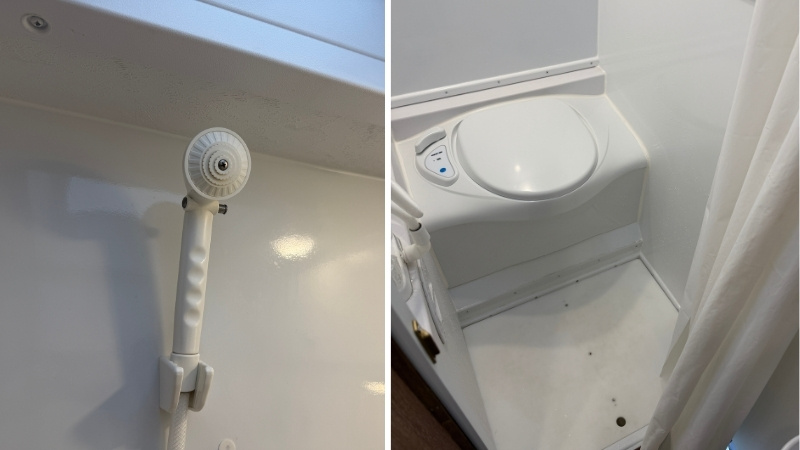
The camper also includes an exterior shower. While we never used it for bathing, it proved useful for rinsing off dusty shoes, cleaning gear outside, or cooling off on hot afternoons.
The Night Hawk’s forty-one-gallon fresh water tank proved to be a great match for the way we travel. Between two people showering, washing dishes, rinsing produce, and cleaning up, we found we could comfortably spend about six days off-grid while both of us took short daily showers.
It’s worth noting that we weren’t using the fresh tank for drinking water. We carried separate jugs for that, which helped stretch our water supply even further.
Between the battery capacity, fresh water, grey water, and the cassette tank, the first item to need attention off-grid was always the thirteen-gallon grey tank. We quickly learned to dump grey water at sanitation stations whenever the opportunity presented itself.
Emptying the cassette toilet came with its own learning curve. More accurately, Eric learned that system, and I benefited from his efforts.
The cassette toilet has its own four-gallon fresh water reservoir that flushes the bowl with water. Over fifty days on the road, we only filled the reservoir four times. Like any cassette toilet, a treatment should be added after being emptied to help break down waste and control odors. The maintenance wasn’t glamorous, but it was simple.
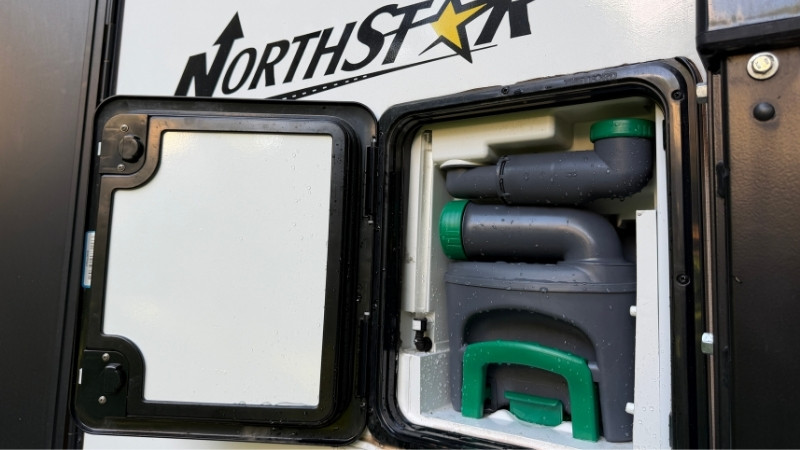
Accessing the removable cassette black tank from outside the camper
With both of us relying exclusively on the cassette toilet, we found that emptying the 5.3-gallon cassette black tank every three to four days kept us ahead of any close calls. While the cassette could be dumped at any toilet or dump station, Eric is convinced that, where local rules allow, pit toilets are the ideal dumping location for a cassette toilet. I’ll let him jump in for a second.
Eric here—and I’m thrilled to potty talk with you guys. Yes, in my opinion, pit toilets are ideal for dumping a cassette. Why?
Dump stations are not made for cassettes. I’ve dumped in them plenty this year, but between getting low with a full, forty-pound container and simultaneously trying to hold open the metal cover, they can be tricky.
And yes, I’ve dumped in porta john and regular flush toilets too, but they present an interesting twist that can end with a splash. Pit toilets allow you to dump standing upright, in a private room, and with little to no risk of a liquid rebound. On that note, I’m passing you back off to Sarah.
No more toilet talk, I promise.
By this point, we had become confident in the Night Hawk’s ability to support us off-grid. The water, waste, electrical, and climate control systems were all proving themselves in real-world conditions. Our remaining question was whether our dually and hard-side truck camper could reach the remote places that make truck camping fulfilling to us.
Most of my favorite campsites are in the kinds of places where you won’t find hookups, facilities, or crowds. I love a dirt road and landscapes that still feel wild. If our truck and camper combination couldn’t reach those places, it would defeat much of the purpose of truck camping for me.
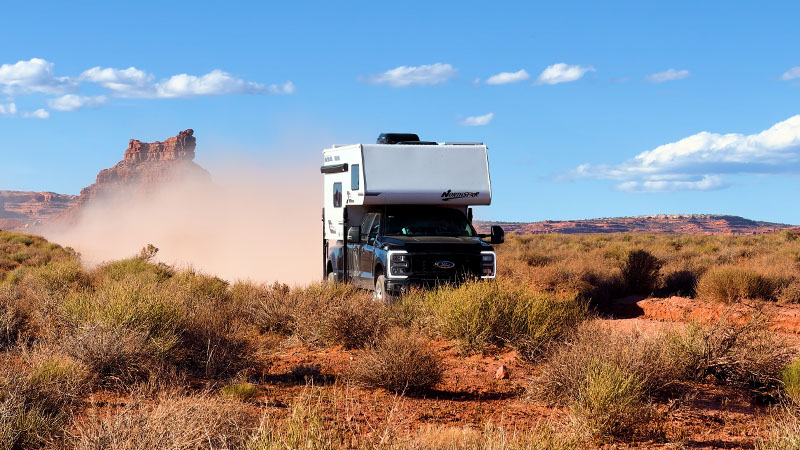
Coming into this trip, I had plenty of off-road experience with single-rear-wheel Toyotas, Rams, and Fords carrying pop-up campers. Eric and I have traveled from the southern tip of Baja to remote Canadian logging roads, and we’ve found ourselves in plenty of tight, rocky, and sandy terrain over the years.
By this point, I knew we could live and work comfortably in the Night Hawk. What I wanted to know was how far we could take it into the backcountry. If I’m being honest, I had my doubts.
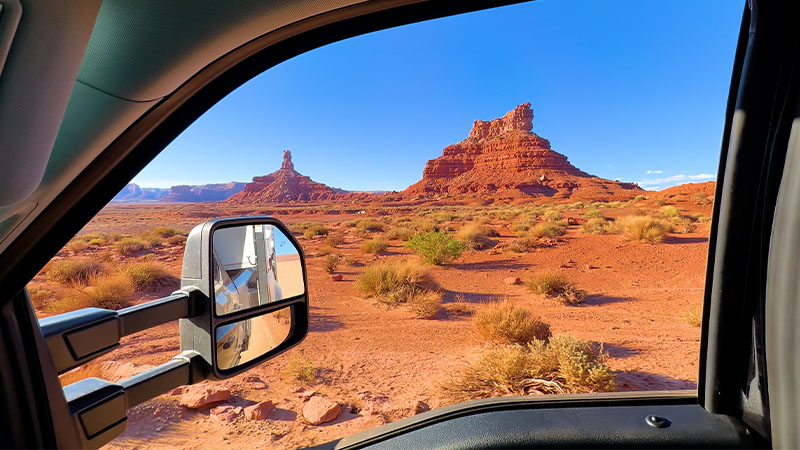
The first opportunity to really push the rig off-road came after Overland Expo West. After a long weekend of crowds, I was ready for open space.
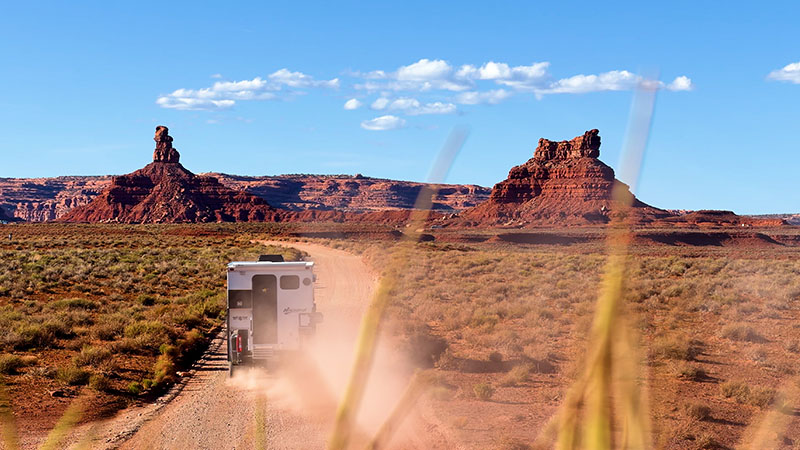
For me, there is no better reset than rolling down the windows, turning up Fleetwood Mac on the radio, and driving down a dirt road with Eric. The Four Corners region finally gave us that opportunity. Over the course of a week, we meandered through Utah’s Valley of the Gods and Moki Dugway, along with other BLM areas outside Page, Arizona.
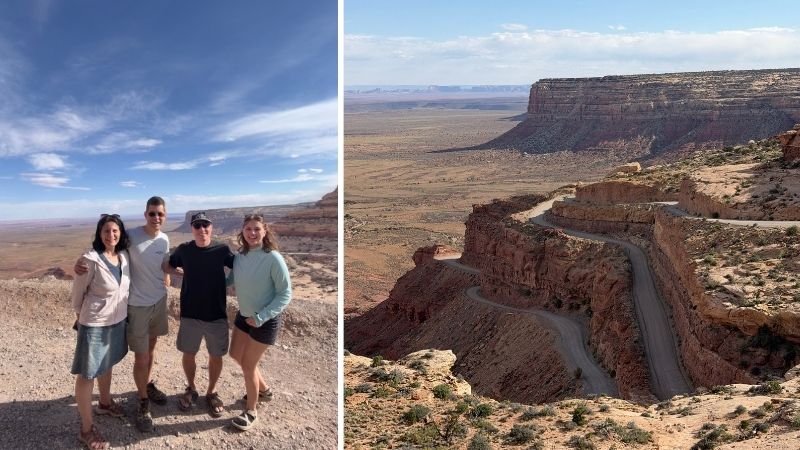
The TCM team at the top of the Moki Dugway
After experiencing a variety of off-road conditions, from washboards to loose rocks and sand, this setup far exceeded my expectations. Yes, we were moving slower than a single-rear-wheel one-ton truck with a pop-up camper, but we were able to reach many of the same places.
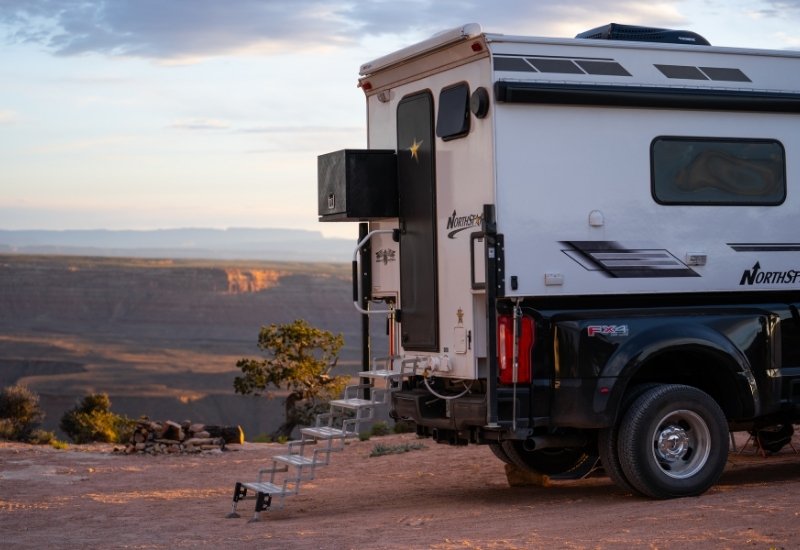
Pictured above: Northstar Night Hawk with Torklift International Stow N’ Go and All Terrain Landing Gear
We were starting to understand the limitations of where we could go and how long we could stay. In the end, off-road capability and living comforts are a balancing act, and the Night Hawk proved to be the perfect medium for this trip.
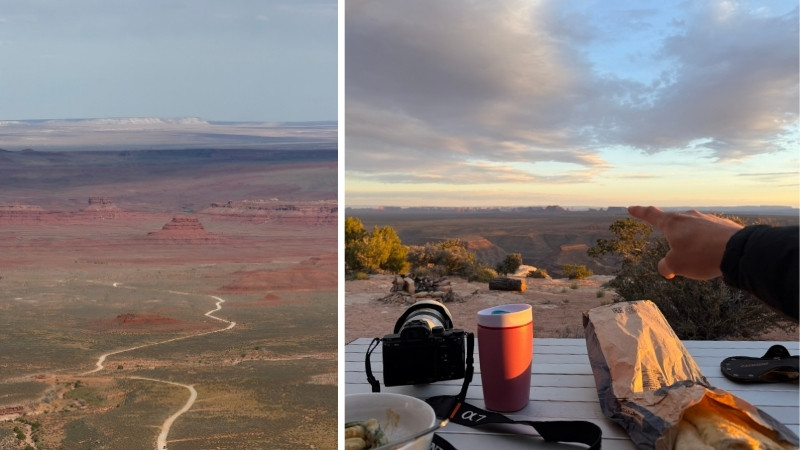
The view that greeted us from our campsite at Muley Point, Utah
The Rockies presented a different set of off-road tests—elevation, rocky trails, tight maneuvering, and picking careful lines through obstacles. We also found ourselves welcoming cold weather for the first time on the trip. Memorial Day weekend brought both challenges together.
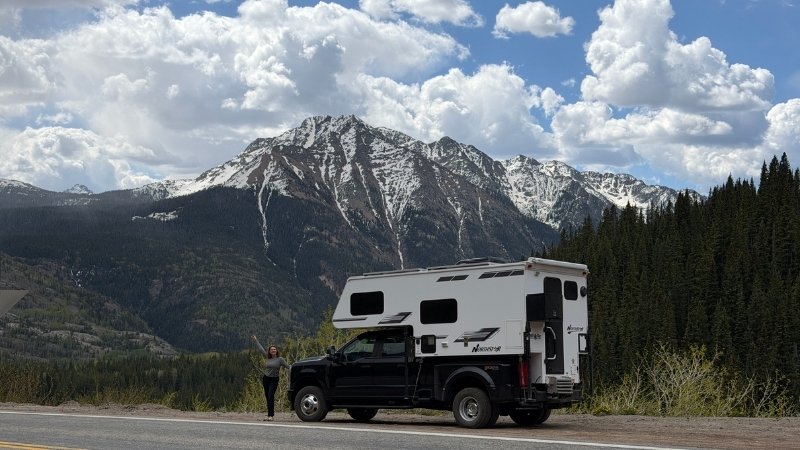
A stretch of Colorado’s scenic Million Dollar Highway
Eric and I spent the holiday exploring around Ouray, Colorado, hiking sections of the Ouray Perimeter Trail and driving the Million Dollar Highway. When it came time to find camp, OnX showed plenty of dispersed camping opportunities along this legendary stretch of road.
We initially found a flat parking area already occupied by a handful of vans and trailers. It would have been an easy place to spend the night, but we were in a truck camper and wanted to see what was farther up the trail.
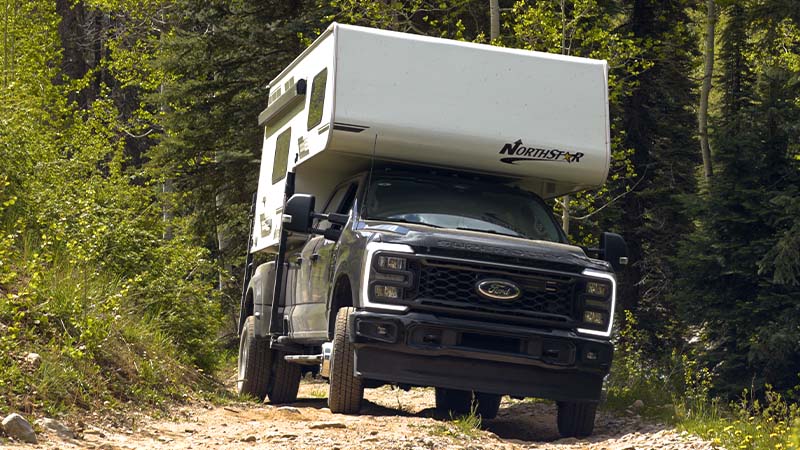
The route to our eventual campsite quickly became more and more technical. Primarily used by Jeeps, it included a small creek crossing, several large rocks, and a few sections where careful tire placement mattered. My biggest concern wasn’t the truck’s capability or traction. It was protecting the dually’s sidewalls from sharp rocks.
With me spotting and Eric behind the wheel, we worked our way up slowly. The Night Hawk swayed and leaned over uneven terrain, but the truck never felt overwhelmed. I guessed we were the biggest rig that had camped at this spot in quite some time.
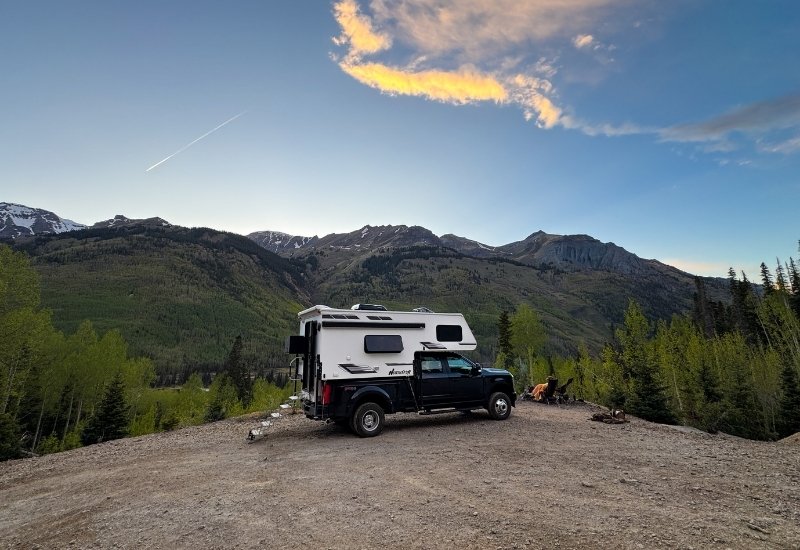
Eventually, the trail opened up to a campsite sitting just above 9,000 feet. Looking out across the mountains, I let out a sigh of relief. Campsites like this are why I fell in love with truck camping.
By the time the sun started to slip behind the mountains, the temperature dropped quickly, and the air had a crisp chill. It was finally cool enough to justify bundling up and turning on the Suburban furnace.
Thanks in part to the Night Hawk’s 12-volt compressor refrigerator, propane consumption remained surprisingly low. After four weeks of full-time living on the road, with daily use of the stove and water heater, we were still on our first of two 20-pound propane tanks. Even with a week of regular overnight furnace use in the mountains, the two tanks lasted nearly seven weeks in total.
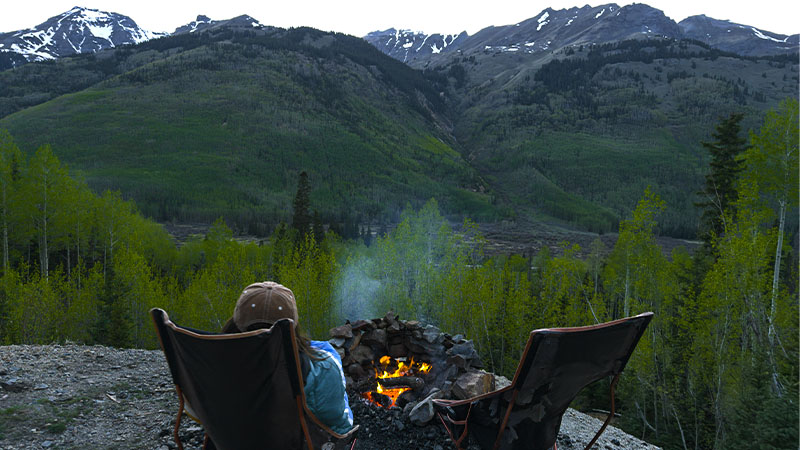
That evening, aspens rustled in the breeze while we built a campfire and cooked dinner. The mountains glowed in the last light of the day. For a moment, there was nothing to think about except dinner and the view. For all the miles, deadlines, and long workdays, moments like this remind me how fortunate I am to do what I do.
Given the choice between a campground and a dirt road leading to public land, I’ll take the dirt road every time.
Going into our spring tour, however, our mission wasn’t simply to go camping. We needed to live and work from the road for months while helping Truck Camper Magazine maintain its regular pace of articles, photography, interviews, social media, and daily operations.
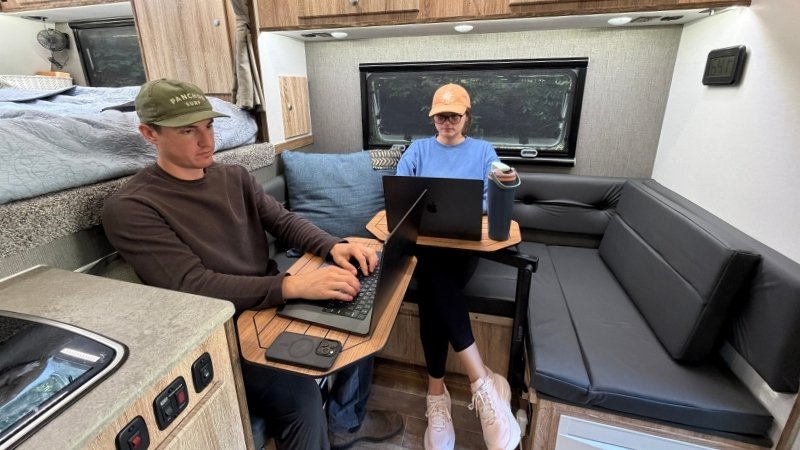
Eric and I working in the Northstar Night Hawk, each with our own Lagun table.
The Night Hawk proved to be exceptionally well suited for the job. It gave us the comfort and functionality we needed to work full-time from the road while still allowing us to reach nearly every destination we set our sights on. Paired with our Ford F-350 dually, it struck a balance between comfort, capability, and practicality.
Were there a few roads and trails we chose not to attempt? Absolutely. In a smaller single-rear-wheel truck with a pop-up camper, I would have pushed a little farther.
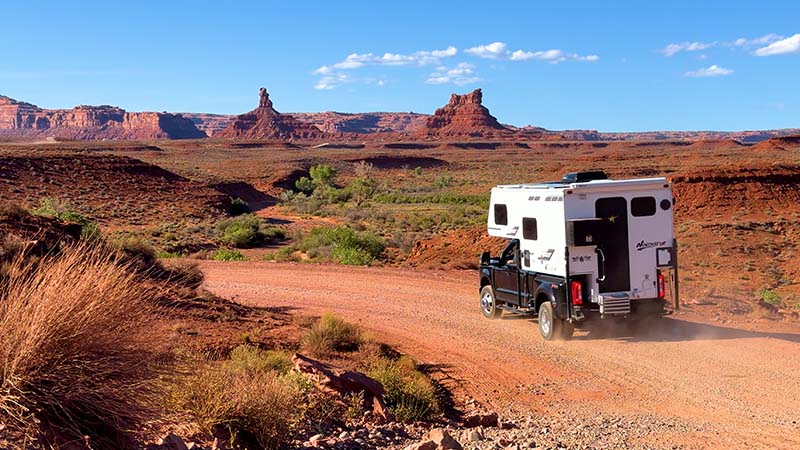
Then again, there were plenty of moments when I appreciated having a hot shower, a built-in toilet, and air conditioning in the middle of the desert. Maybe I’m getting just a little soft. If that’s true, so be it.
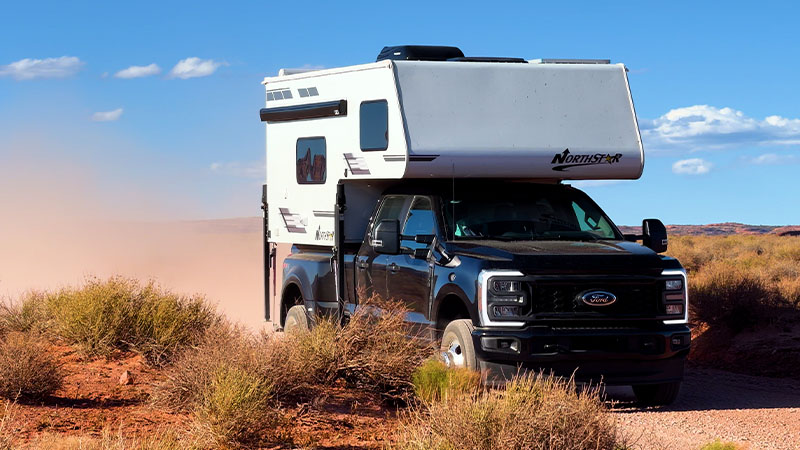
After more than 5,000 miles and fifty nights on the road, my first extended experience in a hard-side truck camper has been overwhelmingly positive. More importantly, the Night Hawk helped remind me that comfort and adventure don’t have to be mutually exclusive.
For more information about Northstar Campers, visit northstarcampers.com. Click here to request a free Northstar brochure.