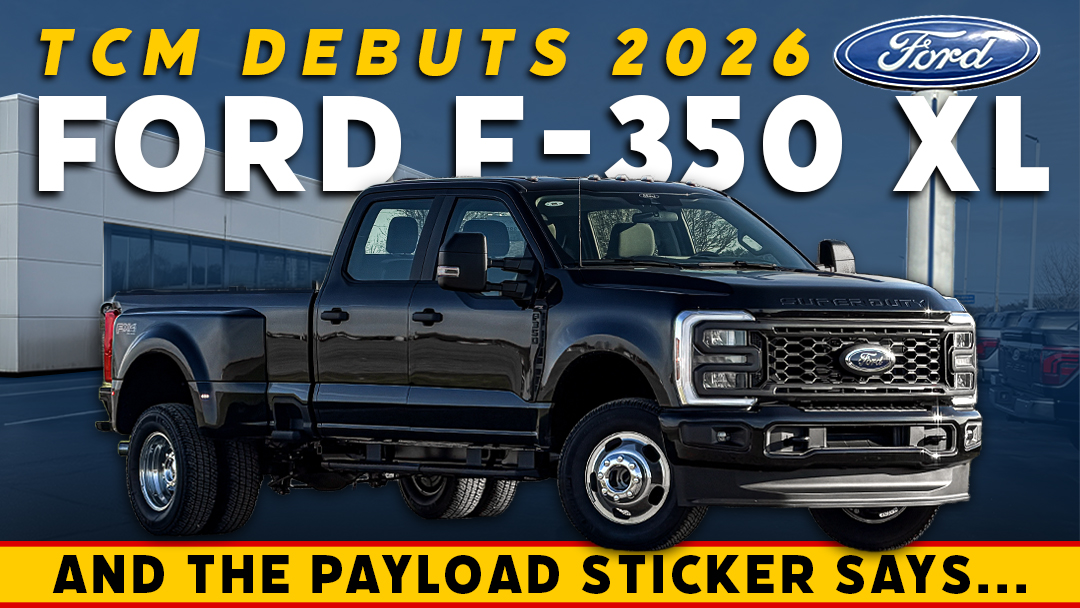
Truck Camper Magazine’s Eric and Sarah Hyde reveal their new truck: a 2026 Ford F-350 XL. Here’s why they chose Ford, how they configured their truck, and the thinking behind each decision. And the payload sticker says…
Since 2014, Truck Camper Magazine has been a Ram household. Gordon and Angela have collectively driven more than 150,000 miles in two Ram 3500s while publishing across the country. When the people who have lived and breathed truck campers for over twenty years say, “These trucks work,” you tend to listen.
And yet, Sarah and I ended up with a Ford. Leave it to the new kids to show up and mess with a perfectly good track record.
Before Ram owners (and our bosses) start sharpening their pitchforks, I should clarify something. Every truck brand has advantages and disadvantages on paper, but our decision ultimately came down to something a lot less scientific: family history.
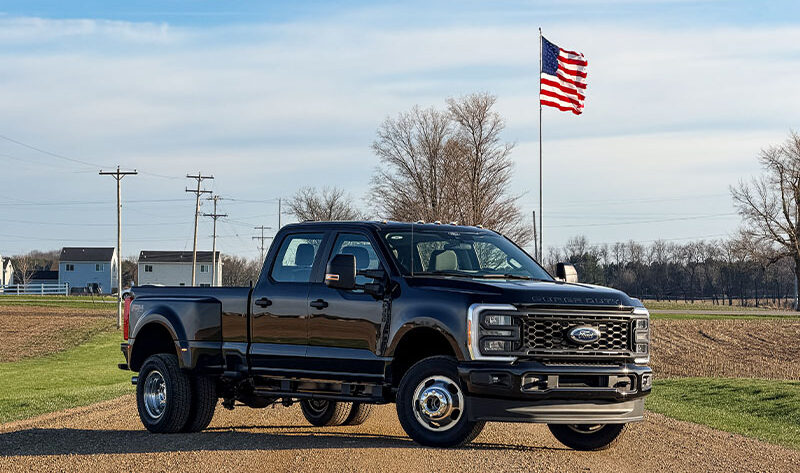
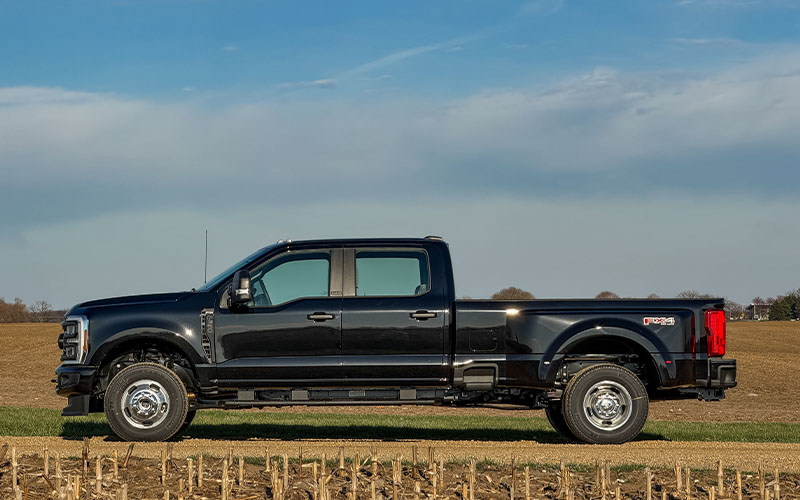
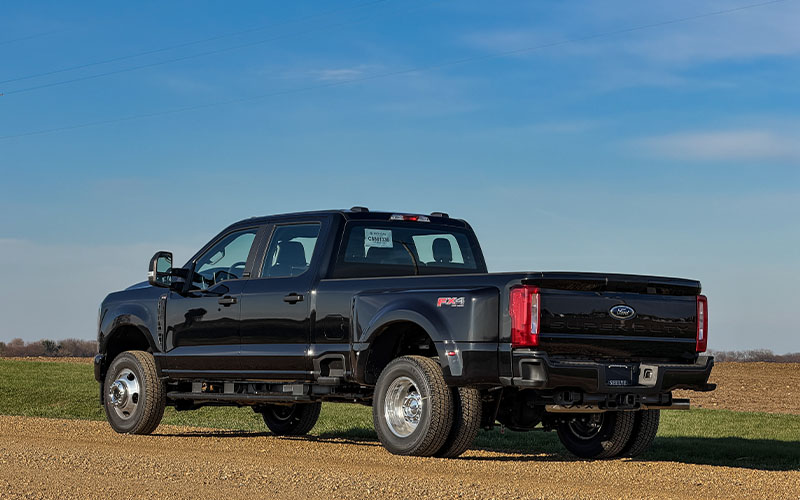
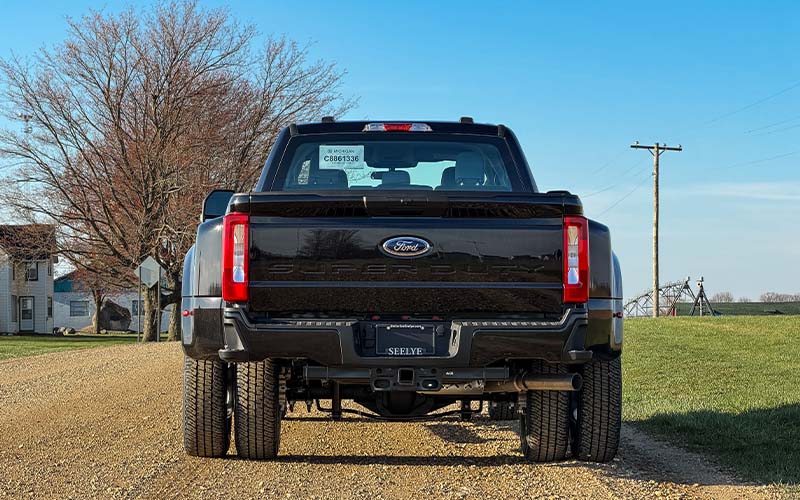
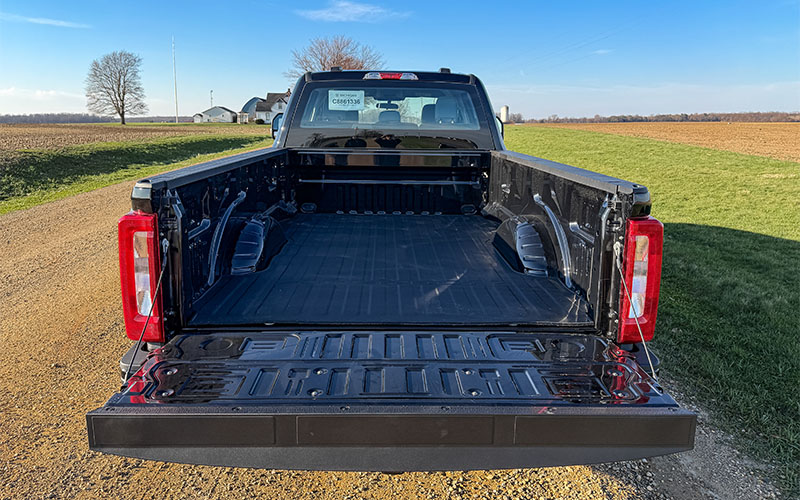
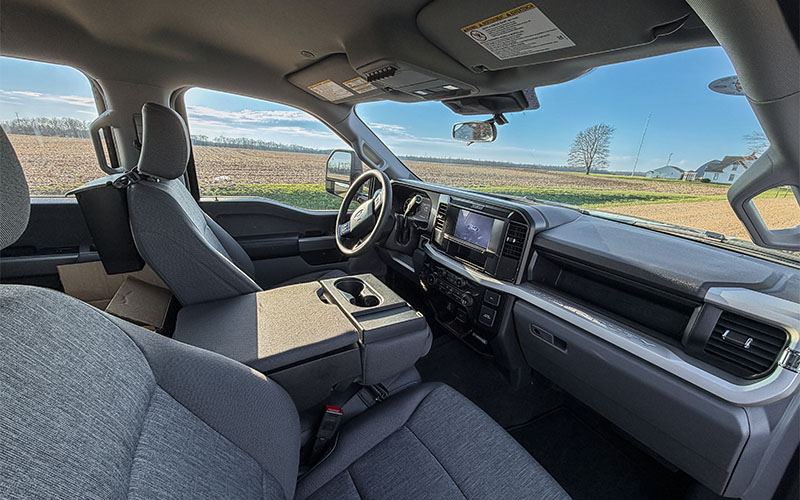
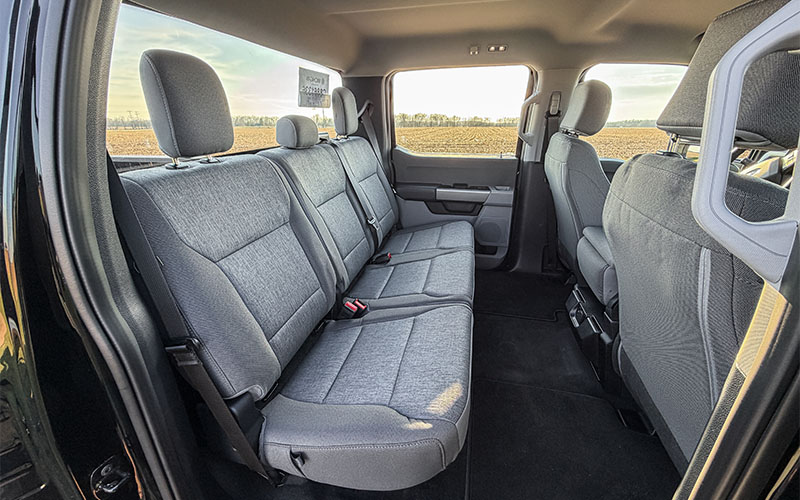
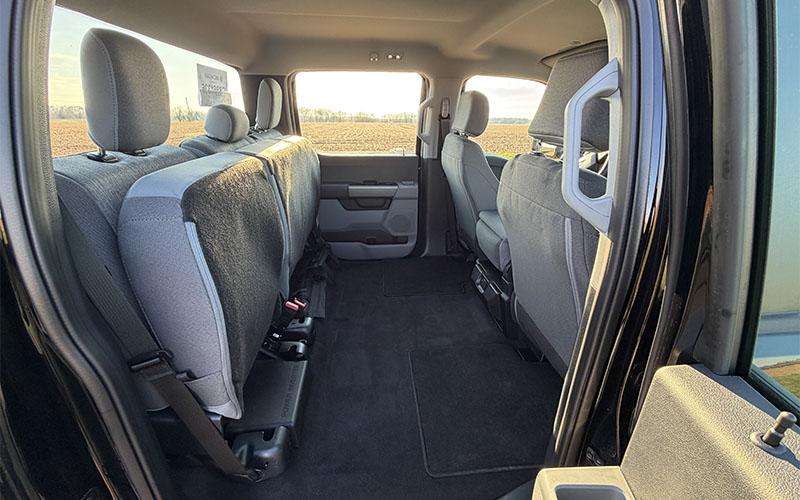
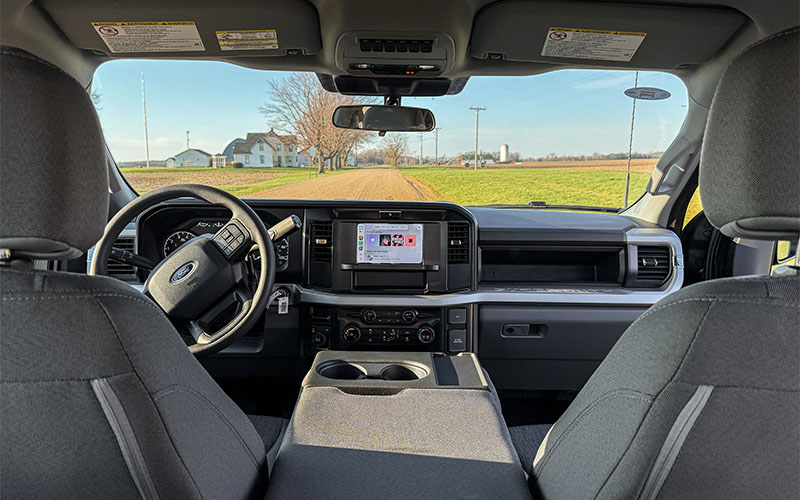
Our new 2026 Ford F-350 XL
All four of my grandparents grew up in Detroit during the golden age of the Motor City. Grandpa Hyde worked in the Livonia Transmission Plant at Ford for more than forty years. Grandpa Pfeffer delivered milk to Ford factory workers when the company was producing B-24 bombers during World War II.
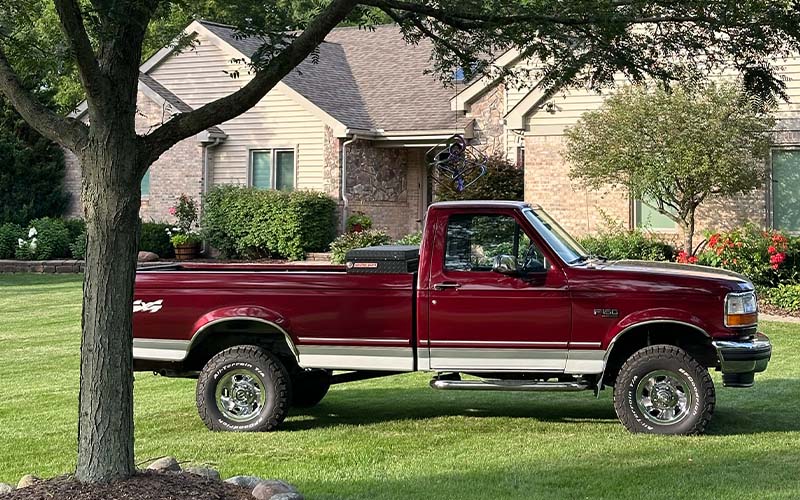
Grandpa Hyde’s 1995 Ford F-150 XLT
Today, two of my uncles and two cousins still work for Ford. In the Hyde family, you drive Ford trucks, or you get roasted at Thanksgiving.
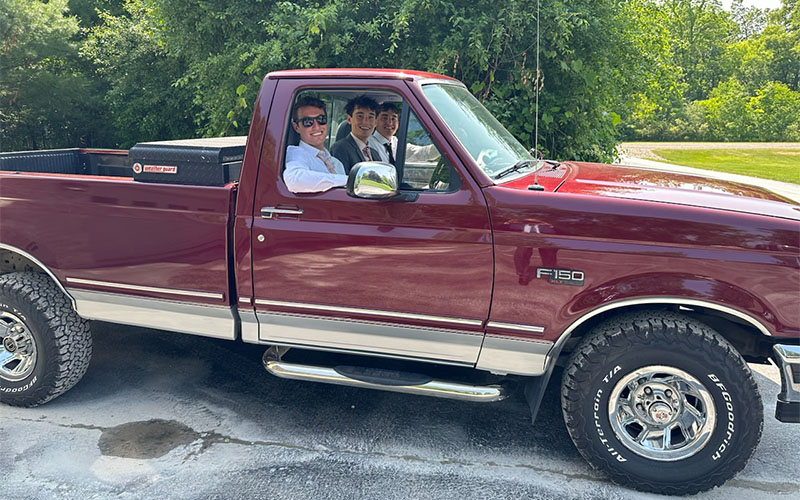
Hyde brothers—Eric, Aidan, Kevin—in Grandpa’s Ford
Unfortunately, my personal history with Ford trucks hasn’t exactly been “Built Ford Tough.” In the last fifteen years, I’ve owned three Fords. Two of them have left us stranded in remote locations, followed by a frequent regimen of shop visits.
Sarah and I were now faced with the largest vehicle purchase of our lives. Could we trust the family-backed brand that has let us down, or was it time to go another direction? Let’s review the evidence on a drive down memory lane.
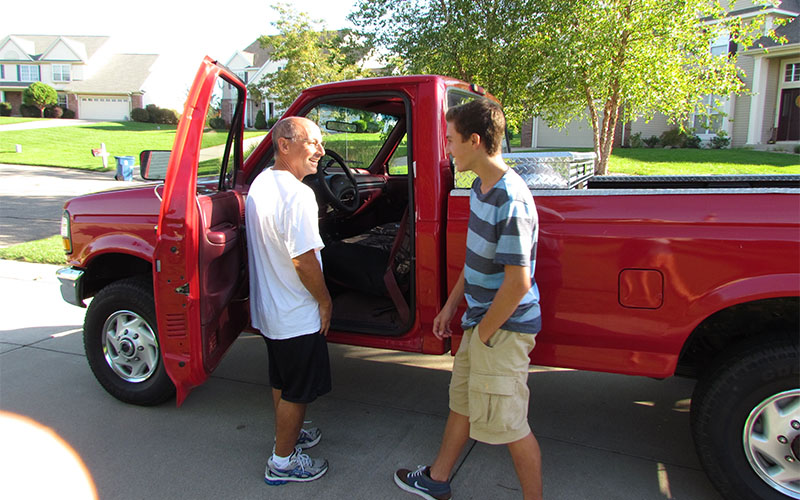
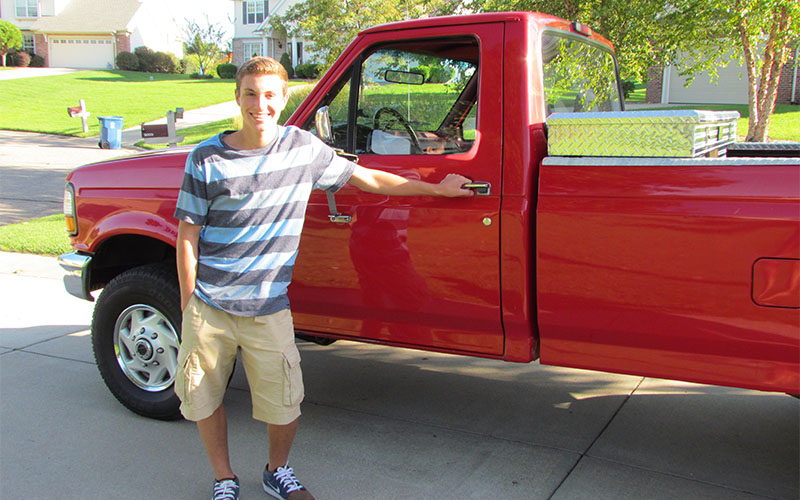
Eric’s Dad handing over the keys to his 1996 Ford F-250
My first truck was a bright red 1996 Ford F-250 single cab with a 5.8-liter gas engine. At sixteen years old, this truck took the adolescent beating you might expect from a kid growing up in rural Michigan—drifting snow-covered backroads, burying it to the frame in muddy fields, and learning the valuable life skill of getting unstuck from places I definitely shouldn’t have driven into. I absolutely loved that truck. I wish I’d never sold it.
Years later, Sarah and I purchased a 2008 Ford Econoline E-450 school bus and converted it into a skoolie RV. For the sake of this story, we’re counting it as a truck.
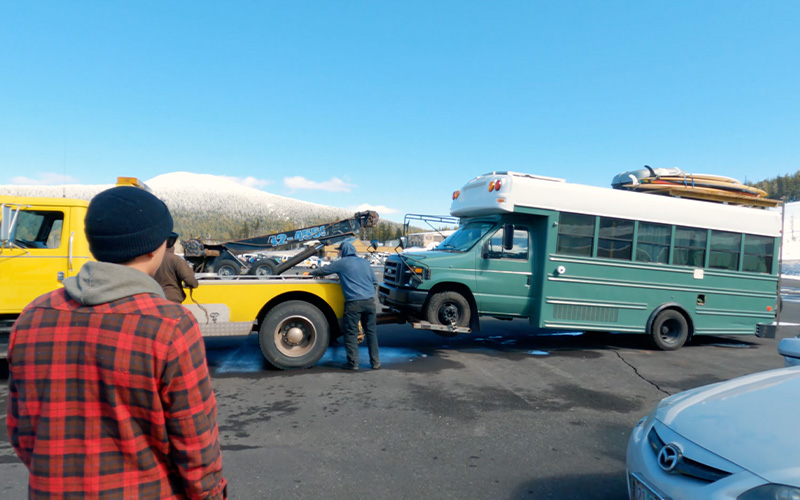
Ford E-450 being towed out of the Mount Bachelor parking lot
Under the hood was the infamous 6.0-liter Power Stroke diesel. The engine had power, and lots of it. Reliability? That is up for debate.
During the three years we owned the bus, we replaced the EGR system, head gaskets, injectors, both turbos, and several other components that I’ve blocked from my memory. We learned a lot about diesel repair during that chapter of our lives.
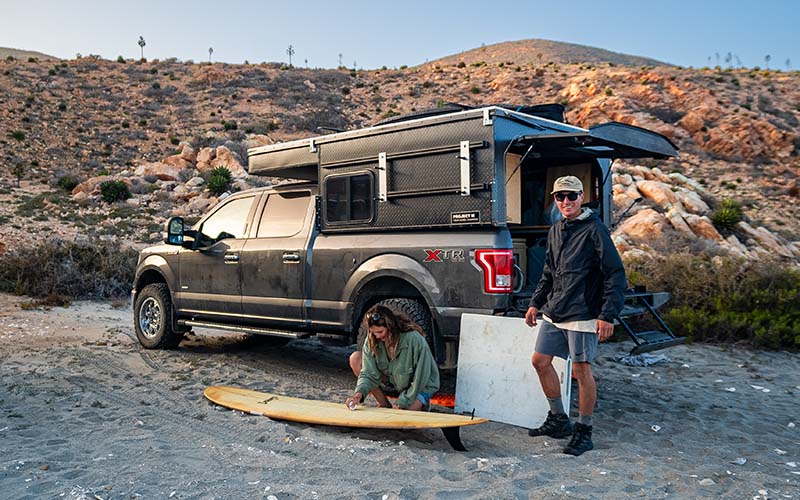
Camping on a remote Baja beach in our Ford F-150 and Project M
After falling in love with truck campers and moving back into a stationary home, we sold the bus and bought a 2015 Ford F-150 with the 3.5-liter EcoBoost gas engine. We got a lightweight Four Wheel Campers Project M and kept our setup minimal.
Sarah had sworn off turbocharged vehicles after our experience with the diesel. I convinced her that the EcoBoost would be different; better fuel economy, plenty of torque, and modern engineering. It looked great on paper.
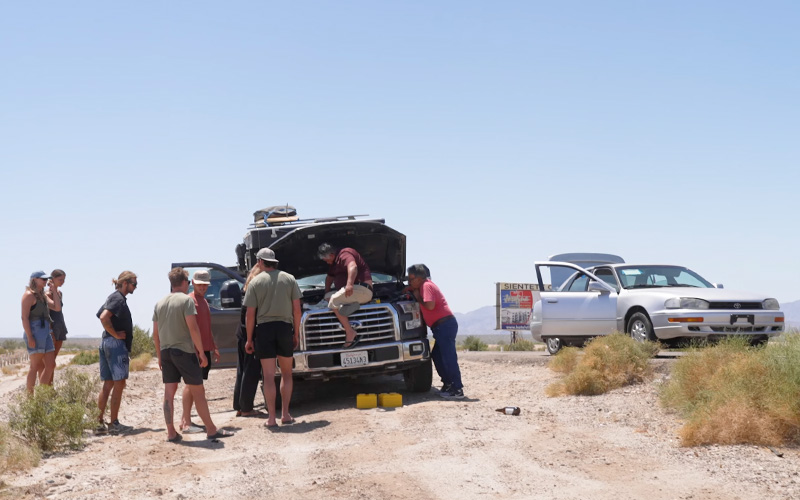
Then our truck broke down in Baja. We were 600 miles south of the border and my dash lit up with more warnings than I’ve ever seen. The gas pedal was useless. There we sat, pulled over without service.
Less than five minutes later, a car slowed down and stopped next to us. A man introduced himself as a Trophy Truck Mechanic before revealing a trunk full of tools. All of a sudden, he identified the problem and was inside our engine compartment.
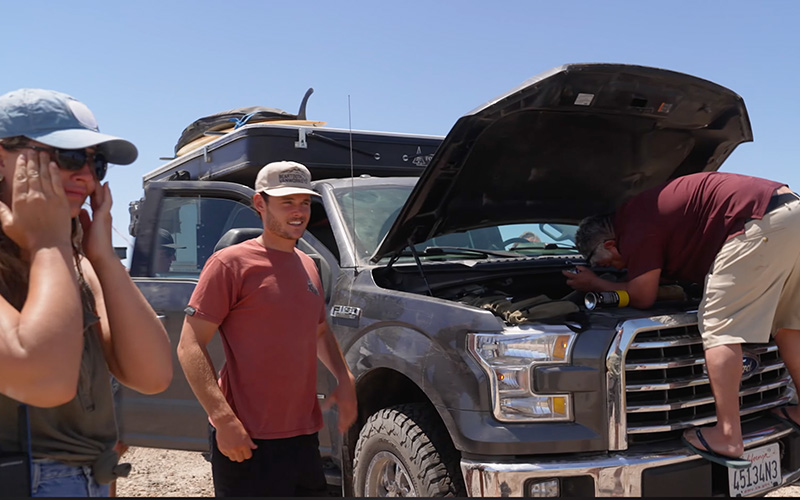
Sarah in despair (left), our friend Connor (center), and the friendly mechanic under the hood
Thanks to him, we were able to limp to the border the next day. We ditched our F-150 in the first shop we could find in Calexico and hitched a ride home. The truck proceeded to spend six months in and out of repair shops.
At this point, most rational people would probably avoid Ford trucks entirely. Which brings us to the obvious question: Eric, why would you ever trust Ford again?
Then our lives changed. Our new roles with Truck Camper Magazine would mean spending over six months each year traveling, working events, attending truck camper rallies, visiting factories, and exploring destinations across North America.
We needed a reliable truck capable of carrying a camper that would support long-term travel. Time to go truck shopping, again.
We set out to find a truck that would match the widest number of future demo campers, while also considering the size of camper required for long-term travel and full-time magazine work.
For six months of annual travel with two people working full-time, a hard side camper with a bathroom and a good-sized dinette table became essential. Those were our must-have parameters: hard side, bathroom, dinette and table.
During our years with Four Wheel Campers, I became a huge fan of short bed trucks. They’re easier to park, easier to maneuver in cities, and more nimble off-road. The question was, could a short bed truck support the camper we needed?
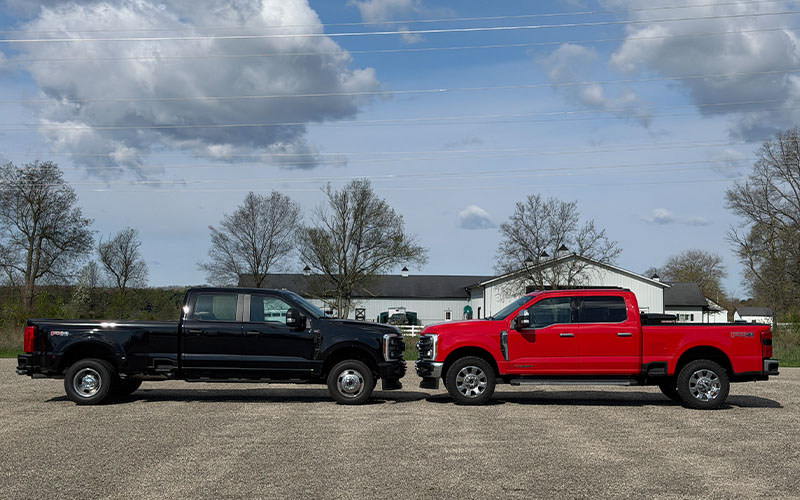
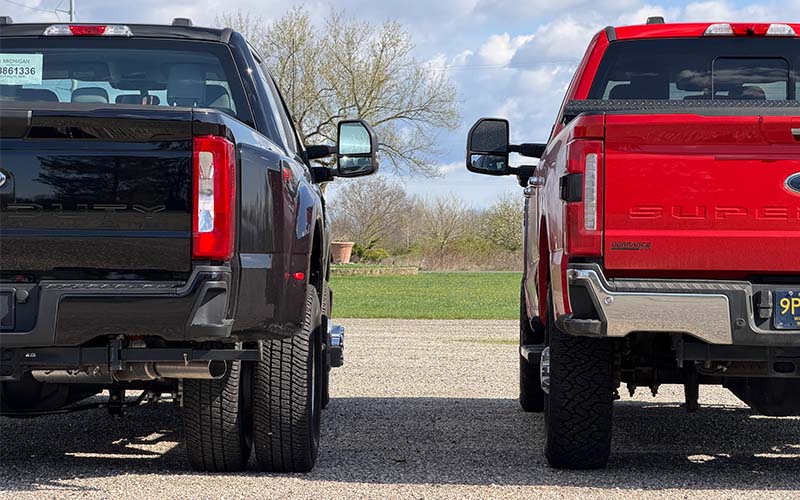
Two Ford Super Dutys: Long Bed and Short Bed
To help narrow things down, we did what anyone would do and visited our nearest truck camper dealer, Unique Campers RV, in Roseville, California. Our goal was to explore several short and long bed models and see if we needed the extra room. Standing inside these display campers, we tried to imagine daily life: cooking meals, working on laptops, and living comfortably for months at a time.
Then we thought about gear: backpacking essentials, snowboards, winter clothing, surfboards, wetsuits, fly-fishing gear, inflatable paddleboards, camera equipment, and recovery tools. When we leave Michigan for a six-month cross-country trip, we basically bring our entire gear closet with us.
Pretty quickly, we realized that short bed campers are great, but we needed to have the option for additional storage and space. Long bed it is.
Once we committed to a long bed, the next question was whether to choose a single-rear-wheel or dual-rear-wheel truck. Using the Buyers Guide, we narrowed our camper search to models with dry weights between 3,000 and 4,000 pounds. That firmly placed us in one-ton truck territory.
Personally, I was determined to make a single-rear-wheel truck work. I liked the idea of a narrower width and better off-road maneuverability. Even after asking Gordon and Angela for advice—to which they strongly recommended a dually—I still wasn’t completely sold on the idea.
My theory was simple: choose a camper with a wet weight less than 3,700 pounds, keep our gear under 500 pounds, and we’d stay within payload limits if we found the right truck.
Then Sarah started listing the weight of everything we planned to bring. We didn’t even finish the list before we exceeded our 500-pound limit. That was the moment Sarah looked at me and said, “Eric, we need a dually.” She was right.
Each of our previous trucks had high mileage. We bought them cheap, skipped the warranties, and hoped for the best. As you already read, that strategy did not end well. This time, we set hard parameters: nothing over 50,000 miles or over ten years old.
The search was on. As Sarah knows all too well, I love an excuse to truck shop into the wee hours of the morning. I scoured Facebook Marketplace, Craigslist, Autotrader, dealer listings, and everything in between. My goal was to familiarize myself with all of our potential options and get a strong sense of what a good deal looks like.
Used long bed, dual-rear-wheel trucks that met our year and mileage criteria were selling for around $45,000. Most of these trucks were base models and lacked camper-friendly packages. After bringing my findings to Sarah, she said, “Well, that can’t be that different from the cost of a new truck?” I hadn’t even considered going that route.
We found several new Ford and Ram trucks with basic trim levels selling for around $60,000. Sticker shock is an understatement. There’s no way. How could we justify a purchase of this scale at twenty-nine years old? This was a time to be frugal, save, and invest—not buy a dream truck.
Time to review the facts. Our home and office will be attached to this truck for more than six months of the year. We plan on driving over 20,000 miles per year for the foreseeable future. Mechanics, tow trucks, and hotels get expensive quickly in the event of a breakdown. Was the $15,000 difference between used and new worth the investment?
Right when we needed to make a decision, our Ford family connections came through in a big way. My cousin extended us a Ford family plan that halved the price difference. I started to consider the initial cost of a used truck: six new tires, basic 50,000-mile maintenance, and other potential repairs. I also looked at the benefits of ordering a new truck: factory warranty and the ability to select camper-friendly packages.
After a second visit to the dealership, Sarah’s first words when we got into the car were, “Buying new actually makes sense.” Wife approval achieved. We were ordering a new truck.
Based on our already exceeded budget, diesel was out of the question. However, gas might have been our decision either way. We still had scars from our Power Stroke experience with the E-450.
Gas trucks have fewer components, which makes repairs more affordable and mechanics easier to find. While diesel trucks provide double the torque, we won’t be towing a trailer and we don’t need to go blasting up the mountainside at ten miles per hour over the speed limit.
Yes, our gas mileage will be worse than that of an equivalent diesel truck. But over the course of this truck’s lifetime, the cost of gas could potentially even out with the saved maintenance costs. Time will tell.
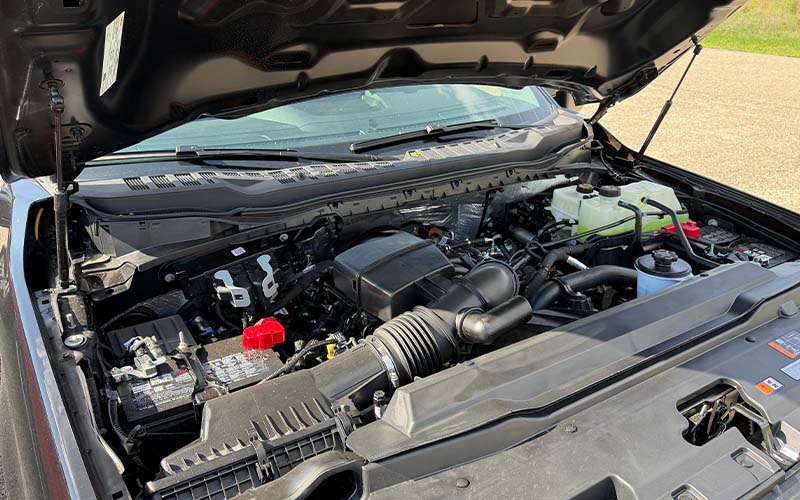
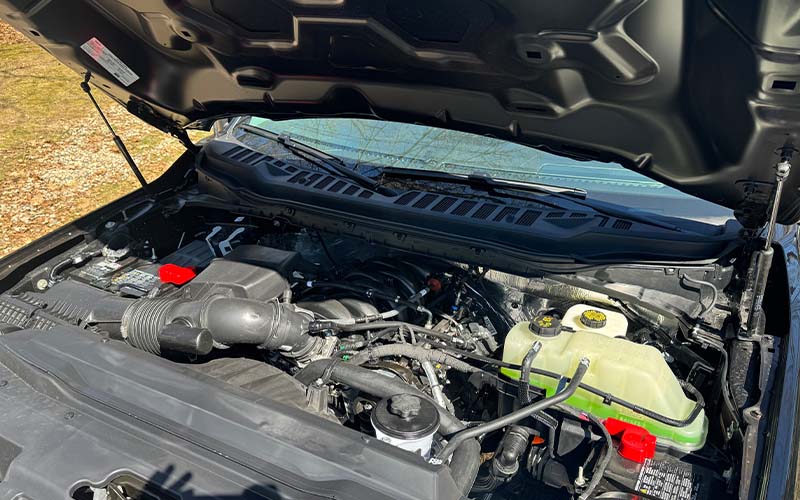
Ford offers two gas engines in the 2026 Super Duty lineup: a 6.8-liter V8 and a 7.3-liter “Godzilla” V8. The 7.3-liter produces more horsepower and torque, though it’s likely unnoticeable. The key difference for us came down to internal strength and reliability.
The 6.8-liter uses a cast-iron crankshaft.
The 7.3-liter uses a forged steel crankshaft.
Since this truck will carry a camper nearly 99 percent of the time, we wanted the stronger bottom end. Forged steel crankshafts handle stress and fatigue better and resist flex under heavy loads. The 7.3-liter is also the same gas engine used in Ford’s Class 4 and Class 5 commercial trucks.
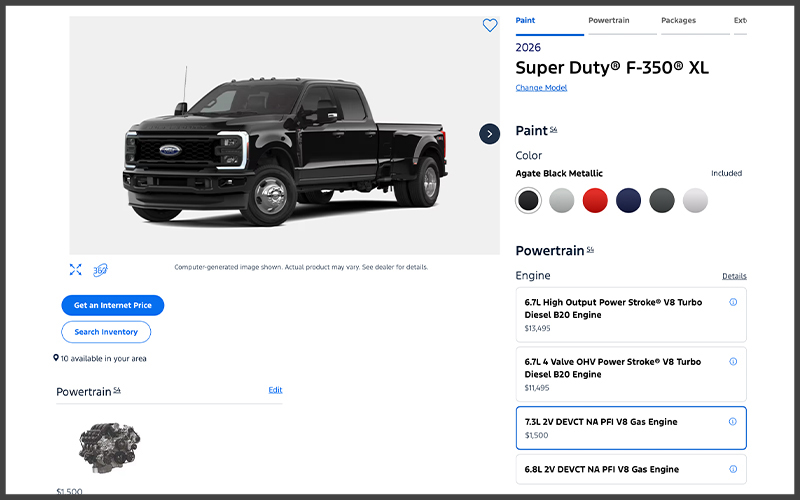
Will this actually make a difference? I have no idea. But it was worth the peace of mind. Godzilla it is.
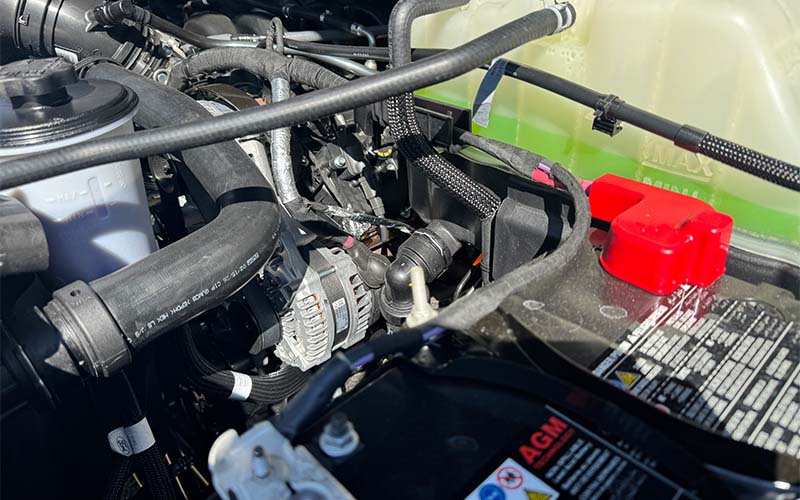
To keep the price down, we chose the most basic XL trim. However, the 7.3-liter engine requires the STX upgrade, which includes LED headlamps and fog lights, forged aluminum wheels, and body-color bumpers. It still looks like a work truck, but a slightly better-dressed one.
Four-wheel drive was a non-negotiable. Sarah and I chase snowstorms in the winter and seek out remote dirt roads and sandy beaches.
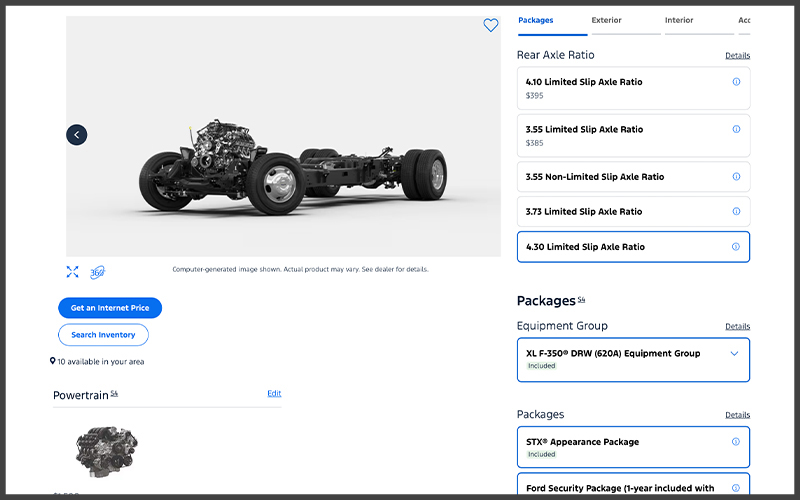
For the axle ratio, we opted for the 4.30 limited-slip differential. The deeper gearing delivers better low-end pulling power when hauling a camper. Combined with the 10-speed transmission, the 4.30 ratio helps keep the truck in its powerband and reduces gear hunting on grades.
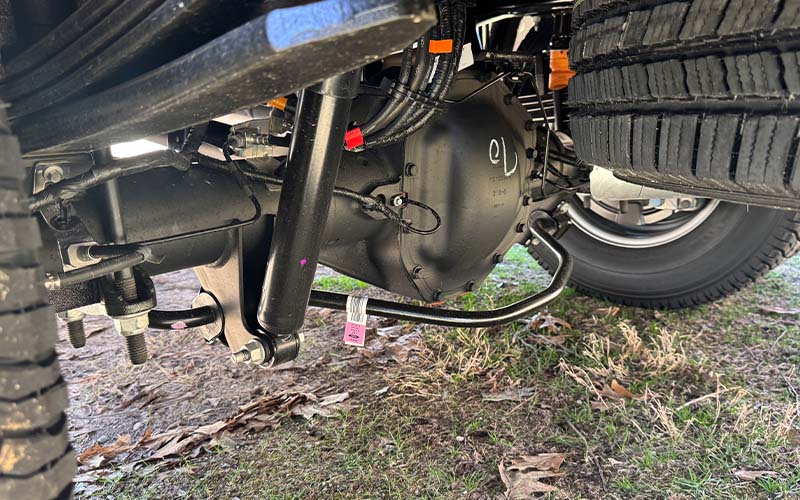
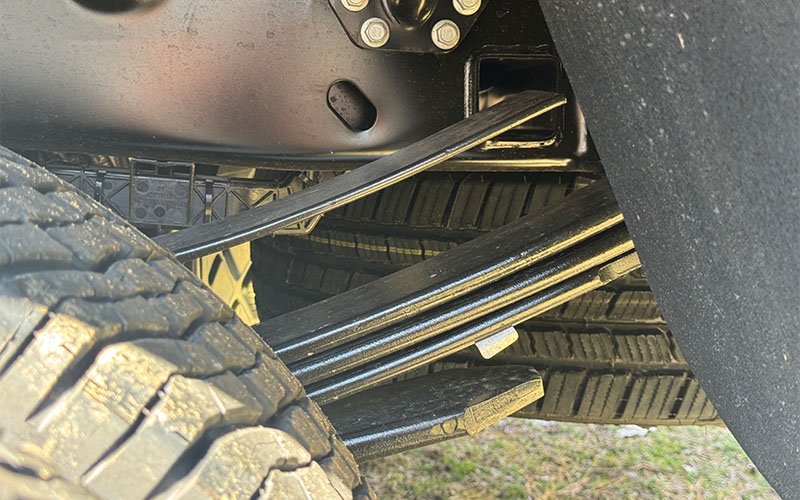
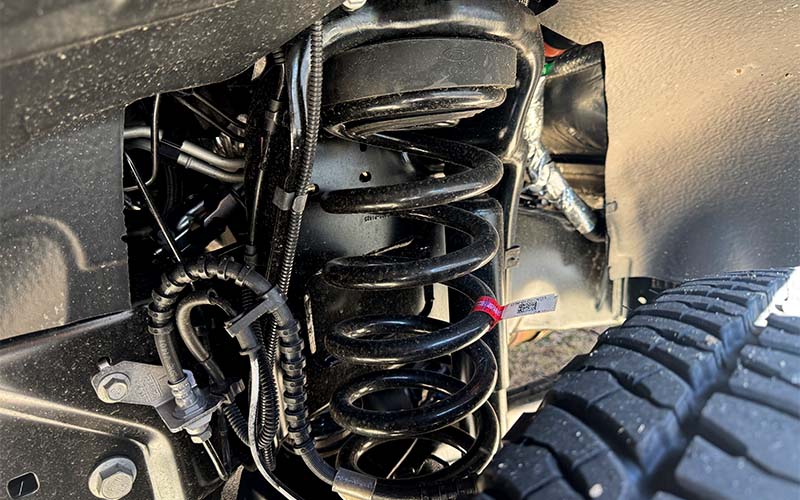
Rear sway bar included in Ford’s Camper Package
Ordering a new truck allowed us to add Ford’s Camper Package and Heavy Service Front Suspension Package. This includes beefier spring rates, a rear sway bar, and a slide-in camper certification. Improving the stability and handling for carrying a truck camper was a no-brainer.
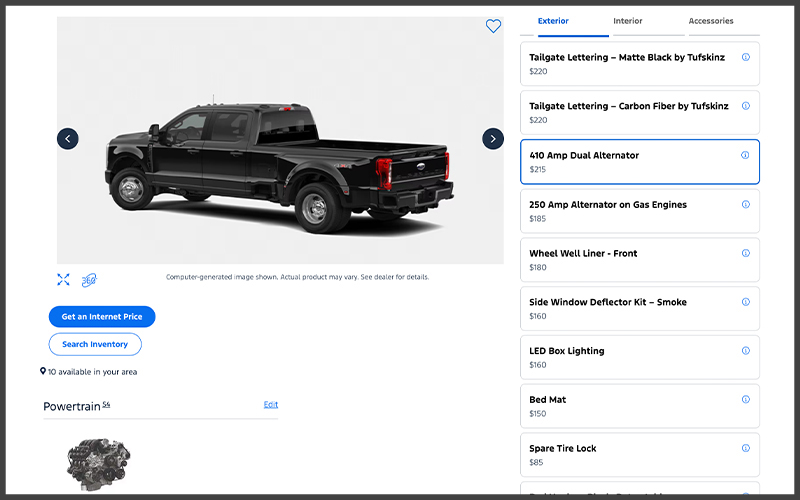
Finally, we added the 410-amp dual alternator system with dual batteries. Modern truck campers increasingly rely on DC-to-DC charging, and this setup ensures the truck will not be the limiting factor when recharging the batteries while driving. Yes, maintenance will eventually cost more, but the extra power being sent to the camper batteries will be worth it.
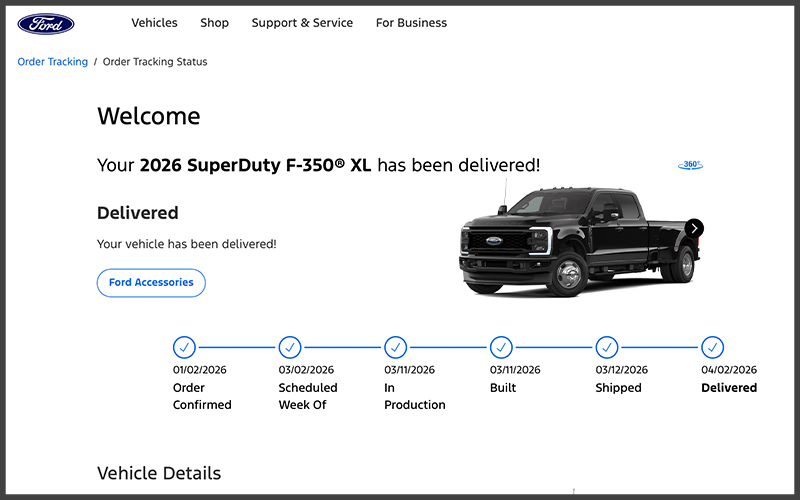
Four months later, we got an email from Ford. Delivered! My Dad quickly offered to drive us to the dealership. We took his Ford F-250, of course.
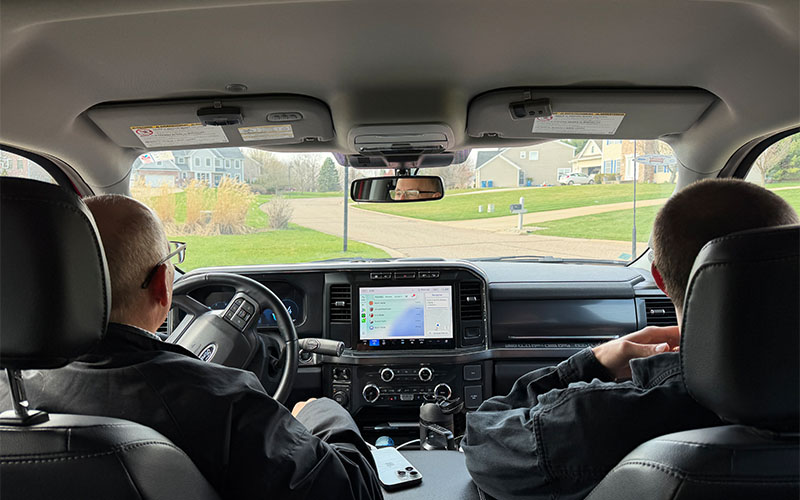
The very first thing I did when we got our new truck was open the door and look at the printed payload sticker. We expected to see a number over 6,300.
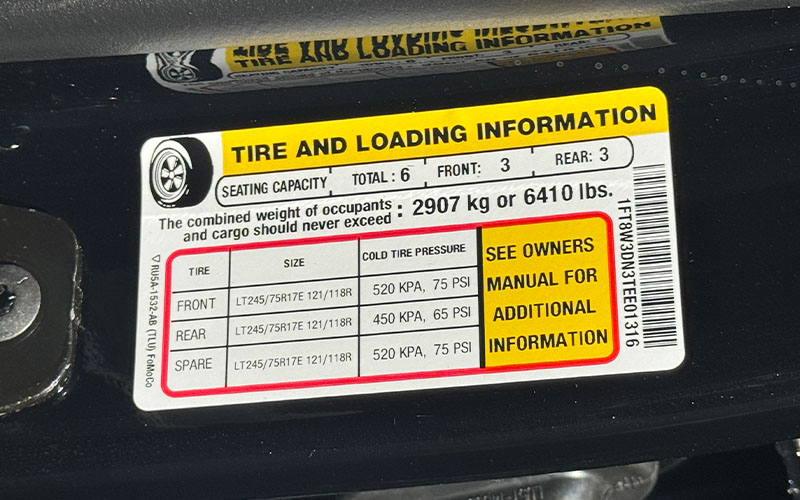
We were thrilled—6,410 pounds. This truck can support a huge variety of long bed campers. With our eyes set on large battery systems and tank capacities for off-grid camping, every pound counts.
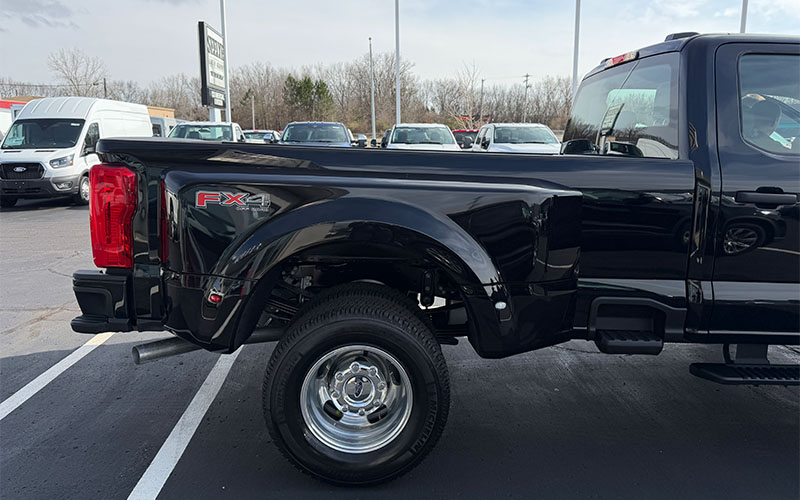
Sarah was jumping around like a kid who just unwrapped a big Christmas present. I was doing the same, only in my head. The excitement and nerves all made for an unforgettable experience.
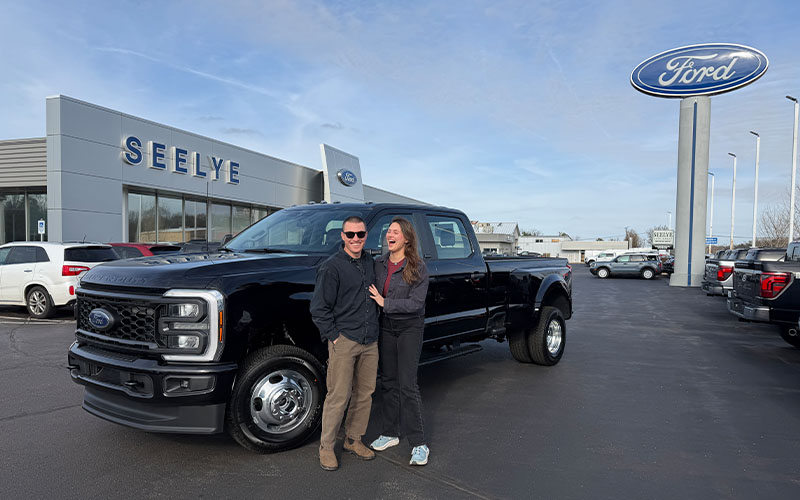
Ford, I’m officially declaring this truck as your last chance to prove yourself. This time, there’s no excuse of a prior owner, high mileage, or poor maintenance history. Let’s put this in baseball terms.
Our current batting average is .333 (1 for 3). Knock this one out of the park and we’ll be up to .500. But if we drop to a .250 average, we’re switching teams.
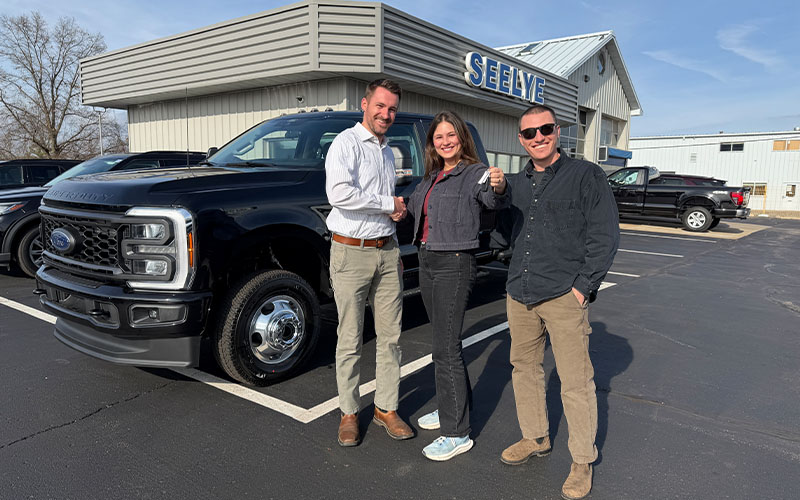
Getting the keys from our Commercial Sales Manager, Jared