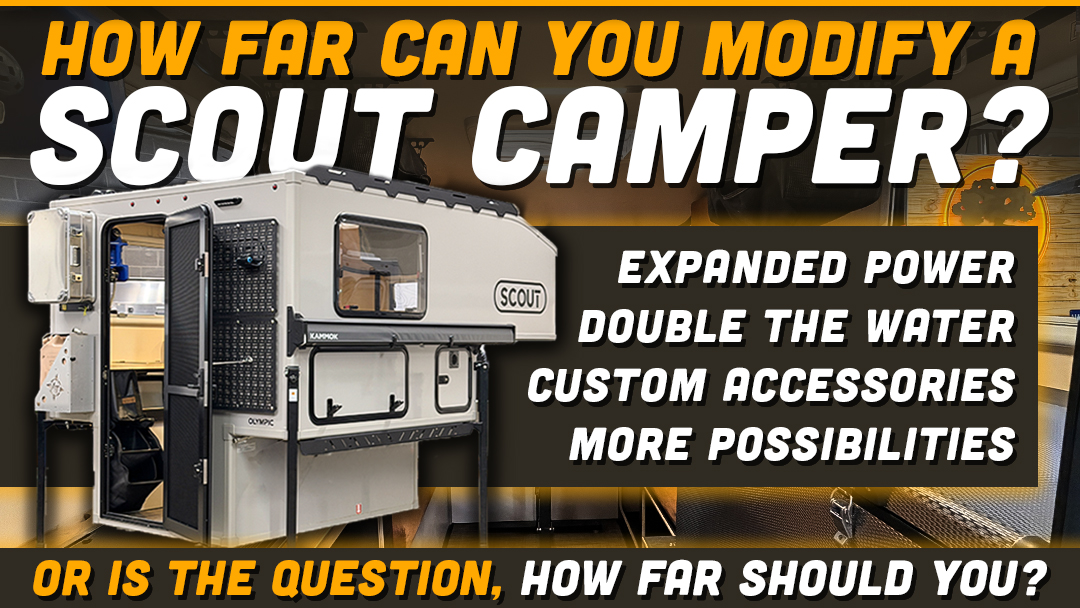
TCM encounters a heavily customized Scout Olympic featuring everything from a custom water system and water heater to upgraded power and heat. It left us wondering: just because you can modify a Scout this far, does that mean you should?
This past spring, the TCM team spent two months living out of our truck campers as we toured manufacturers, visited dealers, and attended Overland Expo West. Before we left, Gordon and Angela predicted the trip would challenge the way I thought about truck campers. Somewhere between the factory floors, campground nights, and thousands of miles, I realized they were right.
One of those moments came at Juniper Overland in Denver, Colorado. We had stopped to see what was new, tour their facilities, and catch up with the team. Sitting on the showroom floor was a Scout Olympic, a camper I’d walked through more than a few times over the years. At first glance, it looked familiar. But the longer I looked, the more obvious it became: this wasn’t a stock Scout.
Scout’s modular philosophy has always encouraged owners to make the camper their own, and Truck Camper Magazine readers have certainly embraced that idea over the years. We’ve seen custom kitchens, storage systems, bike racks, electrical upgrades, dog kennels, and countless other modifications. Every one of them solved a problem.
Is a hot water shower worth burning through propane faster? How much water capacity is really needed if you mostly camp on weekends? How much battery capacity is enough before you’re carrying power you’ll never use?
There isn’t a right answer, and that’s exactly what makes this Scout Olympic so interesting. Let’s walk through it one upgrade at a time and decide which ideas belong on your camper, and the pros and cons of taking a modular Scout to the limits.
When Adventurer Manufacturing debuted the Scout Olympic in 2020, they zigged while much of the truck camper industry zagged. The idea was straightforward: build a 100 percent composite camper with a truly modular interior where nearly every component was removable, fit through the door, and could be upgraded or reconfigured.
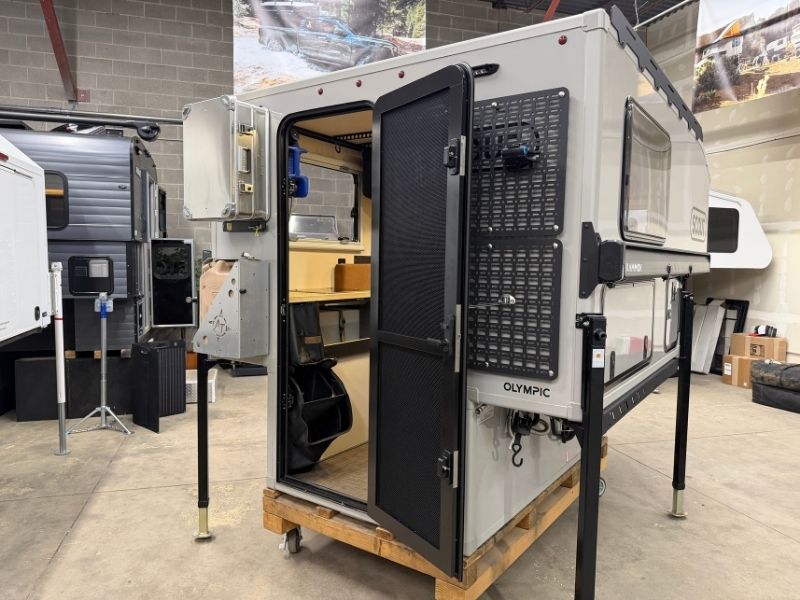
Juniper Overland’s modified Scout Olympic
That philosophy isn’t for everyone, and Scout never pretended it would be. If you want built-in tanks, fixed appliances, or a dry bath, other truck camper options deliver exactly that. Scout starts somewhere else. It gives you the essentials, sends you camping, and trusts that time on the road will tell you what belongs in your camper and what doesn’t.
Standing in Juniper Overland’s showroom, I realized this highly modified Scout Olympic wasn’t departing from Scout’s philosophy. In many ways, it was the natural extension of it. Every alteration reflected a decision someone had made after real nights in real campsites. Whether those same decisions make sense for the way you camp is an entirely different question.
Scout made a conscious decision not to offer a wet bath or factory hot shower in the short bed Olympic. For some buyers, it’s a deal breaker. For others, it’s a compromise they’re happy to make in exchange for a camper that can go farther down the trail.
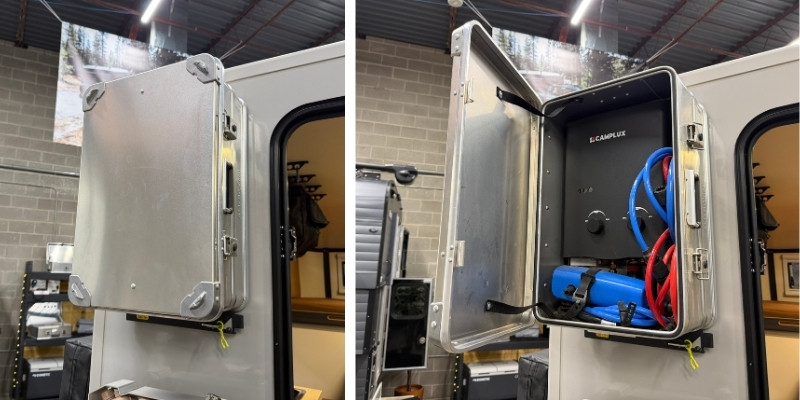
Instant hot water system closed (left) and open (right)
The first thing I noticed on this Scout Olympic was the custom exterior shower system mounted to the rear wall. Inside the aluminum storage case was an on-demand water heater, a 12-volt pump, plumbing connections, and a showerhead. A jerry can below supplied water for the system, leaving the camper’s onboard fresh water untouched.
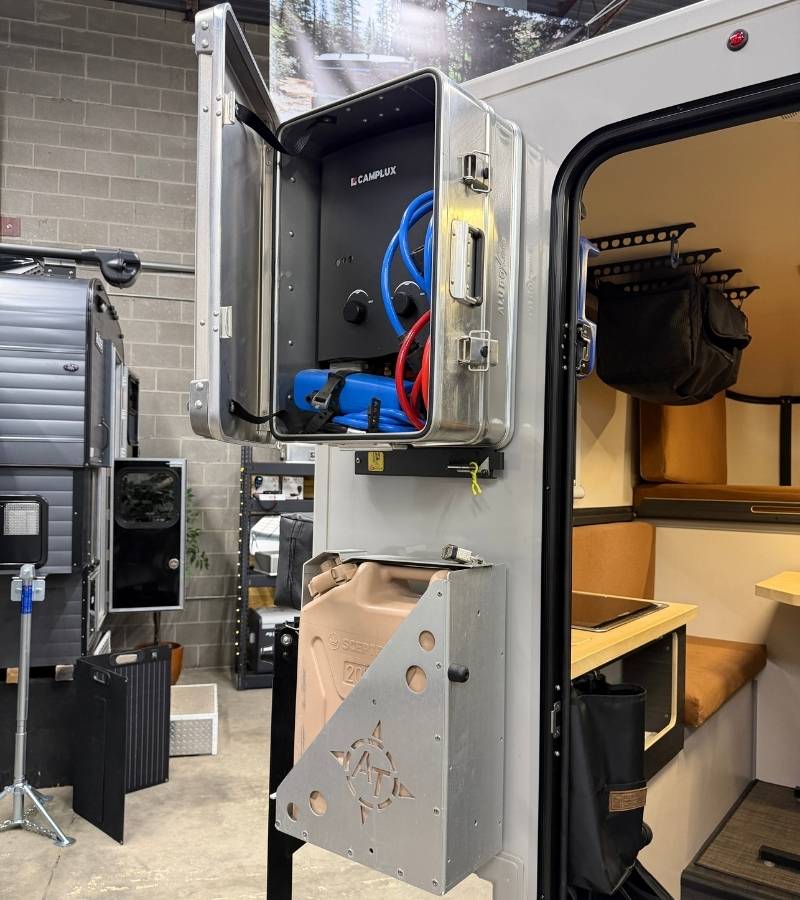
You’re probably asking the same question we did: “What about privacy?” Mounted on the driver’s side of the camper is an Alu-Cab Shower Cube. When deployed, it creates a private space for the exterior shower and can also be used as a changing room or privacy enclosure for using a portable toilet.
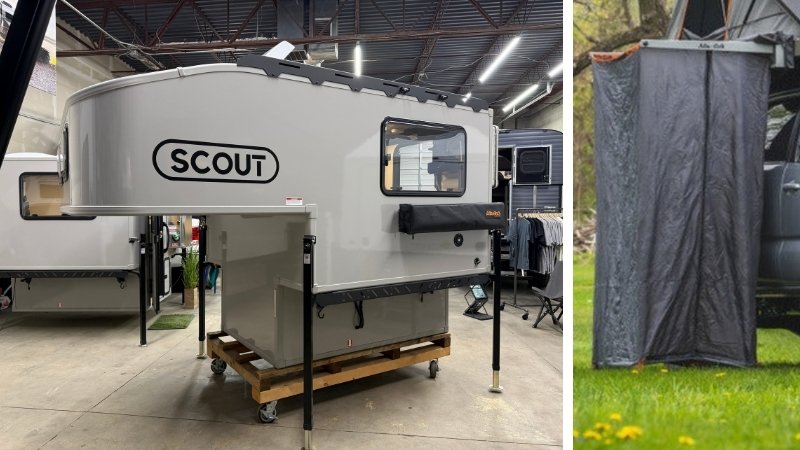
Alu-Cab Shower Cube stowed (left) and deployed (right)
This is where the conversation gets interesting. If you’re coming from a truck camper with a wet or dry bath, an outdoor shower might feel like a step backward. If you’re moving up from a rooftop tent or ground tent, washing off with hot water after a dusty trail ride will feel like a luxury.
Of course, all of this comes at a cost. You’re adding weight, complexity, and another system to maintain. Is that tradeoff worth it? If your trips revolve around campgrounds with bathhouses, probably not. If your idea of camping includes a remote off-grid campsite, this modification makes a lot more sense.
I’ll admit it. I’ve never fully understood the fascination with MOLLE panels. They seem to be everywhere in the overland world, loaded with fuel cans, shovels, axes, and enough gear to survive a zombie apocalypse. I’ve often wondered how much of it solves real problems and how much it simply looks the part.
A few days before we stopped at Juniper Overland, I found myself rereading Truck Camper Magazine’s Camper Mounted Bike Rack article. I was trying to figure out the best way to carry my mountain bike without adding a heavy swing-out hitch to the back of my truck. Then I spotted the Scout Olympic’s rear mounting plate with two fork mounts. Problem solved.
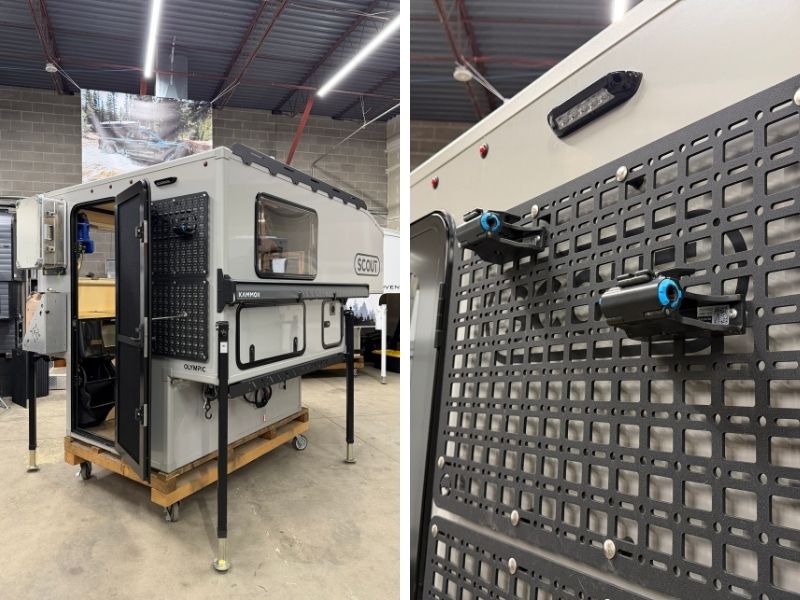
Rear wall mounting plates behind entry door (left) and mountain bike fork mounts (right)
Each plate incorporates 1/4-inch slots, 3/8-inch holes, and MOLLE-compatible attachment points that can carry accessories like Trasharoo bags, RotopaX containers, and Maxtrax recovery boards. Some owners will use every inch of that flexibility. Others won’t bolt a single thing to it.
By mounting my bike directly to the camper, I could eliminate roughly fifty pounds of swing-out hardware, shorten the overall length of the truck, and never have to swing a rack out of the way just to get inside the camper. Suddenly, I wasn’t looking at mounting plates as just another overland accessory.
One of Scout’s more unconventional decisions was to skip the built-in fresh water tank altogether. Instead, the Olympic offers a wall-mounted 4.9-gallon LifeSaver Jerrycan. If you’re a solo traveler or weekend camper, you may never need additional water capacity.
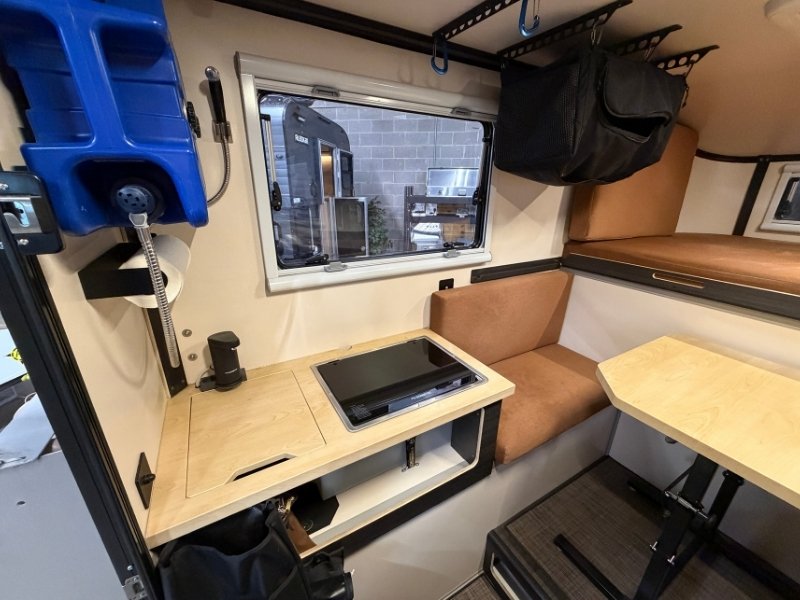
Scout’s blue wall-mounted LifeSaver Jerrycan (top left)
Spend enough time off-grid, however, and water has a way of changing your priorities. Suddenly, you’re thinking less about saving weight and more about spending one extra day at camp before leaving to find a spigot.
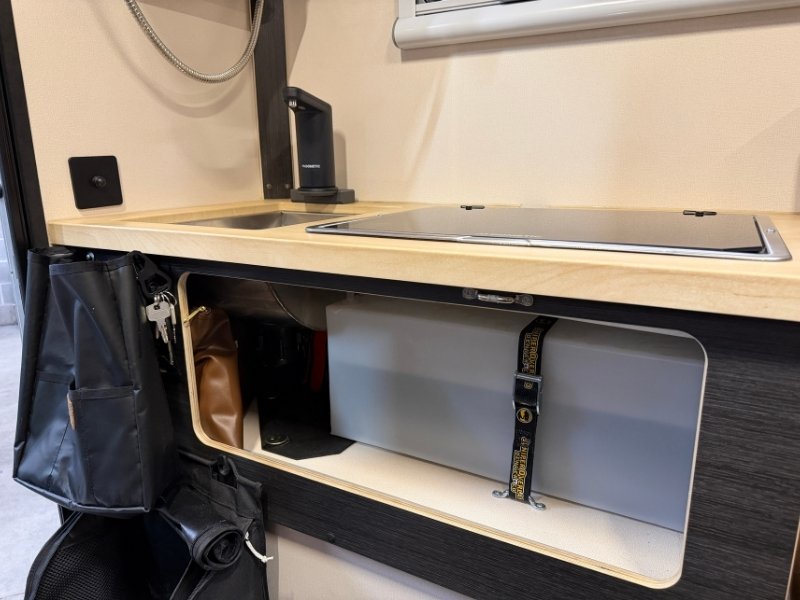
Juniper added a 6.2-gallon fresh water tank beneath the countertop, more than doubling the Olympic’s water capacity. A rechargeable Dometic GO faucet draws from the tank, while the plumbing disappears beneath the kitchenette. Outside, a lockable fill port gives the camper a familiar RV-style water hookup.
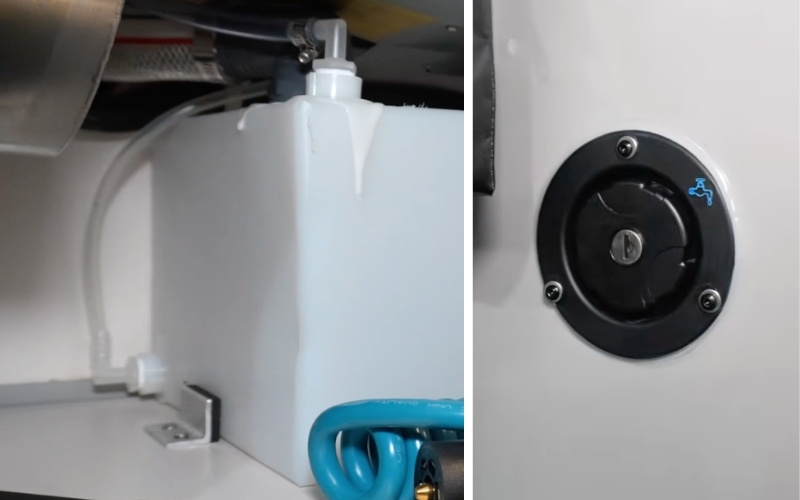
Kitchenette water tank components (left) and exterior fill port (right)
As I looked at the fresh tank, I found myself doing the math. When filled, the 6.2-gallon water tank will weigh a little over fifty pounds. Combined with Scout’s 4.9-gallon LifeSaver Jerrycan, that’s over ninety pounds of fresh water riding on the driver’s side. That’s before you’ve packed food, clothing, or any of your camping gear. Is that too much? It depends.
If most of your trips begin on Friday evening and end Sunday afternoon, I’d probably skip this modification and enjoy a lighter camper. If you’re the type who disappears into the backcountry for a week, fifty pounds starts to sound like a bargain. Like nearly every modification on this Scout, the value isn’t measured in pounds or gallons. It’s measured by how you camp.
As someone who has spent several nights chasing fresh snow in a truck camper without a furnace, I’ve learned one thing the hard way: it only takes one dangerously cold night to wish you had ordered one.
Scout offers an optional diesel heater mounted to the exterior rear wall. If you skipped that option when ordering your camper, I have some good news. You aren’t limited to portable heaters or piling on another blanket.
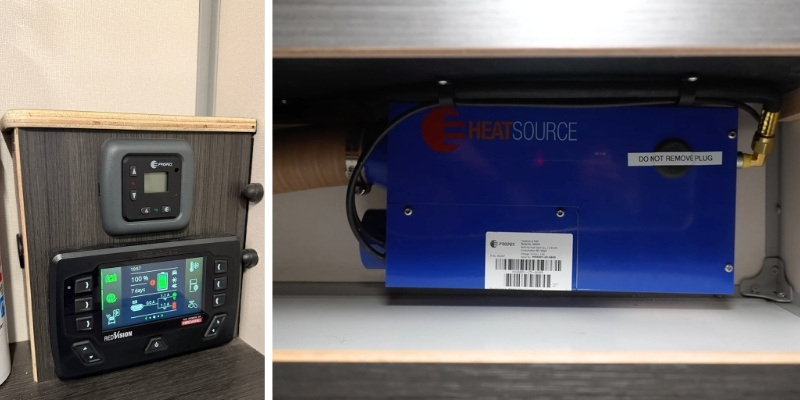
Propex digital thermostat and REDARC RedVision display (left), Propex HS 2000 heater (right)
While walking through this Scout Olympic, a digital thermostat caught my attention. Without it, I probably would have walked right by the Propex HS 2000 furnace hidden in the back of the lower passenger-side cubby. Juniper tied the furnace into the camper’s existing propane system, so instead of carrying a second fuel source, it shares the propane already onboard for the cooktop.
A few years ago, when I lived in Southern California and spent most weekends camping along the coast, I wouldn’t have spent the money on a furnace. But after chasing powder days and waking up to frozen water bottles more than once, I wouldn’t go truck camping without one.
Scout’s modular philosophy recognizes something most of us eventually learn: the way we camp today probably won’t be the way we camp ten years from now. The best modifications often come after spending a few dozen nights on the road.
Electrical systems have become one of the most expensive decisions in truck camping. If you talk to a variety of truck camper owners, you’ll quickly discover that everyone has a different opinion on what is “enough power.”
During our two months on the road, we met a couple running their business full-time from a truck camper, relying on laptops, Starlink, cameras, and video calls throughout the workweek. Another owner eliminated propane entirely, choosing to cook, refrigerate food, and power every appliance with electricity.
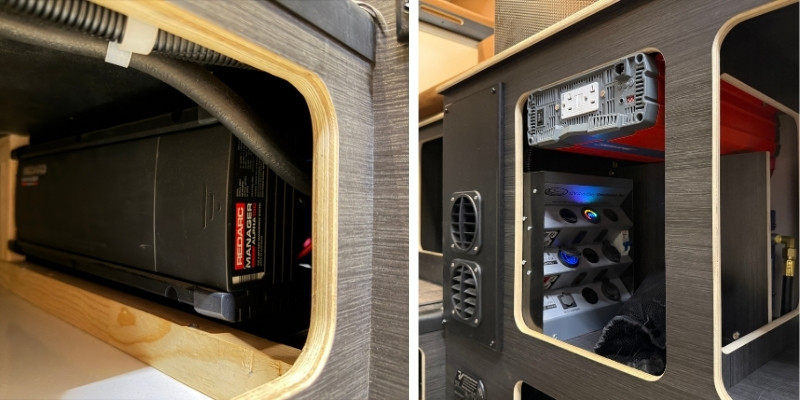
REDARC Manager Alpha 75 (left) and 2,000-watt REDARC inverter (right)
This modified Scout Olympic reflected one of those more power-hungry camping styles. It featured a REDARC power system, complete with the RedVision display and control panel, a REDARC Manager Alpha 75, a 2,000-watt REDARC inverter, an additional 210Ah of lithium batteries, and 200 watts of solar.
Not every Scout needs this level of electrical capacity. A weekend camper’s needs are different from a remote workers. A family’s priorities are different from a solo traveler’s. The “right” electrical system is determined by what you need it to do.
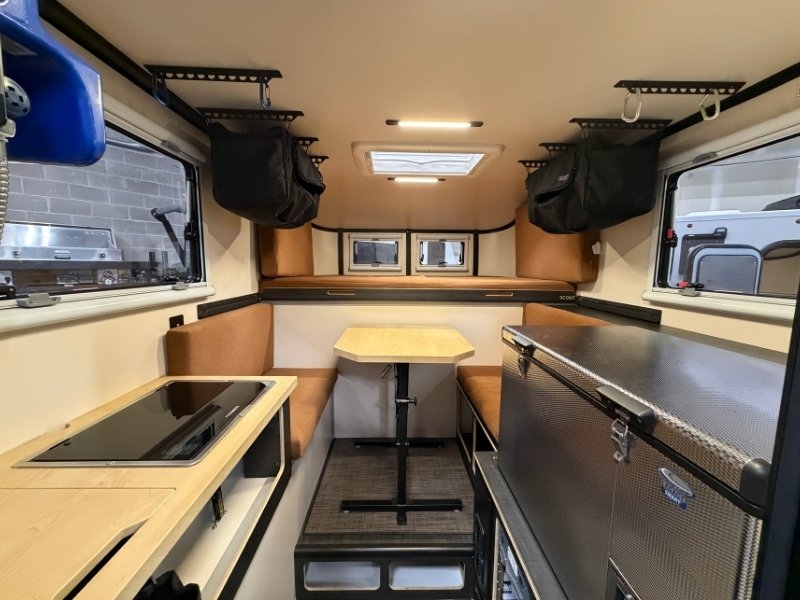
By this point, a pattern had emerged. Scout provides the foundation, but it’s up to each owner to decide what modifications, if any, make sense.
Will every Scout owner want all of these modifications? Of course not. If this Scout Olympic belonged to me, I’d build it one way. If it belonged to you, you’d probably build it another. If everyone built their Scout the same, Scout’s modular philosophy would have missed the mark entirely.
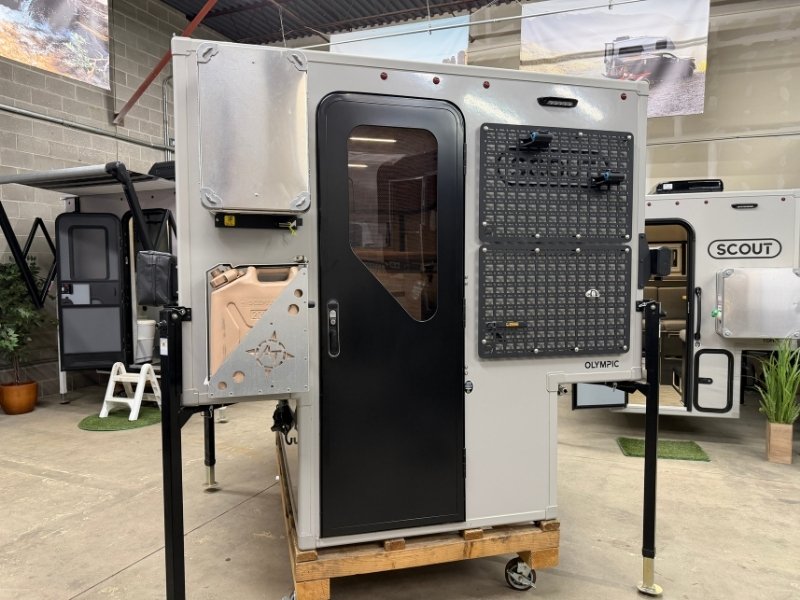
This Olympic started exactly as Scout intended: lightweight, simple, and ready to be shaped by experience. Every modification came from time spent camping, a problem encountered, and a decision to solve it.
Whether it’s an exterior shower after a muddy hike, additional water capacity for longer stays off-grid, or simply leaving the camper exactly as it came from the factory, there’s no wrong answer. The best Scout is the one shaped by the way you camp.