Stacey and Gary Quimby have spent years helping RVers prepare for Alaska through RVing to Alaska, one of the largest and most respected online communities dedicated to the journey. Stacey also serves as Managing Editor of The MILEPOST, making them uniquely qualified to offer practical advice for anyone planning the trip north.
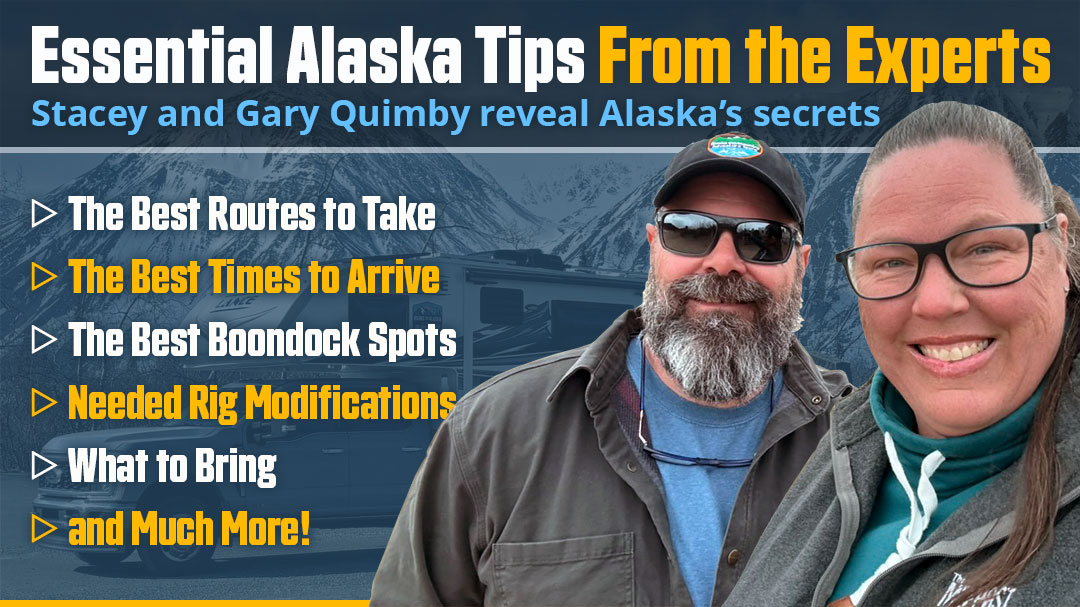
When we learned that the Managing Editor of The MILEPOST and the co-founders of the RVing to Alaska Facebook group were fellow truck campers, we knew we had an opportunity to ask two people who understand Alaska travel from both a professional and firsthand perspective.
Fortunately, Stacey and Gary Quimby were eager to share what they’ve learned from years of traveling Alaska’s highways, researching the region, and helping thousands of RVers prepare for their own adventures.
In the following interview, Stacey and Gary offer practical guidance on planning an Alaska trip, including the best routes, when to travel, ferry options, road conditions, frost heaves, boondocking, recommended truck and camper modifications, tire considerations, and much more.
Whether you’re in the early planning stages or counting down the days until departure, their experience can help you travel with greater confidence and make the most of your Alaska adventure.
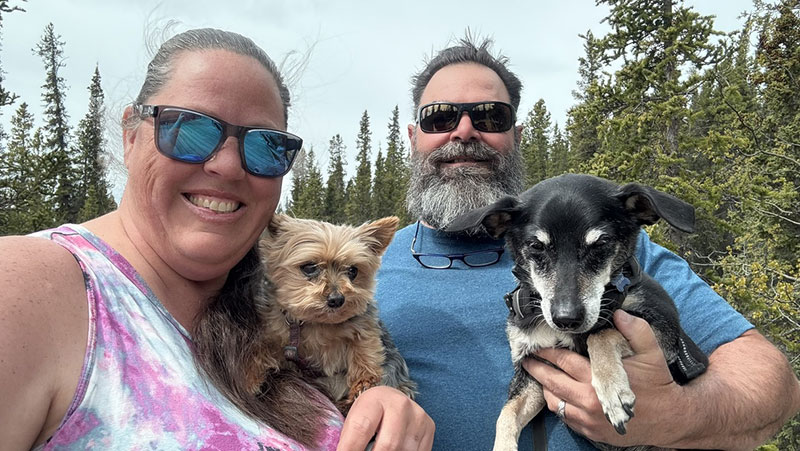
Stacey and Gary Quimby with their co-pilots Sofi and Newman
Given your roles with The MILEPOST and RVing to Alaska, and traveling extensively in Alaska, why did you choose a truck camper?
Gary: We do a lot of U-turns doing The MILEPOST. With a truck camper we can do that. In our forty-foot motorhome, we can’t. It’s nice to have everything small and contained so that we can easily maneuver in and out of tight spots.
A truck camper may not be the best for everyone, but it is for people who want to get off the beaten path and go further on the smaller dirt roads in Alaska. A truck camper has a smaller footprint so you can get into town easier. I personally think it’s a great rig for Alaska.
Stacey: With a truck camper, less can go wrong and you can take your camper off your truck. When we’re in Juneau for five days, we will unload it to get around town. There’s a convenience about it. I also like the creature comforts of our Lance 1172 double-slide. We’re still shocked that we are in the bed of our truck.
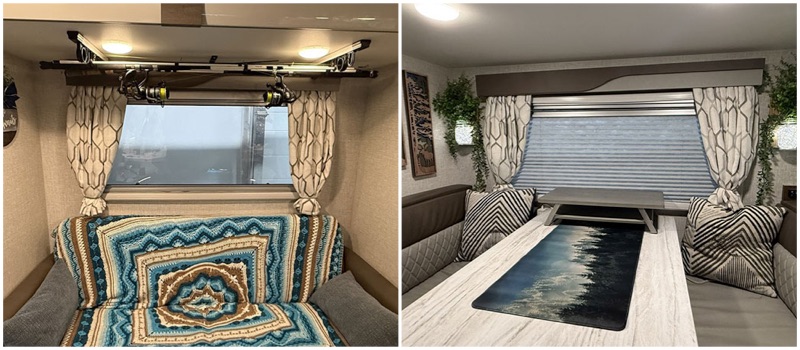
Inside Stacey and Gary’s Lance 1172 with a rear sofa and face-to-face dinette
“A truck camper has a smaller footprint so you can get into town easier. I personally think it’s a great rig for Alaska.”
Many of our readers have Alaska on their bucket list. How do you recommend one goes about planning a trip to Alaska before leaving home?
Gary: Bite off the planning in little chunks. Start by planning your trip to the Canadian border, which is generally easy. Once you plan that, plan out Canada. Think about what you want to see and do along the way. Do you want to travel the west side or go through the center?
Then, plan Alaska. Think about what you want to do. Plan your route around that. Do you want to fish rivers or go through the interior? Do you need to be somewhere at a certain time? RVing to Alaska and The MILEPOST are fantastic resources to help plan your route.
Stacey: In The MILEPOST we have four main ways to enter Canada. There are also route suggestions to choose from. Alaska’s primary highway network is a large figure-eight route connecting Anchorage, Fairbanks, Tok, Glennallen, the Kenai Peninsula, and surrounding regions.
One thing we tell people is that Alaska is the goal, but the best part of RVing to Alaska is Canada. Canada is gorgeous and worthy of your time.
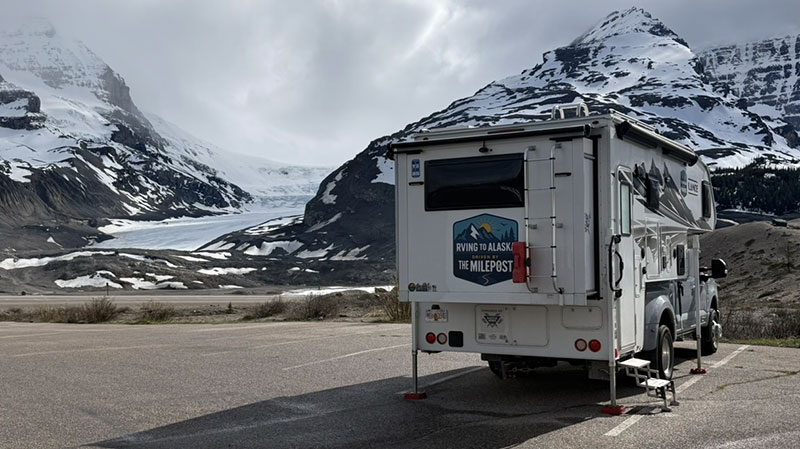
Their Lance Camper near the Icefields Parkway, Canadian Rockies, Alberta
That’s something we’ve heard from other Alaskan travelers; Canada is not to be missed.
Stacey: It’s true. Plan Canada for the trip north. Alaska doesn’t get pretty until June. People get here in April or May and it’s still ugly from winter. It doesn’t green up until June 1st. This year, spring was late, and then summer was late.
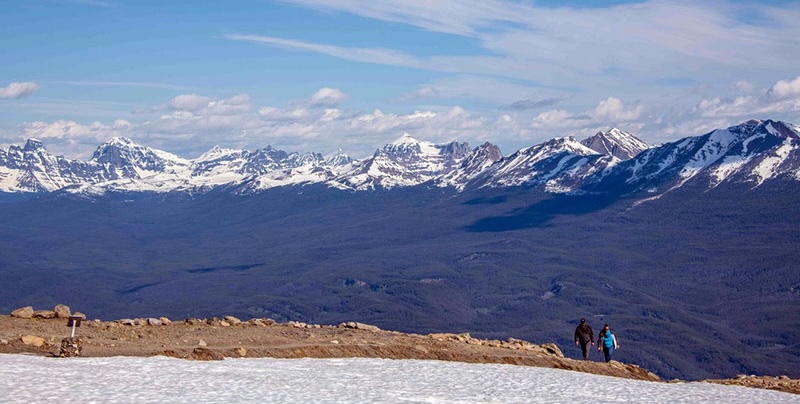
A hike in Jasper National Park, Alberta, Canada
Gary: We recommend enjoying Canada on way up and then spending a month or two in Alaska. Usually people exit Canada quickly because they want to get home. They don’t give Canada the time it deserves in either direction.
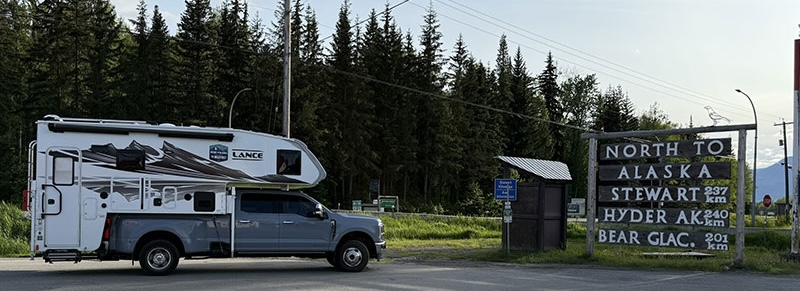
Starting The Cassiar Highway in British Columbia
How does someone use The MILEPOST to plan their trip?
Stacey: The MILEPOST is not a book you read cover to cover because there are so many routes. When you use The MILEPOST, start by reading the first 44 pages. That’s the travel planning section.
People sometimes get frustrated because it’s so detailed. Read it forward or backward—south to north and east to west depending on your direction of travel. That’s the way the roads are laid out. When the navigator is using it on the road, it makes more sense.
This has been a slow year here in Alaska because of fuel prices, and many people postponed their trips. There have been very few RVs from outside Alaska. We were just on the phone with a campground in Valdez last night and they also said it’s a slow year.
Gary: I recommend that you start planning a couple years ahead and not the winter you want to visit. It’s a big trip.
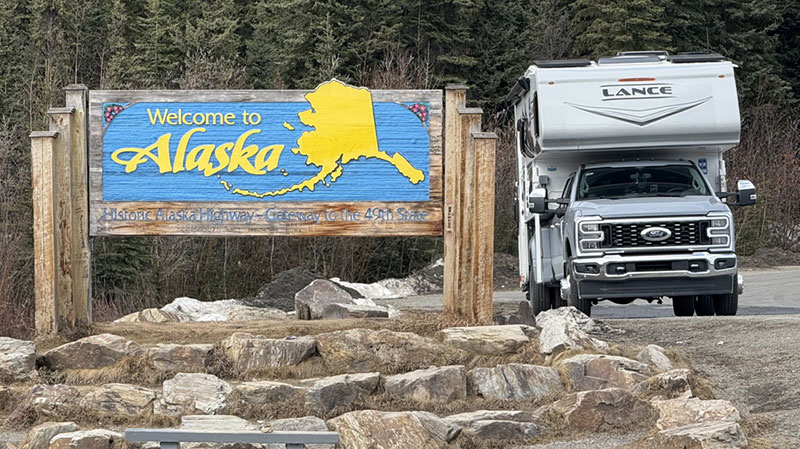
Stacey and Gary’s Ford F350 and Lance 1172
Do you need to be that planned out to visit Alaska? Can people be spontaneous?
Gary: You can be 100 percent spontaneous and unplanned in Alaska. With a truck camper, it’s easy. Pull off and hit a small dirt road.
Stacey: We’re the type of truck campers who will go south forty miles, find an amazing boondocking spot with incredible views, and stop for the night.
That’s how Alaska is different than the Lower 48. Some places in the Lower 48 you have to have reservations six months to a year out. It’s 100 percent opposite up here. You have near total flexibility. You might make one reservation for a specific place you really want to visit. The rest can be spontaneous.
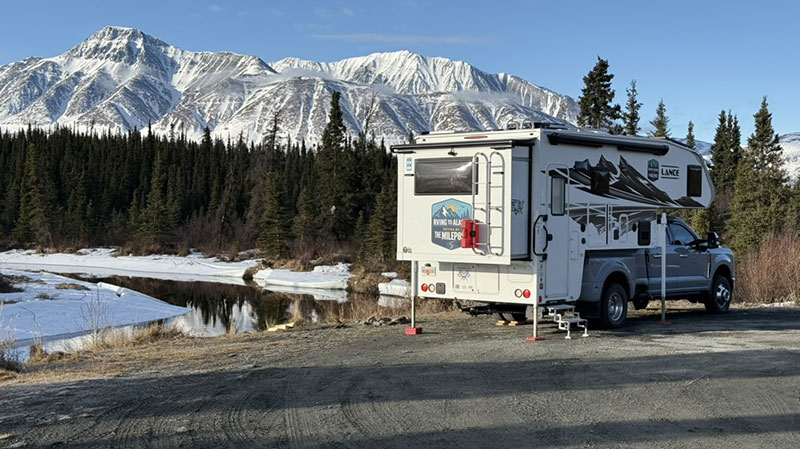
Roadside pull-off, camping off The Alaska Highway
So you can just pull over and park for the night?
Gary: Yes. A lot of pull offs in Alaska allow RVs to park overnight. Boondocking is welcome up here. There are some areas where you have to go into a campground, but even campgrounds often have walk-in spaces. The best year ever for Alaska was 2019, and it has never rebounded.
The plentiful boondocking sounds incredible. What specific places would you need to make a reservation?
Gary: The only place we strongly recommend making a reservation well in advance is Denali National Park. There are limited places to park around there, and campsites are limited. Denali’s reservation system opens on December 1st. As with anywhere, it’s also good to know where you’re going to be over the holidays because places get busy, especially in Seward or Homer.
Stacey: In Canada, we recommend you get reservations in advance for the Canadian National Parks. Banff and Jasper can get busy. For more remote U.S. National Park visits such as Katmai National Park and Lake Clark should be booked in advance. Dat trips are expensive at around $1,100 CAD per person.
Gary: Halibut fishing on a charter could be hard to get a last minute reservation, but you can always call around. Beyond that, being spontaneous is pretty easy in Alaska.
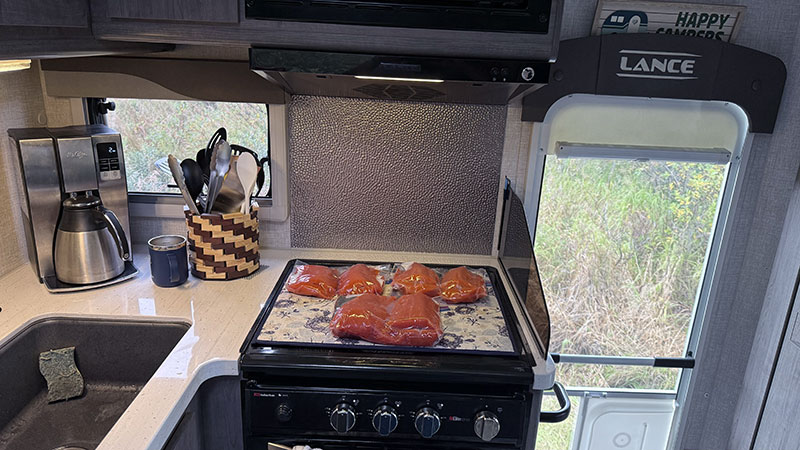
Salmon caught in Alaska in their Lance 1172’s kitchen
How about the Alaska Marine Highway ferry system?
Gary: Yes. If you’re planning to take the Alaska ferry system, make reservations as early as possible. Truck campers are easier to accommodate than larger RVs because of their smaller size, but reservations are still essential. The long ferry trip between Haines and Bellingham is expensive, so most people choose to drive through Canada instead.
Stacey: One important change is that there has been no cross-Gulf ferry service since 2022. That means you can no longer take a ferry across the Gulf of Alaska from southeast Alaska into south-central Alaska. Instead, you have to drive through Canada if you’re traveling between those regions.
That said, Alaska’s ferry system is still a wonderful way to explore. We took the ferry to Kodiak this year, and it’s a great way to visit remote communities that you can’t easily reach by road.
I especially recommend the ferries in Prince William Sound. You drive to Valdez or Whittier and take a ferry between those ports and other communities around Prince William Sound. The travel time is similar to driving, but the ferry becomes a six-hour wildlife cruise through calm, scenic waters.
“If you’re planning to take the Alaska ferry system, make reservations as early as possible.”
What does the Alaska Marine Highway ferry cost now?
Stacey: When I priced the ferry from Bellingham to Ketchikan, it was more than $4,000 for a truck camper. By comparison, the Prince William Sound ferries are much more affordable. We paid about $800 round trip last year, and a one-way trip is typically around $400 or less. Fares are dynamically priced, so booking earlier generally results in lower prices.
One helpful tip is that if your truck camper rig measures 30 feet or less, you can get fares and make reservations online. Vehicles over 30 feet require you to call the reservations office.
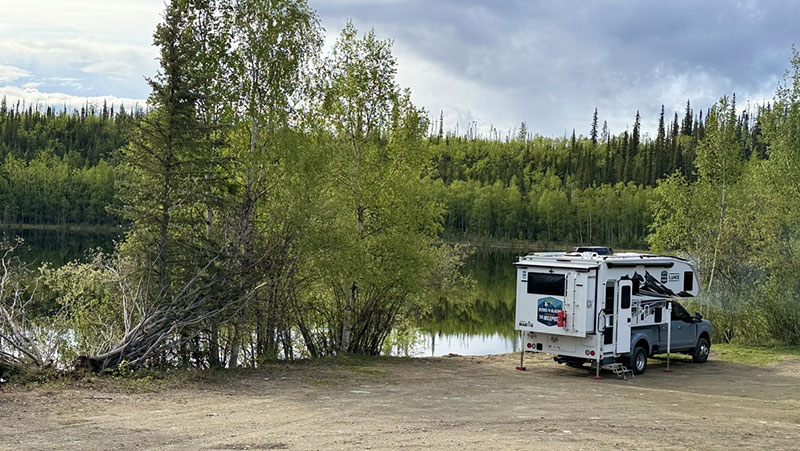
Boondocking in The Yukon
When do you recommend folks visit Alaska?
Stacey: I recommend targeting a Canadian border crossing during the second week of May. Camping in Canada starts Victoria Day weekend, which is a week prior to our Memorial Day. That’s when their campgrounds usually open. If you plan to cross around mid-May, that gives you at least two weeks to transit through. Three weeks allows you to really enjoy Canada at a leisurely pace.
Some days you can go 300 miles, but then others you may want to go 40 miles. If you enter mid-May, it sets you up to get to Alaska the first of June.
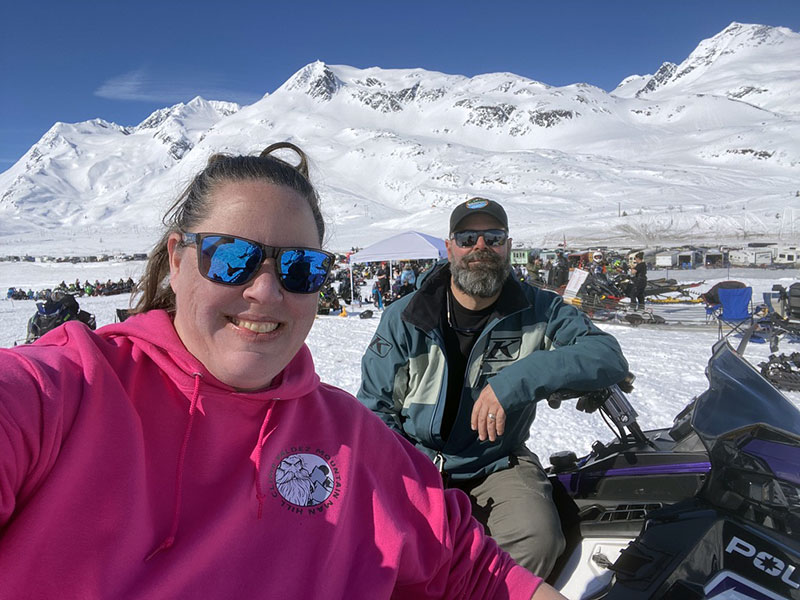
Winter Camping in Thompson Pass, Alaska
Gary: During April and May the snow is melting in Alaska and the roads are horrible. Everything is not green yet. At the end of May and beginning of June everything starts looking pretty and the roads are solid.
June is generally one of Alaska’s warmest months and has the longest days. Around July 15th, the rainy season starts and it continues through August. September is usually dry and at that point, it’s cooler and there might be frost overnight. We’ve had snow on the ground in September for a minute.
We recommend you stay through the state fair around Labor Day weekend so you can see the fall colors. It’s so beautiful up here with the golds, coppers, and yellows. Our fall colors are ground cover.
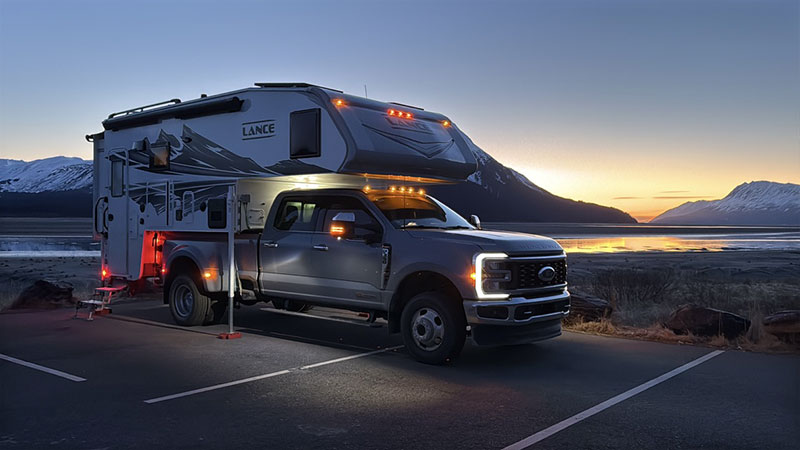
Turnagain Arm at sunset during their shakedown trip
We’ve heard a lot about frost heaves over the years. Are they a big deal?
Gary: There’s a famous section on Alaska Highway called Destruction Bay along Kluane Lake in the Yukon. It’s one of the areas where travelers commonly encounter frost heaves.
Stacey: You will learn to see them because they present themselves. When you see the yellow and white lines get scribbly, you will see a tag where semis have marked the road.
Gary: People will do the trip and express how bad the roads are going north, but when they drive south, they’ll say they fixed the roads. It’s more so that people learn to recognize the frost heaves. You may need to slow down to 15 to 20 miles per hour at times. We also recommend that you use the whole road if you need to.
Stacey: The gravel roads in Alaska are often easier to travel than people expect.
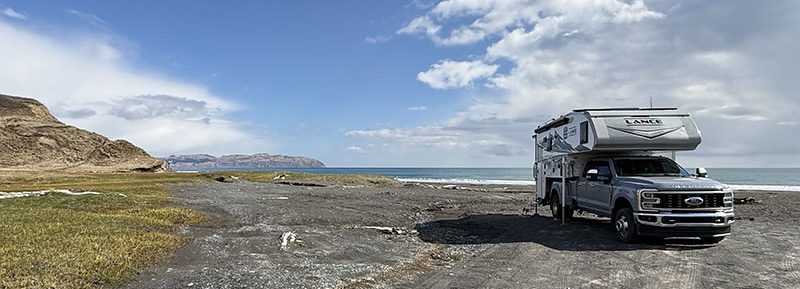
Surfer’s Beach, Kodiak, Alaska
Are there destinations in Alaska that remain largely overlooked?
Gary: Yes. The Denali Highway comes to mind. It’s 134 miles and mostly dirt. It’s also a beautiful drive where you will see some amazing scenery. There are plenty of pull-offs for camping and you will see some amazing wildlife. It’s true Alaska.
Stacey: I recommend Kennecott for Gold Rush history. Dawson City in the Yukon is an absolute must as well as Skilak Lake in the Kenai.
Cordova in Prince William Sound and Kodiak Island in the Gulf of Alaska don’t get a lot of people. You need to take a ferry ride, but it’s absolutely amazing. We loved them both in their own way. RV tourism is not a thing there which makes them special. They’re quiet. To be able to go and park at a small campground and you are the only RV there was special.
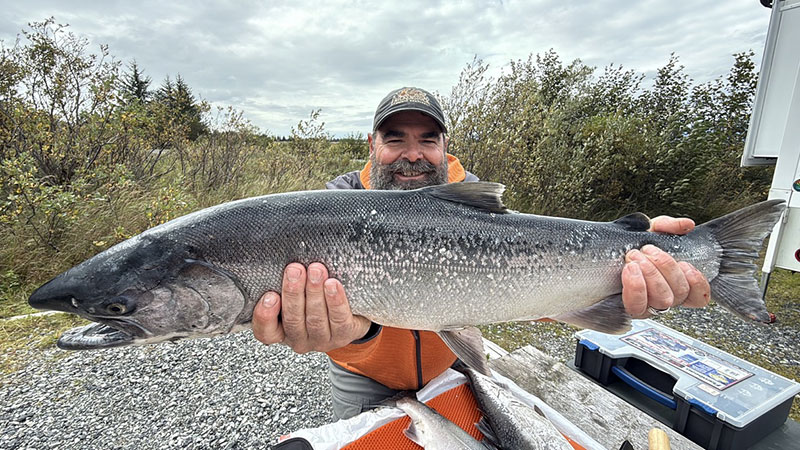
Gary enjoying Cordova, Alaska
Gary: For the adventurous, drive the Dempster Highway to Tuktoyaktuk or head north on the Dalton Highway toward the Arctic Circle. A lot of people like the Dempster over the Dalton.
The Dempster Highway goes to the Arctic Ocean. It can take a couple days to travel. Camp in Tuk and go to the Arctic Ocean. That’s big on people’s bucket list, and ours.
The Dalton Highway provides access to Prudhoe Bay. It’s a little more beat up, especially if it’s raining. It can be horrible. You have to go through a tour to get to the ocean because the Dalton stops eight miles shy of the ocean.
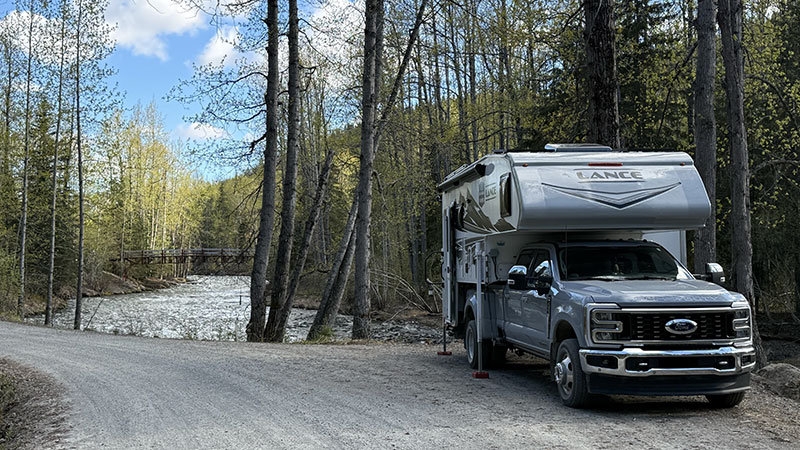
Palmer Creek, Hope, Alaska
Alaska is known for easy boondocking, but where exactly can truck campers just pull over and camp the night?
Gary: The Denali Highway has amazing boondocking spots. I just like being in the middle of nowhere. One of the photos we sent was boondocking forty feet off the highway along the Alaska Highway (often called the Alcan). It was late April.
The winter beach picture was from one of our favorite campgrounds in Deep Creek State Recreation Area on the Kenai. You have to pay, but it’s like $20 a night. We have gone there every season. The volcano is directly across the Cook Inlet from you. That photo was taken in March.
Stacey: For free camping, there are many pull-offs and places to overnight. iOverlander is your friend. In the Hope Mining District Recreation Area, we were eight miles up a road at a gold panning recreation area where there are no claims and you can freely gold pan.
Don’t tell Gordon that. He’ll turn north.
Gary: Alaska is primarily connected by major roads and highways, so there are very few side roads or dirt trails. That’s because of the tundra and there is so much moisture on the ground. It’s hard to make a dirt road on top of that stuff. If you have an ATV, you can get further.
Stacey: The side roads are all listed in The MILEPOST. On Skilak Lake Road, you can drive about twenty miles off the pavement to reach remote lakes and hiking trails. Hatcher Pass is another great side road to explore.
Other than the Dalton Highway and the two highways that connect to it—the Steese Highway and Elliott Highway—there aren’t many side roads. There are very few services, but the scenery is spectacular.
When you look at the out and back of the Kenai Peninsula to Homer and Seward, there are two main highways there. Valdez is another out and back.
There’s a figure eight when you come into Alaska. You either have to work your way to Fairbanks or Anchorage. The two main feeder highways are the Richardson to the east and Parks Highway to the west.
In the middle is the Denali Highway and the Glenn Highway is the southern part of the figure 8. People may decide to go to Fairbanks first because of summer solstice there, and then they work their way around. The fisherman go straight to the Kenai.
You are not going to see all of Alaska in one year. People often say they need to do it slower and give themselves more time.
“On Skilak Lake Road, you can drive about twenty miles off the pavement to reach remote lakes and hiking trails.”
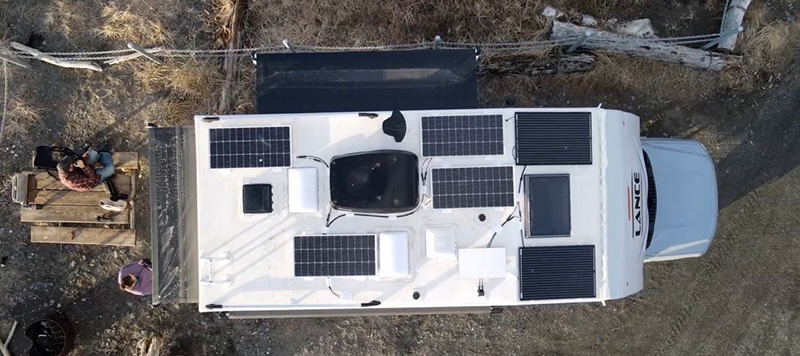
The Quimbys have 600-watts of solar on their Lance 1172
You’ve traveled around Alaska extensively in your Lance 1172. What modifications or equipment have proven to be most needed?
Gary: We recommend blackout shades to make it dark enough in your camper so you can sleep. Make sure that your screens are sufficient for mosquitoes.
I also recommend a generator, even if you have a lot of solar. It can rain for days on end. We have a nice lithium battery pack with a 3000-watt inverter and 600-watts of solar, and we still have a generator.
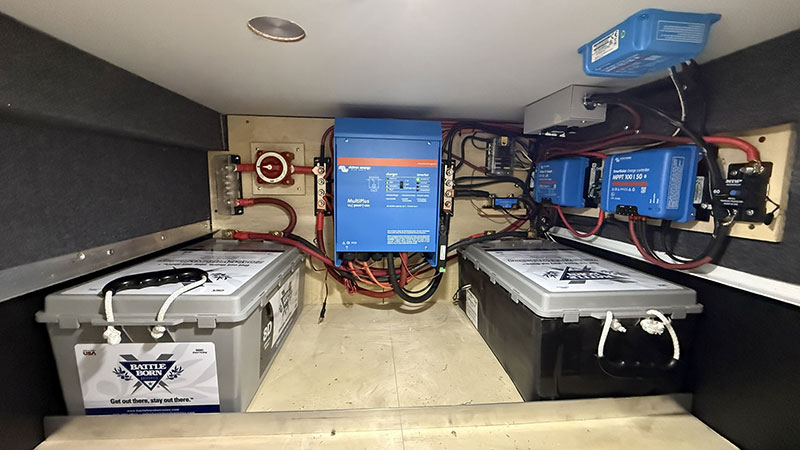
They installed Battle Born batteries and Victron components to their Lance 1172
A 30-amp plug to 15/20-amp plug adapter would be good to bring along because some parks only have 15-amps.
A water filter is nice because you can’t always trust the water. I also recommend a water thief or water bandit with a silicone rubber end as some spigots don’t have a threaded hose.
Starlink works great up here if you have to be connected.
Stacey: Bring four seasons of clothing, especially when you take an excursion. Fifty and sixty degree days are common, but the interior like Fairbanks can be 90 degrees. The coast is more temperate. Gloves and hats should be packed.
As you work your way south, you’re going to run back into summer. You might even need air conditioning back in Canada.
We have food and supplies here in Alaska. People are shocked that US brands are not available in Canada. You can’t always get what you like.
Gary: As far as mods, we have learned to Velcro our cabinets shut. We have had cabinets opening, so we’ve childproofed everything, or rather, road-proofed everything. With most seasoned RVers, at some point, something opens. Up here, keeping the cabinets shut is necessary.
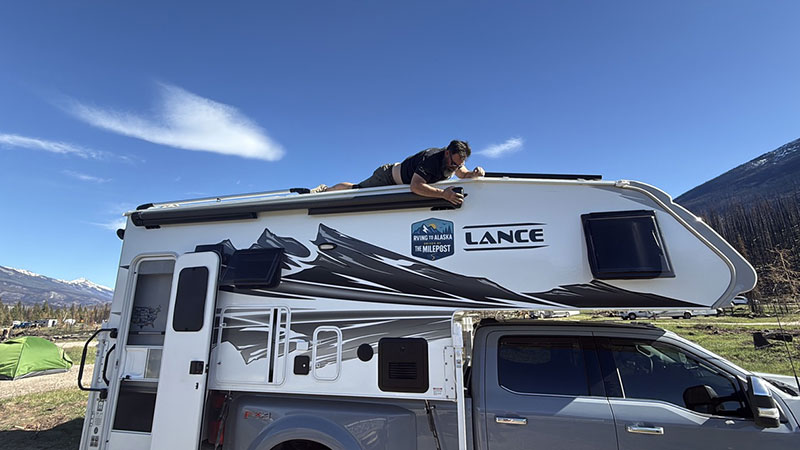
Camper awning repair on the road
How about spare tires?
Gary: There’s a newer product called Blue Tread that patches a tire sidewall. It’s a very good product. Spare tires are nice to have, or at least a tire kit. I also recommend a windshield repair kit or clear tape.
Stacey: We ran over a screw in the liquor store parking lot. That has been our only tire issue while traveling Alaska.
We’ve occasionally found nails in boondocking areas and unmaintained campgrounds from people burning pallets. It’s historically rumored that the McCarthy Road used to have railroad spikes because it’s built over the old railroad. It’s long been debunked because magnets have gone over it.
A lot of people are scared because roads don’t have shoulders and can be soft. We seem to hear about at least one RV ending up off the road every year. The shoulder takes them and they roll. I would be more concerned about that than tire issues. Use common sense when driving here.
Gary: If there’s an oncoming car, it’s good to pull over or stop and let cars inch by versus accidentally going into the ditch. Have a spare tire and tire repair kit, but also know that services are available. Services are available in most larger communities, although distances between towns can be significant.
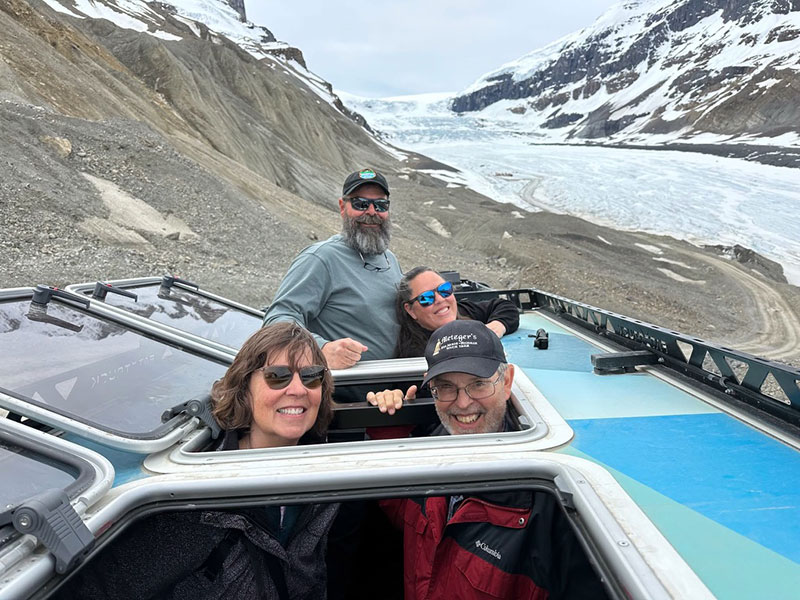
Stacey and Gary hanging out with their RVing to Alaska Community
Stacey: Our RVing to Alaska community has made relationships with local mechanics. People may ask on our Facebook page if someone can help with finding a repair shop in Whitehorse. We have a relationship with the GoNorth rental company. Our members in the RVing to Alaska community get 10% off their parts. People in our group will help you get or find service while you’re traveling through Alaska and Canada.
Another thing about the north; flip your hood open and someone will stop.
Gary: Or put triangles out. Usually people will stop in remote sections.
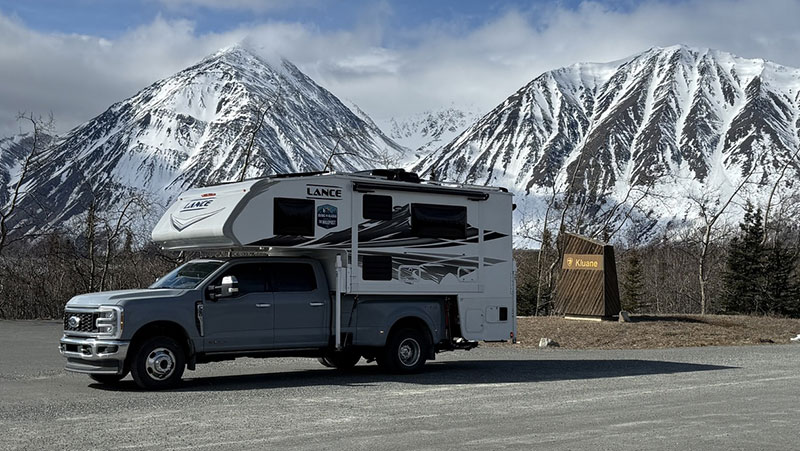
Kluane National Park in The Yukon
Thousands of people dream about driving to Alaska someday. What would you say to the person who keeps putting the trip off until the “perfect” time?
Stacey: There is no perfect time. There is no better time than right now. Tomorrow is never promised.
In 2024 my mom was going to move here. I’d been asking her for years. I said, “Come up and we’ll find you a place”. She finally said yes. It took a medical reason. We took our RV and enclosed trailer to pick her up in Spokane. We pulled into her driveway, and within ten hours we were in the ER with her. She died thirty-six hours later.
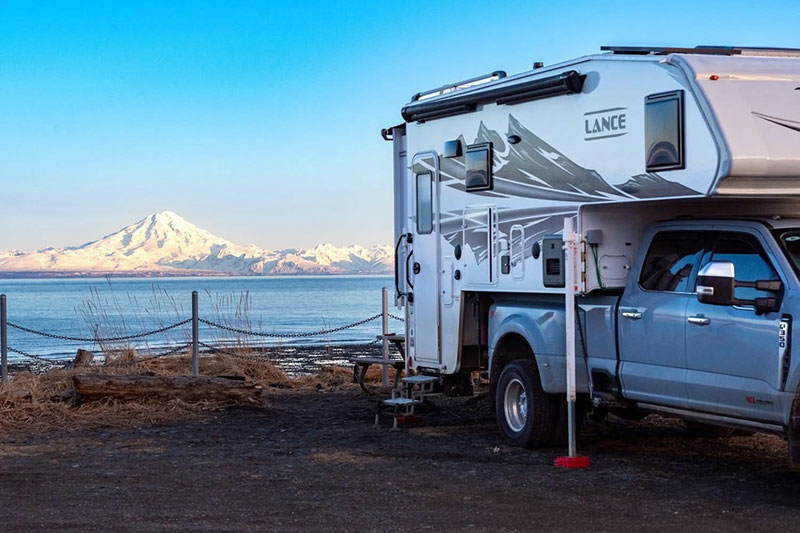
Winter beach camping on the Kenai
We’ve had members in our group where someone died in route. Tomorrow is never promised. We understand the trip can get pushed. Two ladies canceled our rally because of a family member got sick.
Gary: Just do it. You can figure out the problems. This year people have put it off because of gas prices. What is your excuse next year?
Stacey: You can always fly up and rent an RV. Go North has a fleet of truck campers, and you can get a one-way rental. You drive from Alaska to Seattle, and then fly home.
There are other ways of doing it other than the whole drive. TOTE Maritime Alaska has roll-on roll-off that transports vehicles. It’s a three-day trip from Tacoma to Anchorage to have your rig transported, or vice versa. They are about as expensive as the ferry, but then you have to fly out to meet your vehicle. Some people don’t have the time to drive, and it’s less wear and tear.
“There is no perfect time. There is no better time than right now. Tomorrow is never promised. ”
Through The MILEPOST and RVing to Alaska, we are helping people make their trip of a lifetime. That’s the rewarding part of what we do.
Click here if you missed Behind The Scenes with The MILEPOST and RVing to Alaska in TCM.