Supertramp unveiled its new chassis-mounted Paragon at Overland Expo. How does it stack up against the hard-side slide-in Flagship HT? Time for a Supertramp chassis-mount vs slide-in showdown.
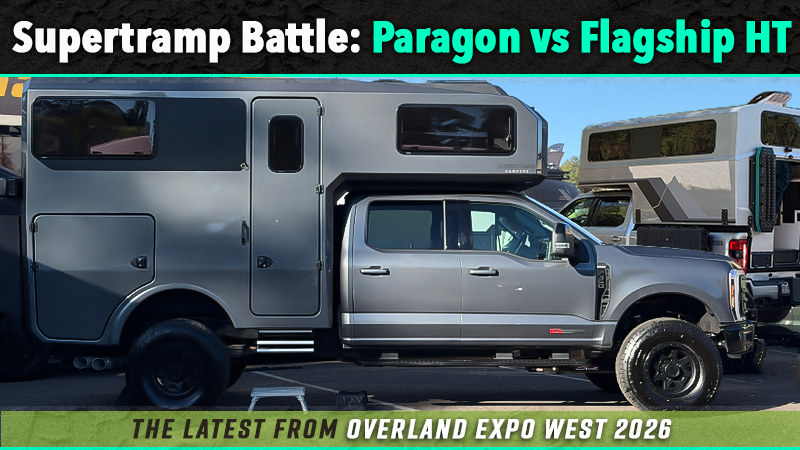
When Supertramp revealed Paragon, their pickup-based chassis-mounted camper, we immediately asked Truck Camper Magazine readers a simple question: Is this still a truck camper?
The results were fascinating. Nearly 70 percent of readers said a truck camper must be removable or demountable. At the same time, more than half agreed that chassis-mounted rigs like Paragon absolutely belong in the truck camping community. That contrast is exactly what makes this comparison so interesting.
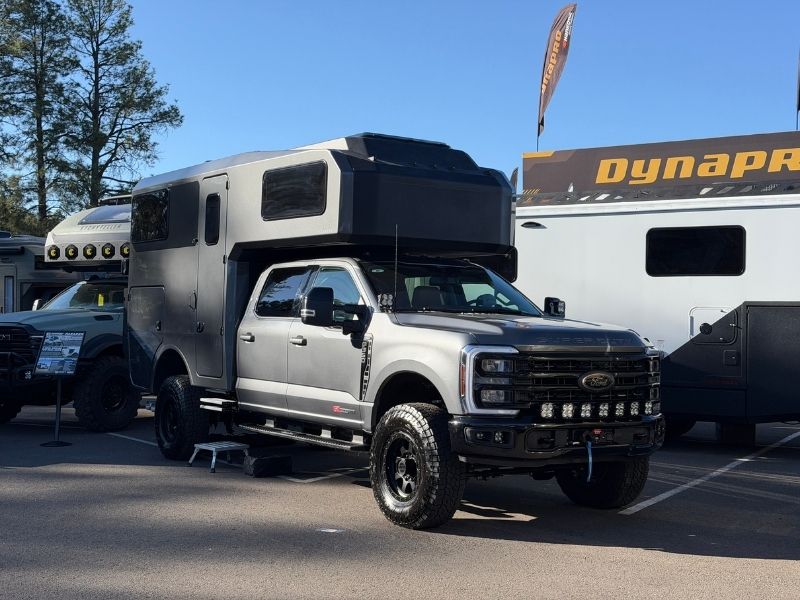
Supertramp Paragon exterior
At Overland Expo West in Flagstaff, Arizona, we stepped inside the Paragon for the first time and compared it directly against its hard-side slide-in cousin, the Flagship HT. So how does Paragon compare?
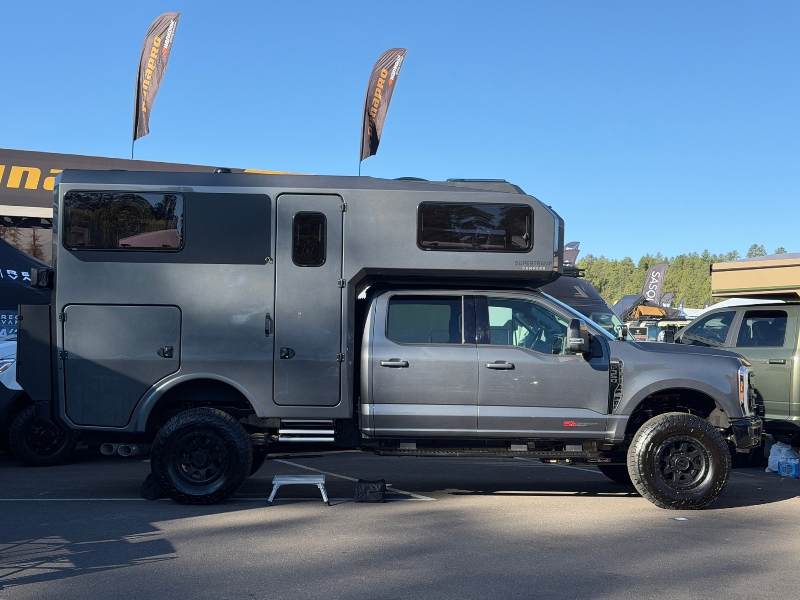
Price-wise, these two setups may land closer together than you might expect. The Paragon starts at $189,000 for a complete turnkey package built on a regular cab, long-bed truck equipped with Carli Suspension.
Meanwhile, a heavily optioned Flagship HT with 800Ah of lithium, custom exterior paint, and exterior accessories can push well beyond $80,000 on its own. Pair that with a new truck with similarly outfitted Carli suspension, and a fully built Flagship HT rig can quickly approach the same price point.
For those who already own a truck—or are shopping the base trim or used market—the Flagship HT becomes a far more attainable option, with a starting price of $65,975.
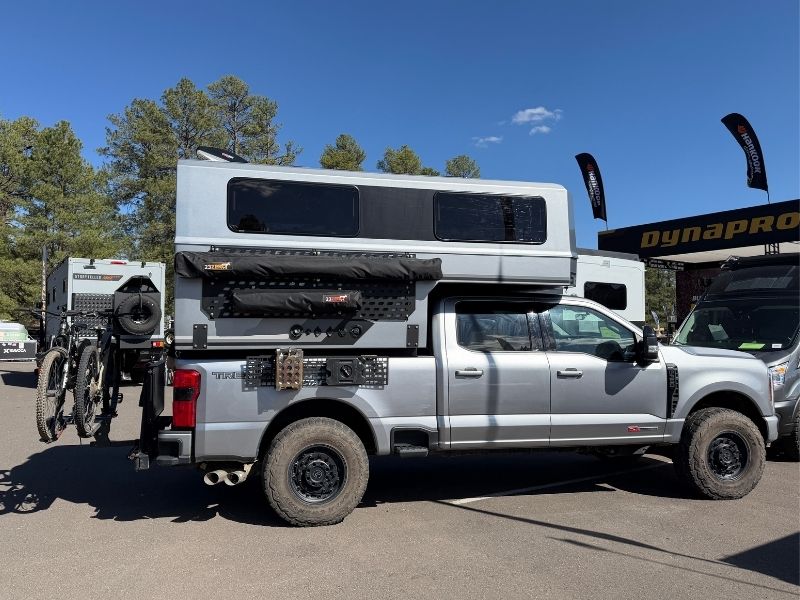
Supertramp Flagship HT exterior
Both Paragon and the Flagship HT feature Supertramp’s lightweight, all-composite, vacuum-infused fiberglass construction. The Flagship HT is designed for short and long-bed pickup trucks and starts with a dry weight of 1,399 pounds.
The Paragon takes a completely different approach. Instead of dropping into a pickup bed, it replaces the bed entirely and becomes integrated with the truck chassis itself. The result is a more unified vehicle, but one that asks for total commitment from the owner. Supertramp reports a total weight of 10,500 pounds for a well-appointed Paragon truck and camper combination, which comes in about 1,900 pounds under the Ford F-350’s GVWR.
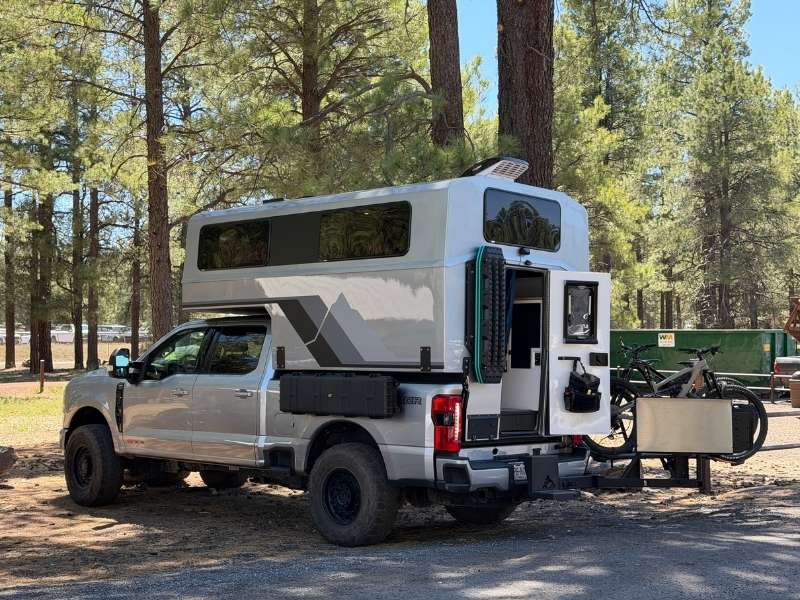
That brings us to the Flagship HT’s greatest advantage—demountability.
A removable truck camper gives owners flexibility that no chassis-mounted platform can duplicate. Your truck and camper remain separate investments. You can upgrade one without replacing the other. If the truck needs service or is involved in an accident, the camper can be removed, and vice versa. You can even unload the camper at camp and explore trails or town with just the truck. That versatility has always been the defining characteristic of truck camping.
Supertramp uses Torklift FastGun Apex turnbuckles to secure the Flagship HT, providing a quick and secure mounting solution.
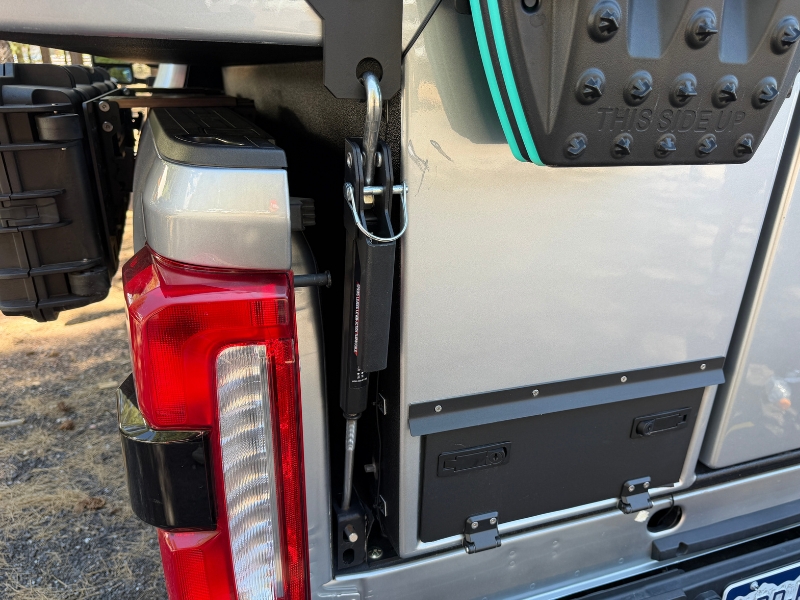
Torklift FastGun Apex turnbuckle securing the Supertramp Flagship HT
The Paragon, by comparison, is an all-in decision. Once installed, the truck exists primarily as an expedition and camping platform.
While Paragon sacrifices demountable flexibility, it lands an uppercut with its floor plan efficiency. By eliminating the pickup bed, Supertramp can utilize otherwise wasted space. While traditional demountable truck campers are able to gain back some of this space with bed replacements like Bowen Customs, it still remains separate from the camper.
The result in the Paragon is increased storage, larger holding capacities, and a more expansive interior living experience. Keep in mind that Paragon is mounted on a long bed truck, whereas the Flagship HT is made for short and long bed trucks.
| Feature | Paragon | Flagship HT |
|---|---|---|
| Fresh Water | 40 gallons | 24 gallons |
| Grey Water | 20 gallons | Up to 10 gallons |
| Battery Capacity | Up to 1,080Ah Lithium | Up to 800Ah Lithium |
| Solar Capacity | Up to 660-watts | 330-watts |
Stepping inside the Paragon, it was immediately clear that Supertramp pushed their premium finishes further. The galley features a deep sink, induction cooktop, and fabricated metal cabinetry that feels closer to high-end yacht design than traditional RV construction.
Paragon interior
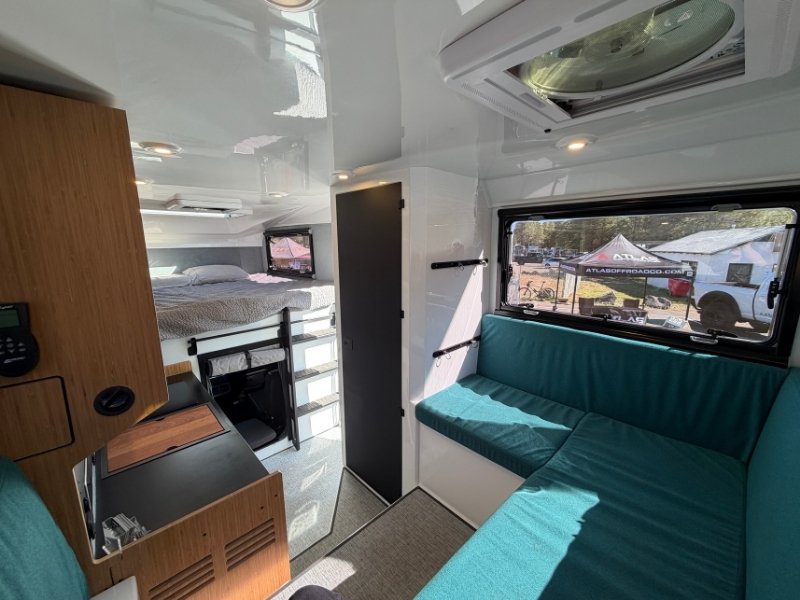
The Flagship HT carries much of the same Supertramp DNA. You still get the induction cooktop and modern styling, but the galley feels more compact and intentionally minimalist compared to Paragon.
Flagship HT interior
Paragon’s rear lounge is a signature feature. The elevated wraparound seating creates impressive 180-degree views and gives the camper a true observation-lounge feel.
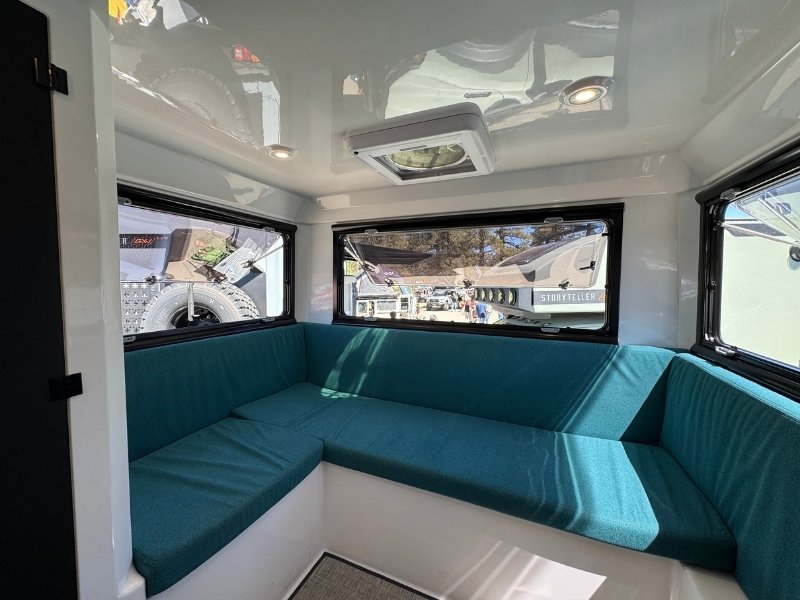
Paragon rear lounge seating
The elevated rear seating also creates a massive garage underneath. At the show, Supertramp demonstrated the space with two full-size mountain bikes stored inside the camper.
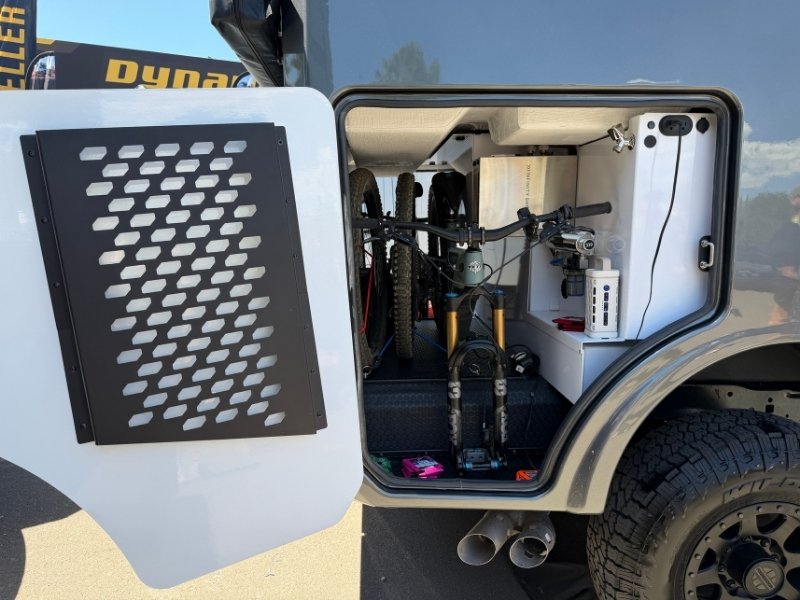
Internal garage storage in the Paragon
The tradeoff is accessibility. Entering the seating area requires climbing two steps, which may be a consideration for some campers.
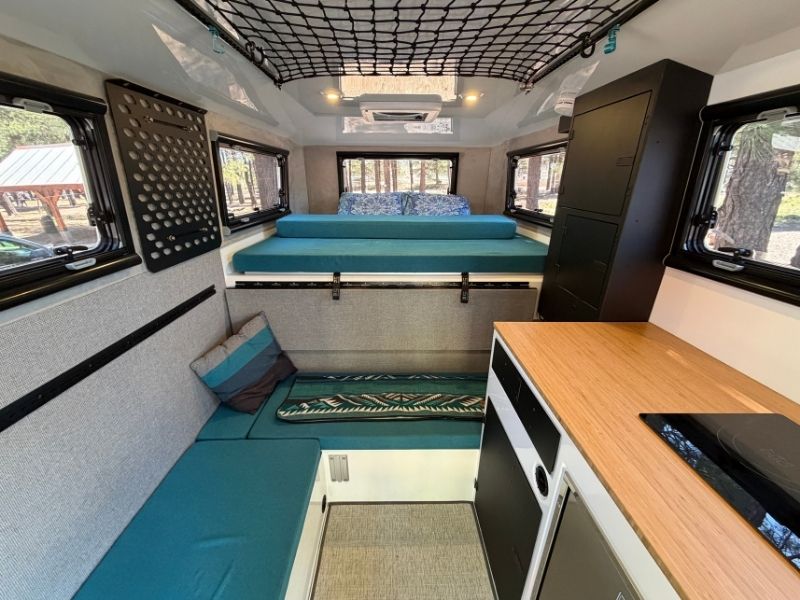
Ironically, when we climbed back into the Flagship HT, the interior felt more open despite its smaller footprint. With less overhead cabinetry and no hard-wall bathroom, the space remains largely unobstructed.
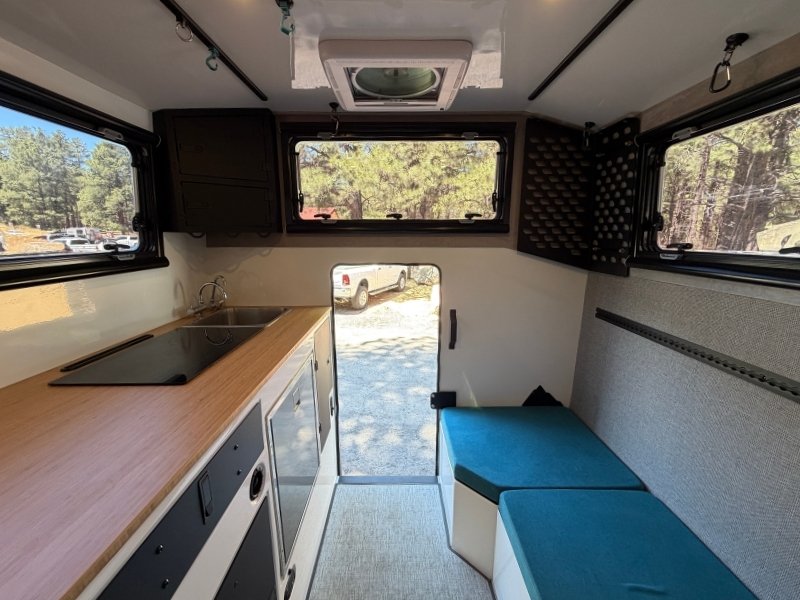
Flagship HT interior
After a quick side-by-side test, we concluded that both campers comfortably seated roughly the same number of people.
The Paragon separates itself with its hard-wall shower. It requires no setup and delivers the kind of convenience typically associated with traditional RV truck campers, with the exception of a built-in toilet. Toilet choices remain the same between both models, including portable cassette, composting, and dry-flush options.
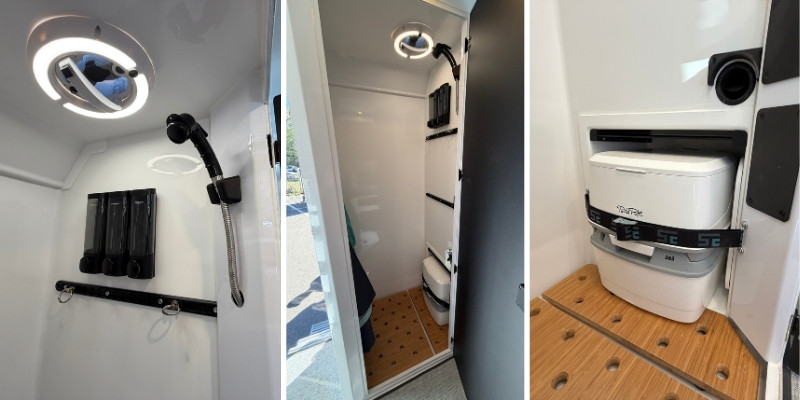
Paragon enclosed shower
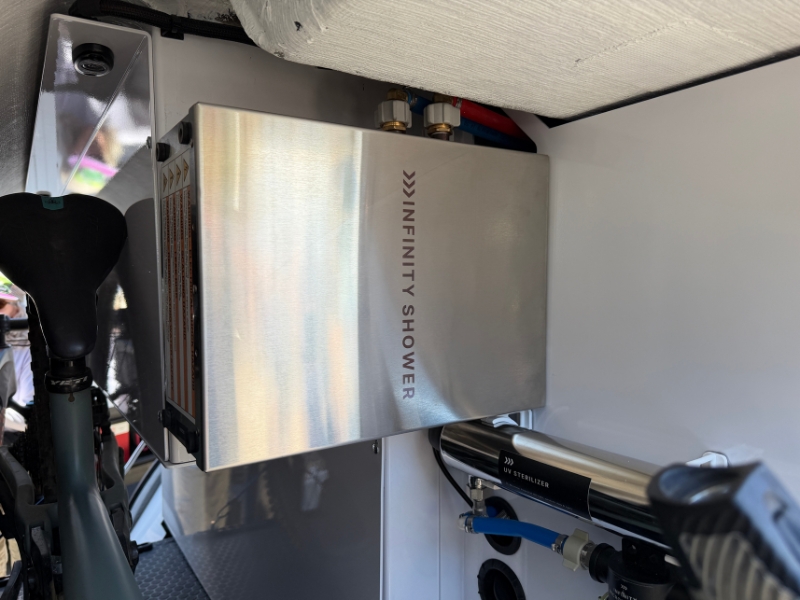
One feature that caught our attention was Paragon’s infinity shower system with UV sterilization. This system recirculates and cleans shower water for reuse, dramatically extending shower capability while conserving water. This is one of those technologies we hope to see adopted by more truck camper manufacturers in the future.
The Flagship HT shower takes an overland truck camper approach. It requires suspending a curtain from ceiling-mounted carabiners, while occupants stand in a basin located beneath the seating area. It works, but it’s undeniably less convenient and less private than the Paragon’s enclosed shower.
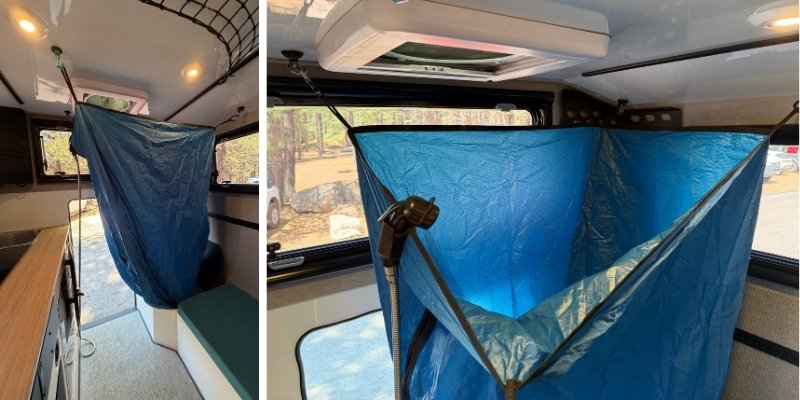
Flagship HT pop-up shower
The Paragon’s pass-through was one of the most talked-about features at Overland Expo West. Using the same soft-sided material in their Flagship LT pop-up, the cab can be closed off or accessed in seconds. Supertramp even added padded protection for your knees while crawling through the opening into the truck’s cab.
Being able to move directly from the camper into the driver’s seat without stepping outside adds both convenience and security. For many truck camper owners, this is the sort of feature they’ve dreamed about for years.
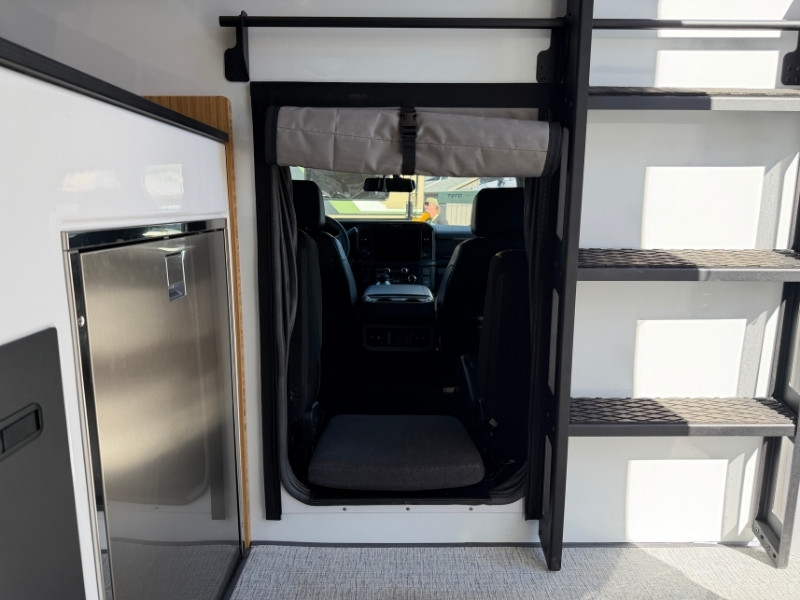
Paragon pass-through
At its core, the Paragon shares much of the same spirit as a truck camper. It mounts to a pickup-based platform, stays relatively compact, and is designed around the same “Go Anywhere, Camp Anywhere, Tow Anything” philosophy that has defined truck camping for decades.
But our reader poll also highlighted something important. For a majority of enthusiasts, demountability remains a defining characteristic of a true truck camper.
So who wins this fight? Honestly, neither. These two setups don’t belong in the same ring together.
If you want an all-in-one expedition rig with greater capacities, more storage, and features like the pass-through and infinity shower, the Paragon makes a compelling case.
If you value the benefits of a demountable truck camper, enjoy a more open living space, and a lower base weight, the Flagship HT remains Supertramp’s leading hard side offering.
In the end, this isn’t Muhammad Ali versus George Foreman battling for the same Rumble in the Jungle heavyweight title. It’s more like Bruce Lee versus Mike Tyson—two completely different approaches, each working to master their respective discipline.