We had to see it in person to believe it—the composite panel Denali 3SC triple-slide flatbed truck camper is real. Was Rugged Mountain able to keep their tiny-home-inspired interior? Let’s take a peek.
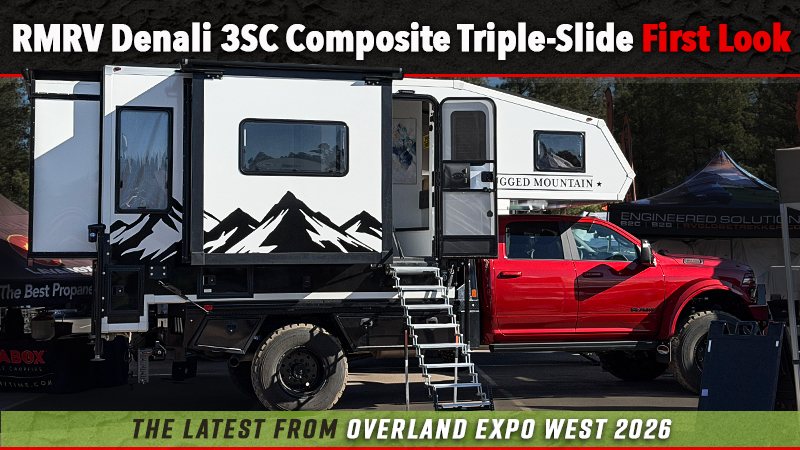
There are only a handful of moments each year when something genuinely new stops us in our tracks. Seeing the Rugged Mountain Denali 3SC for the first time was one of them. Triple-slide truck campers are already rare, but a triple-slide composite panel truck camper? That’s a first.
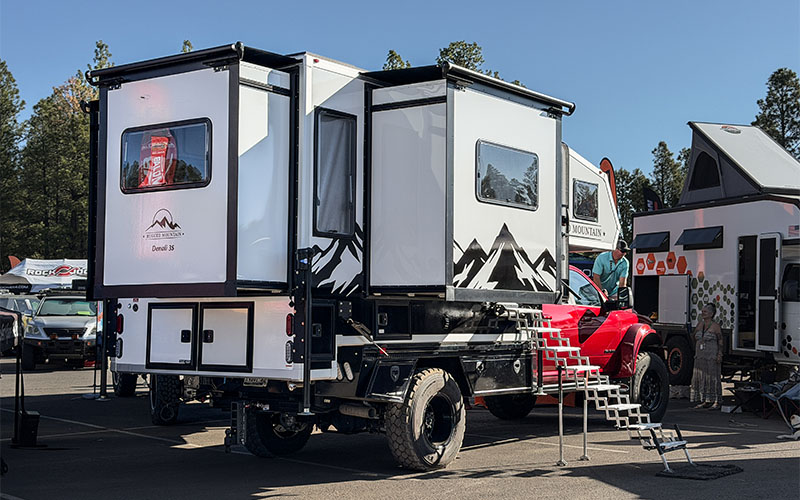
As you may have read in the Rugged Mountain RV Factory Tour, it’s no secret that Jesse Collinsworth, Founder of Rugged Mountain, has been a long time proponent of wood-framed truck campers. Composite panel construction wasn’t something he pursued because it was trendy. It happened because enough truck camper buyers kept asking for it.
Rather than dig in his heels, Jesse listened and completely reworked how Rugged Mountain builds campers. Then he took things a step further and created something the truck camper industry has never seen before.
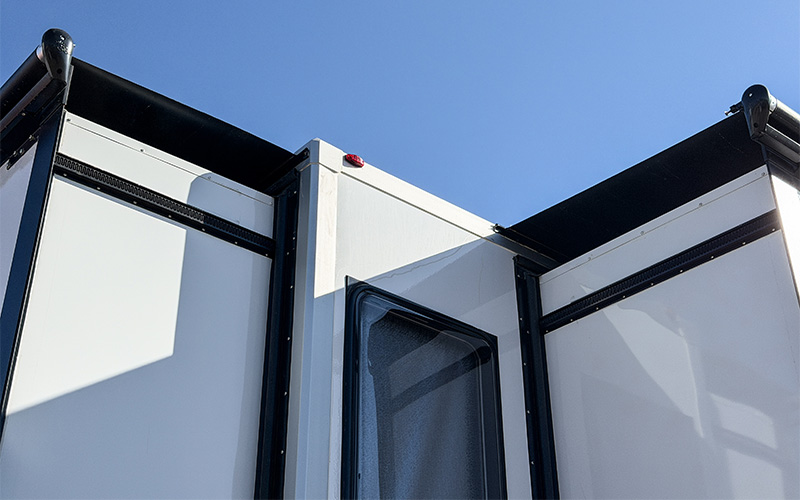
Built using 1.5-inch composite panels and aluminum extrusions by Globe Trekker, the Denali 3SC is a flatbed triple-slide truck camper designed specifically for Class 5 trucks. Rugged Mountain reports a fully loaded weight of 5,503 pounds and a base dry weight of 4,950 pounds.
The Denali 3SC isn’t pretending to be minimalist. This is a full-scale luxury truck camper designed for buyers who want residential comfort without giving up truck camper mobility.
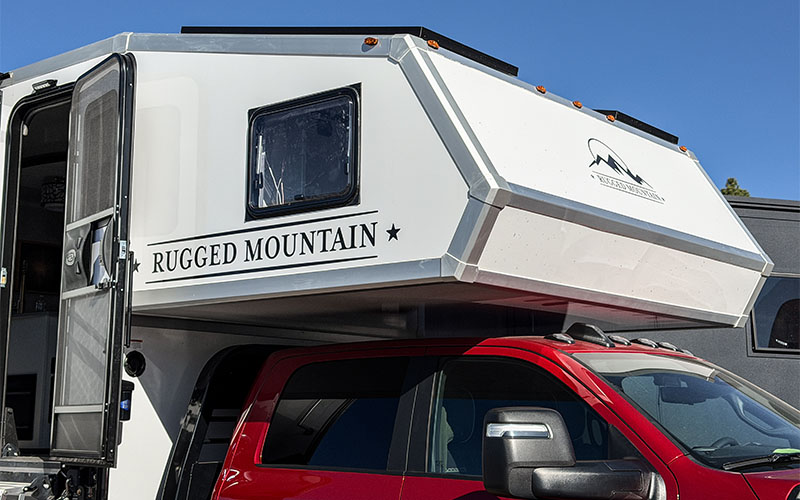
Mounted on a bright red 2026 Ram 5500 with a Buckstop Truckware super single conversion, the Denali 3SC still looks unmistakably Rugged Mountain. The overall profile remains familiar, but the new construction method becomes obvious around the nose and sidewalls.
The overall profile is a reflection of its wood-framed, hung-wall predecessor, but has an edgy twist. The composite panels and aluminum extrusions create flatter surfaces and sharper body lines.
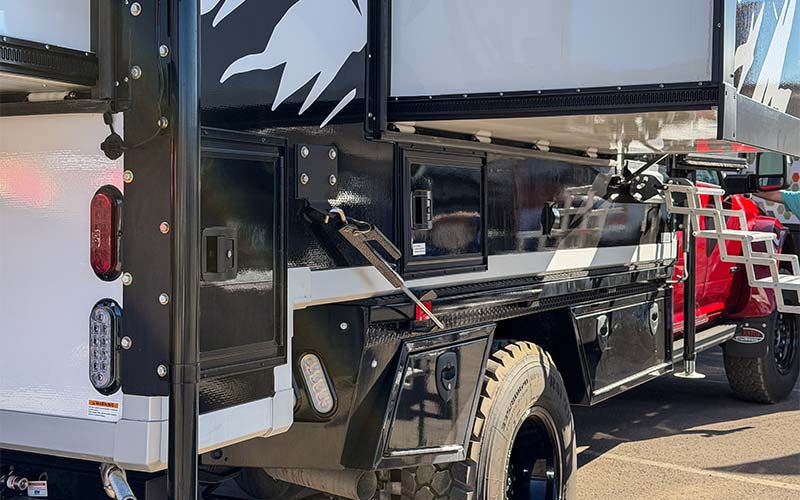
Rugged Mountain’s updated graphics package helps soften the geometric lines of the composite construction while visually tying the camper into the black flatbed below. It’s a clean, cohesive design that feels intentionally integrated from top to bottom.
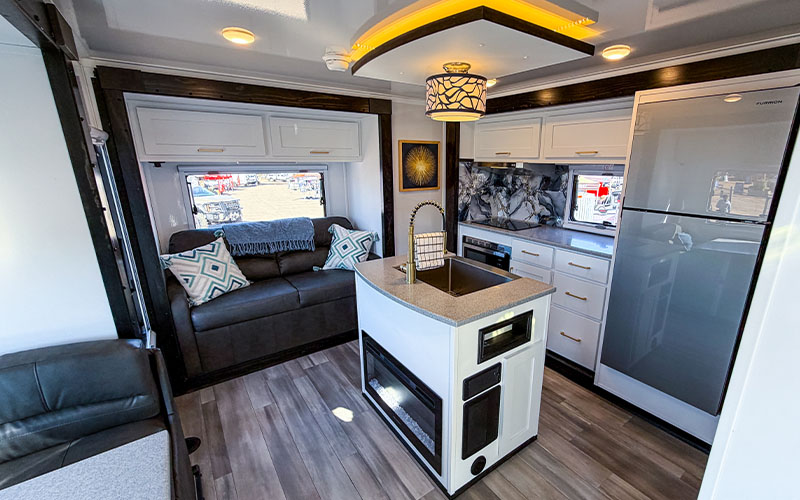
Stepping inside the Denali 3SC immediately brought me back to a conversation I had with Jesse at the Florida RV SuperShow earlier this year. While he was open to adopting composite materials, he was adamant about preserving the warm, inviting interiors Rugged Mountain customers have come to expect.
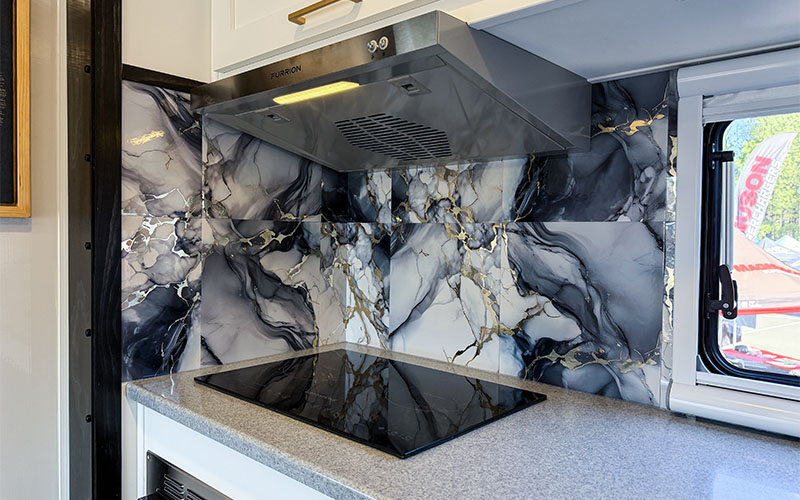
Inside, the Denali 3SC still feels far more “tiny home” than “space station.” The cabinetry, finishes, and overall atmosphere remain warm and residential. In fact, the only place the composite construction really stands out is the ceiling.
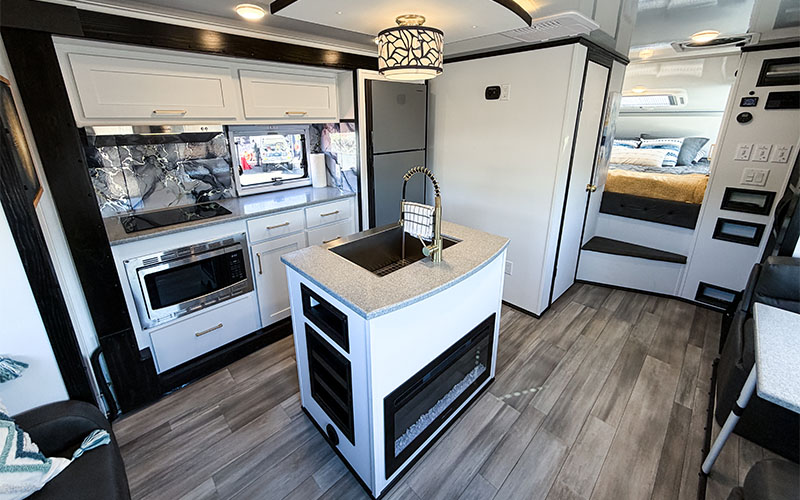
The bright white composite ceiling reflects a tremendous amount of light, making an already massive interior feel even larger.
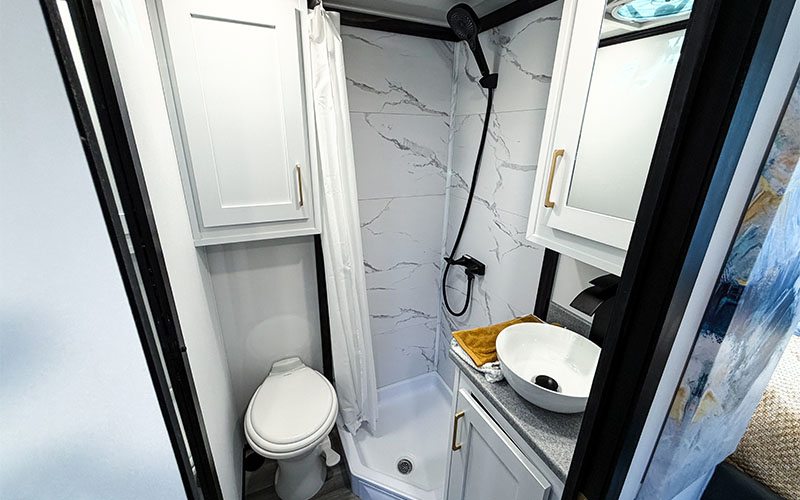
If Jesse’s goal was to maintain Rugged Mountain’s signature interior character while modernizing the structure underneath, mission accomplished.
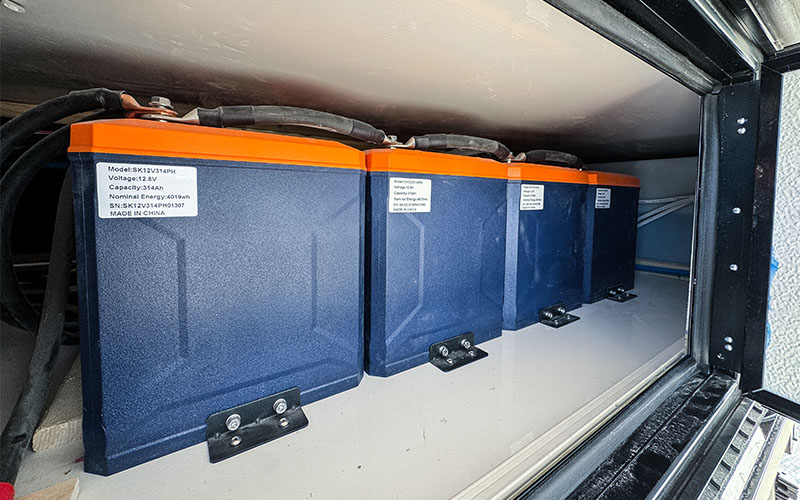
With an MSRP of $117,000, the Denali 3SC is aimed squarely at buyers who don’t want to compromise on comfort, capacity, or capability. This camper packs 80 gallons of fresh water, up to 1,200 watts of solar, and an enormous 1,256Ah lithium battery bank.
Translation? You can run the Houghton air conditioner for extended periods and spend far less time thinking about power management than most truck camper owners ever could.
Granite Platinum Prototype Demo
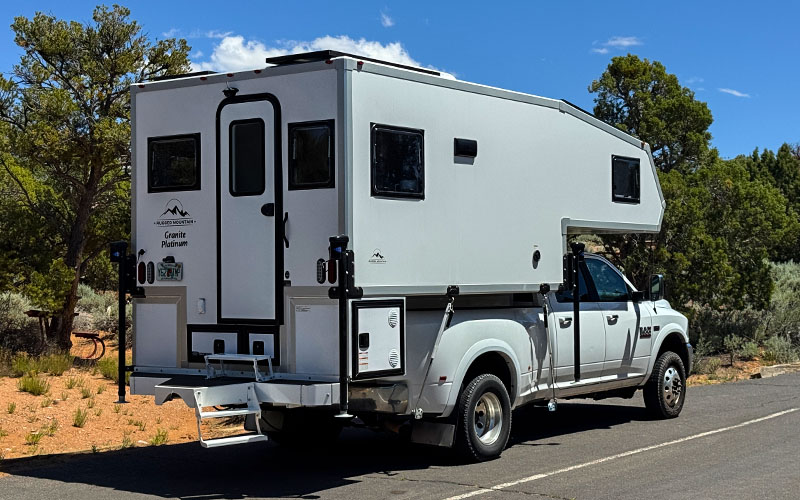
Meanwhile, Gordon and Angela are currently traveling in a Rugged Mountain Granite Platinum composite prototype to answer the questions many of us are already asking. Is composite panel construction noticeably lighter? Does it improve thermal performance? Do the expanded battery and solar capacities fundamentally change the truck camping experience—or are we approaching the point of diminishing returns?
We’ll have those answers soon. Stay tuned.
For more information on Rugged Mountain, visit their website at ruggedmountaincustomrv.com. Click here to get a free Rugged Mountain brochure.