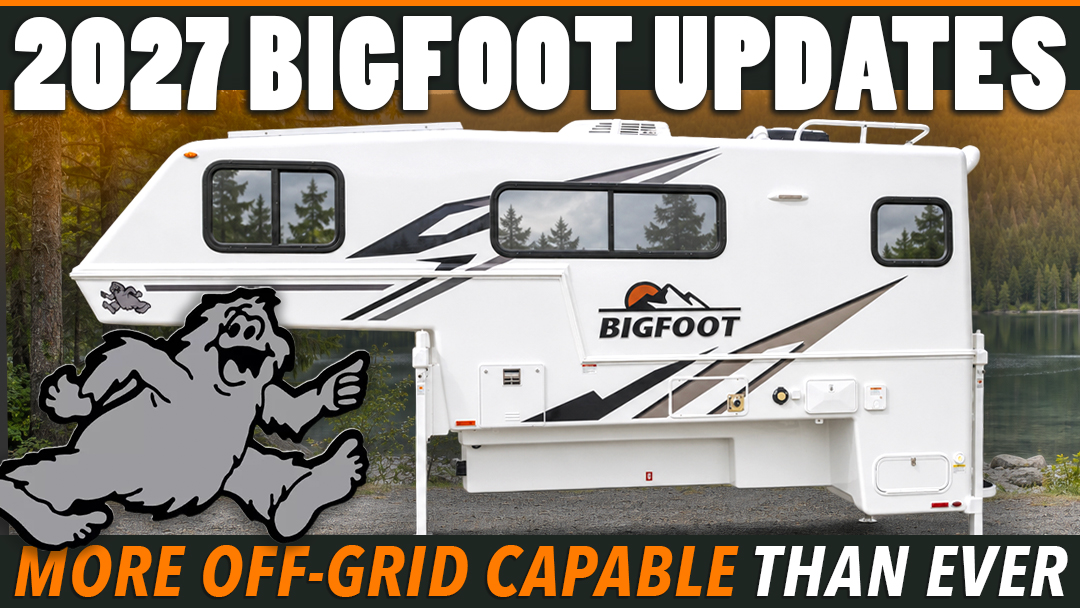
Bigfoot charges into 2027 with a 48-volt power system, high-efficiency combined heating and hot water, and variable-speed air conditioning. Plus, new exterior graphics give Bigfoot spotters something else to investigate. We have photo evidence!
Many of the team members building Bigfoot campers have been with the company for decades. That experience guides Grant Bilodeau, President of Bigfoot, and his crew as they test installations and gather customer feedback before introducing improvements on the production line. The expectation is to build campers that owners can depend on for decades.
That approach carries through Bigfoot’s non-slide 1500 and 2500 Series truck campers. The 1500 Series offers a lower-profile, non-basement design with wet baths. The 2500 Series adds thicker insulation, a heated basement, and options for larger dry-bath layouts. Each model has its appeal, but the same standard applies to every camper coming down the line: “It’s either a Bigfoot, or it’s not.”
So when Grant told us about several significant equipment changes, we knew there was a reason behind each one. For 2027, Bigfoot adds options for an EcoFlow 48-volt lithium power system, Truma Combi heating and hot water, and a variable-speed Furrion ChillCube air conditioner. New exterior graphics round out the updates, making a Bigfoot easier to spot than ever before.
Consider this our investigation into the latest Bigfoot sightings in Armstrong, British Columbia. With a named source, firsthand details, and photographs that are actually in focus, we’re getting a clear picture of what’s changing and what it means for the Bigfoot line-up.
To learn the full story behind the 2027 Bigfoot updates, we talked to Grant Bilodeau, President of Bigfoot RV.
Request Bigfoot RV brochures here
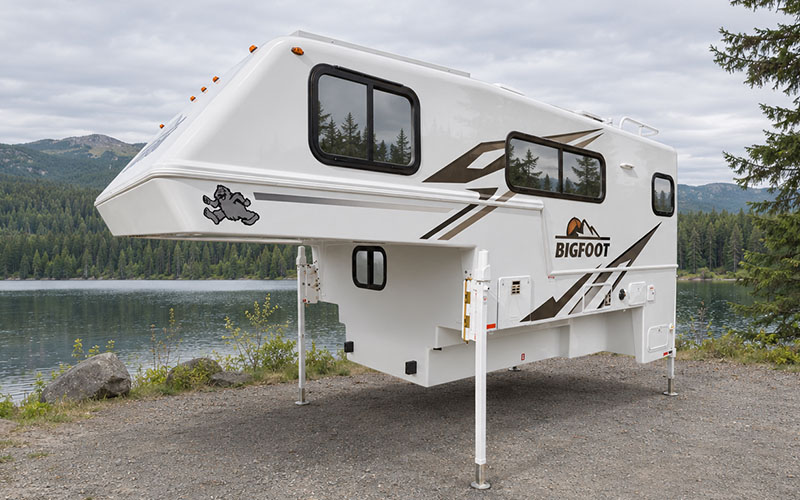
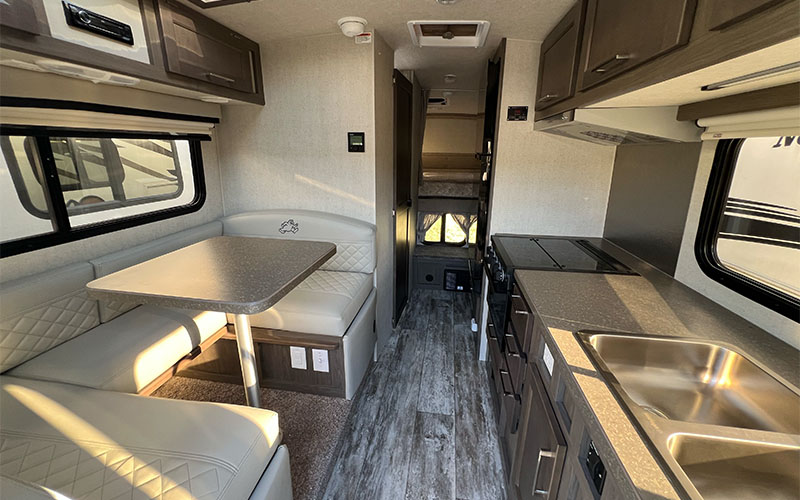
2027 Bigfoot 25C10.6
Before we get into the updates, how are things going at Bigfoot?
Things are good. We’ve had a subtle increase in production. An extra unit or two a month is significant for an operation our size.
Over the past few years, we’ve kept production steady, which helps us maintain our quality standards. Changing production rates affects staffing, which makes quality more difficult to manage. We feel fortunate to have a solid foundation of people, and I think we have one of the strongest teams we’ve had in quite a while.

Bigfoot RV factory in Armstrong, British Columbia
How are you introducing 2027 Bigfoot updates while maintaining quality on the production line?
We take an incremental approach to making changes. We start with one unit and gather feedback before expanding it into other models.
My wife, Denise, joined the team in 2021. She oversees warehouse coordination, works with suppliers to manage inventory, and plays a key role in quality control through interior inspections. She’s very detail-oriented, and her involvement has brought an even higher level of care and attention to our work.
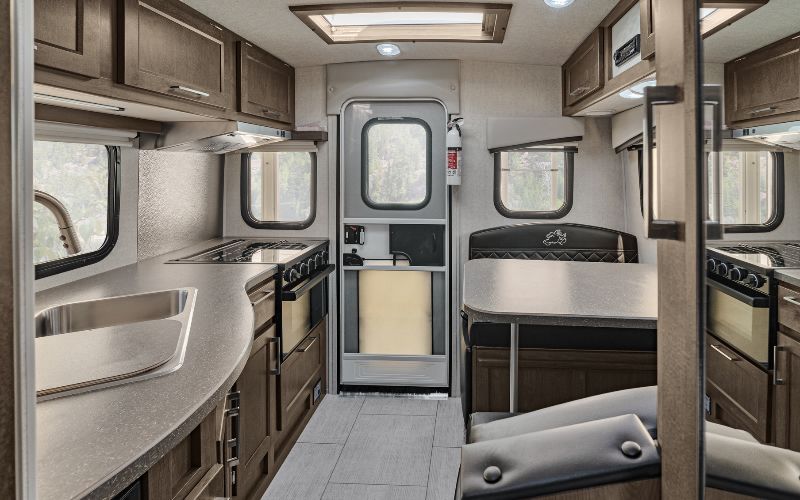
2027 Bigfoot 9.4
Several members of the Bigfoot team have been here for decades. Their experience gives us a strong foundation for introducing new features.
Bigfoot campers have been lithium-compatible since 2018, but you held off on offering lithium batteries until now. What made EcoFlow’s 48-volt system the right choice for Bigfoot?
There’s a clear demand for a factory-installed lithium system. I’ve installed a few custom lithium systems over the years, and I could see how complicated they would be to integrate into production. With technology moving so quickly, I knew it was only a matter of time before someone made it simpler.
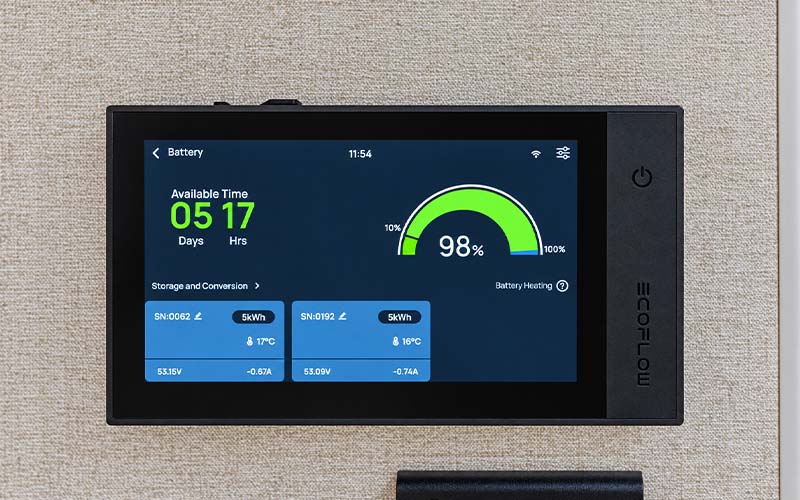
EcoFlow combines each component into one integrated 48-volt lithium electrical system. The Power Hub, batteries, electrical distribution panel, and user interface are connected using EcoFlow’s dedicated cables and connectors, making installation more straightforward.
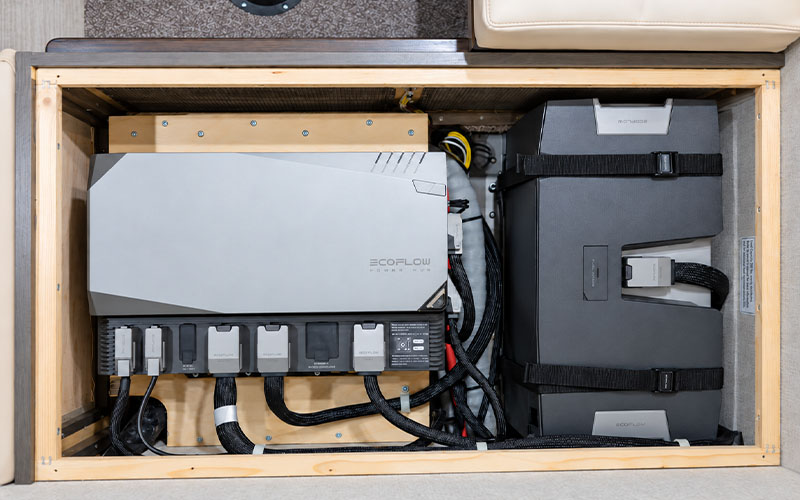
Installed EcoFlow 48-volt Power System
We also wanted a system that was easy for Bigfoot owners to use. Most customers don’t want to read through various manuals to understand their power system. EcoFlow’s user interface can be controlled on one screen or through an app, and the Power Hub handles the settings. You’re getting substantial power without a complicated system to manage.
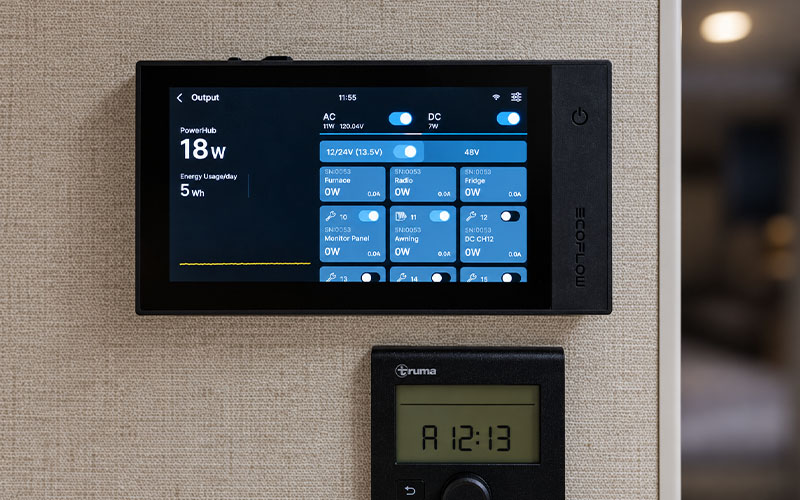
EcoFlow Power Control Panel
Servicing is simpler, too. If a component needs to be replaced, it’s easy to unplug it and connect a new one. That combination of installation, operation, and servicing is why we chose EcoFlow.
How does the EcoFlow system work, and what battery capacities is Bigfoot offering?
The Power Hub manages the charging from solar, shore power, and DC-to-DC charging from the truck. It also houses the 3,600-watt inverter. The batteries operate at 48 volts, and the hub converts that power to 12 volts for the camper’s DC equipment and 120 volts for household outlets.
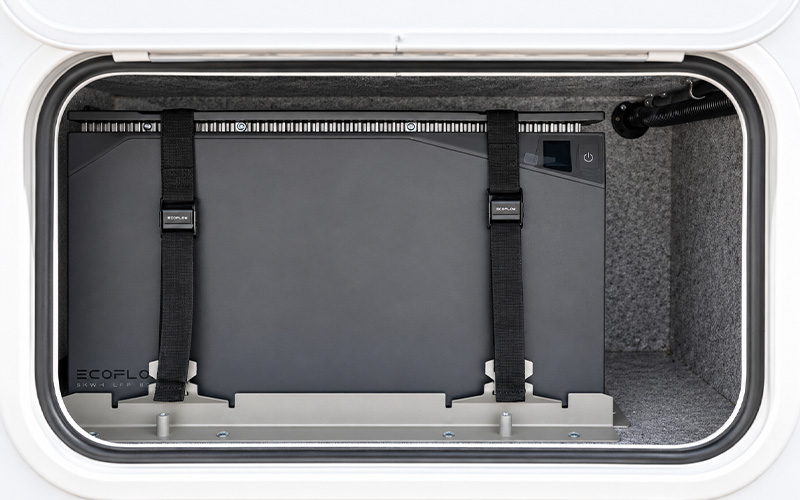
EcoFlow 5 kWh battery
We’re offering 2-kilowatt-hour and 5-kilowatt-hour lithium batteries. To put that in perspective, a 5 kWh battery stores roughly the same energy as 417Ah at 12 volts.
Which Bigfoot models can be ordered with an EcoFlow system?
EcoFlow is exclusive to our 2500 Series truck campers. We’re still determining which models and option combinations can accommodate the different battery capacities. Available space depends on the other options selected.
Truma is another new option for Bigfoot buyers. Which systems are you offering, and in which models?
We’ve used the Truma Combi in our trailers for some time, and we’ve now brought that option into our 2500 Series truck campers. It combines the furnace and water heater in one system. Like EcoFlow, it’s limited to the 2500 Series due to space constraints.
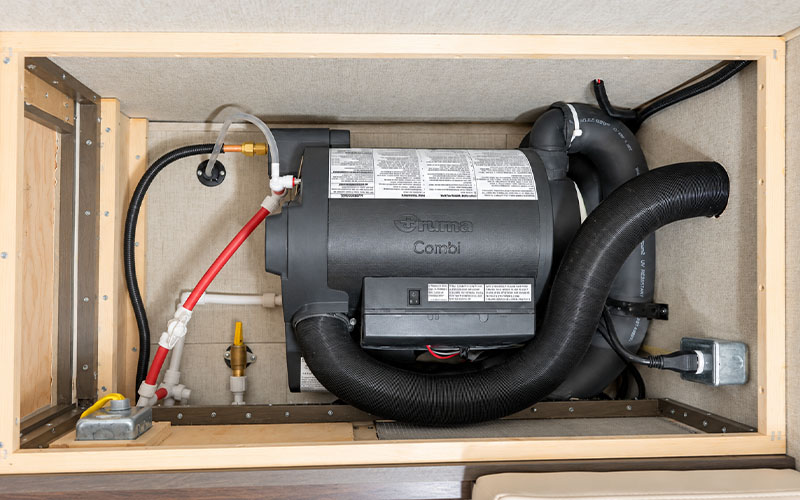
Installed Truma Combi furnace and water heater
The Dometic 30,000-BTU furnace and six-gallon water heater remain standard for customers who prefer that setup and/or want to avoid the additional expense.
What advantages does the Truma Combi offer?
The biggest differences with the furnace are how it delivers heat and the noise level. It has a boost mode to quickly bring the camper up to temperature, then reduces its output to quietly maintain that temperature without the constant cycling of a conventional furnace.
The Combi has a smaller 2.64-gallon water heater compared to our conventional six-gallon tank. The difference is that it heats the water to 140 degrees Fahrenheit, so you’re mixing in a lot of cold water at the faucet or shower. That helps stretch the hot water supply despite the smaller tank.
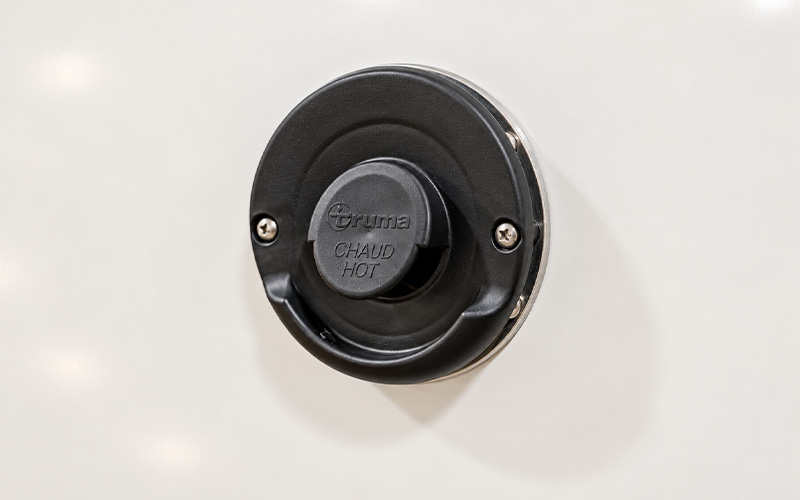
Truma Combi exhaust vent
You can operate the Truma Combi system on propane, electricity, or a combination of both. If the camper is optioned with EcoFlow, you can operate the furnace and water heater with electricity off-grid. The exact runtime depends on your battery capacity and power usage. For extended off-grid camping, you’d typically rely on propane.
Have you tested the EcoFlow and Truma systems together?
Yes. In 2024, we installed both systems in a Bigfoot trailer. That trailer went through Truma’s cold-chamber testing in Elkhart, Indiana, and achieved a Gold certification.
The owner then took it to Breckenridge, Colorado, for a five-week ski trip. He only went through one twenty-pound propane bottle using a combination of electricity and propane.
Another 2027 change for Bigfoot truck campers is the Furrion ChillCube air conditioner. What prompted that switch?
I started hearing positive feedback from dealers about how quiet the Furrion ChillCube is. When I looked into the specifications, the variable-speed technology stood out.
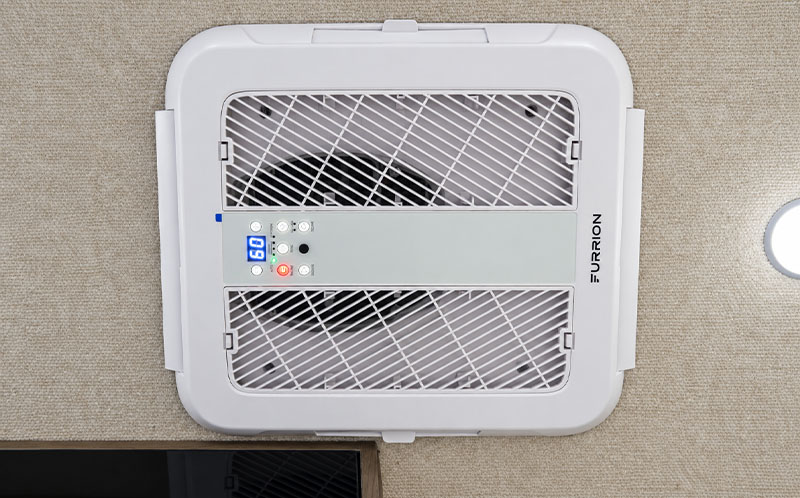
Furrion ChillCube air conditioner from inside a Bigfoot
The air conditioner adjusts its output based on cooling demand rather than operating at full power all the time. Once the camper reaches temperature, it reduces its output to use less power. We’re moving to the 15,000-BTU ChillCube with a heat pump throughout our 1500 and 2500 Series campers.
What should owners understand about using the heat pump in cold weather?
The heat pump can be useful in mild weather conditions, but my concern is somebody relying on it when temperatures drop below freezing. The heat pump warms the living area, but it doesn’t send heat through the furnace ducts to the tanks and plumbing compartments.
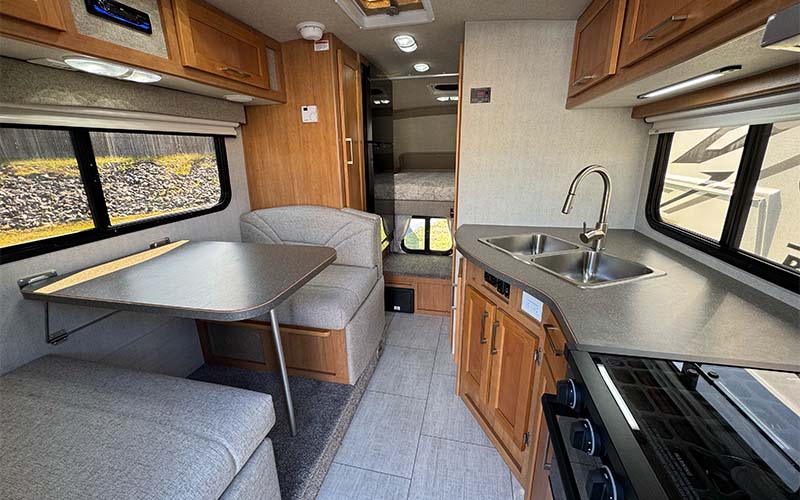
2027 Bigfoot 9.4
For four-season camping in freezing weather, the furnace should be used to protect the camper’s water systems.
How does the ChillCube’s variable-speed operation affect power consumption and runtime?
I like to explain electricity as a bucket of water. The battery is the bucket, and it can be small or large. Charging adds water through the top, while running equipment drains it through a hole in the bottom.
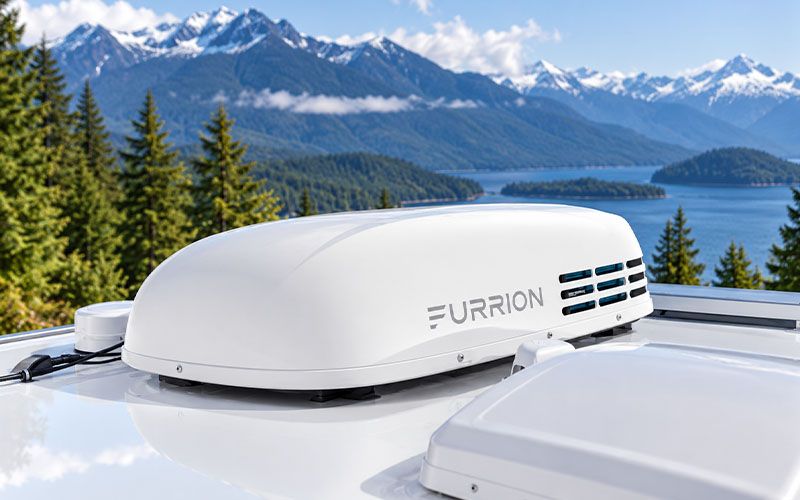
Furrion ChillCube air conditioner from outside a Bigfoot
How long that bucket lasts depends on how much water you’re letting out and how quickly you’re filling it back up. Everybody uses power differently. If you crank up the air conditioner and turn everything else on, you’ll drain it pretty quickly. If you manage it properly, you can extend that time substantially.
The 15,000-BTU Furrion ChillCube draws approximately 1,500 watts at maximum cooling. At medium cooling, that drops to around 800 to 850 watts. Once the camper is cooled down, the air conditioner can operate in eco mode, drawing approximately 300 to 350 watts.
Actual runtime depends on battery capacity, cooling demand, and other electrical loads. Additional appliances will reduce the available power, while solar charging can help extend runtime.
Bigfoot also recently introduced new exterior graphics. What inspired the change?
We wanted a cleaner, more modern look that still felt like Bigfoot. The Bigfoot name is bold and easy to recognize from a distance, and we worked some subtle details into the design. We went through many different designs and colors to get it right, and I’m really happy with how the new graphics turned out.
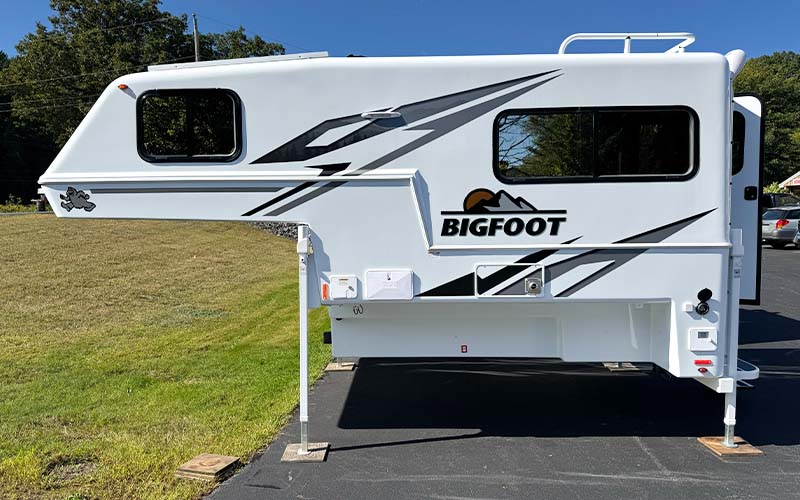
2027 Bigfoot 9.4 at Truck Camper Warehouse
We kept the Bigfoot character, but separated it from the lettering. Now everything has its own space, and the overall look is much cleaner. It’s unmistakably a Bigfoot.
“It’s unmistakably a Bigfoot.”
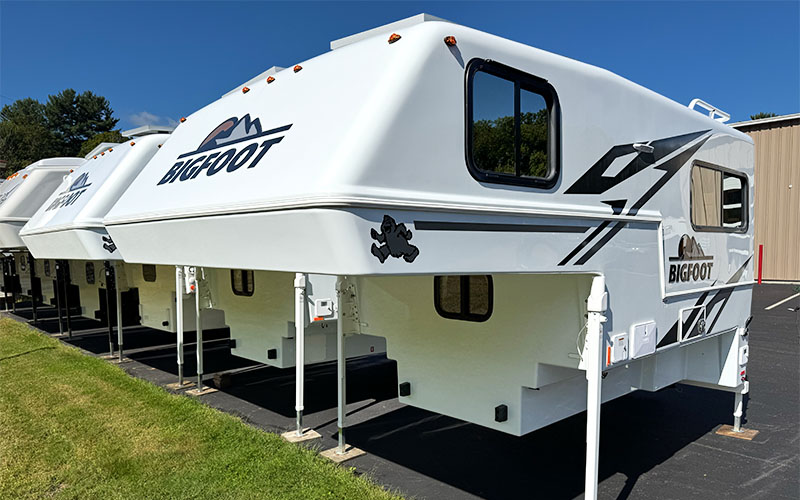
Bigfoot also recently launched a new website. What improvements did you make?
The new site is easier to navigate and gives customers more information about our campers. Each model has its own section with floor plans, interior and exterior photos, specifications, and decor choices. There’s also a comparison tool that lets you put two models side by side to see how they compare.
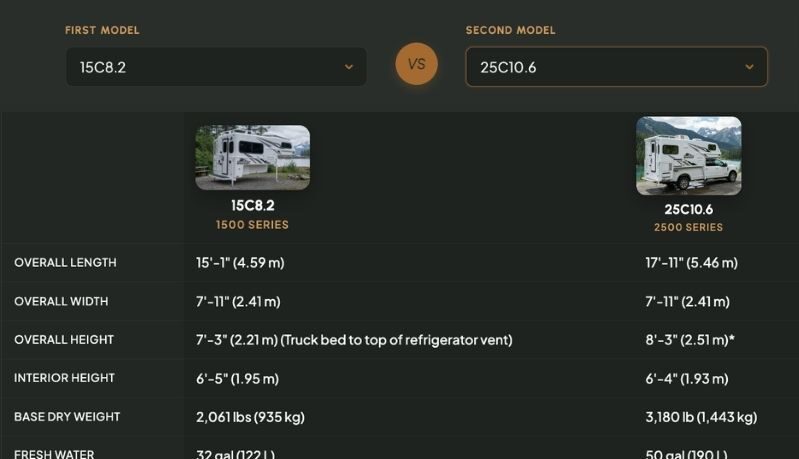
Bigfoot model comparison tool
We’ve added more photos and videos, along with frequently asked questions, warranty information, and our dealer network. The website answers more questions upfront, but we’re still here to help if customers need more information.
What other changes are coming to Bigfoot truck campers for 2027?
I expect 2027 will mark the end of absorption refrigerators in our lineup. We’re already installing Furrion 12-volt compressor refrigerators for customers who request them, and that’s the direction we’re headed.
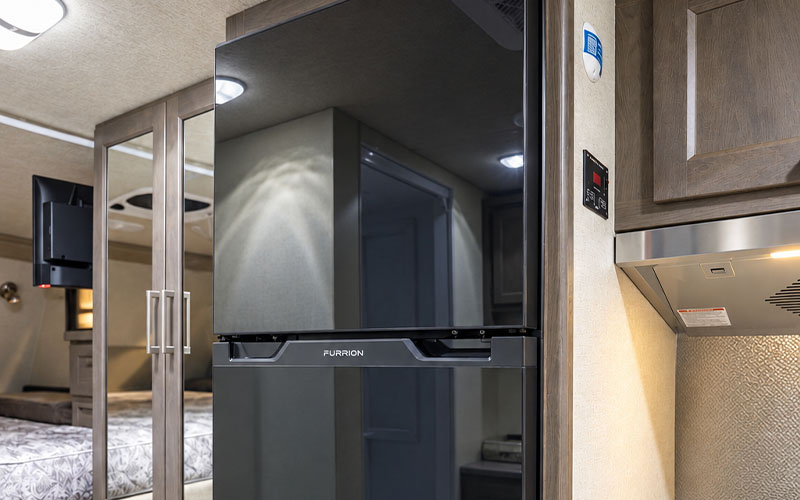
Furrion 12-volt refrigerator
EcoFlow and Truma are significant changes, but we’re always making improvements here and there. If we find something we can do better, we work on it. We don’t feel the need to wait for a new model year to put a good idea into production.
“We don’t feel the need to wait for a new model year to put a good idea into production.”
As Bigfoot moves forward with this new technology, what remains most important to you?
I take pride in building campers that will still be used long after I’m gone. Quality gets you part of the way, but you also have to offer the amenities and floor plans that fit people’s lifestyles.
That’s where these updates come in. We’re always pushing to make our campers better, without compromising the quality Bigfoot is known for.
For more information on Bigfoot Industries, visit their website at bigfootrv.com. Click here to request a free Bigfoot camper brochure.