Is truck camping the secret to a healthier, happier life? As it turns out, our time on the road may be doing far more for our physical and mental health than we realize. Better pack the camper. Doctor’s orders.
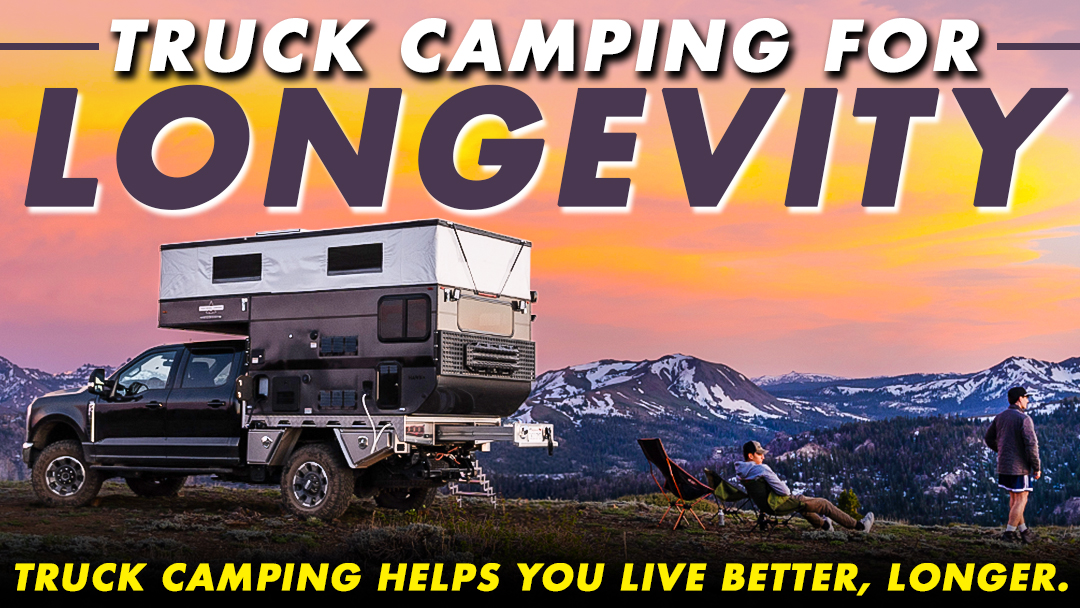
I’ve been reading a lot about longevity and health lately, and the same recommendations keep coming up. Spend time outside. Move your body. Challenge your brain. Try new things. Build relationships. Plan something to be excited about.
As a truck camping enthusiast, I looked at that list and thought, Isn’t that what we do every time we go on a trip?
I don’t load up our camper specifically because I’m trying to live longer. There are places to see, things to experience, and sometimes I just need to get away for a while. But truck camping naturally creates many of the conditions researchers associate with healthier, happier aging.
So, let’s follow a truck camping trip and see what the science says along the way. As it turns out, the benefits may begin before we even turn the key.
Think about the last time you planned a truck camping adventure. Maybe you pulled out a map with your spouse, or maybe you just started asking questions.
Where should we go? I could finally hike Angel’s Landing!
What should we stop to see on our way? Let’s find a Dark Sky Park next week to watch the meteor shower!
Where should we stop for food? Let’s find a local farmers market!
Where should we camp? The view down that forest road looks amazing.
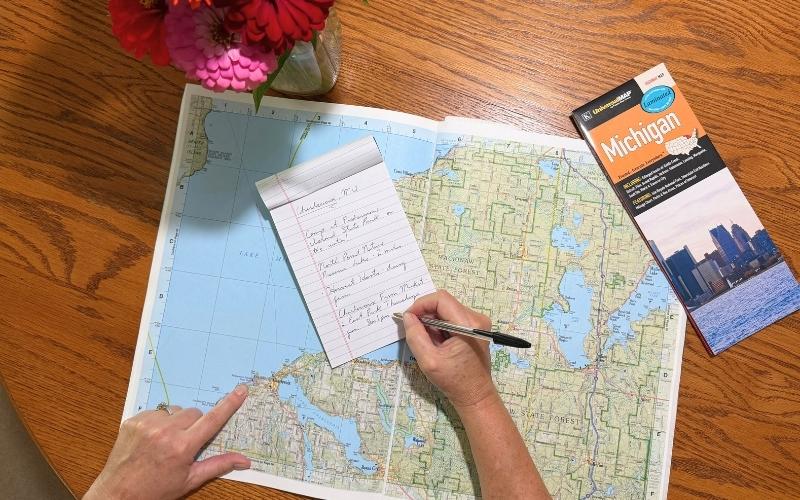
Planning a truck camping trip through Michigan with a map and a list of possible stops
I’ve found that envisioning a future trip can bring me nearly as much joy as the trip itself. And there’s research behind why anticipating that experience feels so good. A 2015 study published in the Journal of Experimental Social Psychology found that anticipating a positive experience can increase positive emotions and help us cope with and recover from stress. Before we even leave the driveway, just the thought of truck camping may already be doing some good.
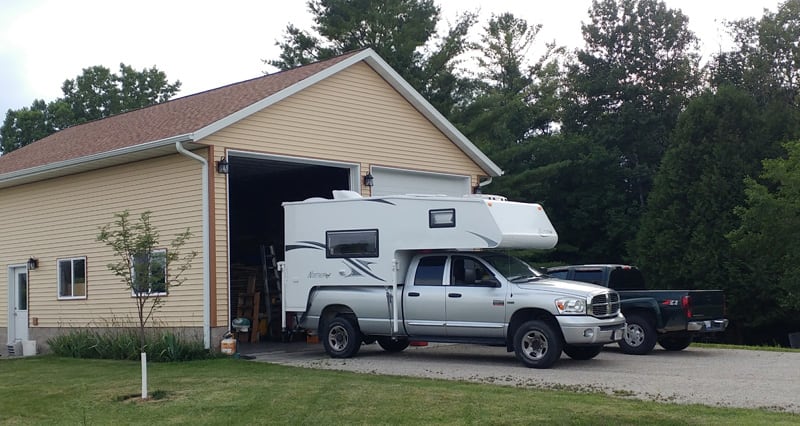
A truck camper ready to depart on a trip. Photo courtesy of Kathy Claycomb.
Eventually, the departure day arrives. Coffee in hand, you do a safety check around your camper and pull out of the driveway. Home is in the rearview, and so is your routine. New roads, places, and challenges take over. Your brain is officially off autopilot.
At home, routines take over, and we easily slip into familiar rhythms day after day. The same roads take us to work and the grocery store. The view of the backyard only changes with the seasons, and basic things like water, power, and temperature control don’t require much thought. Truck camping changes that.
On the road, your brain is already flooded with new thoughts. Which route will get us to camp the fastest? Is it cheaper to get gas here or should we wait another fifty miles? I’m so glad we stopped at the visitor center to learn how this landscape was formed. Is that branch high enough to drive under? Does our site look level enough? Where did I pack the bottle opener? All that novelty gives the mind a little exercise.
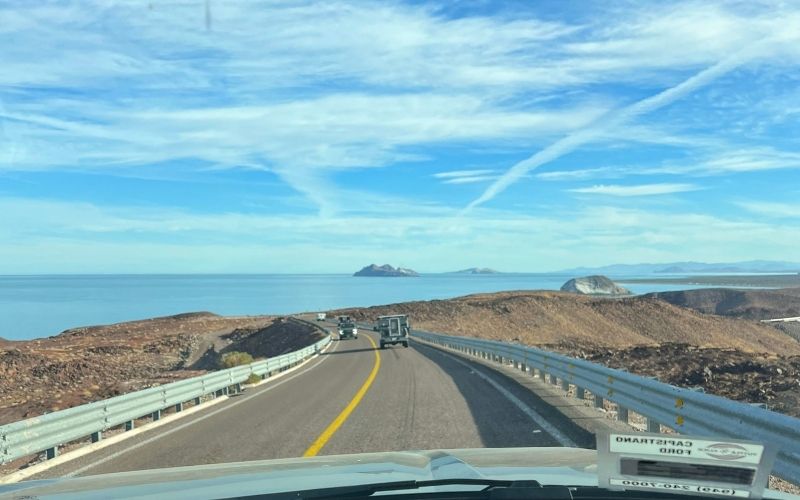
A view of the Sea of Cortez from Federal Highway 5 in Baja California, Mexico
Our brains retain the ability to adapt and form new neural connections throughout adulthood. This is known as neuroplasticity. According to a 2025 review published in Brain Research, adults can continue forming new synaptic connections and even reorganizing existing circuits when engaged in mentally stimulating pursuits.
Those stimulating experiences can also help build cognitive reserve, which is essentially the brain’s resilience against age-related decline. Travel combines mentally stimulating experiences like dealing with temperature swings, learning new things, making decisions, and solving problems.
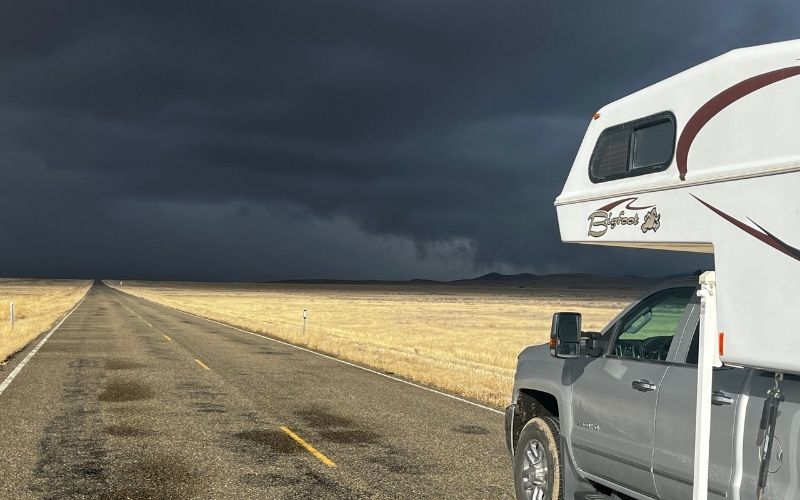
Navigating a storm with a Bigfoot truck camper in northern Nevada. Photo courtesy of Mark Motsko.
Who knew a wrong turn, finding a gas station with a nearly empty fuel tank, or calculating how many more showers you can take with your remaining fresh water could have an upside? Truck camping gives our brains plenty to think about. Fortunately, once we arrive at camp, the next longevity benefit requires considerably less effort.
After arriving at camp, pulling out the camp chairs, and breaking into the refrigerator, your entire living environment shifts. From that moment on, the outdoors becomes your living room.
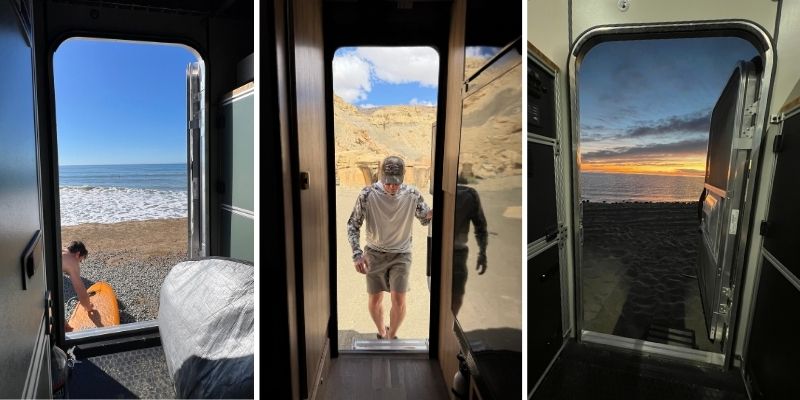
Different views from truck camper entry doors
According to UCLA Health, spending time in nature has been associated with reduced stress, improved mood, better cognitive function, and physical health benefits. A study of nearly twenty thousand people published in Scientific Reports found that those who spent at least two hours in nature during the previous week were significantly more likely to report good health and high well-being than those who reported no natural exposure.
Two hours disappear quickly at a campsite. Explore around camp, enjoy a meal outside, or sit around a campfire, and you’ll easily surpass the two-hour mark. Now consider the days, weeks, or even months that truck campers spend in nature while on a trip.
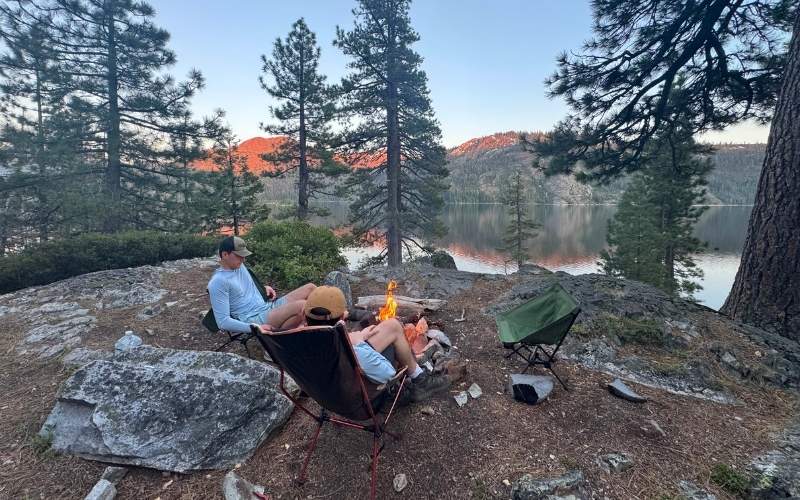
A Japanese practice called Shinrin-yoku, or “forest bathing,” involves immersing yourself in a natural atmosphere and connecting with the environment through your senses. According to UCLA Health, studies suggest forest bathing can benefit cardiovascular and immune health, improve mood, and reduce symptoms of depression and anxiety. Many truck campers unknowingly do something similar while sitting under their awning with a cup of coffee surrounded by pine trees.
Even when “inside,” a truck camper can blur the line between indoors and out. Park on a beach with the windows open and you’ll feel a cool breeze filtering through. If you sit at the dinette at night, you may hear the sounds of crickets and frogs through the screens. Sitting in our camper often feels more like spending time in a comfortable shelter within nature than being separated from it.
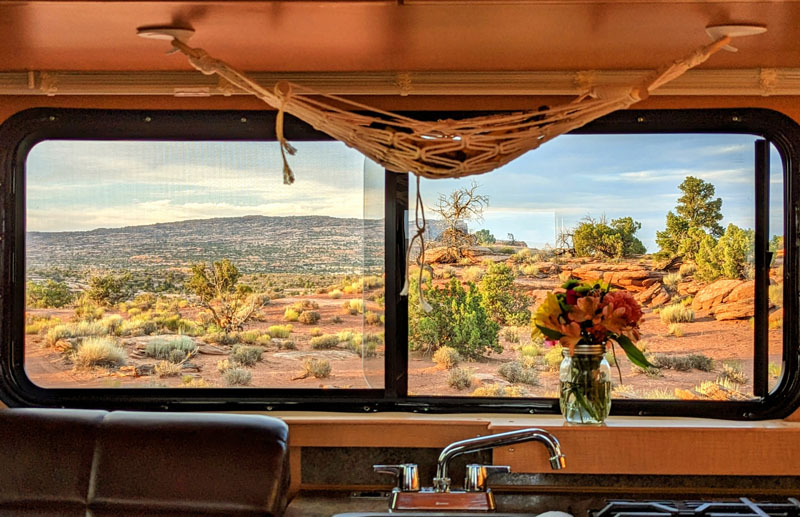
View of Utah from inside an Alaskan truck camper. Photo courtesy of Jake Kramer and Kate Cassidy.
That immersion is part of why I’ve spent as much time camping as possible. A weekend indoors leaves me drained and irritable. Yet I feel mentally refreshed after a weekend of waking up with the sun, walking through the woods, and eating outside.
Time in nature is an almost unavoidable part of truck camping. When you go a step further and start to add in the everyday tasks of camp life, another healthy habit begins adding up almost without trying.
That first morning at camp, you might check the weather and start thinking about the day. There’s a rushing waterfall a couple of miles down the road. That lake you passed yesterday has a trail lined with blooming flowers. And what about that charming little restaurant you saw in town? Before you know it, your shoes are on, and you’re out the door.
However, hikes and long walks through new towns are only part of it. Stepping in and out of the camper, climbing into the cabover, gathering firewood, and exploring around the campsite may barely register as exercise, but all that movement adds up. I’m always surprised by how quickly my step count climbs on my smartwatch while truck camping.
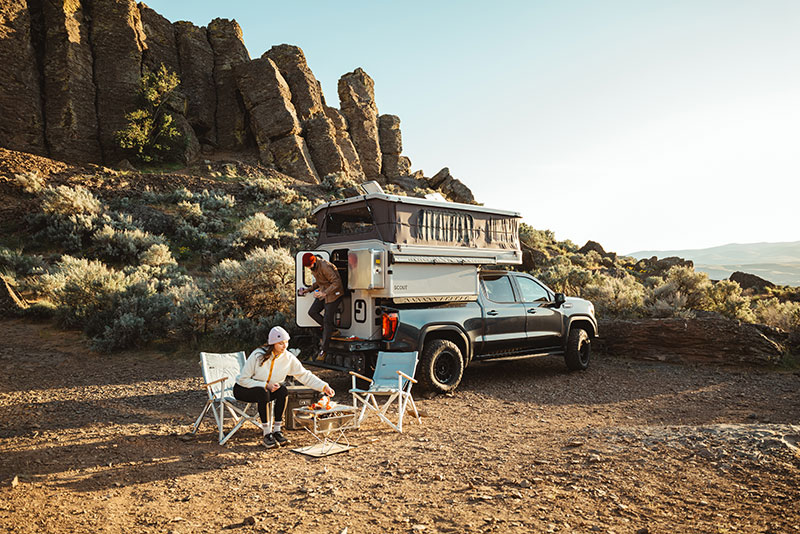
Scout Olympic owners enjoying camp
The less glamorous parts count too. Washing a truck and camper by hand is no small feat. Cassette owners might have to carry a forty-pound container to a pit toilet. Pop-up owners are no strangers to raising the roof. Maybe you had to fix something under the truck. The list goes on.
It’s a given that exercise is good for us and that truck camping in general requires movement, but I wanted to know more. Do the environments we’re often in while truck camping have an influence on movement?
A U.S. Forest Service review of research on nature and human health reported that people exercising in natural environments tend to do so for longer periods and at greater intensities. Interestingly, the same review found that the positive health effects of green space may even be enhanced by the presence of water, or “blue space,” giving us another reason to take that hike around the lake.
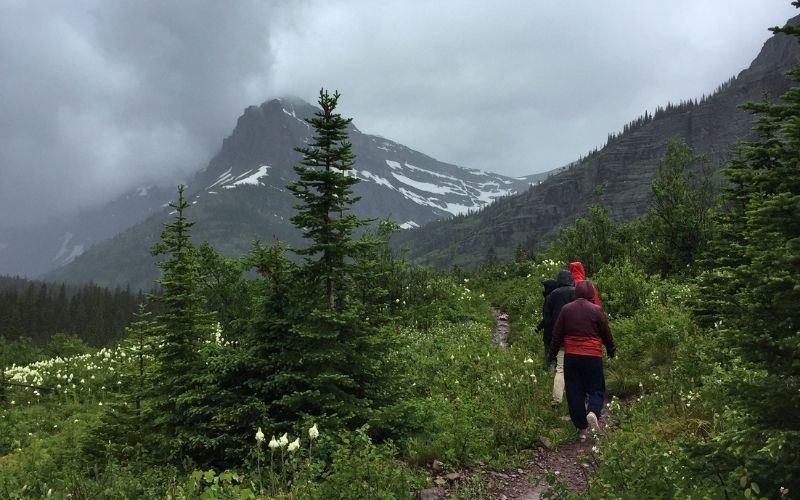
Glacier National Park, Montana
That finding makes sense to me. On a treadmill, I’ll stare at the clock counting down my self-assigned minutes. On a trail, I’m just curious about what’s around the next bend. Whether it’s a five-mile hike or five trips in and out of the camper, truck camping naturally builds movement into the day.
At this point in your trip, you’ve driven many miles, enjoyed meals, gotten lost, and solved problems with whoever is sharing your campsite.
When you travel with a companion, truck camping creates quality time together. At home, the people we love may spend most of the day going in different directions.
Without work emails, household chores, and the usual distractions competing for your attention, you sit outside after dinner, talk, laugh, and enjoy being together. That uninterrupted time with the people you care about may be one of the healthiest parts of truck camping.
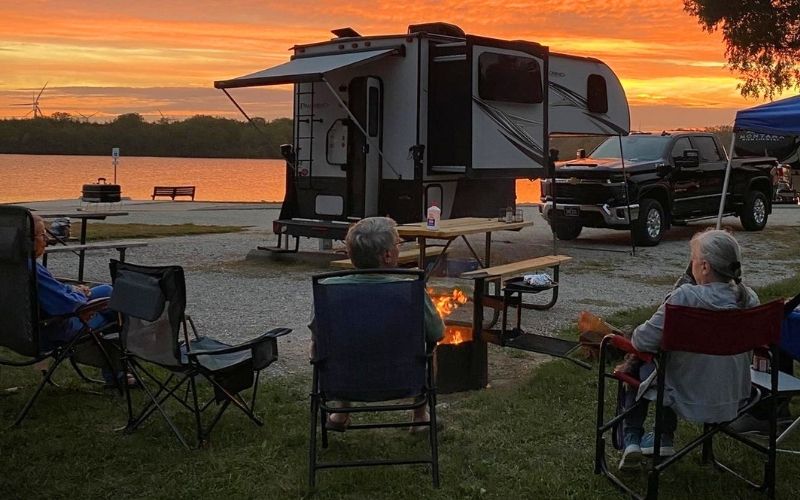
A family camping trip at Green Valley State Park, Iowa. Photo courtesy of Ellen Kearney.
In 1938, the Harvard Study of Adult Development began tracking two hundred sixty-eight Harvard sophomores. More than eighty years later, it has become one of the world’s longest-running studies of adult life. The research eventually expanded to include another group of men from inner-city Boston, as well as spouses and descendants. Through all those decades of research, the biggest finding is simple: relationships can help us live longer, happier lives.
The study found that close relationships, more than money, fame, social class, IQ, or even genes, were better predictors of happiness throughout life. Those relationships also helped delay mental and physical decline as participants aged.
Of course, plenty of truck campers travel solo. Fortunately, you don’t have to share your dinette to benefit from social connection on the road.
Parking lots, trailheads, campgrounds, and gas stations aren’t places most people expect to make connections. Yet in my experience, when you throw a truck camper into the mix, someone usually wants to talk about it. Truck campers are unusual enough that people aren’t always sure what they’re looking at, yet cool enough that they want to come over and find out.
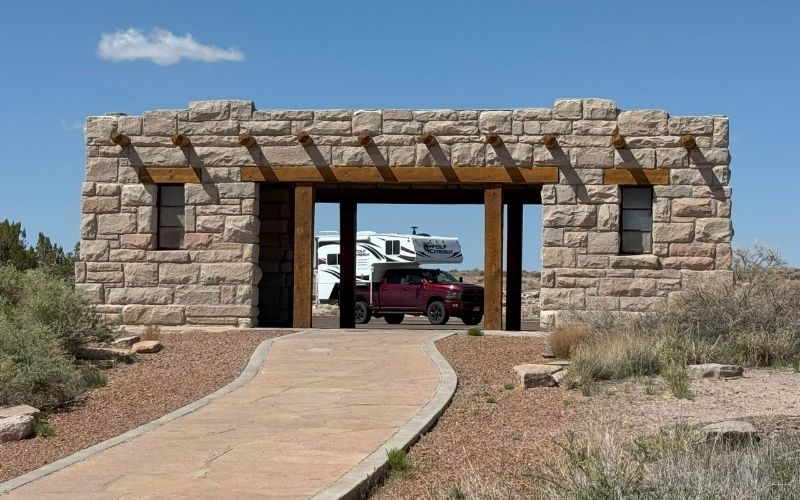
A Wolf Creek truck camper at Petrified Forest National Park, Arizona. Photo courtesy of Patricia Lentell.
I recently talked with a Northern Michigan local at a farm stand about our Ford F-350’s payload capacity. Leaving Buckskin Gulch in Utah, we stopped to share trail information with fellow truck campers. They were brief encounters, but for a moment, the world felt smaller and brighter.
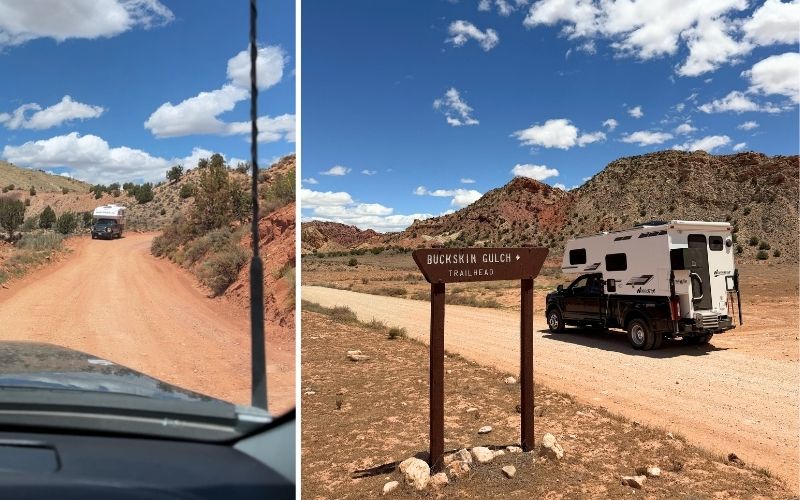
Leaving Buckskin Gulch, Utah
One of our most memorable run-ins with a stranger happened while doing laundry in Durango, Colorado. My husband, Eric, struck up a conversation with a father placing a For Sale sign in the window of his Winnebago. Eric learned that he had purchased the van after his wife passed away. He and his two teenage sons spent the past year traveling the country and learning how to heal.
That man left quite an impression on us. He shared some valuable life lessons and perspectives. On top of that, he gave us coordinates to a wonderful campsite that we enjoyed for a couple of nights. Months later, I still wonder if he sold the van and hope he is doing well.
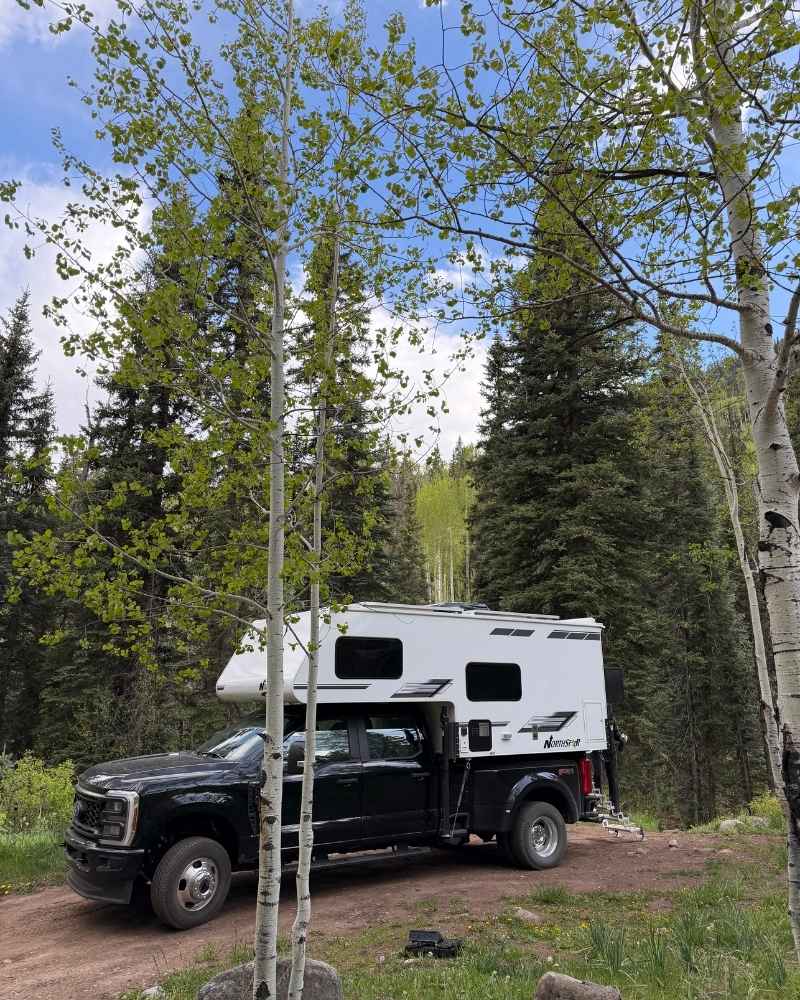
Northstar Night Hawk at the campsite recommended to us outside Durango, Colorado
Those brief connections that seem to happen naturally while we’re on the road may matter more than we realize. A study published in Proceedings of the National Academy of Sciences examined the social interactions and well-being of more than fifty thousand people. It found that having a more diverse “social portfolio,” with interactions across different types of relationships, including strangers, was associated with greater well-being.
So the next time you’re on the fence about attending a truck camper rally, joining that ranger talk, or waving at your campground neighbor, go ahead and say hello. There is a science-backed reason to do it.
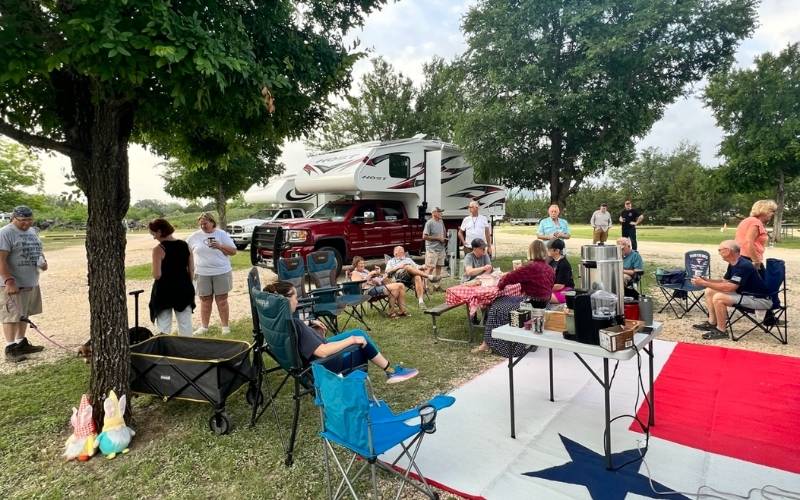
The Texas Truck Camper Rally, organized by Princess Craft RV
Eventually, it’s time to head back to reality. You spend the day driving, pull into the driveway, unload the refrigerator, and start the laundry.
Maybe you think about everything that happened along the way. There were unfamiliar roads, new places, and problems that needed to be solved outside your normal routine. Your brain encountered mentally stimulating challenges associated with neuroplasticity. Meanwhile, you walked trails, climbed in and out of the camper, hauled gear, and probably logged more steps than you realized. Your brain was challenged, your body moved more than usual, and you spent hours immersed in nature.
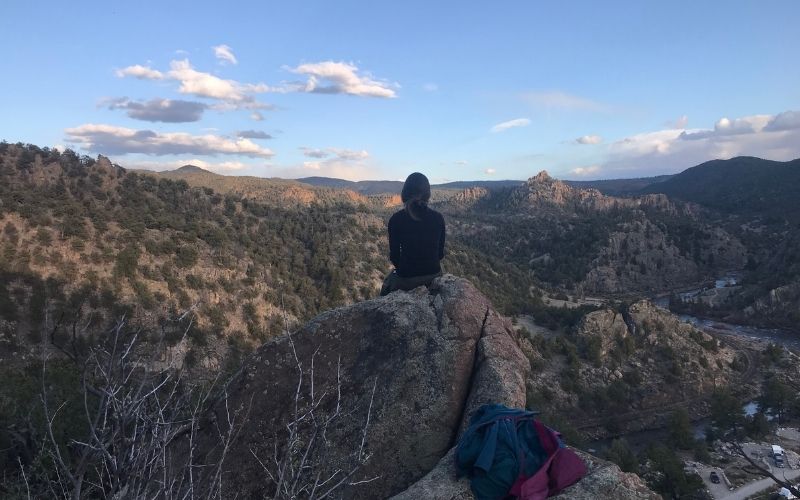
Enjoying the view above the Colorado River
Then there are the things that are harder to measure. Maybe you talked with a guide at the visitor center or with a friendly campground host. Uninterrupted time was spent with whoever came along. That hike with your spouse might become one of those stories that only needs to begin with, “Remember that time in Colorado…?” to make you both smile years from now. Those conversations and shared experiences may not show up on your smartwatch, but after everything we’ve learned, they deserve some serious health credit, too.
Healthy habits often sound like tasks we have to squeeze into an already busy schedule. Truck camping has a way of working them in for us. That may be what I appreciate most about all of this.
At home, your normal patterns return. You drive familiar roads you don’t need help navigating, and your routine starts to blur one day into the next. Then someone mentions a museum you’ve never heard of. You see a photograph of a lake you’d like to visit. If you’re like me, you start to get the travel itch. Before long, the map is spread across the kitchen table.
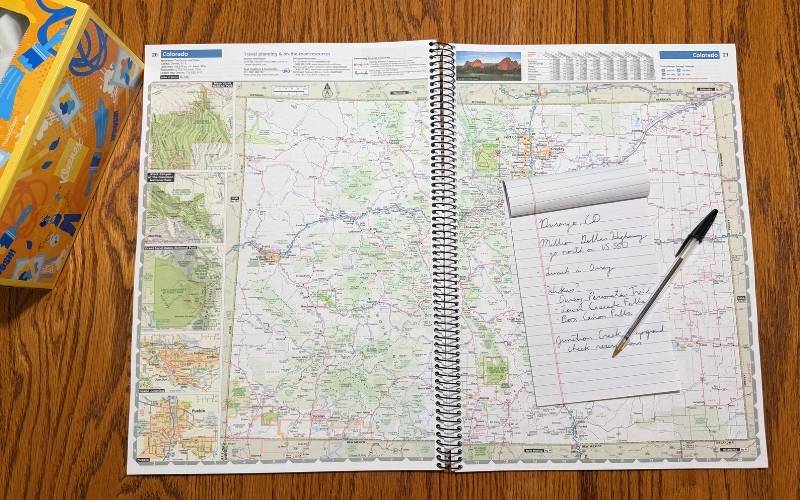
Planning a truck camping trip through Colorado with a map and a list of possible stops
Where is that? When should we go? What else could we see? Just like that, you have something new to look forward to.