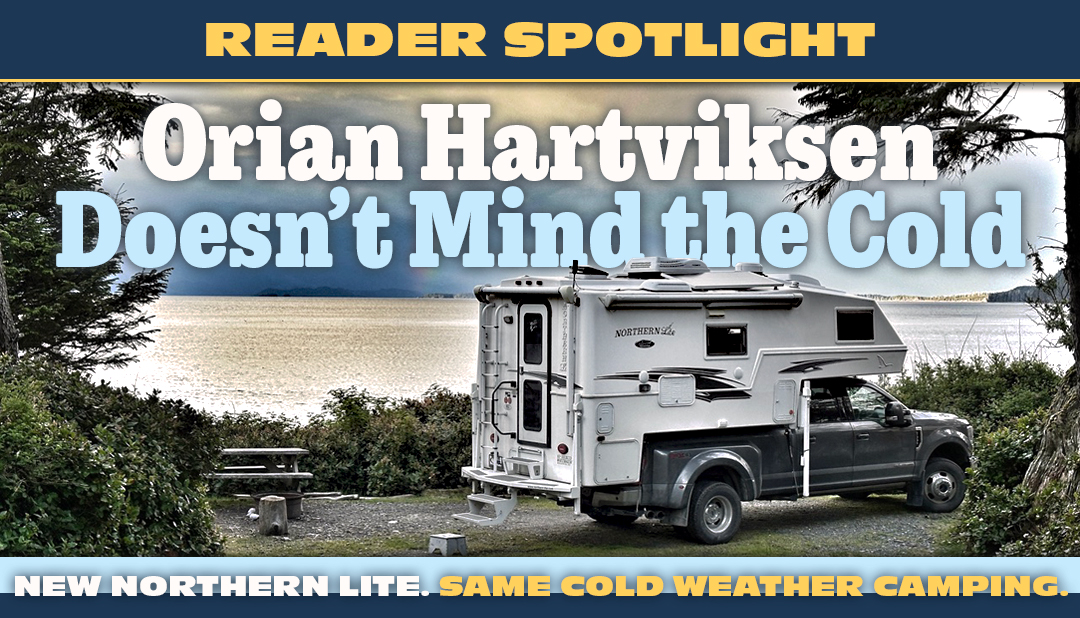
In 2012, Orian Hartviksen was exploring remote logging roads, camping at -15°C (5°F), and traveling far from campgrounds. Fourteen years later, Orian shares her travels, why she upgraded to a Northern Lite 10-2EX, and experienced trip tips and inspirations.
When we launched Truck Camper Magazine in 2007, we immediately came into contact with ladies who were leading the truck camping charge. In fact, our second story ever was with a lady who went solo truck camping after losing her husband.
Which brings us to a particularly fun interview with Orian Hartviksen. Orian challenged us with the idea that camping as cold as -15°C (5°F) was a fantastic way to lose the crowds, enjoy pristine wilderness, and access more boondocking opportunities. As fair-weather campers, we said, “Brrrr!” but our readers said, “Yes, please!” spurring us to seek out more and more winter truck camping stories. Thank you, Orian.
Our new Reader Spotlight series is the perfect excuse to ask experienced truck campers like Orian for tips, tricks, and recommended destinations and overnight sites. Here is Orian’s update on the last fourteen years of truck camping, and then some.
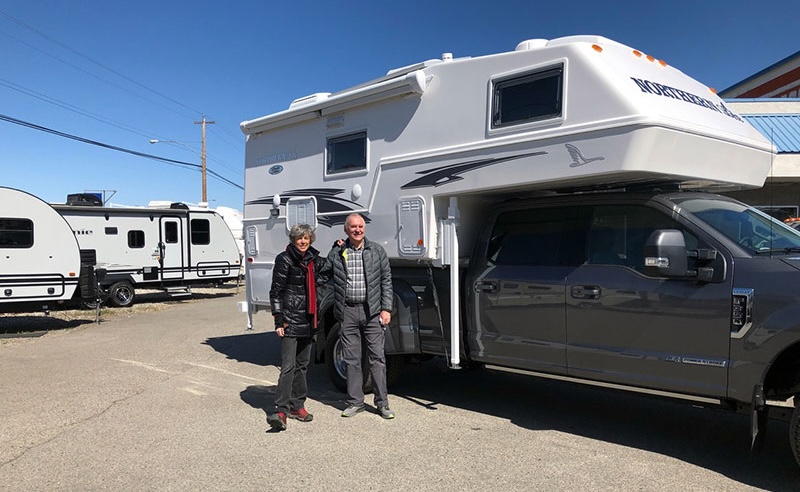
Orian and Alf the day they got their Northern Lite 10-2EX Limited Edition
When we first interviewed you fourteen years ago, you were traveling in a Northern Lite 8-11. What led you to upgrade to a Northern Lite 10-2EX?
We loved our 8-11, but had two issues. First, we were right at or just over our truck’s payload. And second, the interior height and size of bathroom were too small for my husband.
At 6’2”, he had difficulty taking a shower in the wet bath, and he broke the knob off the Fantastic Fan with his head. Our 8-11 was an older model with lower ceilings compared to Northern Lite’s current 8-11EX model.
To get the interior space, height and truck payload we wanted, we bought a Northern Lite 10-2EX LE and a Ford F-350 dually. The new truck also gave us a smoother ride and more table room for friends.
We also added a 3,000-watt inverter and have two 200Ah lithium batteries. That was a game changer. With all our devices and toys, like our WeBoost, our 6-volt AGMs couldn’t keep up. Now we never have to worry about power, and can use the heater, microwave and my hair dryer whenever.
The main difference is that we now have more luxuries, which, if anything, takes away from the camping experience. Parking in lots is a bit harder, and we are more selective choosing remote roads due to our increased size.
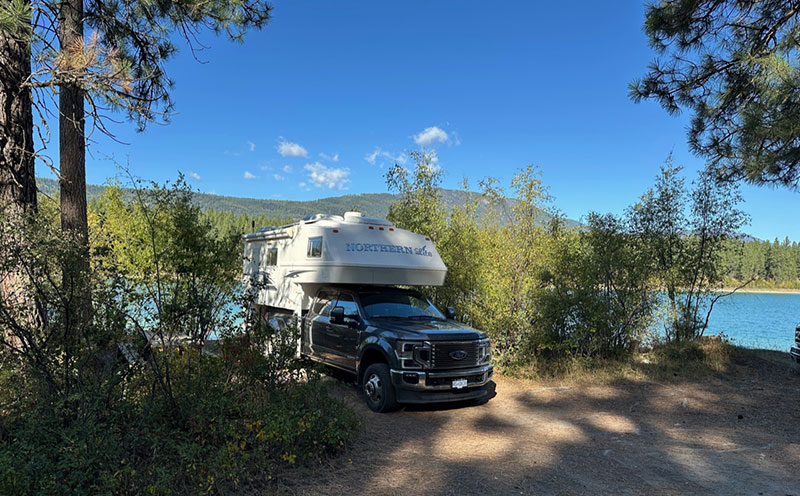
Johnson Lake, Southern Kootenays, British Columbia
Your original article was titled Minus 15 and Truck Camping because you weren’t afraid to camp in sub-freezing temperatures. Do you still seek out winter adventures today?
We don’t purposely head out when it’s below freezing, but since we travel primarily spring and fall, we often encounter snow in the mountains.
While we live in the Okanagan Valley in British Columbia—Napa North as it is sometimes called. The valley winters are mild. But if we head to the Yukon or almost any direction, we can still find winter.
My favorite winter camping memory is actually of Natural Bridges National Monument in Utah. We spent our evening riding the perimeter of the park on our bikes in T-shirts, and woke the next morning to a small blizzard.
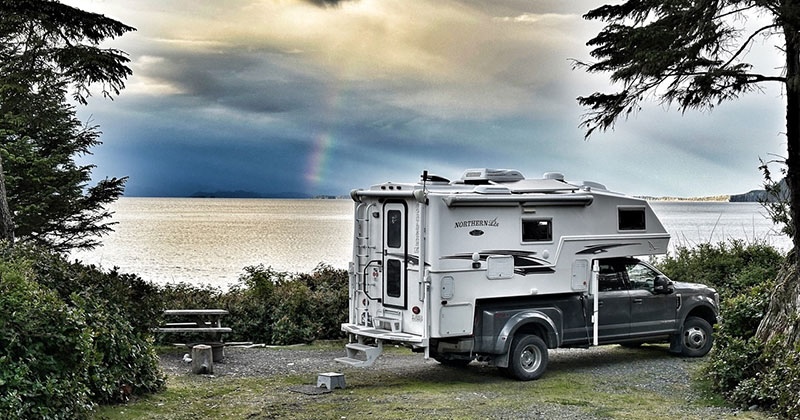
Malcom Island off Northern Vancouver Island, British Columbia
In 2012, you told us your favorite trips involved remote forestry roads, boondocking, and camping far from crowds. Has your camping style changed over the years?
We have continued to search out Rec Sites (formerly called Forestry Sites) down long rough roads, often two tracks and cliffside. We also enjoy Provincial campgrounds. Until Covid, we enjoyed month long treks down to Utah, as well as along the Washington and Oregon coasts.
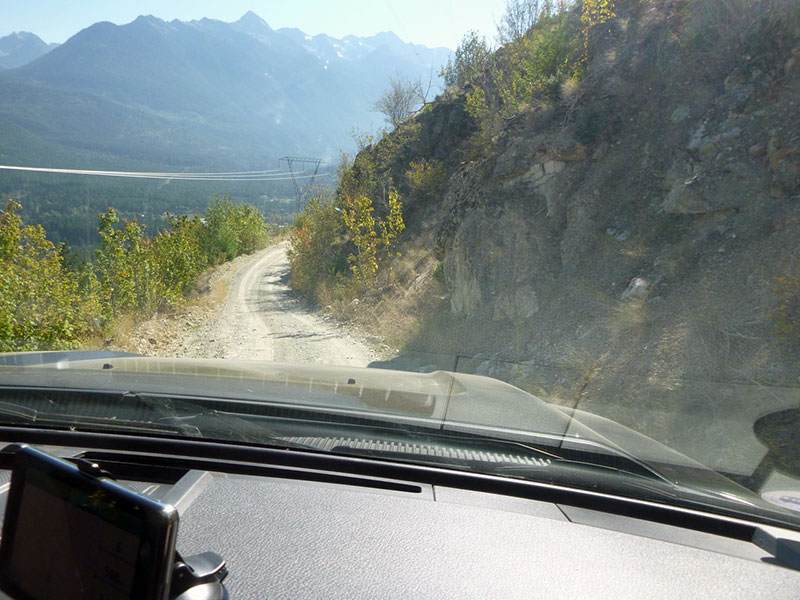
The Highline between Seton Portage and Darcy below Carpenter Lake in British Columbia
During spring and fall, the campgrounds in British Columbia are much quieter. With fewer tourists, the small towns with their quaint shops and pubs are inviting, and their proprietors ready to chat about the town and people.
Many of the Rec sites are free with no amenities. They’re so nice and quiet. We boondock if we find a really nice spot, or are on a long trip and just need a spot to sleep.
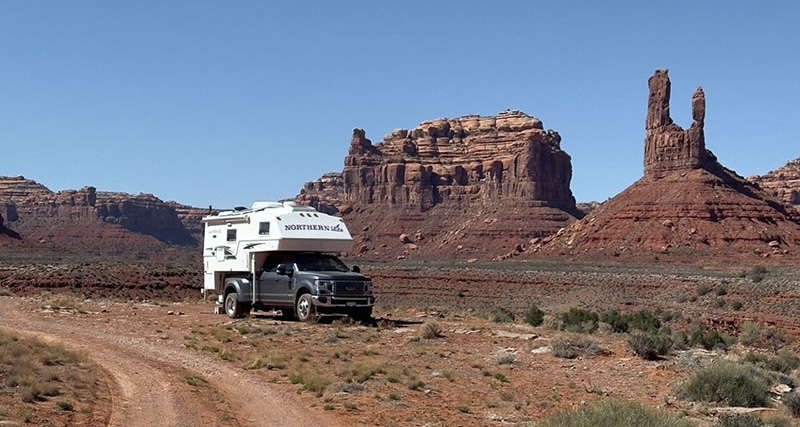
Valley of the Gods with their Northern Lite 10-2EX
As the trip planner and keeper of the travel log, what trips or destinations stand out as the most memorable?
Three trips stand out. First, our first trip down to Utah, when we puttered our way down and back and took in all the major national parks, national monuments, and state parks. We saw Monument Valley in the snow, hiked all but one of the trails into the hoodoos in Bryce, hiked almost to the top of Angel’s Landing in Zion, rode a dune buggy, and discovered BLM camping.
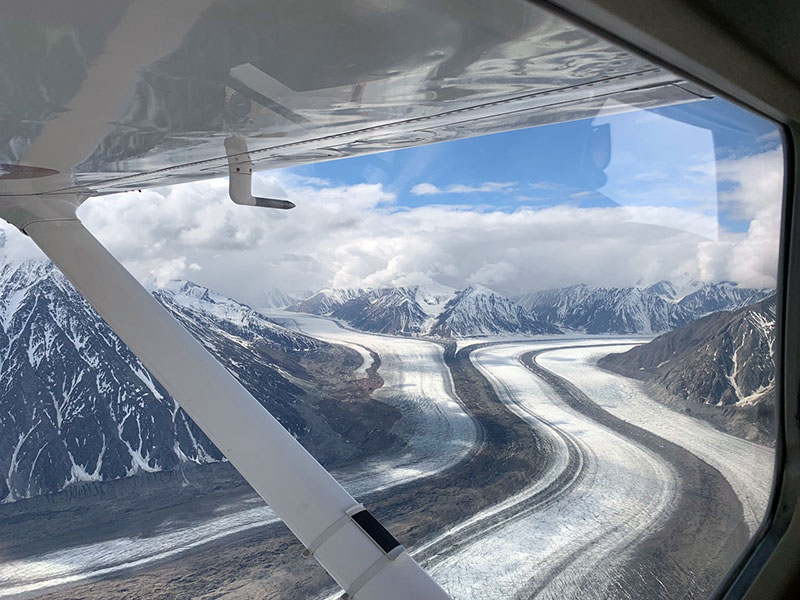
Flying over Kluane National Park in the Yukon
Second, we went to the Yukon, taking five weeks to explore all the small towns, drove the Top of The World Highway, took a plane ride over Kluane National Park, and learned so much about the gold rush and dredges.
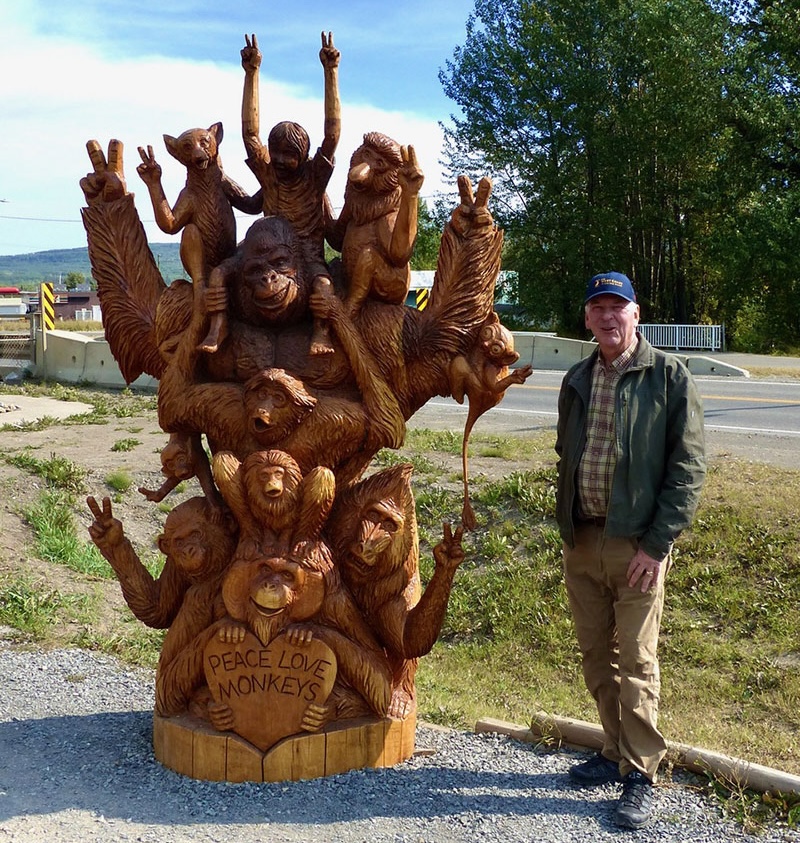
Chetwynd, British Columbia chainsaw sculptures
Third, in 2011, we drove through the United States to Ontario for a reunion, and back through Canada. We saw so many giant things—national parks, a missile bunker, the Spam Museum, and prairie grasslands. We also went hiking in Banff National Park, and gained a much greater appreciation for the vastness of our country.
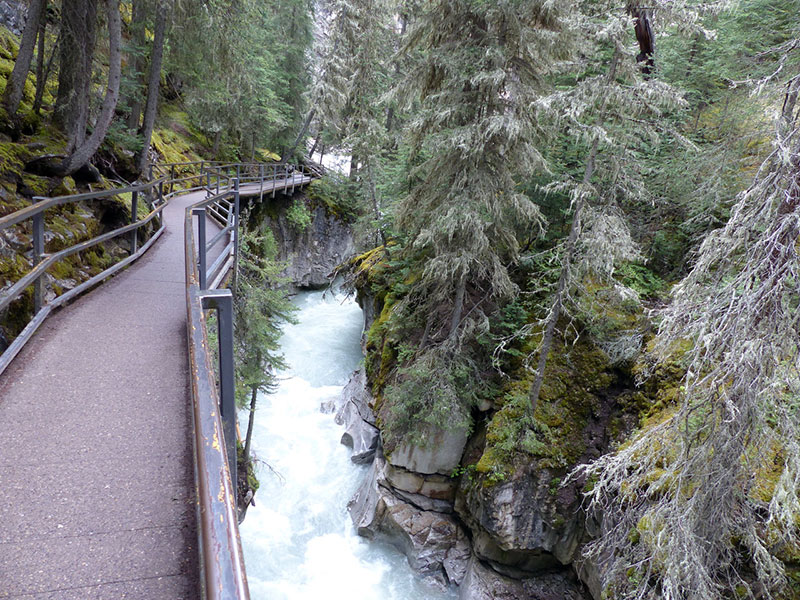
Johnston Canyon, Banff, Alberta
You’ve been truck camper owners now for sixteen years. If you could give one piece of advice to truck camping newbies, what would it be?
I have three pieces of advice. First, whether you choose the camper first, or the truck, make sure the truck has the payload and equipment to handle the camper. It’s not just the legality. It’s safety and comfort of the ride.
Second, if the camper is used, inspect it thoroughly. And before taking delivery, new or used, test every light switch, appliance, pump, heater, etc.
Third, if you like to explore backcountry, make sure you have the ability to call for help. Get an inReach or use Apple Satellite texting—or something. Canadian cell service has huge gaps, so it’s more important here.
“Our style is to move every day or two, make lots of stops on the way, and enjoy the journey.”
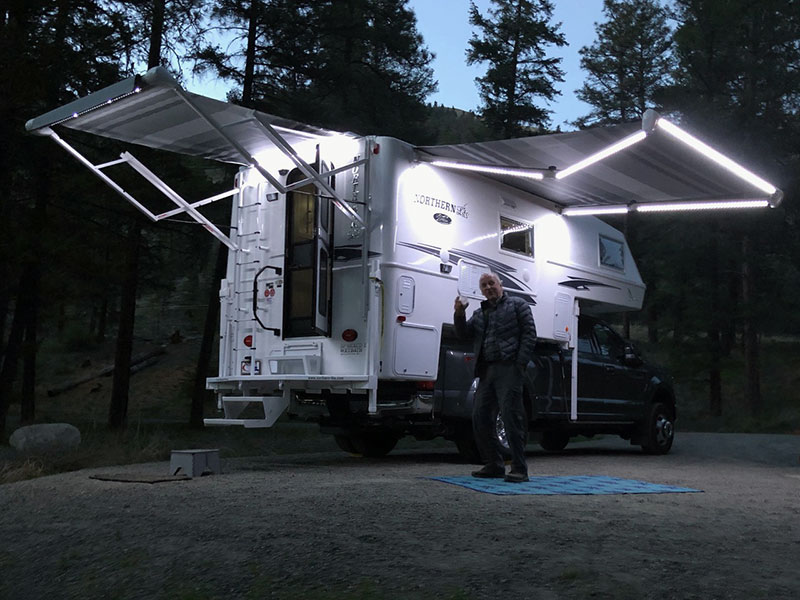
Alf with both awnings deployed and lit up on their Northern Lite 10-2EX
That’s all great advice. Is there anything else you’d like to add?
We have always loved our truck campers. Our style is to move every day or two, make lots of stops on the way, and enjoy the journey. If booking a site for a week or two is your style, you may prefer a trailer or an RV with a toad. Then you can make day trips. The only time we camp for more than a couple of days in one place is when we’re with friends with trailers. Then we do day trips in their trucks.
Orian Hartviksen’s Rig
2021 Ford F-350
2021 Northern Lite 10-2EX LE