Only a few days a year present the light, weather, and timing for David Clock to capture the images he’s chasing. From his Arctic Fox 865, he captures the Sierras at their most dramatic. The scene is set, the light is fading. Three… two… one… wow.
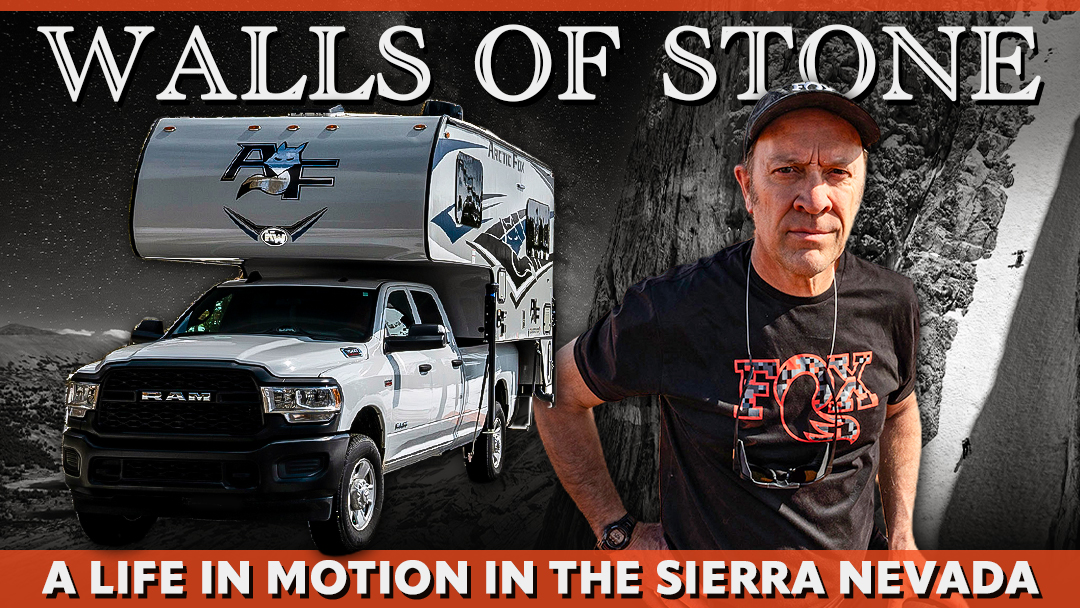
Countless kids flip through the pages of National Geographic and dream about wild places “out West.” But for most, those images stay just that, a dream. Few people actually build their lives around exploring those landscapes, let alone capturing them at their most beautiful moments.
That pull never faded for David Clock. His life revolves around spending time in the Sierra Nevada mountain range. When he’s not truck camping, he’s planning the next time he will. At sixty-four, he chases elevation, weather windows, and fleeting light. His Arctic Fox is the base camp for photography and outdoor passions, including mountaineering, snowboarding, and mountain biking. David refuses to slow down, making the most of every opportunity to experience nature.
He isn’t just exploring the mountain—he’s trying to translate what it feels like. His ongoing black-and-white photography book focuses on the Sierra’s most dramatic, jagged peaks. Each image emphasizes contrast, texture, and mood, shaped by years of experience and intent to create a lasting impression.
The project itself is a test of patience and precision. Each shot requires months of planning, waiting for conditions to align. Even then, success is not guaranteed. For David, this pursuit is not just about finishing a book. It’s about the process, the places it takes him, and the chance to create something meaningful from a lifetime spent in the mountains.
What first drew you to the outdoors and camping?
It really started where I grew up, in Muskegon, Michigan. I remember sitting inside during the winter, flipping through National Geographic magazines and seeing all of these incredible landscapes out west. When you’re stuck in gray and gloomy weather, you start wanting something different. Those images planted an idea early on: there’s a lot to explore in the world. That was the true start for me.
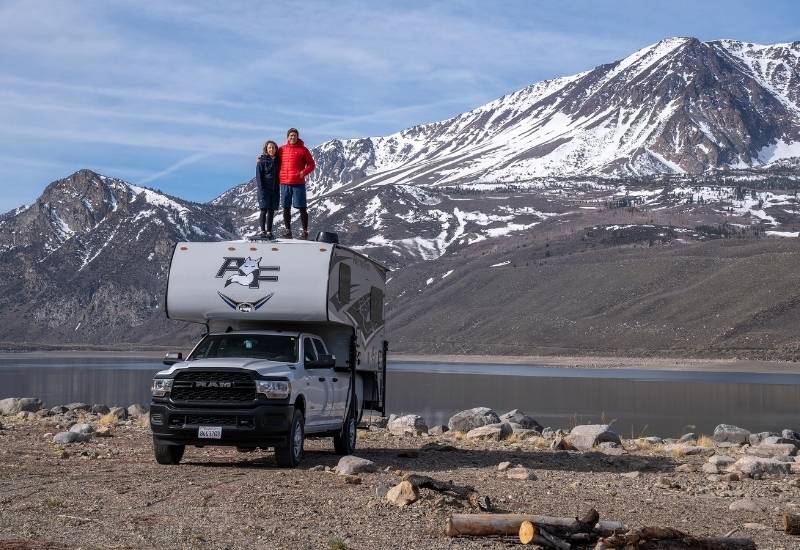
David Clock and his wife, Page, with their truck camper
My family spent time up north near Lake Charlevoix. While it wasn’t traditional camping, it was an outdoorsy environment. It set a foundation that came to life when I started traveling and exploring on my own.
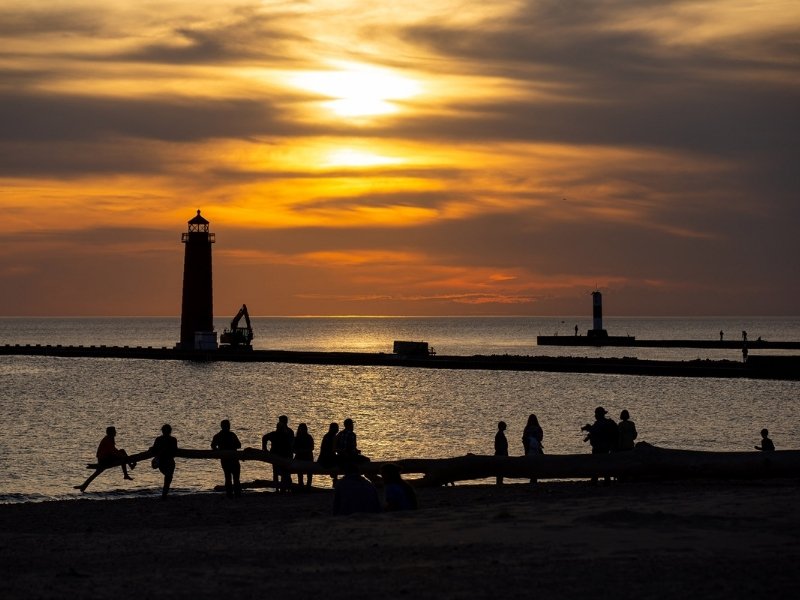
Sunset over Pere Marquette Beach in Muskegon, Michigan – photographed by David Clock
In an email, you mentioned that moving from a truck cap to a truck camper in the 90s changed everything. What led you to make that switch?
During a trip out West as a tennis pro at the time, I stayed one night in Lake Tahoe, California. I immediately knew this is where I wanted to live. Five years later, my wife, Page, and I moved from Michigan in 1992 and have been here ever since. At the time, I was doing a lot of mountain biking and camping with a truck cap setup. It worked, but it was not comfortable.
A particular trip to Moab, Utah, pushed me over the edge. I woke up cold and miserable and realized I needed something better to stay longer and explore more wild places. Seeing all the truck campers out West made it obvious what the next step would be. I did the research and ended up with a pop-up camper around 2007. It completely changed how long I could stay out and how much I enjoyed being out there.
Did upgrading to a truck camper allow you to pursue the outdoor lifestyle you dreamed of as a kid?
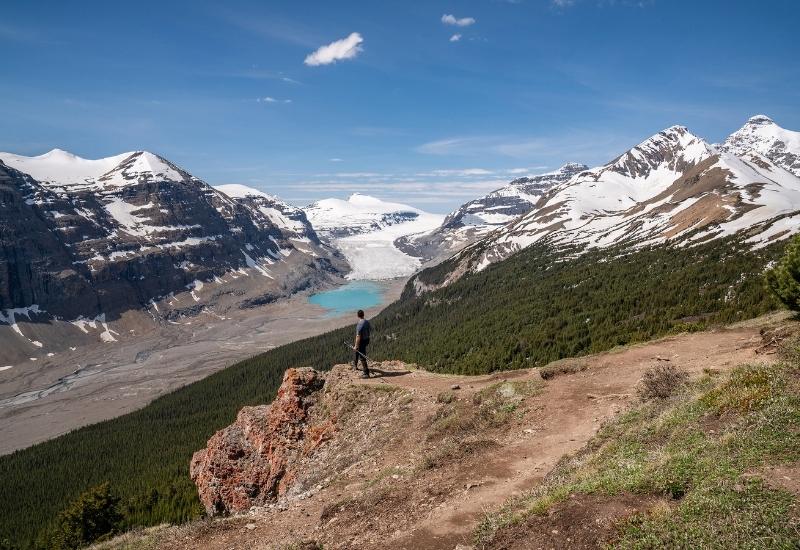
Absolutely. I’ve been to the places I saw in National Geographic as a kid—Yosemite, Yellowstone, and so many more. I get to experience them in a much more intimate way. The biggest difference is what happens at the end of the day after a long hike, ride, or multi-day backpacking trip. I don’t have to leave when the park closes, or visit for the weekend. I get to live there and experience it on a whole other level.
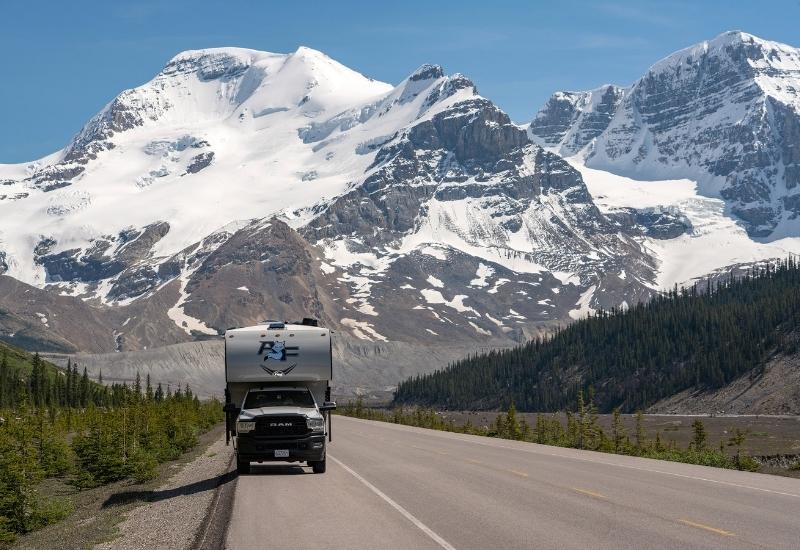
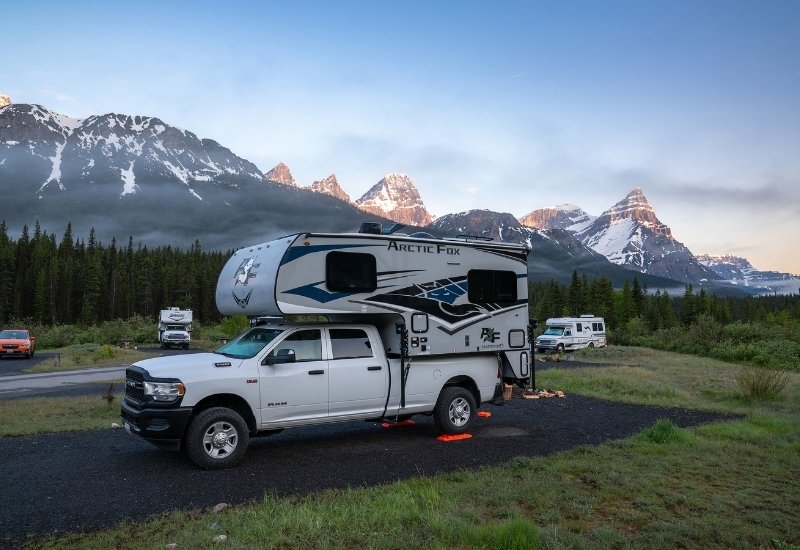
When I’m alone in my Arctic Fox 865, it almost feels like more space than I need. But when Page comes along, it feels just right. What hasn’t changed is how much I appreciate the comfort. Not dealing with being too cold or too hot, not sleeping on the ground, having a shower—it all adds up. I can stay out longer and recover better, which directly feeds into everything else I’m doing.
You’ve submitted some incredible photographs to the TCM calendar contest over the years. When did you first get into photography, and how did that interest become more serious?
My interest in photography goes back to my time in Michigan as well. A friend of mine had a photography business, which kept me connected to it. At the same time, I explored Lake Michigan, Grand Traverse Bay, Mackinac Island, and further north into Michigan’s Upper Peninsula. I’ve seen the Northern Lights up there, along with a lot of other beauty.
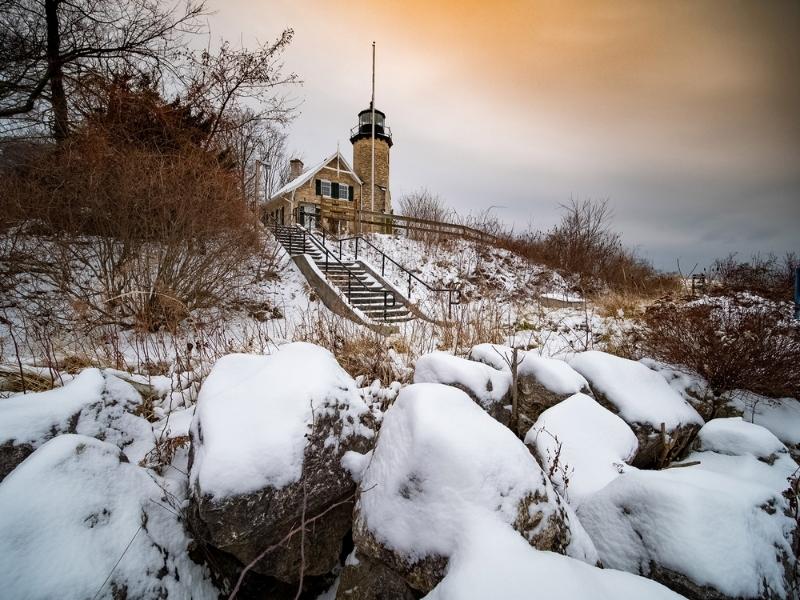
The lighthouse channel area in Whitehall, Michigan, after a winter snowfall – photographed by David Clock
Those experiences made me want to bring something back to share. This all started in the film days, and from there, it just grew. Being outdoors and experiencing these places naturally led me to documenting them with photography. Over time, it became more and more intentional.
Now you’re working on a black-and-white photography book of the Sierra Nevada. When did that project begin, and what inspired it?
The idea for the book started forming in 2007, around the same time I got my first truck camper. I had just started getting into digital photography when 10-megapixel cameras were the standard. People were beginning to respond to my work positively. That kind of encouragement made me think about doing something more.
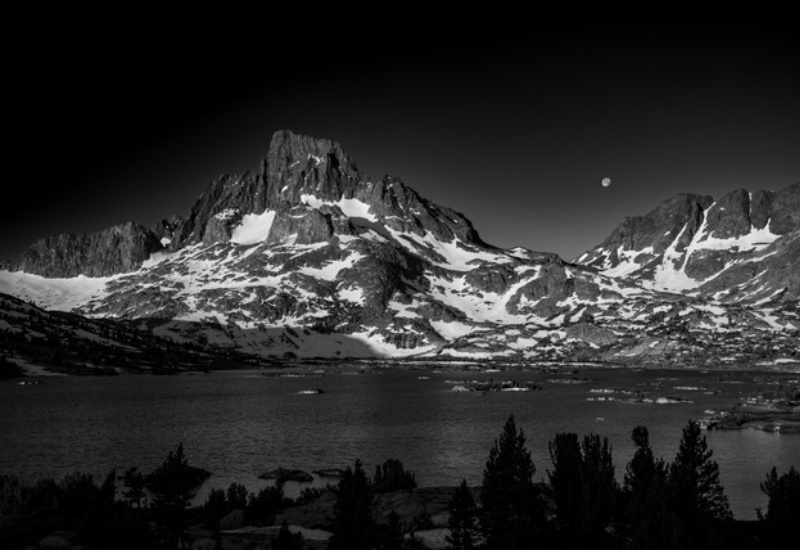
A moonset gives way to sunrise at Thousand Island Lake, California – photographed by David Clock
I didn’t want to sell individual photos. I wanted to create something lasting that meant more. Living in the Sierra, spending so much time recreating there, and being surrounded by those mountains made it an obvious subject.
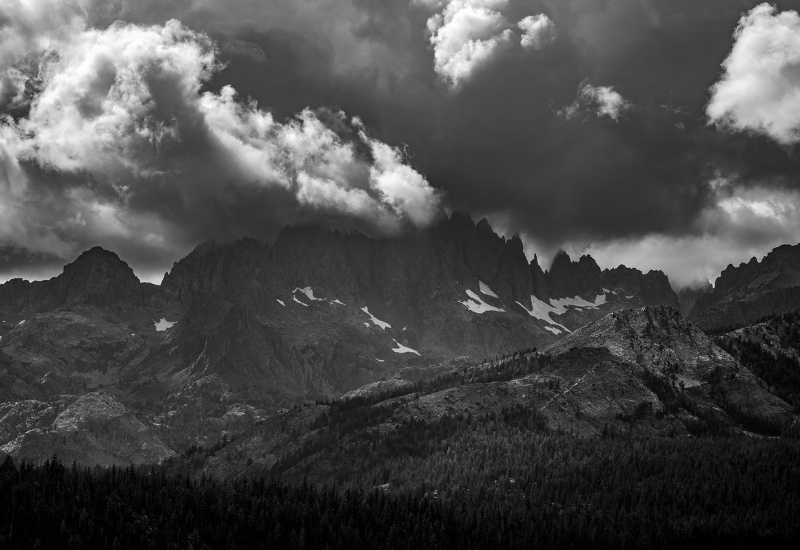
The Minarets near Mammoth Lakes, California – photographed by David Clock
The peaks here are sharp, jagged, and dramatic. Being in that environment all the time gave me a connection to it. My idea was to photograph over twenty specific, well-known peaks. I wanted to capture them at particular moments—whether at sunrise, sunset, or at night—that really made them stand out.
At what point did you realize it would become a book?
It was a gradual process. At first, it was just an idea in the background. Around 2013, I started taking photos specifically with the book in mind. That’s when it shifted from casual photography to something intentional. In 2020, I got much more serious and committed to finishing it.
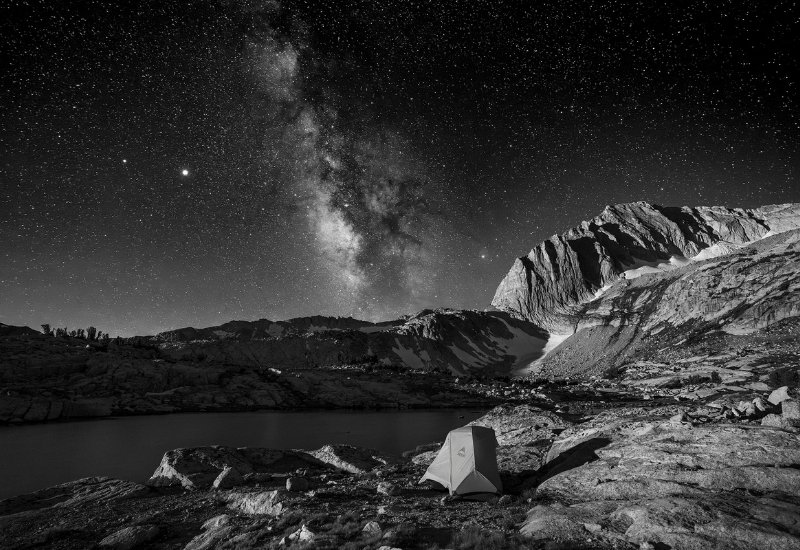
North Peak in the Eastern Sierra Nevada range – photographed by David Clock
Now I’m down to just a couple of images left to shoot. It’s been a long process, and I’ve gone back to some locations multiple times, trying to get the right conditions, but I’m finally nearing the end of the shooting phase. Next will be the writing process.
Why black and white? What does it allow you to capture that color doesn’t?
Black and white brings out a level of creativity, detail, and contrast that you don’t always get with color. It forces you to understand how colors translate into tones. Red, blue, and yellow are the key colors I look for because of how they respond when converted to black and white. You can’t just take a photo, convert it, and expect it to work.
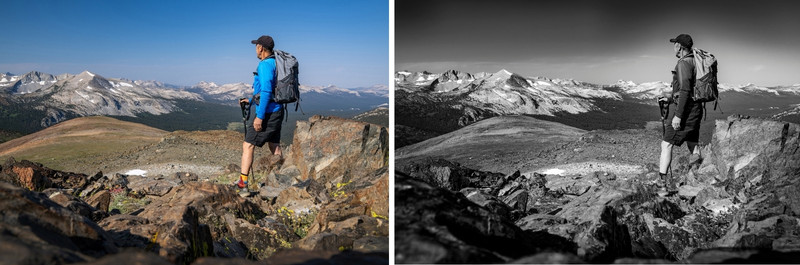
A side-by-side comparison of color and black-and-white photography by David Clock
The process starts in the field. If I’m standing somewhere and the scene doesn’t have what I need, I’ll move. Sometimes that means changing locations entirely. Black and white adds drama, and it allows me to turn something that might feel average in color into something much more striking. It’s about understanding contrast, light, and composition at a deeper level.
What makes a scene worth capturing for you?
It comes down to the feeling and the conditions. The Sierra has these craggy, jagged peaks that stand out, but the shot only works when everything lines up. Light, clouds, snow conditions, and moon phases all have to come together. Sometimes that only happens a few days out of the year for a specific shot. On top of that, I have a full schedule, so I’m not always available when those conditions finally come together.
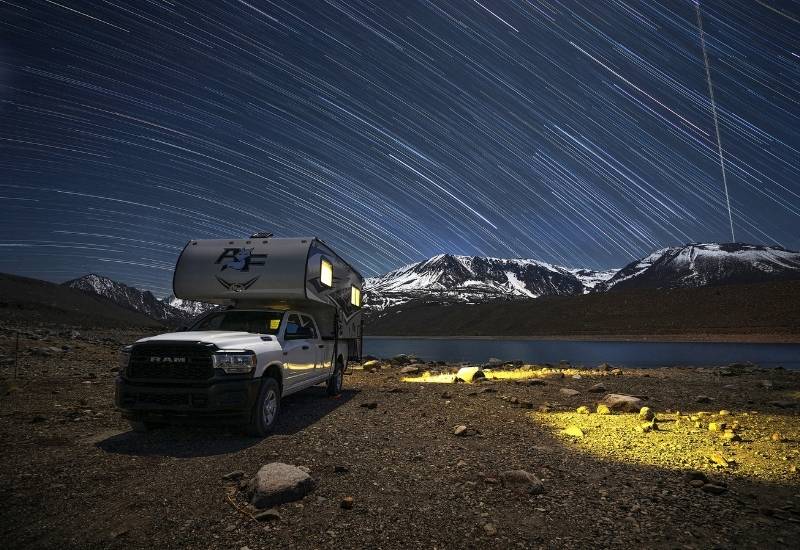
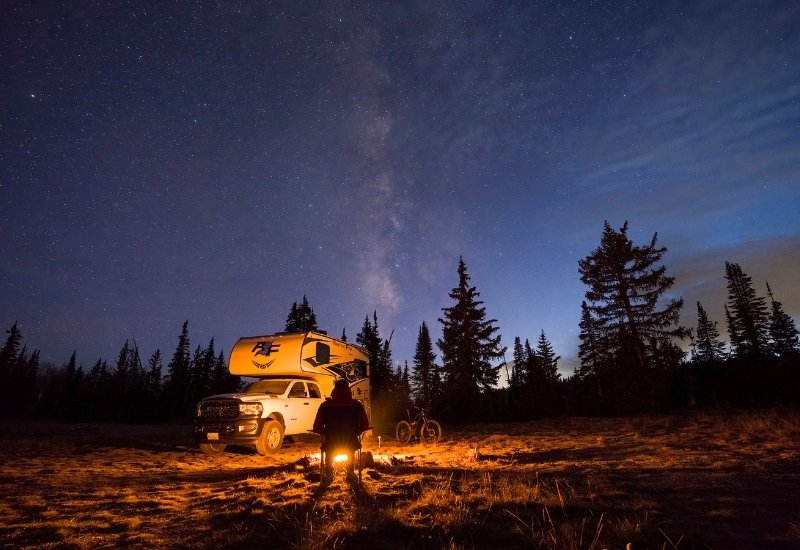
Astrophotography in the Eastern Sierra, and winner of the 2023 Truck Camper Magazine Calendar Contest
I might have two or three days a year where the moon is in the right position, the light is right, and the weather cooperates. That’s what makes it challenging. There are times I’ve gone out on a trip and come back with nothing. That’s just part of the process. You have to be willing to try again.
How much planning goes into capturing those images?
I’m looking at things six months in advance sometimes. Planning is a huge part of it. I use the app PhotoPills to figure out where the moon will be relative to a peak, and I use the website timeanddate.com to track moonrise, moonset, sunrise, and sunset. Then there’s the permit process.
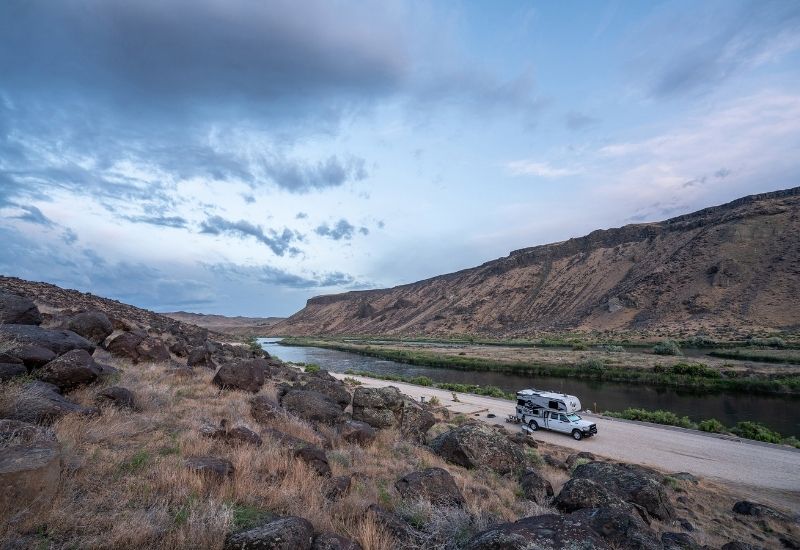
For a lot of these locations, you have to secure permits months ahead of time, and the popular ones sell out quickly. On top of that, I work full time, so I’m limited to certain days off. Everything has to align. The conditions, permits, and schedule need to be right, and even then, you’re not guaranteed anything. Last year, I spent about sixty-five days in my Arctic Fox working on this project. That was all within the few months of the year when high-elevation areas were accessible in my truck camper.
How does your Arctic Fox 865 support your photography and travel style?
It’s essentially my mobile base camp. It allows me to position myself exactly where I need to be. There are times I’m leaving home at three or four in the morning to get to a location. Having everything ready to go makes that possible.
“It’s essentially my mobile base camp. It allows me to position myself exactly where I need to be.”
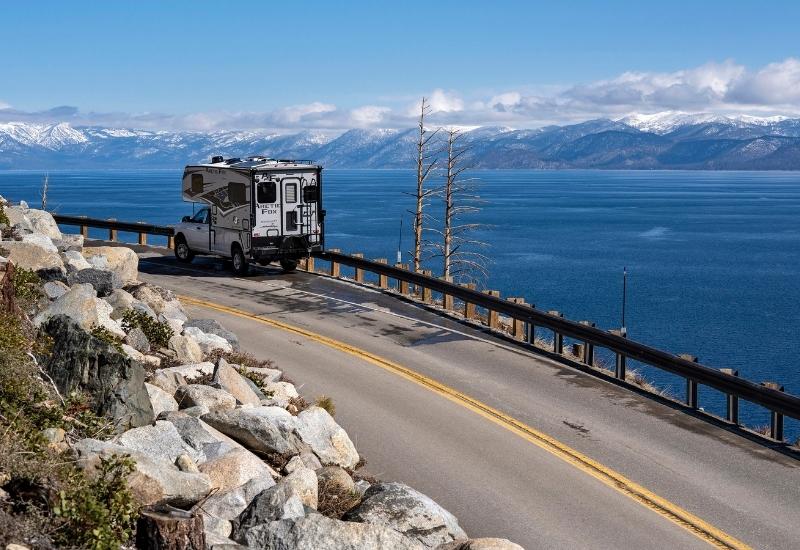
I keep the camper stocked with the basics so I can leave on short notice. It stays on the truck year-round, even in winter. I use it for trips where I’m splitboarding or accessing areas in freezing conditions. It gives me flexibility, saves time, and makes everything more efficient.
What is splitboarding?
Splitboarding is done with a special type of snowboard that separates into two pieces that work like skis. When split, the skis allow you to travel uphill through the snow, which you can’t do with a regular snowboard. Special traction strips called skins are attached to the bottom of the skis to help grip the snow while climbing. Once you reach the top of where you’re going, the two pieces reconnect into a snowboard for the ride down.
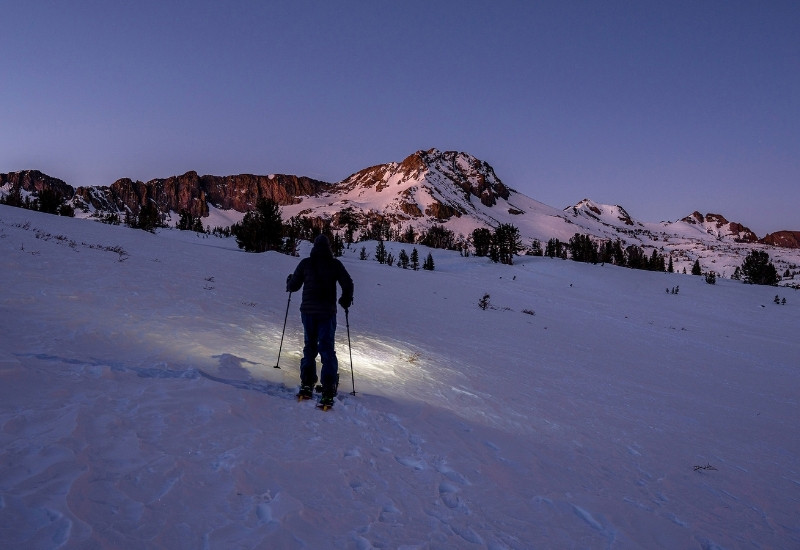
What led you to your Arctic Fox 865 truck camper?
It was a quick decision during the pandemic. We were looking for a new camper for a long time and couldn’t get our hands on one. Eventually, the dealer called and said they had three Arctic Fox 865s available. We went down to take a look, and I knew right away it would work. We decided to take it on the spot. By the next day, the other units were already gone. It wasn’t what we originally planned, but it’s been a great fit.
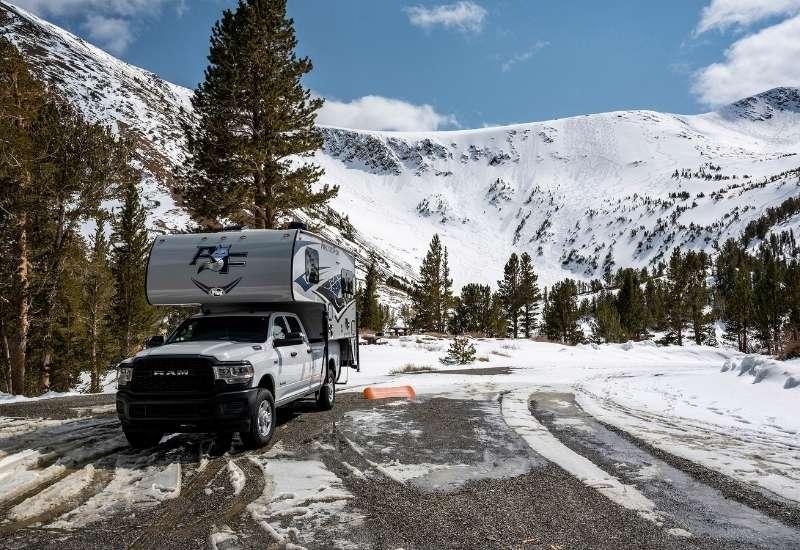
David Clock’s Arctic Fox 865 and splitboard at the base of the Sierra Nevada mountain range
You’re passionate about mountain biking, snowboarding, hiking, mountaineering, and kayaking. How do you balance photography with your other outdoor pursuits?
There aren’t enough hours in the day. I’ve been fortunate that my job is tied to the outdoors, and that helps. My wife and I also don’t have kids, which gives me more flexibility and free time.
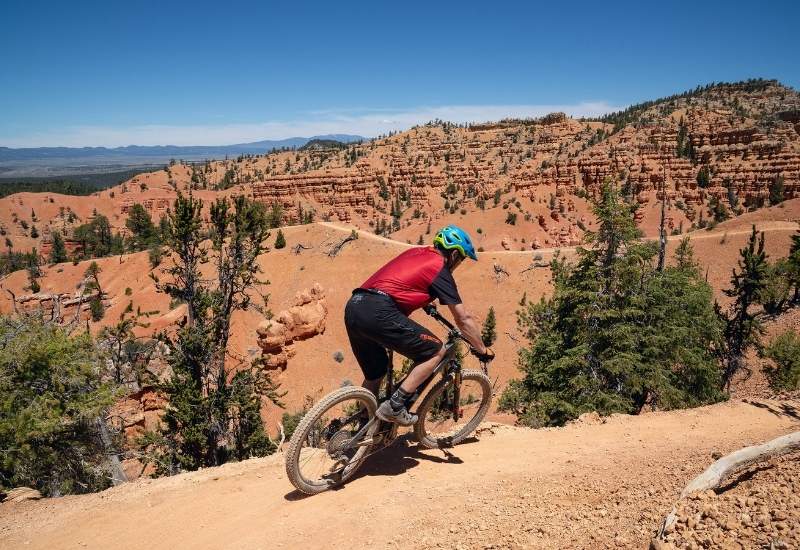
Most of what I love to do is right here in Tahoe, California. We have incredible mountain biking, hiking, kayaking, and climbing within reach. Sometimes I’ll combine things. I might go down to Mammoth Lakes for a photo, ride my bike the next day, and then hike into another area before heading home. It just depends on the time I have and how deep I need to go into a location. The balance is tricky yet rewarding.
Do you ever combine truck camping with backpacking?
Yes, that’s a big part of what I do. There are trips where I’ll hike ten to twelve miles with several thousand feet of elevation gain. In those cases, I use the camper as a base camp at the trailhead, then backpack in for a couple of days.
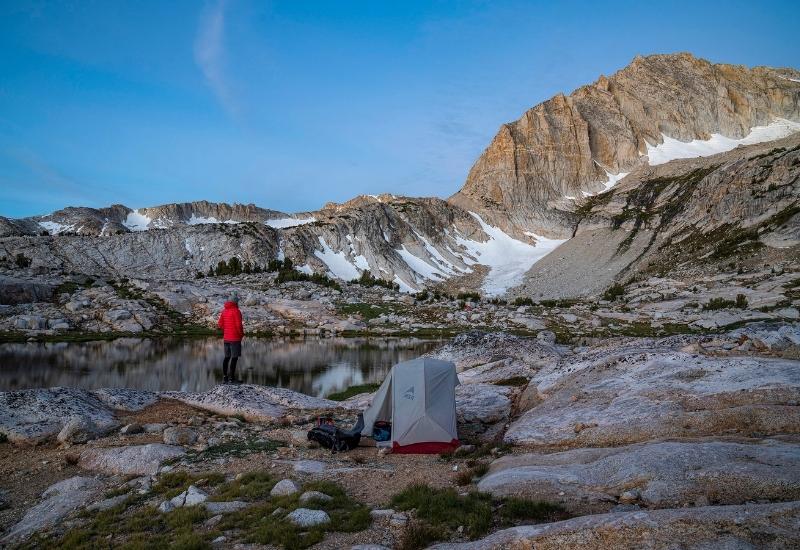
When I come back, having that camper there makes a huge difference. It’s something that would be much harder to do comfortably without it. It’s not something everyone does, but for me, it works really well.
At sixty-four, what keeps you motivated to stay so active?
I just keep going. I don’t wait around. Life is too short for that. I still feel like I’m thirty-five, even though there are definitely days when I feel it physically. I get sore and tired, but being outside is what keeps me going. I genuinely enjoy it every single day. To me, sixty-four is just a number. As long as I can keep going, I will.
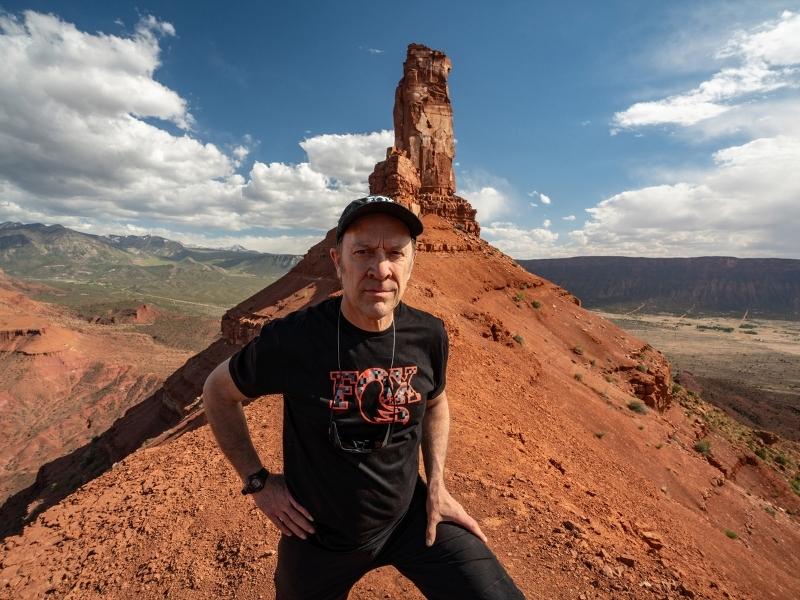
“To me, sixty-four is just a number. As long as I can keep going, I will.”
Does your wife share your passion for the outdoors?
Yes, we hike together quite a bit. Page runs her own business, so she’s pretty busy. That means a lot of my camping trips are solo right now. Whenever she’s able to come along, it changes the experience for the better, and lately she’s been finding more time to join me.
When I’m home, I have friends in Tahoe who share similar interests, so we’ll go riding, hiking, or spend time out on the lake together.
Do you have a title for your black-and-white photography book?
Yes, I’m planning to call it Walls of Stone. The name came to me while I was photographing Mount Whitney, which is the highest summit in the contiguous United States at 14,505 feet.
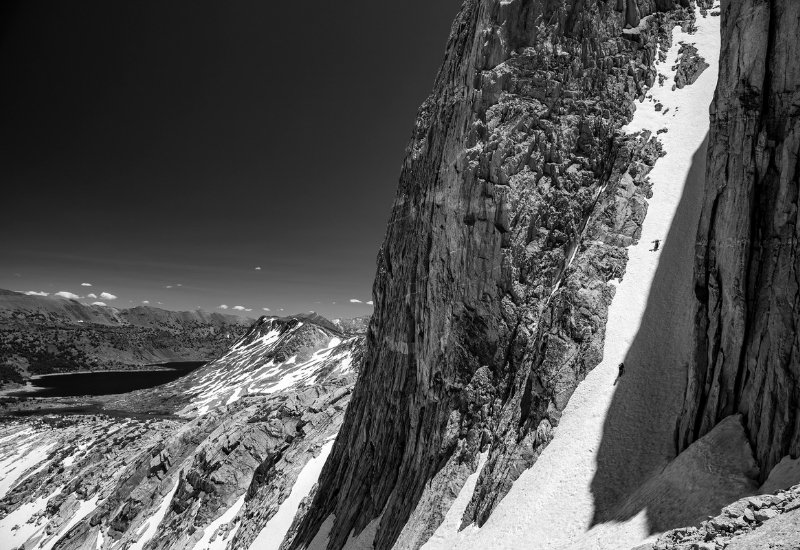
Look closely: two splitboarders climb the snow-filled couloir beneath towering Sierra granite walls – photographed by David Clock
When you look at that skyline, it’s just these sheer, jagged walls of rock. That idea stuck with me, and I decided to focus on peaks that have that same craggy, dramatic character. The title reflects both the look of the mountains and the feeling I’m trying to capture.
After this project, do you see yourself continuing with black-and-white photography?
Yes, definitely. Early on, I thought I might move on to something else after this project, but the more I’ve worked with black and white, the more I’ve come to appreciate it. There’s a level of drama and creativity in it that really resonates with me. I can see myself continuing to photograph mountains, possibly in other regions like British Columbia, Alaska, or the Pacific Northwest. This project has changed how I see photography and the world around me. It’s something I want to keep exploring.
What do you hope people take away from your work?
I hope it inspires people to get outside and experience these places for themselves. The wilderness is incredible, and I think if more people saw it firsthand, they would understand why it’s so important to take care of it.
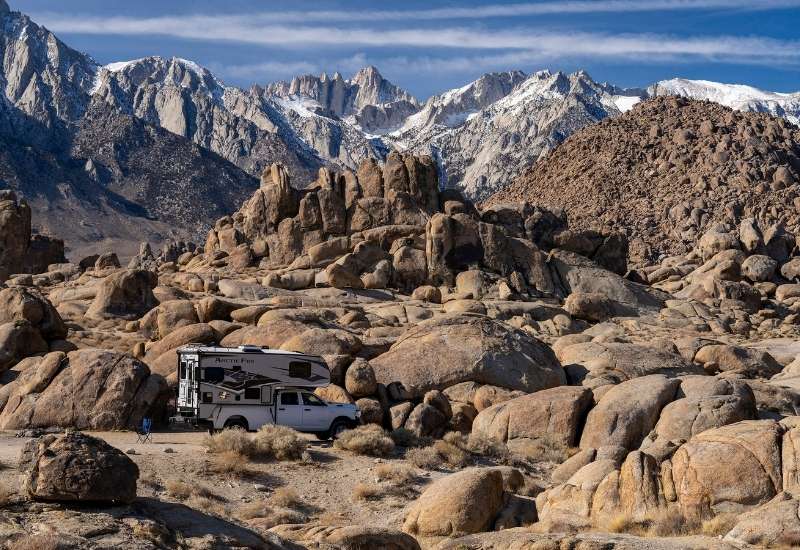
David Clock’s Arctic Fox 865 in California’s Alabama Hills National Scenic Area
That can mean being mindful or simply respecting and appreciating the environment. I want people to see the value in it. My camera feels like an extension of my arm. It’s a tool to show people what’s out there and what they can experience.
What advice would you give someone interested in truck camping and photography?
When it comes to camping, my biggest pieces of advice are to plan ahead and maintain your equipment. Planning makes everything easier and more enjoyable. When you’ve thought through your route, timing, and the conditions, you’re free to actually enjoy the experience. Maintaining your equipment means you’re prepared to go at any time. I keep my camper ready and stocked so I can leave on short notice if conditions line up.
When it comes to photography, learn the rules so you can break them. The rules help you understand composition and technique, but once you understand them, you can develop your own style.
“I’ve spent my life chasing that feeling of being outside, and it’s been an incredible journey. I wouldn’t trade it for anything.”
If you have the opportunity to see the world, take it. Life’s short, and you don’t know what tomorrow brings. I’ve spent my life chasing that feeling of being outside, and it’s been an incredible journey. I wouldn’t trade it for anything.
David Clock’s Rig
Truck: 2021 RAM 3500
Camper: 2022 Arctic Fox 865
Tie-Downs and Turnbuckles: Torklift