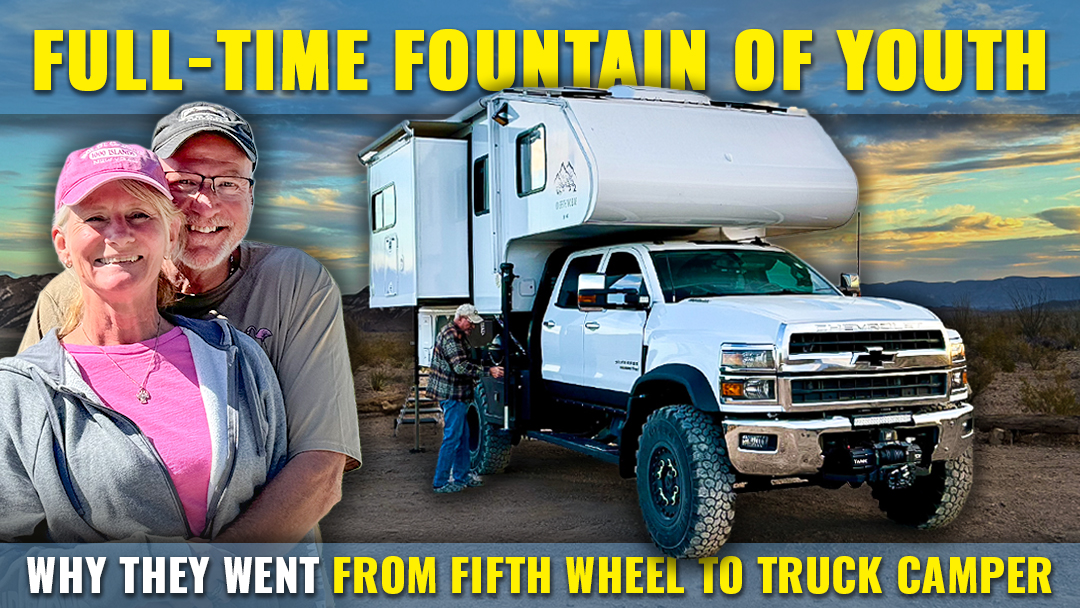
After two decades, Bob and Angie Hallock came full circle back to a truck camper. With a Host Mammoth and Chevy 5500, they’re ready for their biggest adventure yet. Their mission? To stay young.
The bigger the rig, the more limitations you face—where you can go, where you can camp, and how freely you can move. When you have to turn away from a beautiful destination or squeeze into the only campground that accommodates you, it becomes a reason to rethink everything.
Bob and Angie reached that point after traveling in a 45-foot fifth wheel. It gave them space, but it took away the spontaneity. After Bob retired, a decision was made: it was time to stop planning camping trips and start building a life around it. The dilemma? How could they go full-time and downsize their rig at the same time?
What followed was a full-circle realization and complete transformation to full-time travel. Today, their setup is anything but small in the truck camper world—a double-slide Host Cascade on a Chevrolet 5500HD—but perspective is everything.
Seven years later, Bob and Angie have camped from Florida to Alaska, guided mostly by weather and instinct. They’ve traded a retirement full of predictability for a life that promises to keep them active. This is what happens when you stop waiting, and start living.
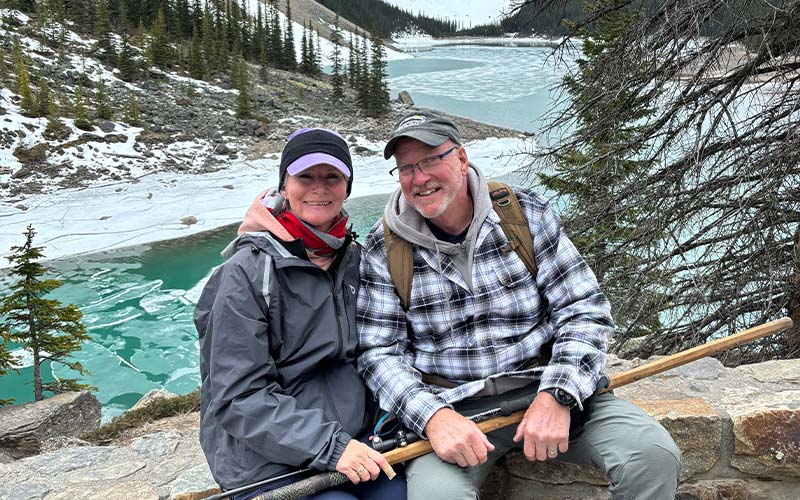
Bob and Angie hiking near Hyder, Alaska
What inspired you to live full-time on the road?
Bob: The more we traveled, the more we didn’t want to stop. Every place led to another place that we wanted to see. I retired as a power lineman in New York in 2017, and we started wintering in Arizona for a couple of years. By 2019, we said, “Why not just do this full-time?” There was no reason to wait.
Angie: It took a little convincing from Bob at first, but I was excited to get on the road. I have no regrets. It’s a great lifestyle, especially in retirement. It keeps us young.
“It’s a great lifestyle, especially in retirement. It keeps us young.”
What was the biggest adjustment when you transitioned to living full-time in a truck camper?
Angie: Once I got used to it, I fell in love with the comfort of having our own space and knowing that everything we had was ours. It was a bit of an adjustment, and there’s more work involved—finding camp, dump sites, and places to fuel up—but being able to take your entire home with you wherever you go is pretty special.
Bob: The timing worked out well for us. We went full-time right before COVID, and since our camper is off-grid capable, we were pretty isolated.
Was there a moment when you realized, “This is exactly why we chose this lifestyle?”
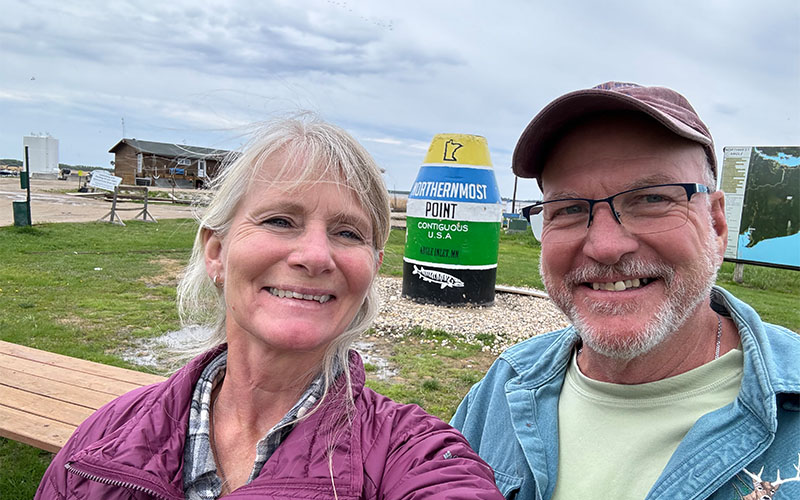
Bob: Michigan in 2021. We planned to stay a week and ended up staying almost a month. That’s when it really hit me—this is what we were meant to be doing.
Angie: I agree. Visiting Mackinac Island was incredible. Seeing how folks on the island live without vehicles—only bikes and horses—was a really unique experience. Then we went to the Upper Peninsula and it felt like Alaska. We camped on the beaches and the water was crystal clear. It was just mind-blowing. That trip actually pushed us to finally take our camper to Alaska, a trip we had put off due to COVID in 2020.
The Great Lakes hold a special place in my heart! What type of destinations do you seek out along your travels?
Bob: We look for backroads, dirt roads, and free camping whenever possible. We often visit family and friends along the way. Really, it’s How Ever The Wind Blows. That’s actually the name of our YouTube channel.
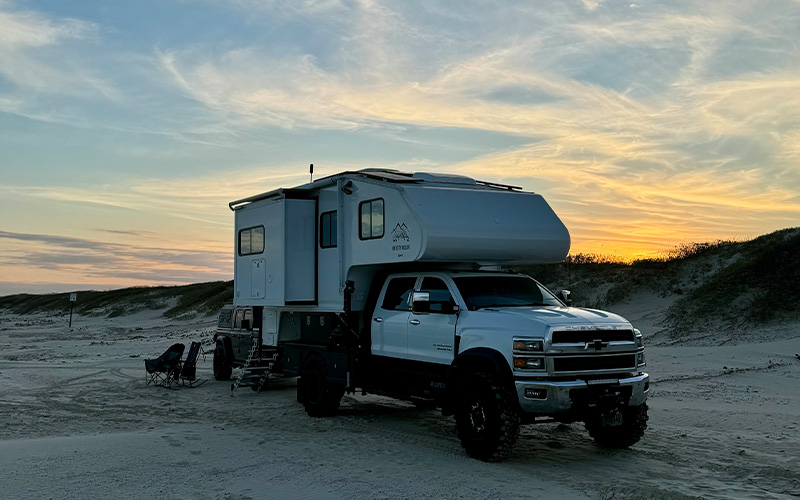
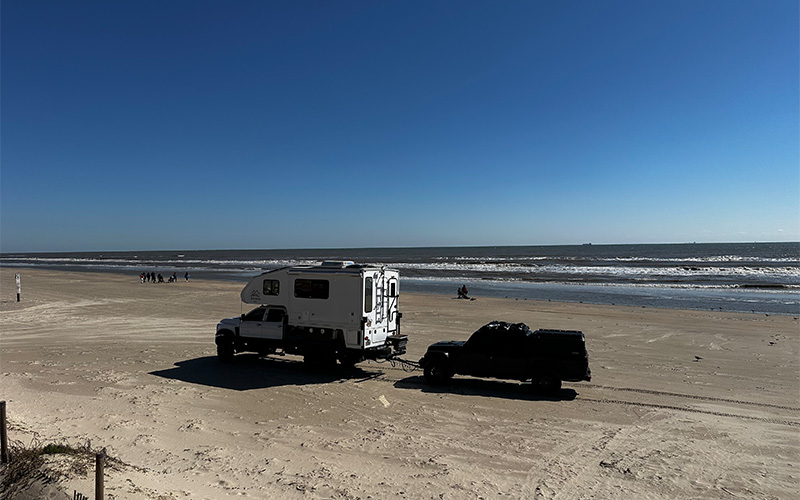
Angie: We love beach camping and we’re getting more into off-roading. With this setup, we don’t worry as much about where the road leads us.
How do you decide where to go next?
Angie: Bob usually creates an itinerary. We get ideas from people we meet along our travels and stories we read from fellow truck campers on Truck Camper Magazine. He makes a plan and we just pick up and go.
Bob: Overall, we like to keep moving. No reservations, no strict plans. We try to keep driving days to under 300 miles and figure it out along the way.
I’ve found keeping a loose itinerary often leads to the best adventures. Tell us about your Alaska trip.
Angie: I had some apprehensions, but I put my trust in Bob. I was nervous, excited, and didn’t know what to expect. As soon as we hit the road, all of my anxieties went away.
“As soon as we hit the road, all of my anxieties went away.”
Bob: We drove the Dalton, Alaska, Cassiar Highways. I was prepared for bad weather and lots of mosquitoes. Luckily for us, it rained only three days out of the three weeks we were there. When we visited Denali State Park and camped at K’esugi Ken Campground, we had a clear view of Denali’s southern peak for four straight days.
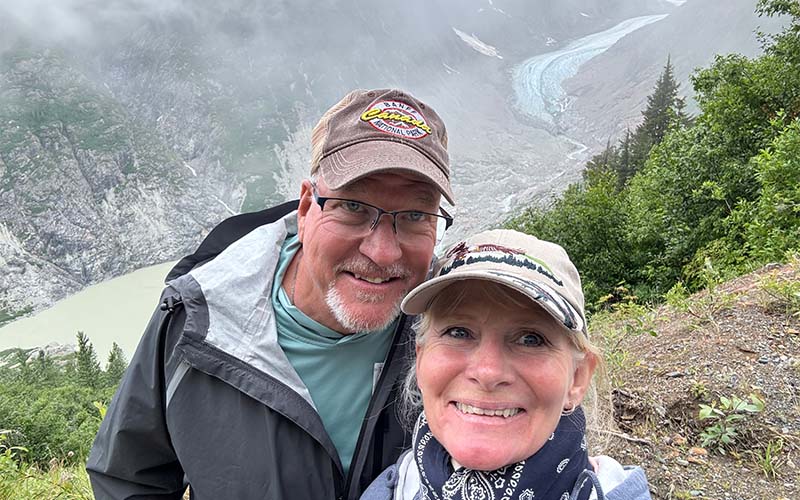
Angie: We had to adjust our plans due to landslides, which led us to Stewart, British Columbia, and Hyder, Alaska. That turned out to be one of the highlights of our trip. Hyder is still an active silver and gold mining town. We saw a grizzly bear, a wolf, and made it out to Salmon Glacier. Even in a tiny town, we had one of the best meals we’ve ever had. The experience was more than I could have imagined.
What an incredible trip. Why is a truck camper the right camping platform for you?
Bob: In 2017 and 2018, we traveled in a 45-foot fifth wheel, which limited where we could go. With a truck camper, we can go almost anywhere. It’s better suited for the off-grid, self-contained travel that we love. Just the other day, I parallel parked on a busy street and went into a brewery. Try that in a fifth wheel.
Angie: It’s true, we did! Our first camper was a single-slide Lance that we purchased in 2002. As our family grew, so did our campers. We’ve had a total of 7 different types of campers over our 26 years of RVing; including a Class C, Class A, and fifth-wheel. In 2020, we went back to a truck camper with our Alaska trip in mind. I love the truck camper life. Our living room is outside. Inside is mostly for cooking and sleeping.
Welcome back! What drew you to the Host Cascade?
Angie: When I sat in the recliners, it gave me a 180-degree panoramic view through every window. I was sold instantly. We have a large enough truck to support the triple-slide Host Mammoth and Yukon, but the view in the Cascade was unbeatable
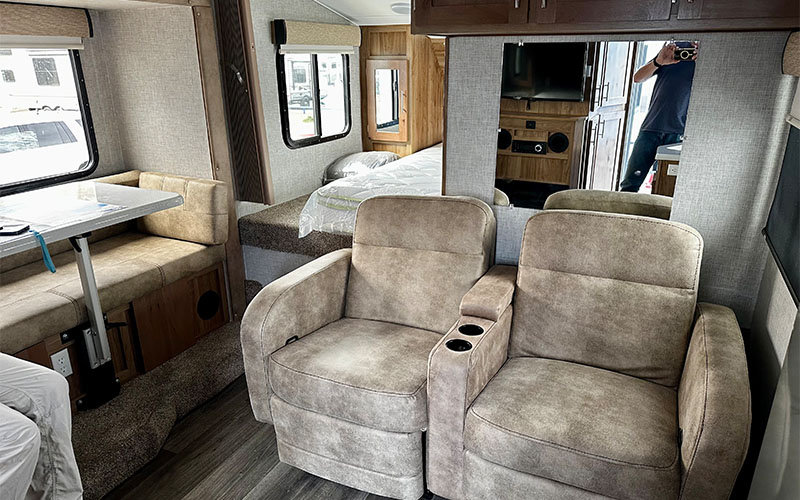
Rear-facing recliners in the Host Cascade
“When I sat in the recliners, it gave me a 180-degree panoramic view through every window.”
Bob: The big thing for me was the Power Gear slide mechanism in the Host. I wanted something that would hold up and be reliable for years.
You’ve made a few modifications to your camper. Which one has made the biggest difference in day-to-day life?
Bob: I added a space in our dinette that we call the coffee bar. It gives us a place to store cameras and computers while we’re moving, and set things on when at camp. It keeps things neat.
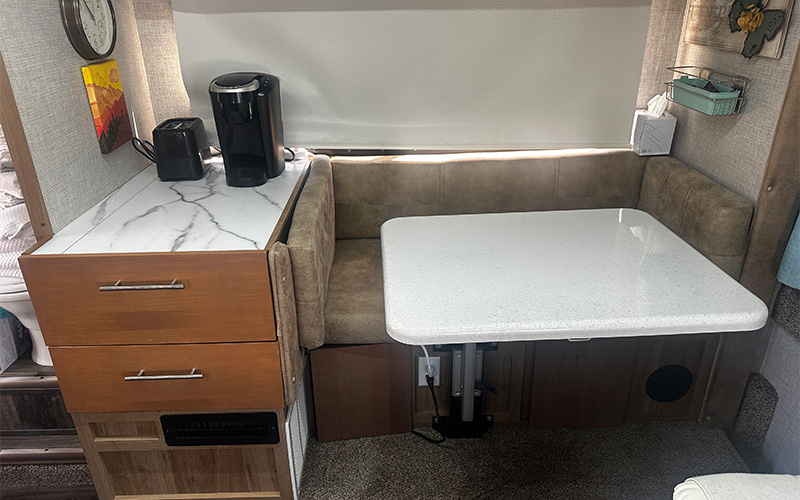
Angie: Without question, our buffet and coffee bar. We love it.
Why did you choose a Chevy 5500HD?
Bob: I’ve had a CDL (Commercial Drivers License) my whole life, and I knew I would be overweight with a one-ton. That never sat right with me. The 5500 gives us the capacity and safety—especially the braking power. The brakes are double the size of those on a one-ton.
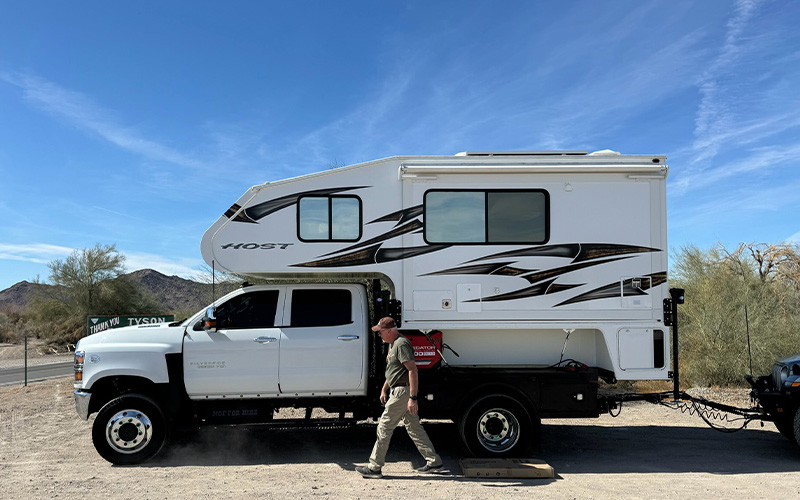
Bob: I told the state we were using the truck for a camper, not commercial use. It’s registered and insured as a pickup truck.
Angie: We have been pulled over a couple of times after not stopping at a DOT checkpoint. A very nice Virginia State Trooper told us to put “Not For Hire” decals on the truck and we haven’t had a problem since.
That’s a really great tip for medium-duty truck owners. What made you convert to super singles?
Bob: It was a combination of past experiences and getting more into off-roading. Before the conversion, I buried the truck on a pull-off after missing the entrance to a State Park. Thankfully, a gentleman helped pull us out, but we were lucky to be in a public area.
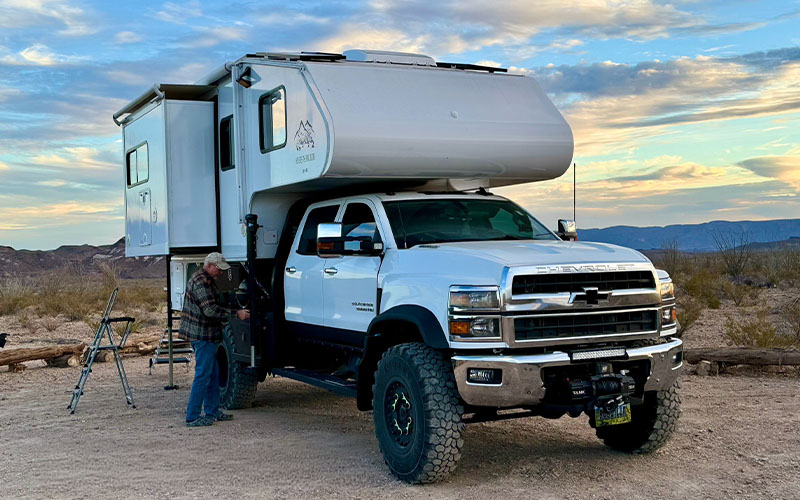
Bob: Since switching to super singles, the truck handles better on pavement and off-road. It’s hard to explain, but the difference is incredible. Before, we would really feel potholes and cracks in the road. Now it just glides over them. Being able to air down to twenty PSI and go on soft sand beaches is phenomenal.
Would you go with super singles again?
Bob: Yes, I have no regrets at all. We only lost a mile to a mile and a half per gallon.
Angie: Absolutely. It makes the rig look sharp, too.
It sure does! Tell us about the other modifications you’ve made to the truck.
Bob: The first thing I did to the truck was extend the flatbed by eighteen inches to be nine-feet-six-inches long. I also widened the bed six inches.
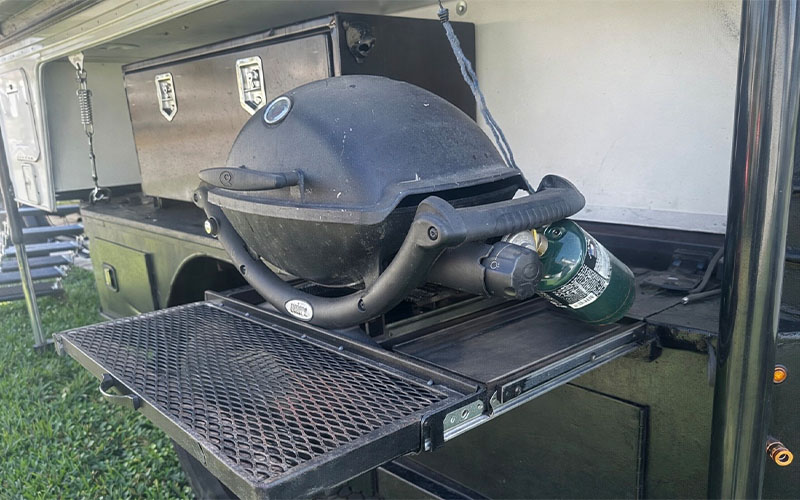
Bob: One of my favorite custom modifications is the slide-out grill along with a slide-out table. We can pull off at a rest stop and make hot dogs or burgers in minutes.
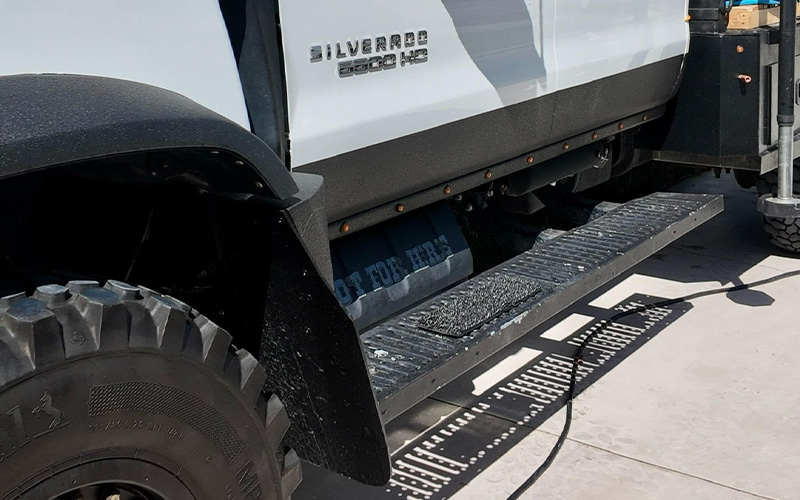
Bob: The super singles increased the height of the truck and made getting in and out of the truck more difficult. I saved thousands of dollars by welding on ATV ramps I found at Harbor Freight. They made perfect steps.
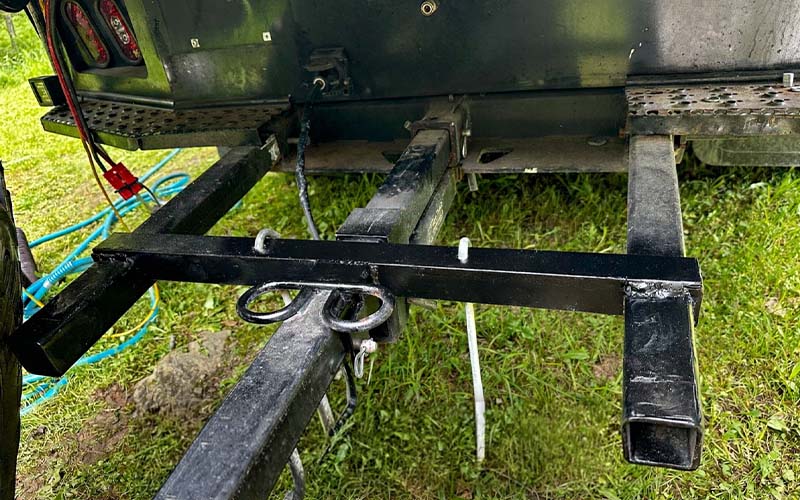
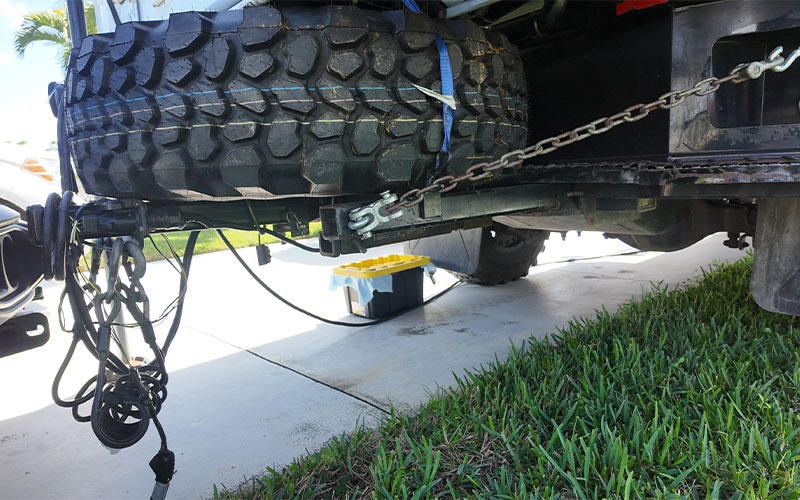
Bob: The last big modification was fitting the spare tire. I welded a two-foot extension to the truck frame on either side of the hitch extension to support the extra weight. The tire sits right on top, and the towing extension is supported more than it was originally.
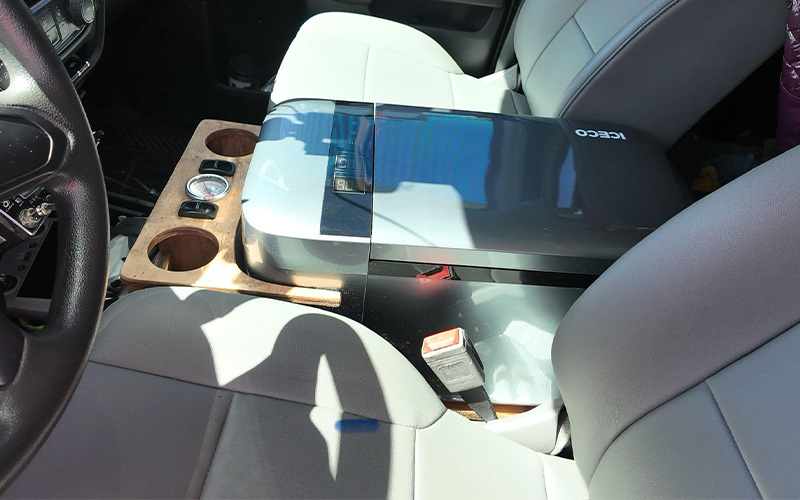
Angie: We removed the center console and replaced it with an Iceco 12-volt refrigerator and a custom cup holder with built-in onboard air compressor controls. The onboard air lets us adjust the airbags to quickly level out at camp. We bring food and drinks into the cab for quick access when we’re on the road. Little conveniences like that go a long way.
It sounds like you let your imagination run wild, then have the skillsets to bring it to life. When you unhook your Jeep, where are you headed?
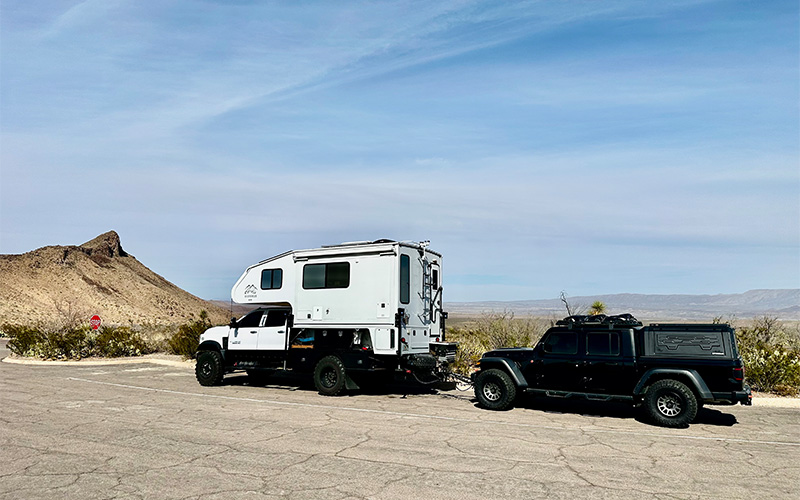
Bob: Everywhere. The Jeep is our daily driver. The camper rarely comes off the truck unless it needs serious mechanical work. It also gives us access to the places the truck camper can’t go.
Tell us about your “she-shed on wheels.”
Angie: The she-shed will be my creative space for quilting and crafts, while giving us a space to store extra gear. It’s a twenty-foot enclosed trailer that we’re making modifications to.
Bob: We’re installing a residential all-in-one washer-dryer in the front of the trailer so we no longer have to go to laundromats. I also engineered a custom carrier for our recumbent bicycles out of an old boat trailer that rides on top of our cargo trailer.
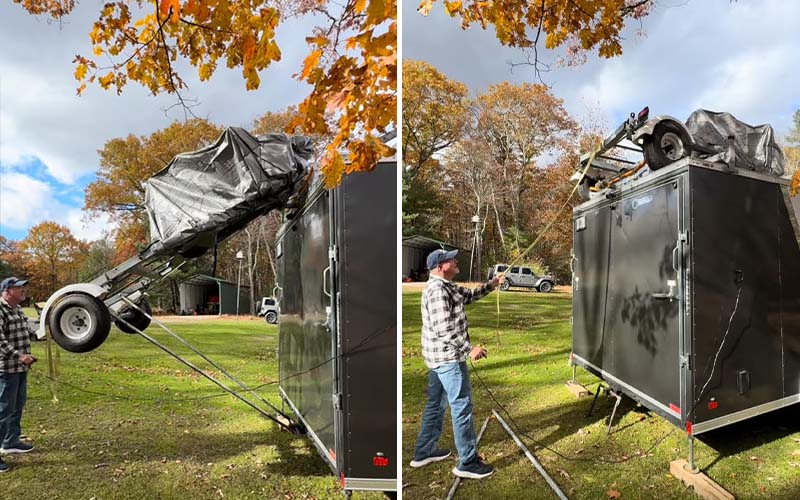
Bob: When it’s done, the cargo trailer will house our bikes, kayaks, and the Jeep. I raised it up five inches and will be installing off-road tires so we can bring it wherever the truck goes.
If you were building this rig again, is there anything you would do differently?
Bob: I would go with an 84-inch cab-to-axle wheelbase instead of the 60-inch. It would be nice to have a little garage space between the cab and the camper. I think that would be it.
Angie: We love our little home on wheels and are very satisfied with the setup we have.
What has living smaller taught you about happiness and contentment?
Angie: The older I get, the more I realize that the less stuff we have, the better off we are. I focus on capturing memories instead of collecting things. I try to capture our memories in photos and videos so we can carry them with us in the visual sense. Wherever we go, we have a new view and a new experience. That’s what matters to us.
Bob: I agree.
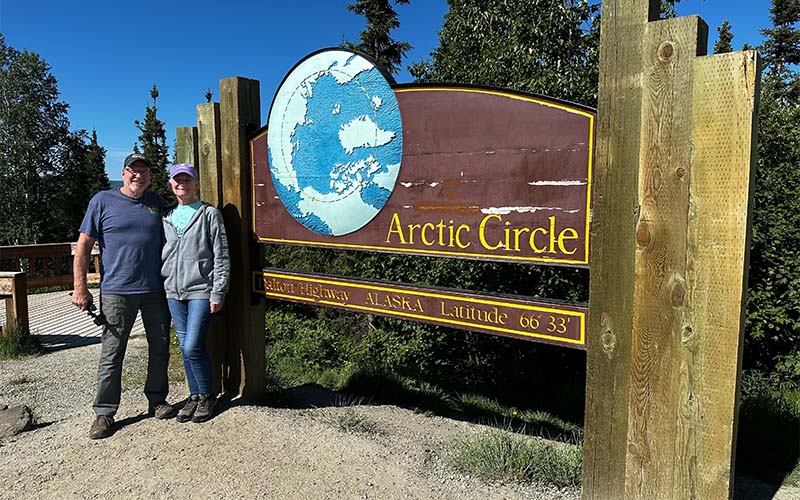
“I focus on capturing memories instead of collecting things.”
What will you value most about this lifestyle years from now?
Bob: The people we’ve met are what I’ll value most. Complete strangers have become lifelong friends. There are so many more good people in this world than there are bad. It restores your faith in humanity.
Angie: The people we meet in person and online. It’s a blessing being able to share our journey with others through social media, especially with those who can’t travel like we do. Everyone is always so appreciative, whether it be at a gas station or over the web.
Beautifully said. What would you say to someone considering full-time truck camping?
Bob: Start small and don’t wait.
Angie: If you have a spouse or significant other, make sure you have a good relationship. Sometimes you need to take a walk, and that’s okay. Our relationship works very well with this lifestyle.
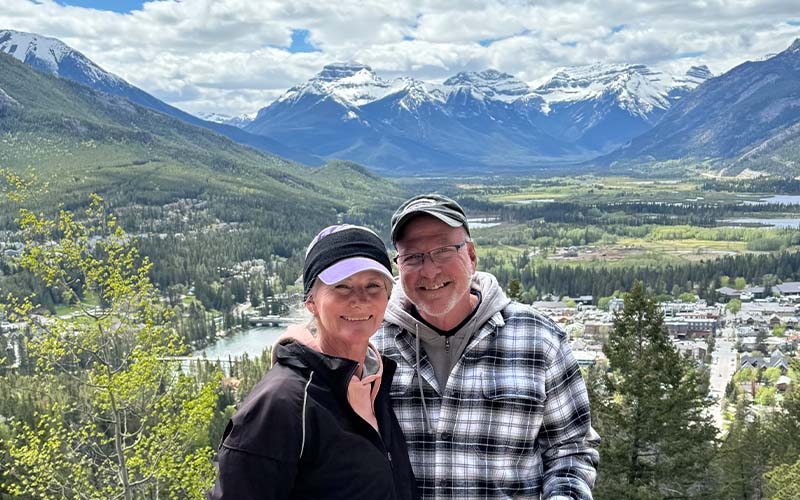
Angie: It’s also okay to be a weekend warrior if you’re not retired. Even if you’re going within thirty minutes of your home, it’s still an adventure. You don’t have to go far to find something new.
Bob: I love our life. It keeps us active, sharp, and engaged.
Angie: It keeps us young! If we can inspire folks to do the same, we’re thankful for that.
Bob and Angie’s Rig:
Truck: 2021 Chevy 5500HD
Camper: 2025 Host Cascade