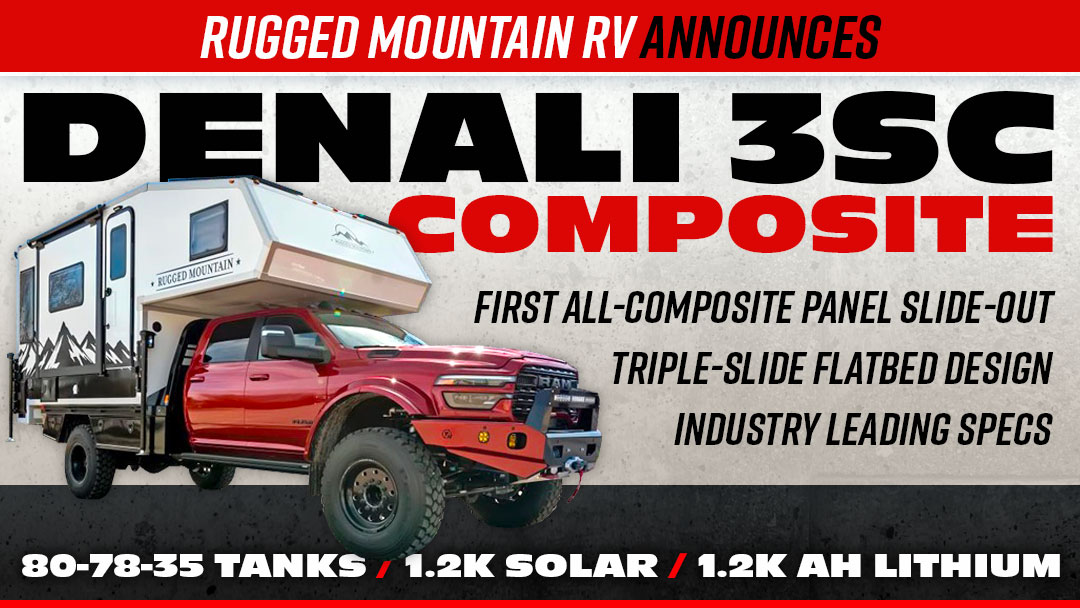
Rugged Mountain has unveiled the Denali 3SC Composite, a triple-slide flatbed truck camper built with 1.5-inch composite panels from Globe Trekker. It’s the first composite panel truck camper with slide-outs, and it has three. Meet the Denali 3SC!
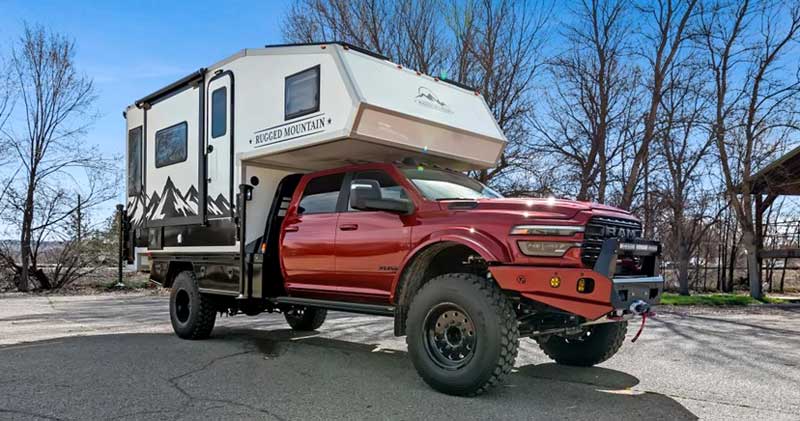
The triple-slide flatbed Rugged Mountain Denali 3S has reached an almost mythical status in the truck camper community and marketplace. While few have seen one in person due to the premium model’s limited production, nearly everyone has been wowed by Denali 3S images and videos showcased in these very electrons and across social media. Even if you’re not a truck camper enthusiast, the expansive and distinctly residential presentation of a Denali 3S commands attention. It’s a show stopper.
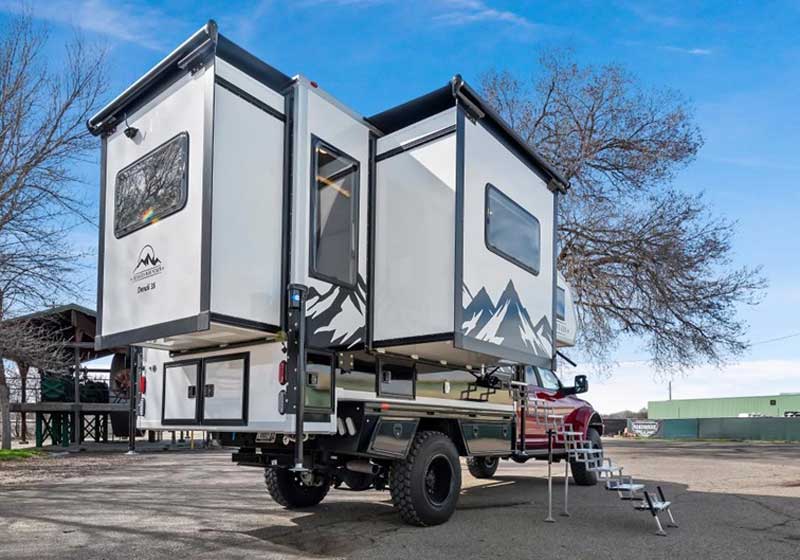
For some, that excitement is about to launch into overdrive when they learn that Rugged Mountain is now producing the Denali 3S as a composite panel build. Where the original was a wood-frame hung wall design, the new version features 1.5-inch thick composite panels and aluminum extrusions from Globe Trekker. Put another way, the new Denali 3SC may look like the original, but it’s a whole new build with entirely different materials.
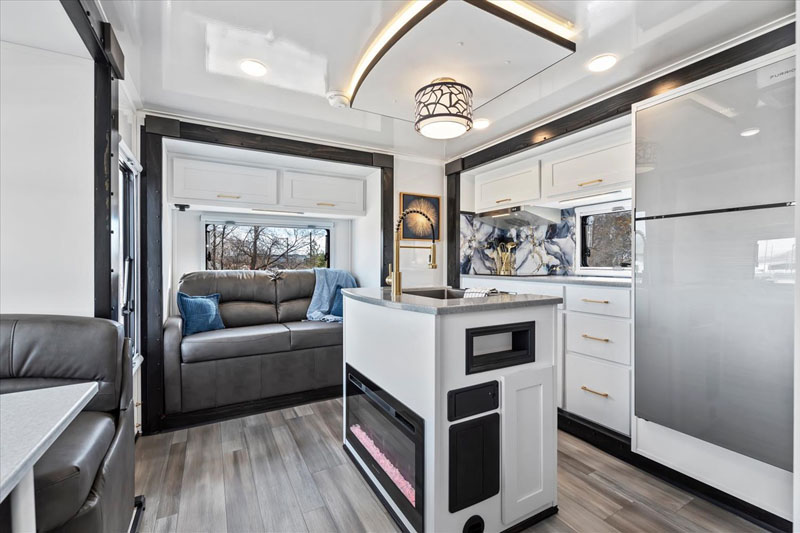
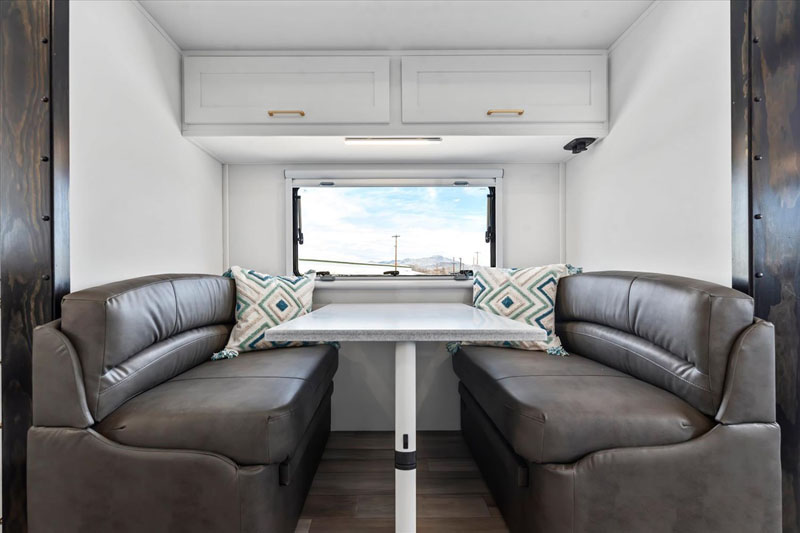
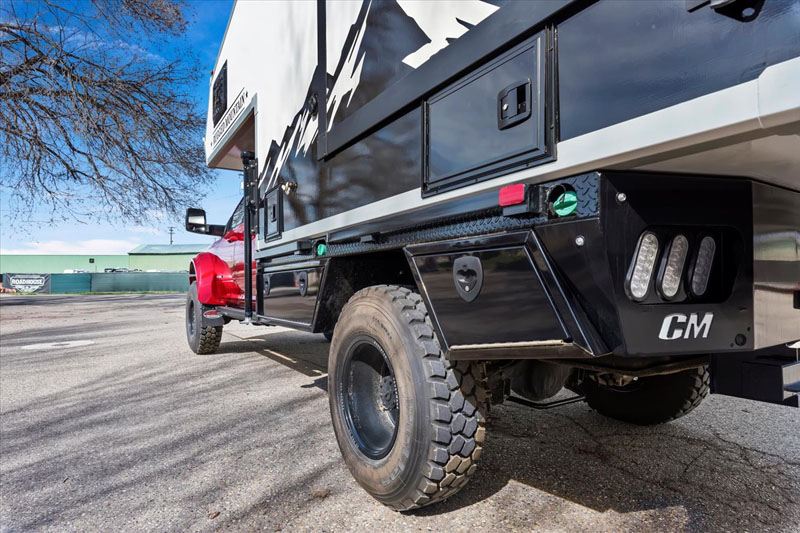
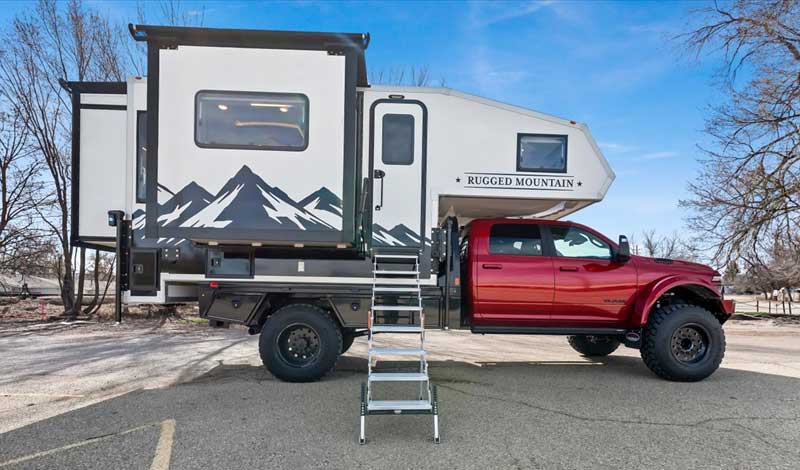
Beyond the composite panels, the rest of the Denali 3SC Composite remains nearly identical to what’s known as the largest flatbed triple-slide truck camper in history. The exterior showcases the new composite construction and a fresh quarter-wrap look, while the interior stays true to signature Rugged Mountain design. If you’re weary of the tan browns and muted grays that dominate much of the RV interior universe, Rugged Mountain has a bright and modern tiny home-inspired aesthetic.
To dig deeper into the composite evolution of the Denali 3SC, we spoke with Jesse Collinsworth, Founder and CEO of Rugged Mountain RV.
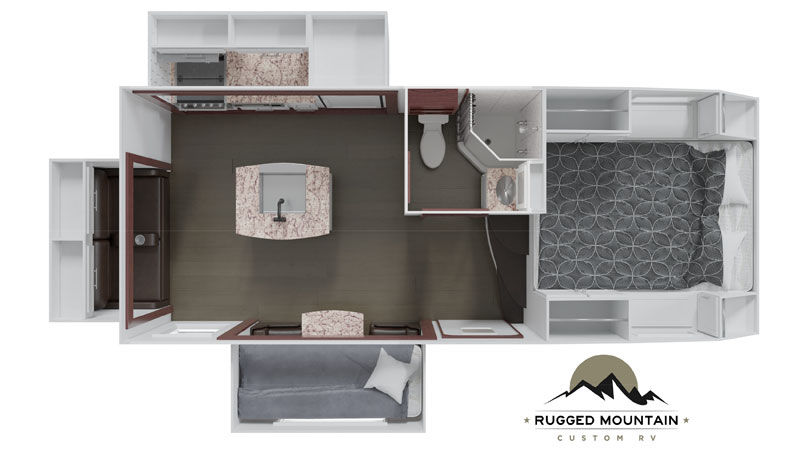
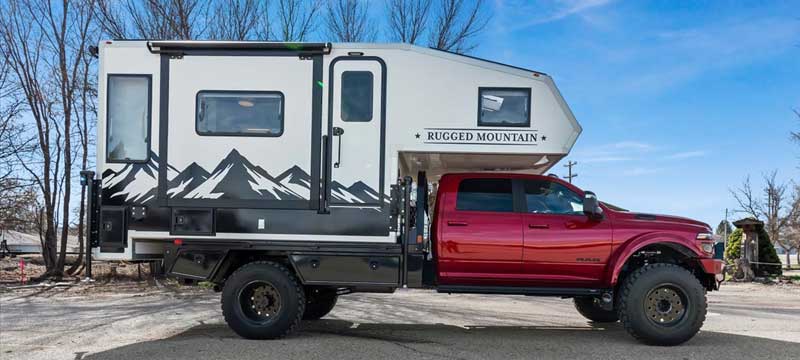
The Rugged Mountain Denali 3SC is a hard side, triple-slide, dry bath truck camper made for Class 5 trucks. The interior floor length of the Rugged Mountain Denali 3SC is 12’5”, the interior height is 6’7”, and the center of gravity is 64” from the front.
The Denali 3SC has an 80-gallon fresh tank, a 78-gallon grey tank, a 35-gallon black tank, and a Timberline 1.0 water heater and furnace. It comes with 314Ah of lithium standard. Optional is a full Victron solar package with 1200-watts of solar on the roof.
Rugged Mountain is reporting the fully loaded weight of the Denali 3SC at 5,503 pounds, and the dry weight of a base model at 4,950 pounds. The MSRP for the 2026 Rugged Mountain Denali 3SC is $117,000.
Click here for a free Denali 3SC brochure
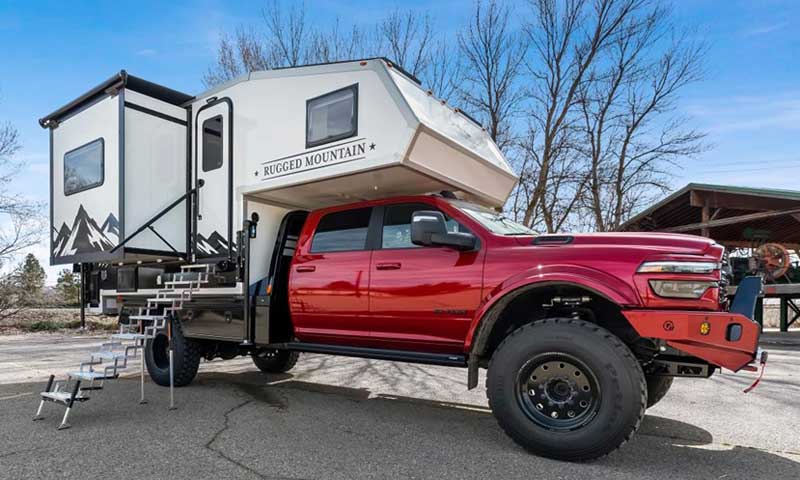
The all-new Rugged Mountain Denali 3SC, photos courtesy of Rugged Mountain RV
The Denali 3SC is the second composite panel camper you’ve announced in 2026. Is this the new direction for Rugged Mountain RV?
Yes. This past January, we launched the composite panel version of our non-slide Rugged Mountain Granite in Truck Camper Magazine. The slide-in Granite Platinum is probably our second hardest model to build, next to the Denali 3S with its three slide-outs. If we can build those two models with composite panels, we can build any of our truck campers in composite panels.
For the record, the Rugged Mountain Denali 3SC is the first true frameless composite panel slide-out truck camper ever made. No one else has even attempted to build one. Now we know we can build a composite triple-slide truck camper and maintain the premium quality we’re known for.
How is the composite in the Denali 3SC different than what other composite truck camper manufacturers are using?
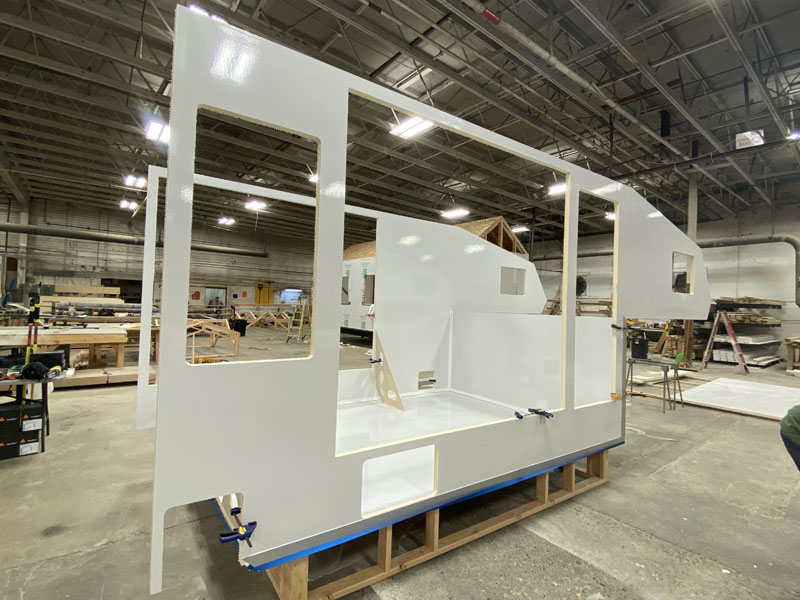
For both the Granite Platinum and Denali 3SC Composite, we are using an incredibly strong 1.5-inch-thick all-composite panel and extrusion system by Globe Trekker. The entire structure, including the roof, side walls, basement, and rear wall are all frameless composite panels.
There are a number of companies building composite panels and extrusions. Why did you choose Globe Trekker?
Globe Trekker approached our team five years ago. They wanted to work with us and were willing to advance their panels and extrusions to our requirements. At first, I wasn’t initially impressed with what they were offering. Then their engineering team greatly improved the strength and capability of their composite panel and extrusion system.
Other composite panel companies simply wanted to sell me what they offered. They didn’t want to work with us or make modifications to their systems. Globe Trekker was all in on being the first composite panel and extrusion system used with slide-outs. It’s been a great partnership.
Did you have to change the design or CAD files of the Denali 3S to make the composite version?
Yes. Everything had to be redesigned. Even the cabinetry had to be adjusted by a quarter-inch here or an eighth-of-an-inch there. Overall, the camper is two-inches shorter because of the available composite panel size. The finished Denali 3SC Composite is otherwise identical dimensionally, except for the flat versus arched roof. We also skipped the front nose cap since it’s not necessary with the composite panels.
Where did you remove two-inches of height?
Mostly the basement. The interior height was only lowered by three-quarters of an inch.
Did you encounter any challenges building the slide-out rooms using composite panels?
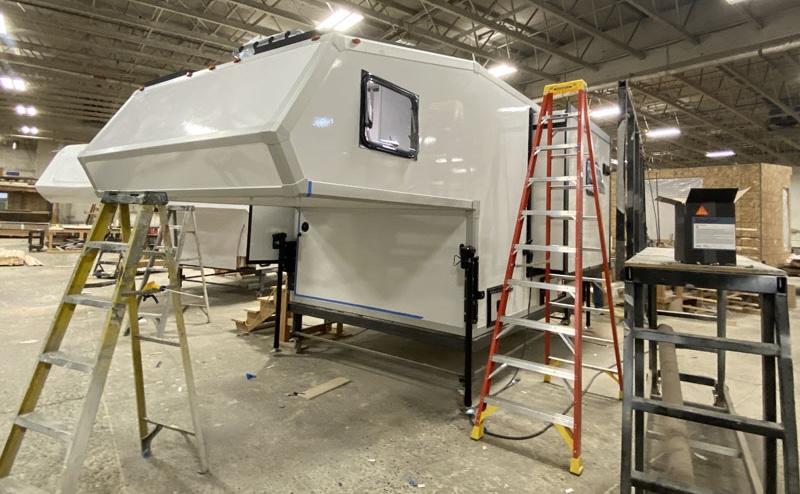
We needed to embed additional structure in the slide-out openings to support the Schwintek slide-out mechanisms. For this first prototype of the Denali 3S Composite, we used wood to create this additional structure.
Bill Sands, President of Globe Trekker, flew in himself to examine this challenge. Together, we came up with a new extrusion to support the slide mechanisms. The production Denali 3SC will use the new extrusion.
Will the final Denali 3SC structure be wood-free?
The entire exterior structure is already a wood-free 100 percent composite panel. The new extrusions will eliminate the need for wood to support the slide-out mechanisms.
The prototype has a composite panel interior floor. For the production version, we will be changing the interior floor to a three-quarter-inch plywood for a more residential feel. The composite panel floor is excellent, but it doesn’t have the solid underfoot feel our customers demand.
What windows are you using for the Denali 3SC?
We’re using the same thermal pane acrylic windows we use in all of our campers. We had to make an adaptation to properly fit the windows on the Granite Platinum and Denali 3SC Composite prototypes, but that’s been resolved in CAD for future production units.
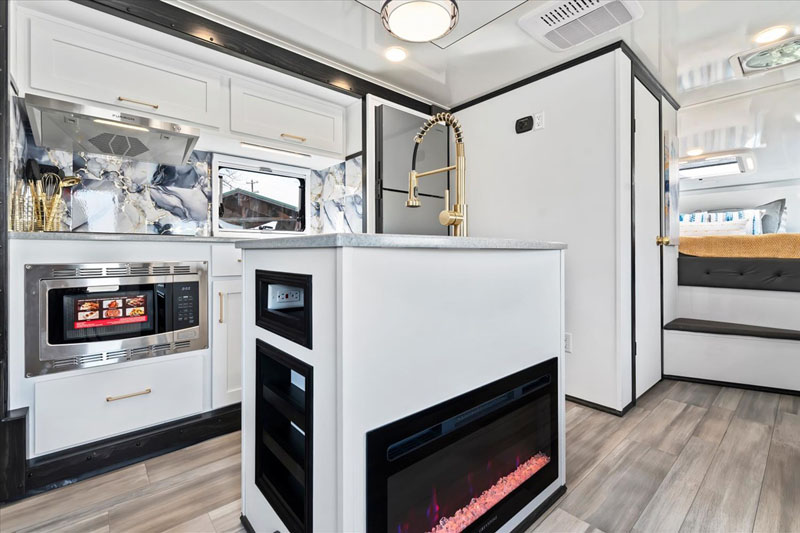
Does the Denali 3SC Composite feature Rugged Mountain’s signature tiny home interior?
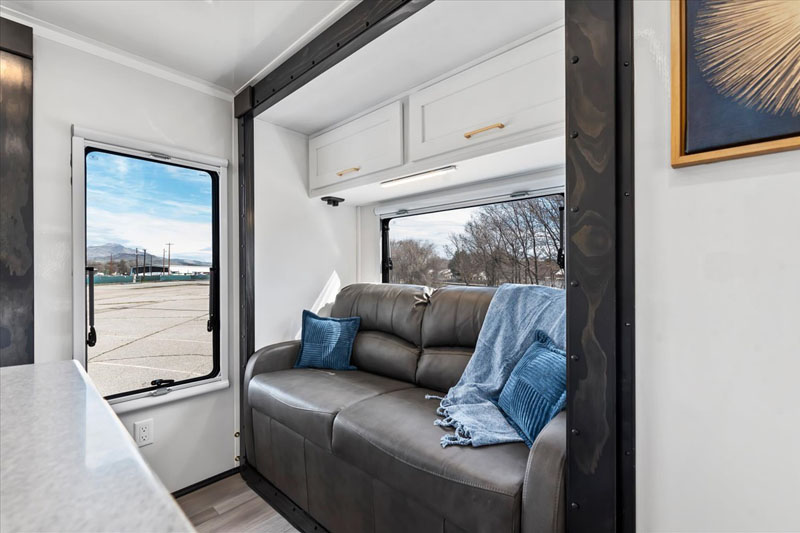
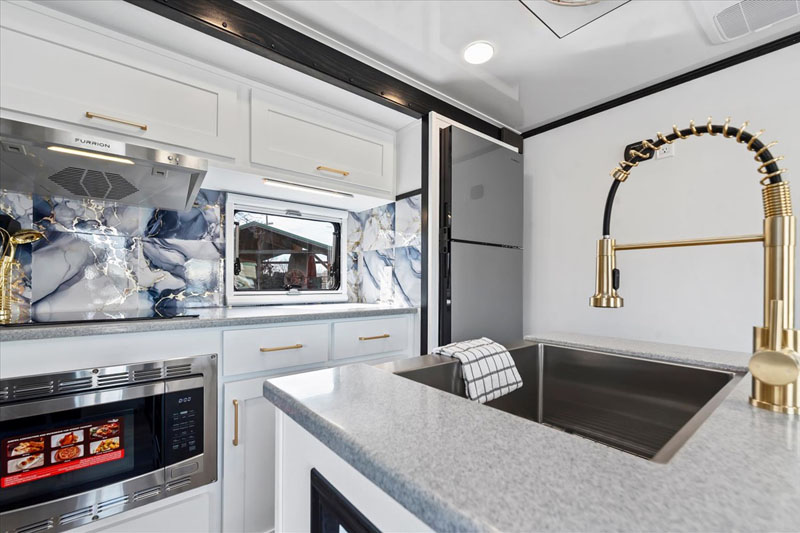
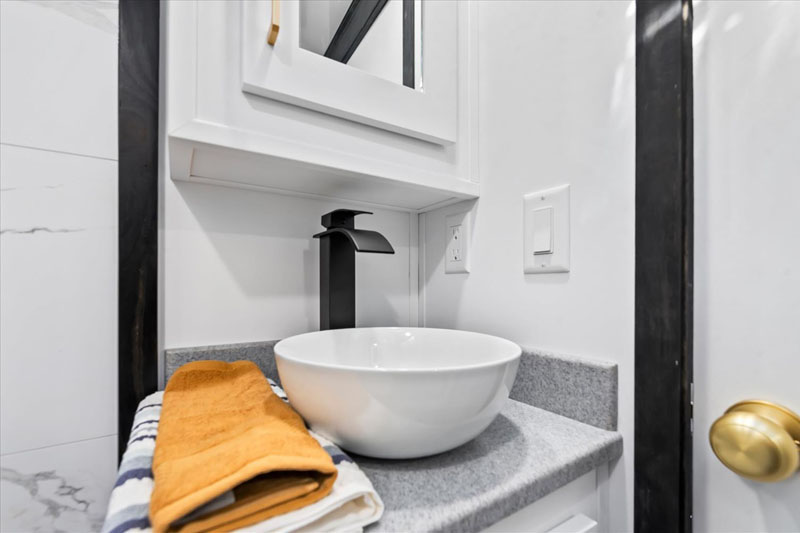
Yes. The interior looks identical. You still get that feeling of home. From the inside, there aren’t many places you can tell the camper is a composite panel. The baseboard and trim are identical. Customers are going to like how easy it is to clean the interior walls. You can simply wipe them down. Customers can still pick their floor, fabric, stain colors, kitchen backsplash, countertops, shower surround, and more.
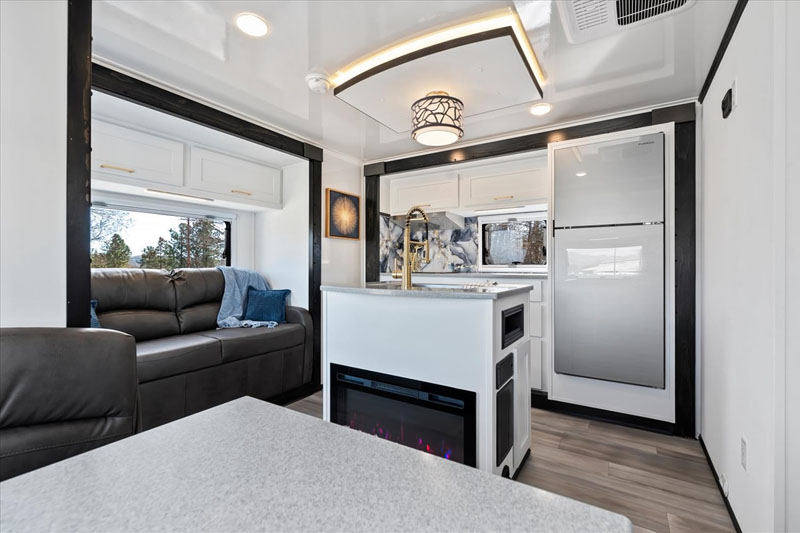
Are there any component differences between the wood-frame and composite panel Denali 3S versions?
There’s no propane option in the composite version. The composite version only comes with a premium Timberline 1.0 diesel heating system. This is a limitation of the composite panels and how they’re cut.
The 12-volt compressor refrigerator and air conditioner options are all the same. We also include an induction cooktop and a convection air fryer microwave standard.
In the cabover, we’ve eliminated the forward-most vertical cabinets in favor of a flat nightstand.
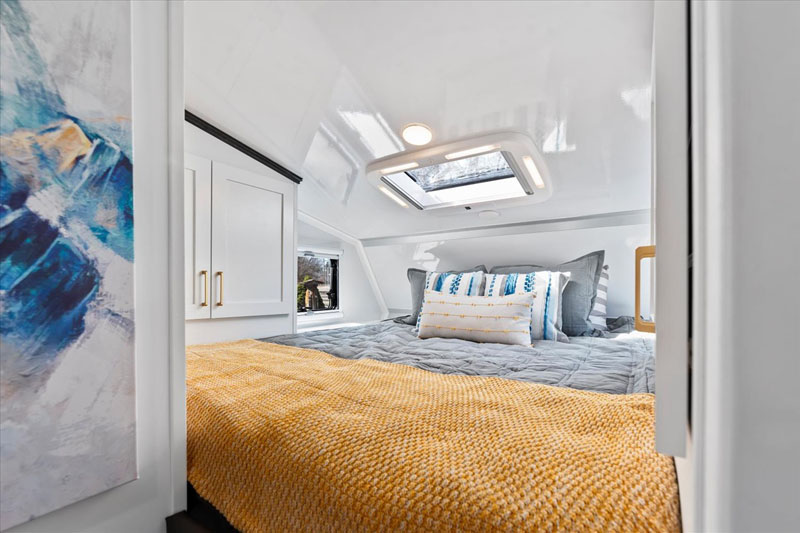
There’s a flat table top there now for charging phones and tablets. This change really opens up the cabover area and has always been an option on Rugged Mountain truck campers.
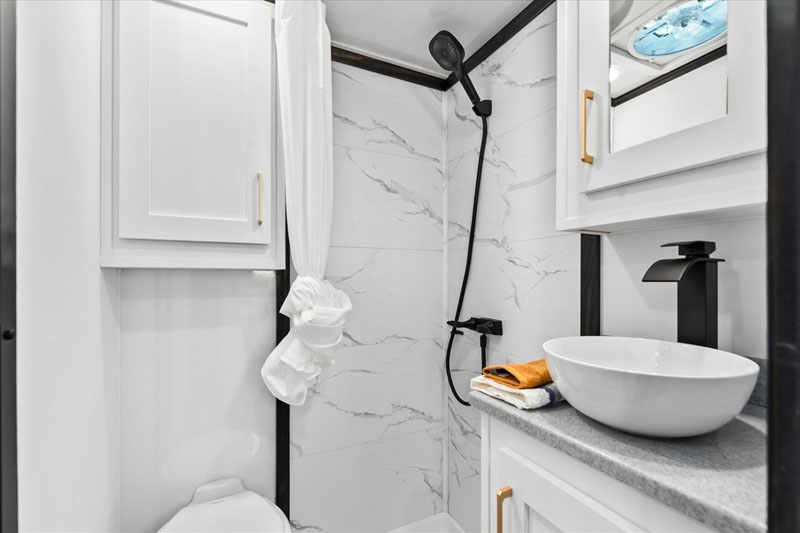
Are you using the same holding tanks as the wood-frame Denali: 80 fresh, 78 grey, 35 black?
Yes. The holding tanks are exactly the same.
Talk to us about the standard solar and battery setup in a Denali 3SC Composite.
That’s also the same. The units come solar-ready with the required wiring. To date, every Denali 3S customer has ordered the maximum of six 200-watt solar panels. All campers come standard with one SOK 314Ah lithium battery. You can opt for up to four SOK batteries, or get a full Expion or Lithionics battery system.
I have used SOK and Expion in my personal campers. As an RVIA (RV Industry Association) member, every battery we use is UL-listed for use in an RV. Many lithium batteries are not UL listed, or are not UL listed for use in an RV—so we don’t use them.
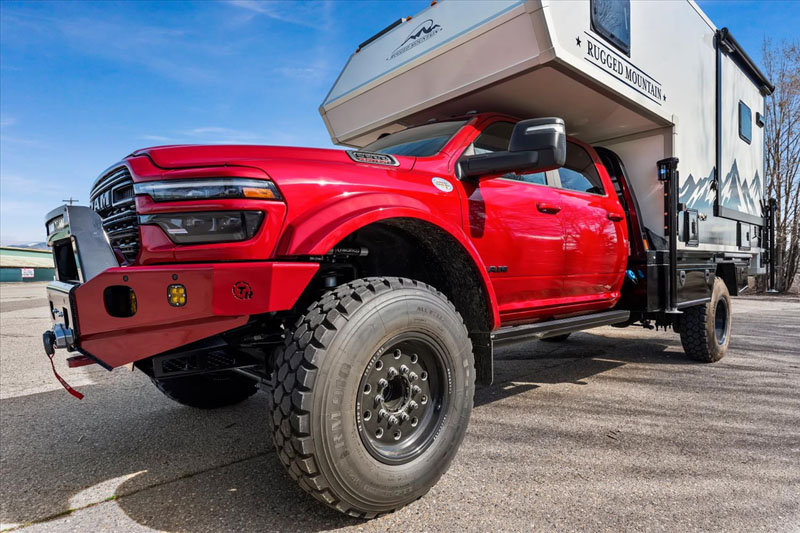
What truck is the Denali 3SC designed for?
The Denali 3SC requires a Class 5 truck: Ford F-550, Ram 5500, or Chevy 5500.
My personal wood-frame Denali 3S, fully loaded and wet, weighs about 7,000 pounds. That includes 80 gallons of fresh water at 8.34 pounds per gallon. That’s 667 pounds of water. With all of the available storage, you will likely have 1,000 pounds of personal stuff on board.
Large lithium battery systems add significant real-world weight to a truck camper setup. Individual batteries typically weigh between 70 and 100 pounds, meaning a 1,000Ah lithium system alone can add roughly 800 pounds before any personal gear is loaded.
Once customers begin adding common adventure equipment, such as kayaks, or towing toys, the total weight quickly climbs and can approach or exceed a truck’s available cargo capacity. I wish our competitors would warn their customers about this fact. This is an important reality that buyers should be aware of when evaluating campers like the Denali 3S, as understanding true loaded weight is critical to maintaining a safe and properly matched truck-and-camper combination.
What is the base dry weight of the Denali 3SC Composite?
The Denali 3SC Composite base dry weight is 4,950 pounds.
Keep in mind that a standard Rugged Mountain build is like an optioned-out competitor. I see competing campers that don’t include everything from a dinette to a microwave to an entry assist handle to a battery system in their weight and price. Then they want to charge tens of thousands for an advanced electrical setup and 600Ah of lithium. We don’t play that game.
Where is the center of gravity on a Denali 3SC Composite?
The Denali 3SC Composite’s center of gravity is 64” from the front.
We use a set of highly accurate racing scales to find the weight of our campers at each jack and determine the center of gravity. I want our weight distribution to be even, so when a slide goes out, it doesn’t shift the weight too much to one side.
What is the base MSRP for the Denali 3SC Composite?
The base MSRP for the Denali 3SC Composite is $117,000 USD. A typically optioned unit, including maxed-out solar and other popular options, will run $125,000, depending on the options chosen.
How much do the composite panels factor into that price?
The composite panels add a minimum of $10,000 to $15,000 to a Rugged Mountain truck camper. We will bring that cost down once we’re able to order the panels in bulk.
What is the warranty for the Denali 3SC?
Rugged Mountain truck campers come with a two year structural warranty. Of course, we take care of our customers long term.
As a composite panel camper, we have eliminated most of the issues people experience with truck campers. There’s a full composite panel roof that’s not going to leak. The composite won’t rot, rust or delaminate. The vacuum seal used when making the panels sucks out all the air and is incredibly strong. You can even see the mesh on the fiberglass.
“The Denali 3SC Composite will be on display at Overland Expo SoCal in Costa Mesa this weekend in the Globe Trekker booth.”
Will the Denali 3SC be on display at upcoming RV shows or Overland Expos?
Yes. The first show where the Denali 3SC Composite will be on display is Overland Expo SoCal in Costa Mesa this weekend in the Globe Trekker booth. Other events will be scheduled throughout the year.
When will the Denali 3SC Composite be available?
You can order one now. We currently have orders for composite Denalis. I’m holding them off until the next one is finished with the new extrusions. I want to make sure they’re perfect before we deliver any units to customers.
Now that Rugged Mountain has developed a composite panel Denali 3SC, will you still be offering a wood-frame version of the Denali 3S?
Our customers will give us that answer. I believe Rugged Mountain customers will prefer the composite version, especially once we have the new slide-out extrusions. We should have an updated Denali 3S Composite with the new extrusions by mid to late April.
Now that you’ve built a Granite Platinum and a Denali 3SC with composite panels, will you be building a composite panel X12 or X14?
Yes. I am 100 percent positive I can build an X12 and X14 with composite panels. That will be easy in comparison to building a composite Granite or Denali 3S. When I developed our X12, I made all the dimensions for the composite panels. As soon as this Denali 3S Composite is finalized, the X12 will be our next composite model.
“Stay tuned for an all-new eight-foot slide-in Rugged Mountain.”
Rugged Mountain has been on a tear with new models. Is there anything else in development?
Actually, yes. Stay tuned for an all-new eight-foot slide-in Rugged Mountain. I can’t share too many details yet, but I’m focused on a camper for three-quarter ton trucks with the tailgate closed.
Holy cow! That was unexpected. We won’t pry, but we’ll definitely be looking forward to seeing another new model in 2026. What are you most excited about for the Denali 3SC?
Nobody else has ever built a composite panel truck camper with slides. There’s no metal or wood frame. It’s only composite panels. And it’s a triple-side flatbed to boot.
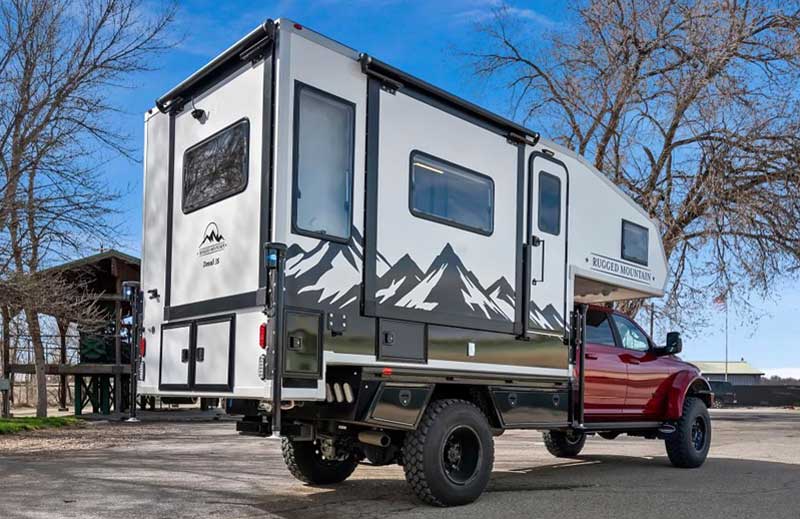
I’m also excited that we’re getting away from swooshes. This camper has a completely fresh graphics package. It’s a quarter-wrap, and it is now standard for all Denali 3S campers.
“Nobody else has ever built a composite panel truck camper with slides. There’s no metal or wood frame. It’s only composite panels.”
For more information on Rugged Mountain, visit their website at ruggedmountaincustomrv.com. Click here to get a free Rugged Mountain brochure.