Nobody lets you test-drive a toilet. Choosing the right one for your truck camper is a decision you’ll live with for years. Once it’s used, returns aren’t an option. That’s why we did the dirty work for you. What’s the best toilet option for you? Let’s flush that out.
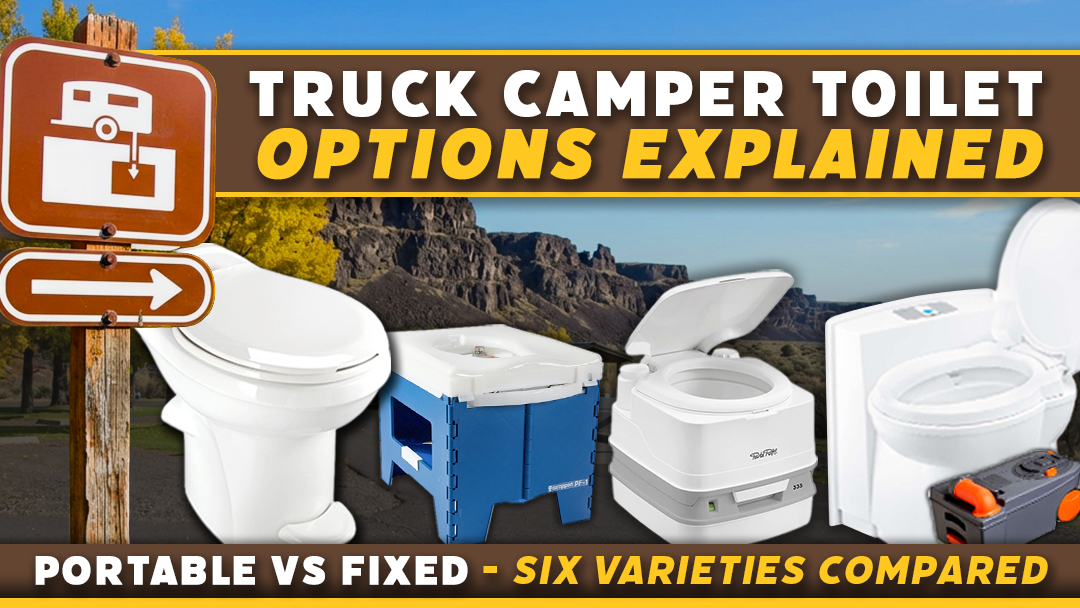
If you’re shopping for a truck camper, chances are you’ve spent hours combing through Truck Camper Magazine, visiting manufacturers’ websites, and comparing floor plans. For many buyers, the toilet is overlooked during the early stages of truck camper shopping. And yet, this choice can influence your entire camping experience—where you camp, how long you stay, and how often you need a dump station.
Before deciding on a toilet, take a moment to think about how you actually travel. Are your trips mostly quick weekend escapes or longer off-grid adventures? Do you prefer the simplicity of a portable setup or the familiarity of a traditional RV bathroom? Would you plan around dump stations, or prefer to avoid them altogether?
Truck campers offer a surprising range of toilet systems, from simple portable setups to fully enclosed bathrooms with flushing toilets that feel close to home. Understanding the different categories can make it easier to narrow down the right option.
In this guide, we will break down the two main categories of truck camper toilets: portable and fixed. Within each category, we will look at the most common systems and explain how they work. If you prefer the quick version, you can jump ahead to the truck camper toilet comparison table later in this article.
What’s the best toilet option for you? Have a seat, and read on.
Portable toilets are the simplest option found in truck campers, and that’s their biggest advantage. Instead of plumbing, tanks, and permanent fixtures, these systems are portable and removable. You place the toilet where it fits, use it when needed, and empty it when the container fills.
Ultra lightweight pop-up and hard side truck campers are the most common places to find portable toilets. Their compact size and flexibility make them a natural fit where space and weight are limited. Many manufacturers have also designed clever ways to hide them when they are not in use.
The tradeoff of simplicity is a small holding capacity and frequent hands-on waste management. Portable toilets generally need to be emptied more often, and the user usually handles the waste container directly. Some systems use disposable bags while others rely on small flush tanks. A few advanced designs seal waste into disposable liners after every use.
Let’s break down the most common portable toilet systems, how each one works, their pros, their cons, and associated costs.
Bag toilets are the simplest portable option available. Most designs use a folding seat or a lightweight frame that holds a disposable waste bag known as a WAG bag.
WAG stands for Waste Alleviation and Gelling. The name sounds technical, but the concept is simple. The bag contains a powder that gels liquids and helps control odors.
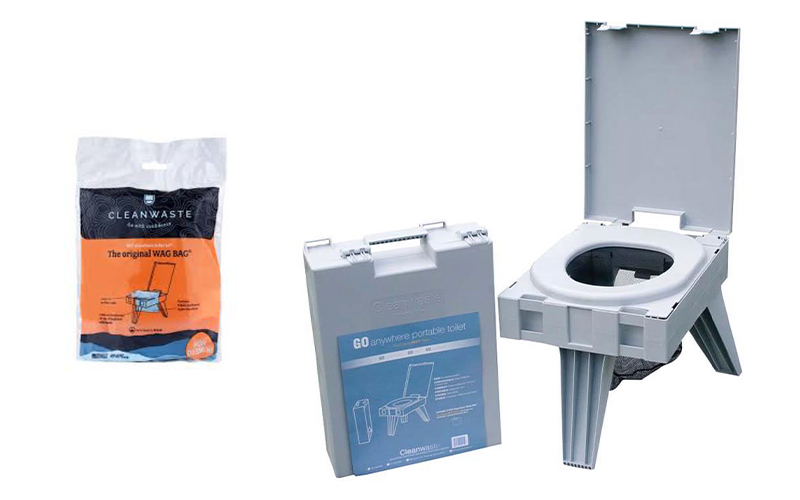
Each kit typically includes an inner waste bag, the gelling powder, and a durable outer bag that seals everything for disposal. The outer bag provides a second layer of containment and helps prevent leaks and odors.
Most WAG bags can be placed in a regular trash receptacle once they are sealed. It is still important to be considerate about where they are discarded. Choose dumpsters or sealed trash bins whenever possible, and never bury them or place them in pit toilets.
For campers who value simplicity and minimal equipment, bag toilets can be a practical solution. If this approach sounds too hands-on, or if you prefer a system that is ready whenever nature calls, bag toilets may not be the right fit.
Pros of Bag Toilets for Truck Campers
Cons of Bag Toilets for Truck Campers
Maintenance: None. Use the bag and dispose of it properly.
Cost: Typically $30 to $120 for the toilet and $2 to $4 per disposable waste bag.
Holding Capacity: One use per bag.
Examples: GO Anywhere Portable Toilet by Cleanwaste, and Bush Toilet by Ironman4x4
Flush-style portable toilets provide a more familiar bathroom experience while remaining completely self-contained. These units have two main components. The upper tank stores fresh water for flushing, and the lower tank collects the waste.
Portable flush toilets are typically set up by filling the freshwater reservoir and adding the recommended tank treatment. When the flush mechanism is activated, water rinses the bowl and moves the waste into the sealed holding tank. The flush action helps control odors and keeps the bowl clean between uses.
Holding capacity varies depending on the model and usually ranges from two to six gallons. Keep in mind that water adds weight, and a full tank can become heavy quickly. Just one gallon of water weighs 8.34 pounds. Once full, that six gallon capacity becomes 50 pounds of waste.
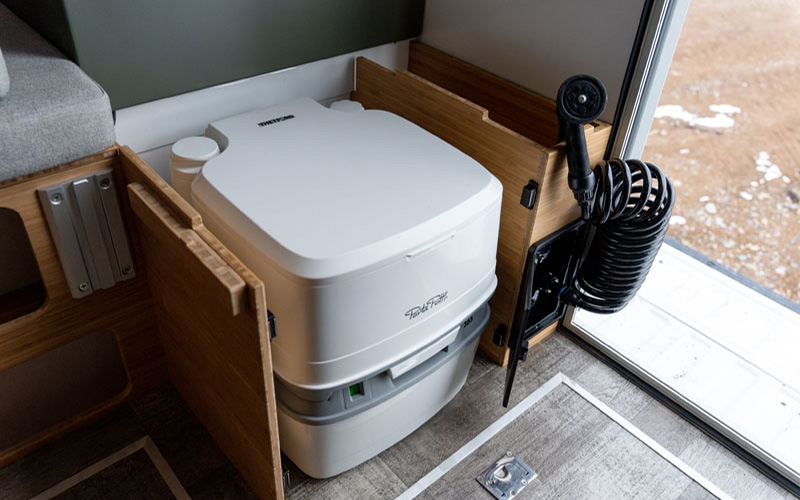
Portable flush toilet hidden in the bench of the Outpost 6.5. Photo courtesy of Outpost Campers.
When the tank is full, it detaches from the toilet and can be emptied at a dump station, pit toilet, or standard toilet. The tank usually includes a sealed cap and a pouring spout to make disposal easier. Empty the cartridge into a toilet bowl, give the container a quick rinse, and send your delivery on its spiraling grand finale.
Manufacturers typically recommend emptying into a standard toilet or porta-john, which is fine in theory. In practice, walking into a gas station with a sloshing waste tank is its own kind of social experiment. No business wants people walking into their establishment with what’s essentially a big Tupperware full of human waste. Drop it and you could be on the local news that evening.
The better approach is to stick to open-air restroom facilities, porta-johns, pit toilets, or RV dump stations when it’s time to empty. It’s more discreet, more considerate, and significantly less likely to get you banned from a Flying J.
Pros of Portable Flush Toilets for Truck Campers
Cons of Portable Flush Toilets for Truck Campers
Maintenance: Add tank chemicals as recommended, rinse the tank after dumping, and periodically lubricate seals. Because these systems use water, they can freeze in cold temperatures. Empty both tanks when not in use and consider adding RV antifreeze if winter camping.
Cost: Typically $120 to $280
Holding Capacity: Between 3 and 6 gallons of waste
Examples: Porta Potti 565E, and Porta Potti 135 by Thetford
The first time I saw a dry flush toilet in action, I was captivated. I even sacrificed a bit of used coffee grounds just to watch the system wrap them into a spinning silver liner. It is oddly satisfying to imagine the mechanism politely twisting, sealing, and packaging up something you would rather not deal with.
Dry flush toilet systems pull liner material from a cartridge each time the toilet is flushed. The waste is twisted and sealed inside the liner, creating an individual bag for each use. Those sealed bags remain inside the toilet until the cartridge is full. At that point, the cartridge can be removed and the waste bags disposed of in the trash.
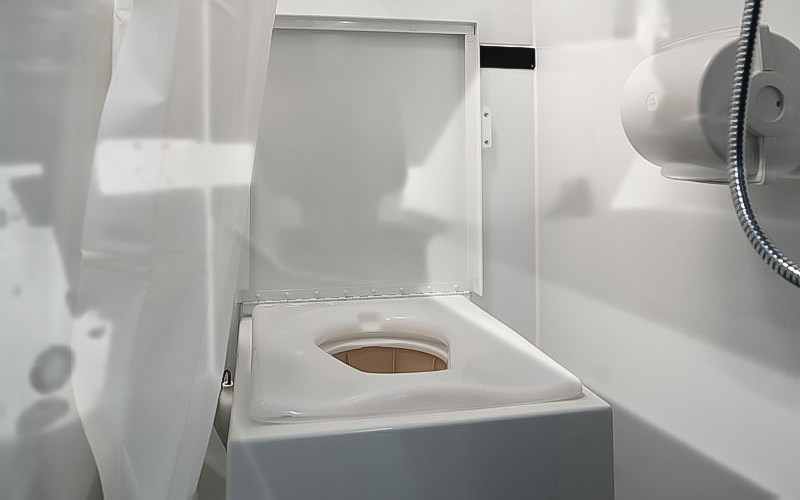
Portable dry flush toilet by Wrappon
Because each use is sealed individually, odor control is excellent. There is also no liquid waste sloshing around in a holding tank.
Dry flush toilets do require electricity to operate. They are typically powered by a battery and can often be wired into the camper’s power system. On the flip side, the initial purchase price is higher than other portable toilets, and replacement cartridges add an ongoing cost.
Many owners prefer dry toilets because the process is clean and simple. After dealing with dump stations and holding tanks, the convenience of pressing a button is very appealing.

Portable dry flush toilet by Wrappon
The upfront price and ongoing cost of replacement cartridges can raise a few eyebrows at first. After a few rounds of dumping tanks, dealing with chemicals, and managing wet waste with other toilet systems, the convenience starts to look much more appealing. Most owners I have talked to swear by their dry flush toilets. Once you see one in action, it is easy to understand the appeal. Hang on to your used coffee grounds and see for yourself.
Pros of Dry Flush Toilets for Truck Campers
Cons of Dry Flush Toilets for Truck Campers
Maintenance: Replace liner cartridges when needed, keep the chamber clean, and maintain the battery. Dry flush toilets perform well in cold weather since they do not rely on water. Keep the battery warm in extreme conditions to maintain performance.
Cost: Ranges from $750 to $1,600 upfront with refill cartridges costing about $0.50 to $1 per flush.
Holding Capacity: Depending on the model, 15 to 50 flushes per cartridge.
Examples: Laveo has several dry flush options, as well as CompoCloset and Modiwell.
Urine-diverting toilets and portable “composting” toilets are essentially the same type of system. Both separate liquids and solids into two different containers. The main difference is how the solids are managed. Both rely on WAG bags or liners, while composting versions use an additional organic medium such as coconut coir or peat moss to help control odor.
Separating liquids from solids helps prevent the wet mixture that often creates odors in traditional holding tanks. The liquid container typically needs to be emptied every few days, depending on usage, while the solid container can often last longer before needing attention. Managing two containers takes a little practice, but these systems eliminate the need for a black tank and use little to no water.
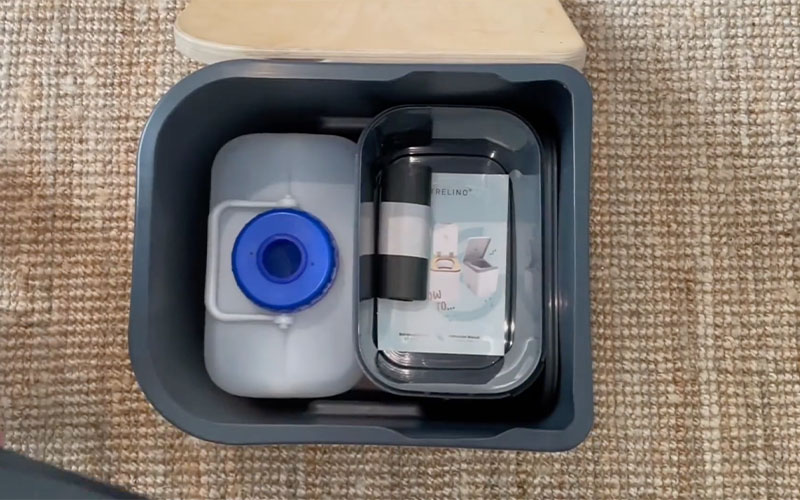
Many urine-diverting toilets are marketed as composting toilets, but true composting takes time. Even under controlled conditions, the process can take 12 to 18 months. Many smaller portable “composting” toilets also lack the ventilation and holding capacity needed for true composting. In most cases, they rely on organic materials and liquid separation to control odors rather than fully composting the waste.
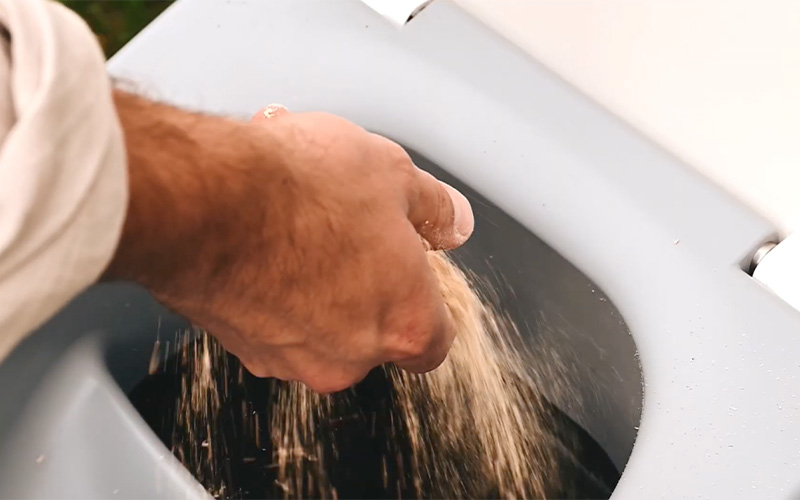
My husband, Eric, and I used a fixed composting toilet in our DIY skoolie build for two years. It had proper exterior ventilation and a large holding chamber designed for long-term use. Even then, composting only works if you have a place to store and eventually use the finished material. For many travelers, the waste ultimately ends up in a landfill or sewage system.
Even so, urine-diverting toilets offer some clear advantages. They eliminate the need for a black tank and use very little water. When managed properly, they can also go long stretches between emptying the solids container.
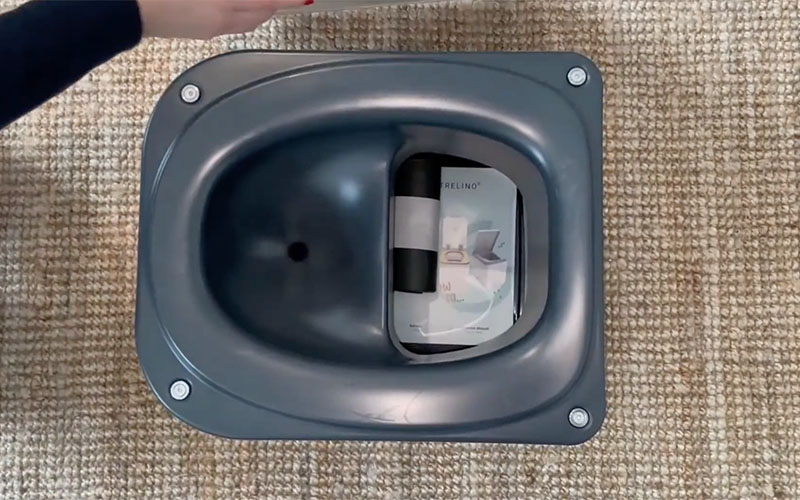
Pros of Urine Diverting Toilets / Composting Toilets for Truck Campers
Cons of Urine Diverting Toilets / Composting Toilets for Truck Campers
Maintenance: Involves regularly emptying the liquid container, emptying the solids bin, and replenishing the compost medium. The ventilation fan needs power and regular checks. Liquid containers can freeze in cold temperatures. Empty frequently and consider adding a small amount of RV antifreeze to the liquid bottle if winter camping.
Cost: From $250 to $600
Holding Capacity: Usually about 1 to 3 gallons of liquid capacity and 2 to 3 gallons of solid capacity.
Examples: OGO composting toilets, Trobolo composting toilet systems, Trelino composting toilets
Portable toilets offer flexibility and simplicity, but many truck camper owners prefer a more traditional bathroom setup. That’s where fixed toilet systems come in.
Fixed toilets provide the most familiar bathroom experience you will find in a truck camper. These permanently installed systems connect to dedicated holding tanks, which means the toilet is always ready when nature calls. Many campers with fixed toilets also include enclosed bathrooms, and being able to close a door can make a big difference when trying to maintain a rose-scented illusion between travel buddies.
For many truck camper owners, a fixed bathroom simply feels more comfortable and convenient. There is no setup required, the toilet is always in the same place, and the system can handle much larger waste capacity than most portable options.
Many campers with fixed toilets also include enclosed bathrooms with a sink and shower. In a small living space, having a dedicated bathroom can make daily life feel much more civilized.
On balance, that comfort comes with additional infrastructure. Fixed toilet systems require freshwater plumbing, valves, and some form of waste storage, either a removable cassette cartridge or a traditional built-in black tank. All of this adds considerable weight, cost, and complexity to a truck camper.
At first glance, a cassette toilet looks much like a traditional RV flush toilet. Most models use a handle or push button to flush and are typically made from durable plastic to keep weight down. The key difference is hidden below the bowl.
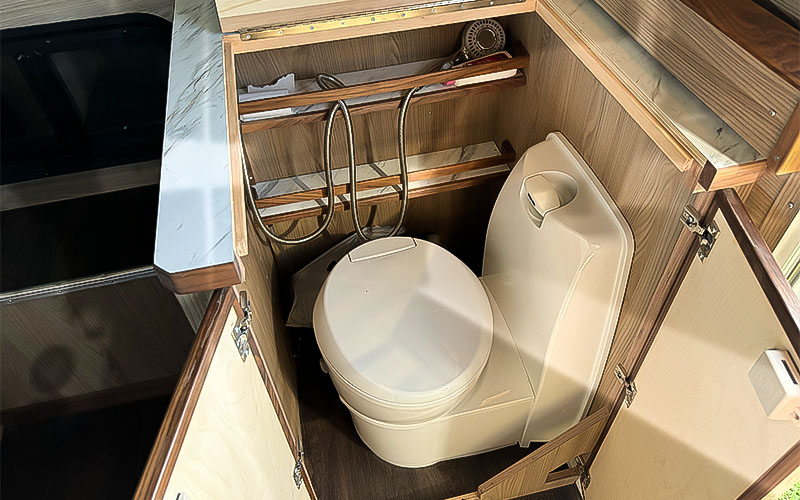
Fixed cassette toilet in an Alaskan 8 Flatbed truck camper
Instead of sending waste to a large fixed tank, cassette toilets collect everything in a removable waste cartridge located directly beneath the toilet. When the tank fills, it can be accessed through an exterior service hatch on the side of the camper.
When it’s time to empty the cassette, slide the cassette out, carry it to a residential toilet, porta john, or dump station. Then, empty it using the built-in handle, sealed cap, and pour spout. The process is straightforward and keeps the entire job outside the camper. Most cassette tanks hold around 5 gallons. That can quickly add up to over 40 pounds to carry when it’s time to empty, which is worth considering when choosing a toilet option.
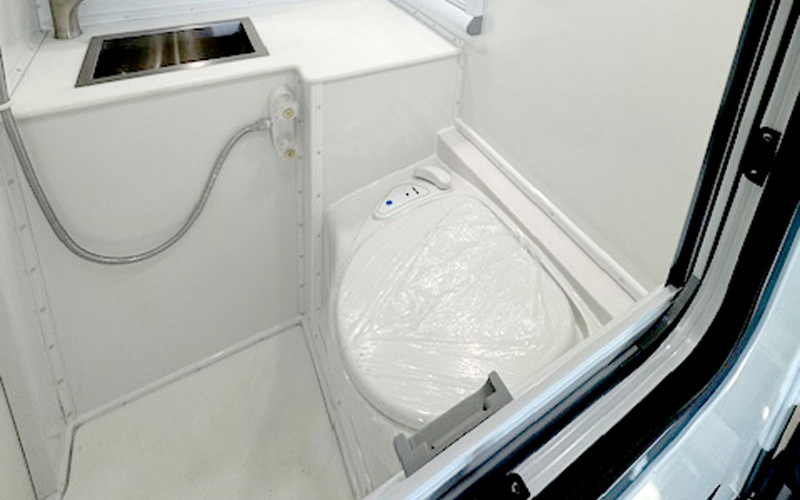
Fixed cassette toilet in Northstar 10X
Because the tank is removable, cassette toilets offer more flexibility when it comes time to empty them. In many cases, the cassette can be emptied in the same places as portable toilets. As mentioned earlier, it is best to stick to open-air restroom facilities, porta johns, pit toilets, or RV dump stations when it is time to empty the tank. This means you do not always need to locate a traditional RV dump station.
Cassette toilets are also favored for cold-weather camping because they allow you to camp where dump stations may be closed during the winter. Since liquids can still freeze inside the cassette, many owners add antifreeze tank treatments to the tank. If the tank does freeze or become damaged, the removable design makes it easier to deal with. The cassette is smaller, easier to thaw, and replacement cassettes can be purchased and swapped out if needed.
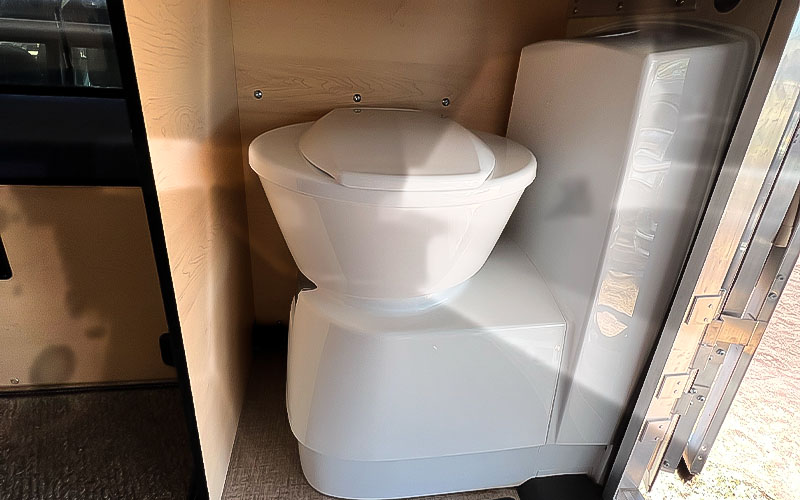
Fixed cassette toilet in a flatbed by Four Wheel Campers
That flexibility is one of the reasons cassette toilets have become popular in truck campers. They provide the familiar flush toilet experience of a traditional RV system without the size, weight, or plumbing infrastructure of a full black tank. You will find them in everything from enclosed wet baths to clever installations tucked beneath benches or inside cabinets.
For many truck camper owners, cassette toilets strike a comfortable middle ground between portable toilets and full black tank bathrooms.
Pros of Fixed Cassette Toilets for Truck Campers
Cons of Fixed Cassette Toilets for Truck Campers
Maintenance: Cassette toilets are relatively simple to maintain. After emptying, the tank should be rinsed thoroughly and a small amount of water and deodorizing chemical added before reinstalling it. Periodically inspect the seals and sliding valves. Applying manufacturer-approved lubricant helps keep the mechanism operating smoothly and prevents unwanted odors from escaping. Cassette tanks and flush water can freeze in cold weather. Use antifreeze-compatible tank treatments and keep the system drained when not in use in freezing conditions.
Holding Capacity: From 4 to 5 gallons of waste per cassette toilet.
Tip: Carry a spare cassette to extend time between dumps—just make sure you have space to store it!
Cost: $700 to $1,200 for the toilet itself when purchased online, not including installation. In many factory-built truck campers, cassette toilets are either included in the base model price or offered as an upgrade option, with the installation cost bundled into the option price.
Examples: Thetford C260 Series, Thetford C220 Series, Dometic cassette toilets
Black tanks take up space and add weight, so they are typically found in larger truck campers with enough room to house the plumbing system. The additional infrastructure also adds to the overall cost of the camper, which is one reason truck campers with black tanks tend to carry higher base prices.
Traditional RV flush toilets provide the most residential-style bathroom experience and the largest waste holding capacity you will find in a truck camper. These toilets are permanently installed fixtures, often made from plastic or ceramic, and typically sit at a comfortable residential height. Most models use a foot pedal or lever to flush, which activates a gravity flush system similar to what you would find in a home bathroom.
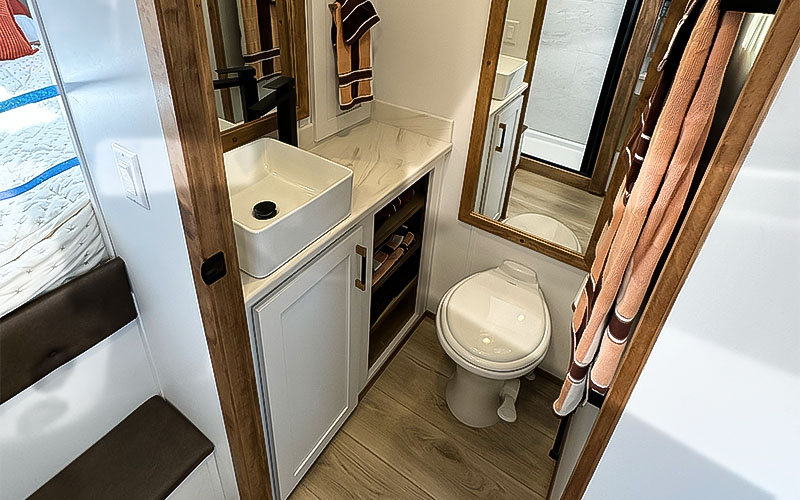
Fixed RV flush toilet with a black tank in a Rugged Mountain X14
Everything is flushed into the black tank, where it remains sealed until the tank is emptied at a dump station. For many truck camper owners, this simplicity during daily use is a major advantage over portable toilet systems.
When the black tank fills, it is emptied at an RV dump station using a sewer hose that connects the camper’s outlet valve to the dump inlet. Dumping the tank is not the most glamorous part of RV travel, but the process itself is fairly straightforward.
Emptying a black tank typically involves connecting a sewer hose between the camper and a dump station inlet, opening the black tank valve to allow it to drain completely, and then following with the gray tank to help rinse the system. Once finished, the valves are closed, the hose is detached and rinsed, and everything is stored before moving on.
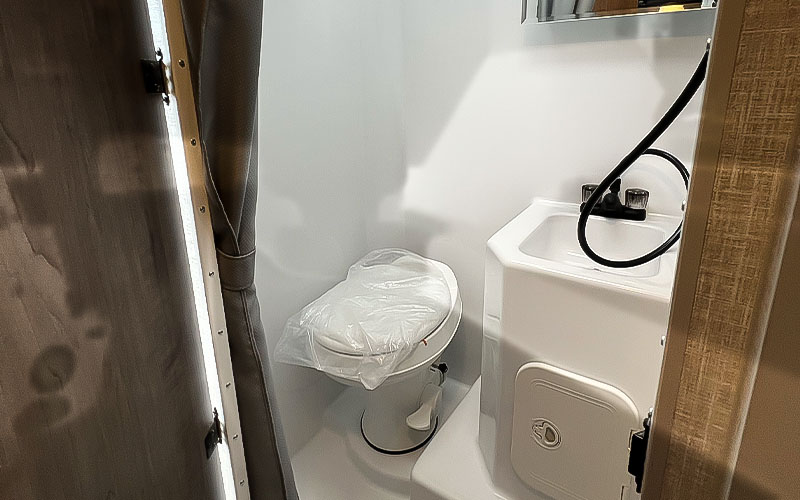
Fixed RV flush toilet with a black tank in a Lance 960
Black tanks benefit from occasional cleaning to keep sensors accurate, reduce odors, and prevent buildup inside the tank. Many campers include a built-in tank flush system with an exterior inlet that sprays water inside the tank, helping rinse the interior. Periodically rinsing the tank as part of a dump station routine helps maintain performance and improve gauge accuracy.
You can also fill the black tank with water and then dump it to flush everything out. Doing this once a month or so helps clean the tank, improves gauge accuracy, and reduces odors.
Of course, black tanks do require some planning. If there are no dump stations along your route, you may need to adjust your travel plans to empty the tank. On the flip side, if you are staying at a full-hookup campsite, you can connect your sewer hose for continuous use during your stay. This is less common in truck camping than in traditional RV camping, but if it appeals to you, a permanently installed toilet with a black tank may be the right choice.
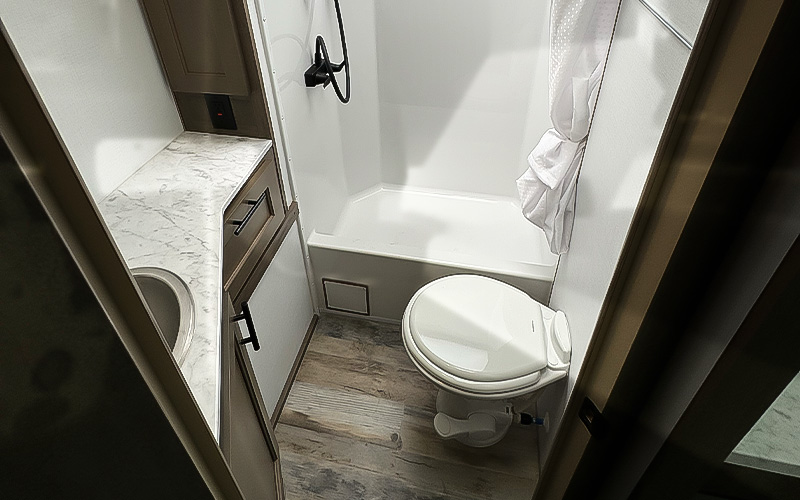
Fixed RV flush toilet with a black tank in an Eagle Cap 1165
Winter camping introduces another consideration. Water lines and holding tanks can freeze in extreme cold if they are not properly protected. If temperatures drop below freezing for more than a few hours and the heat is not on inside the camper, it’s recommended to winterize a camper with RV safe anti-freeze. Many truck campers address this with insulated or heated tanks, but it is still an important factor to understand when evaluating different systems, especially if you are a cold-weather camper.
The upside to this system is comfort. Larger campers with black tanks often have enough space for a fully enclosed bathroom. It may feel compact compared to a house, but being able to close a bathroom door inside a camper makes a big difference when sharing a small living space.
Within the traditional RV toilet category, most models fall into two material types: polyethylene and ceramic.
Polyethylene RV Toilets
Polyethylene toilets are the most common option in truck campers. Made from durable plastic, they are lightweight and cost-effective, which makes them a practical choice for manufacturers trying to balance comfort with weight limits.
Despite being plastic, modern polyethylene toilets are surprisingly tough, handle the vibration of road travel well, and have proven reliable for decades.
The tradeoff is that plastic does not have the same solid feel as ceramic. The surface can scratch more easily and may show staining or discoloration over time. For many truck camper owners, however, the weight savings and durability make polyethylene toilets a sensible and widely used choice.
Ceramic RV Toilets
Ceramic RV toilets are made from porcelain-glazed clay and offer the most residential feel. The smooth, non-porous surface helps waste rinse away easily, resists staining, and makes routine cleaning simpler.
They feel more solid than polyethylene models, which some owners appreciate. The porcelain glaze resists scratches and staining and holds its appearance longer.
The tradeoff is weight and cost. Ceramic toilets are heavier and typically found in larger truck and camper rigs with the payload capacity to support them.
The good news is that most RV toilets connect to standard floor flanges, which means many polyethylene models can be swapped out for ceramic versions. If you are curious what that upgrade involves, see our Plastic to Ceramic Toilet Upgrade article.
In practice, both materials work well with the same black tank systems. The choice usually comes down to priorities: lighter weight and lower cost or a more traditional feel.
Pros of Traditional RV Toilets with Black Tank for Truck Campers
Cons of Traditional RV Toilets with Black Tank for Truck Campers
Maintenance: The black tank should be emptied regularly at an RV dump station and rinsed to prevent buildup inside the tank. Many owners use tank treatments and RV-safe toilet paper to help control odors and break down waste. Periodically inspect valves and seals to keep everything operating smoothly. Black tank systems are at risk in freezing temperatures. Flush RV antifreeze through your toilet to protect its plumbing system from damage, and drain your black tank completely when it’s not in use.
Holding Capacity: Ranges depending on the camper but typically ranges from 15 to 40 gallons.
Cost: Black tank toilets are typically included in truck campers with built-in bathrooms. Replacement RV toilets generally cost $100 to $200 for polyethylene models and $250 to $400 for ceramic versions, not including tank or plumbing components.
Examples: Thetford Aqua-Magic Series, Dometic 320 Series RV Toilets, Dometic model 410.
Now that you’ve seen how each system works, here’s a side-by-side look at how they stack up.
| Toilet System | Category | Water Required | Waste Storage | Emptying | Dump Station | Cold Weather | Cost |
|---|---|---|---|---|---|---|---|
| Bag Toilet (WAG Bag) | Portable | No | Disposable bags | Every use | No | Excellent | $30–$120 + $2–$4/bag |
| Flushing Portable Toilet | Portable | Yes | 3–6 gal tank | 2–4 days | Not always | Moderate | $120–$280 |
| Dry Flush Toilet | Portable | No | Liner cartridges | 15–50 uses | No | Excellent | $750–$1,600 |
| Composting Toilet | Portable | No | Liquid + solids | Days / Weeks | No | Excellent | $250–$600 |
| Cassette Toilet | Fixed | Yes | 4–5 gal tank | Few days | Not always | Moderate | Included |
| Traditional RV Toilet | Fixed | Yes | 15–35 gal tank | 1–2 weeks | Yes | Moderate | Included ($100–$400) |
The toilet may not be the most glamorous feature in a truck camper, but it is one of the most important. Using the bathroom only takes a few minutes each day, but the wrong setup will show its true colors at the least convenient moments. The right one quietly does its job and fades into the background, allowing you to stay focused on enjoying your truck camping experience.
Whether you choose a simple bag system for weekend trips or a fully enclosed bathroom with a residential-style toilet for long adventures, the best option is the one that matches how you actually travel. Take a little time to think it through before you buy. Your future self will thank you, hopefully from a very comfortable seat.