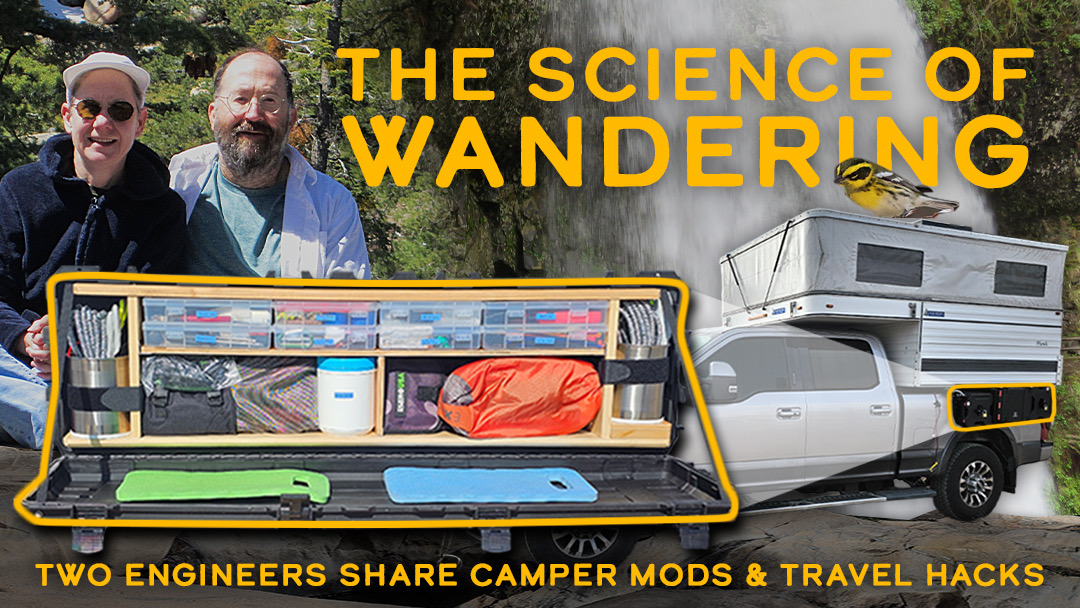
Organization of Donna and Paul’s STAPLL long hard case
Donna and Paul measure twice, calculate everything, and then let go to travel with curiosity. Their meticulously modded rig and years of free-spirited exploration prove that accuracy and wanderlust can ride side by side. Don’t miss their ingenious exterior storage solutions!
Donna and Paul’s adventures kicked off forty years ago as they pored over paper maps spread wide across their local diner booth. Fueled by big breakfasts and even bigger curiosity, they’d pick a direction and just go—no rigid itinerary, just their sense of adventure guiding every turn.
They’re the kind of folks who are drawn to the stuff most people walk right past. They seek out unlabeled artifacts, unidentified wildlife, and abandoned buildings. Figuring out how things work and where they came from gives them a quiet satisfaction of discovery.
That same drive to discover and problem-solve has shaped their rig from the ground up. One look inside their truck camper and you can tell they come from engineering backgrounds. Everything has a place, and everything is in it is carefully structured and organized.
Over the years, what started as a Four Wheel Camper base has been steadily built out and modified. When limitations forced this duo to break camp sooner than they would have liked, they did what they do best: observe, research, modify, test, and repeat.
Their most recent modification involves clever exterior gray water storage and gear organization using the STAPLL system—voted 2025 Innovation of the Year by Truck Camper Magazine readers. Now dirt and gear stay outside where they belong, and less time is spent digging for items in a pinch.
With a rig this dialed in and a travel style this wonderfully unpredictable, you’d think something would have to give. Yet, after decades of truck camping, Donna and Paul have proven the theory that structure and spontaneity make pretty great travel partners.
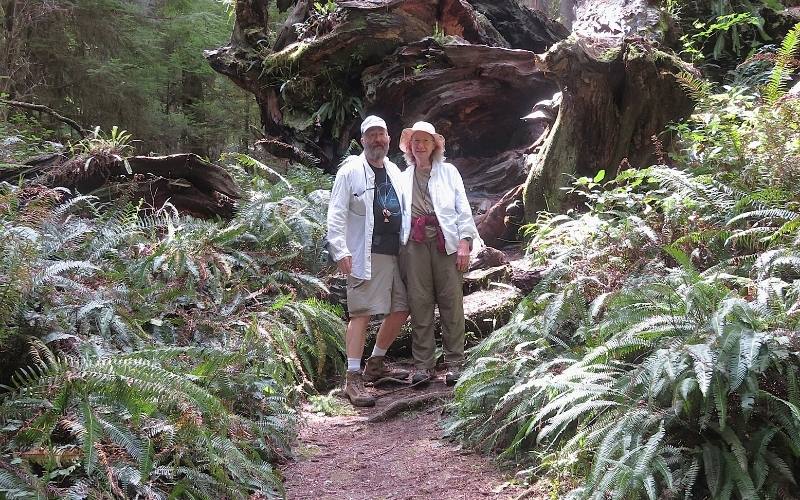
Donna and Paul hiking in Prairie Creek Redwoods State Park
After more than forty years of camping together, what gets you out the door?
Donna: We still get excited about wandering, hiking, and letting the world surprise us. We don’t start with a strict itinerary. We look around once we’re on the road and chase places with great trails.
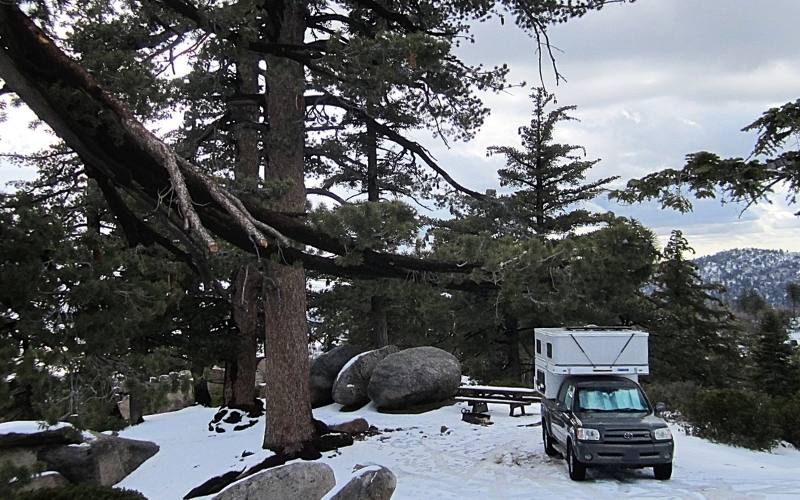
San Bernardino National Forest
Donna: We live in Southern California, so we primarily explore out West. Some of our favorite locations in California include Carrizo Plain National Monument, which is interesting from a geological standpoint. It features the white alkali flats of Soda Lake, vast grasslands, surrounding mountains, and visible evidence of the San Andreas Fault.
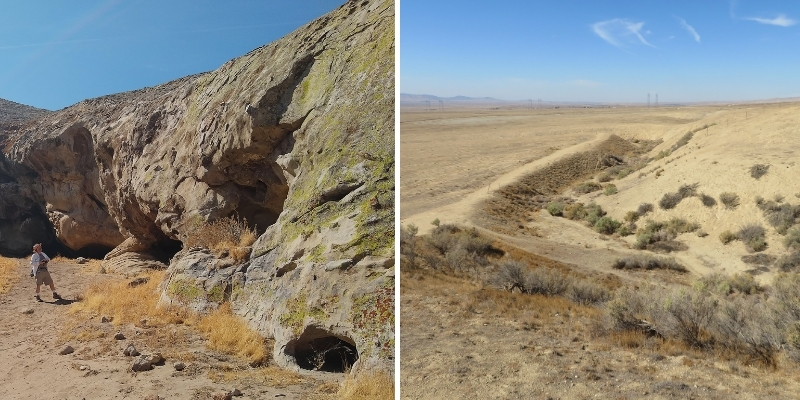
Carrizo Plain National Monument
Donna: Castle Crags State Park, Montana de Oro State Park, and Rancho Cuyamaca State Park are also favorites because they have extensive hiking trails that we are still exploring.
How do you continue to find new places to explore?
Paul: It’s a mix of research and luck. We look ahead to where we might find something interesting or new, and then try to find a place nearby to camp. When something looks intriguing, we follow our curiosity. It’s research-informed wandering.
Donna: We heard about Ladder Canyon from other California State Parks Foundation volunteers at the Salton Sea. On a subsequent volunteer weekend, we stayed over to hike the nearby canyons.
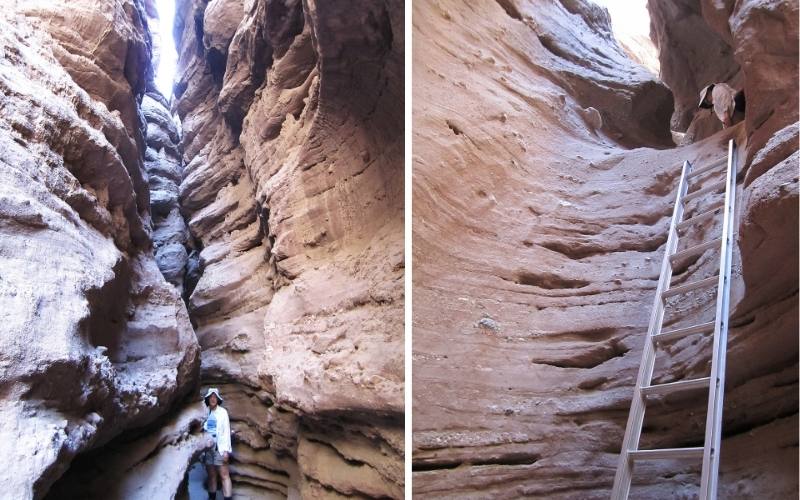
Ladder Canyon
Donna: Ladder Canyon goes from a wide trail through Painted Canyon to a series of slot canyons with ladders to climb. Parts of the canyons were so narrow that we had to turn sideways to get through. The best way to hike the trail is clockwise, so that you go up the ladders rather than down.
Paul: The name Fossil Falls simply intrigued us, so we planned a weekend visit. Fossil Falls Trail winds through a 20,000-year-old lava flow, where basalt rock was carved and polished by an ancient river, leaving behind a dry, sculpted stone waterfall.
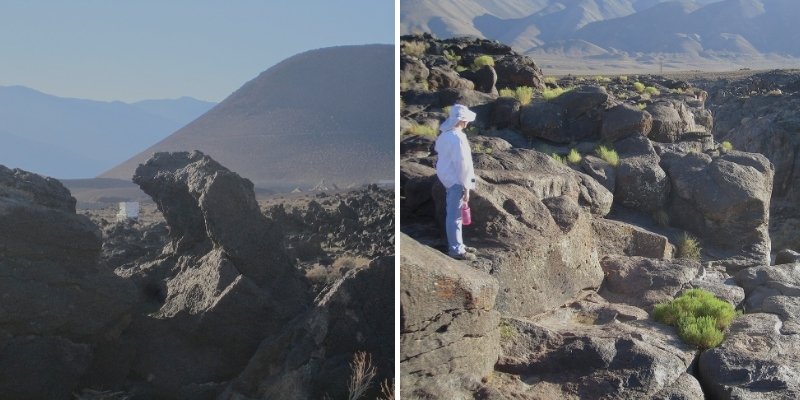
Fossil Falls
Paul: A lot of our best discoveries have come from roadside signs. A sign in Lassen led us to the lava tubes—massive, pitch-black caves you need a flashlight to navigate. We weren’t planning to go there, but we were delighted when we did.
It’s a great feeling when the road shares a bit of its magic. Are there any other places you’re drawn to exploring?
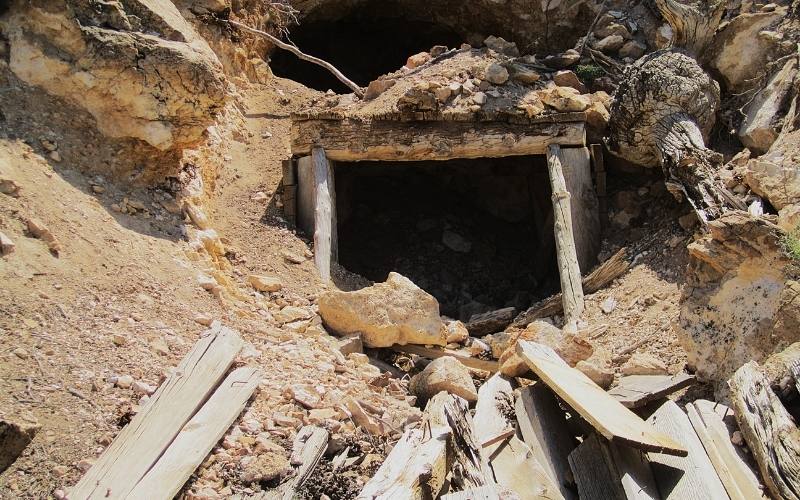
Donna: We really enjoy exploring and observing abandoned buildings and mining sites. There’s a great location with several abandoned mines along the Grandview Mine Trail in Inyo National Forest. Discarded equipment is scattered throughout the sites. There’s a Worthington steam pump that’s still there because it was not cost-effective to remove it.
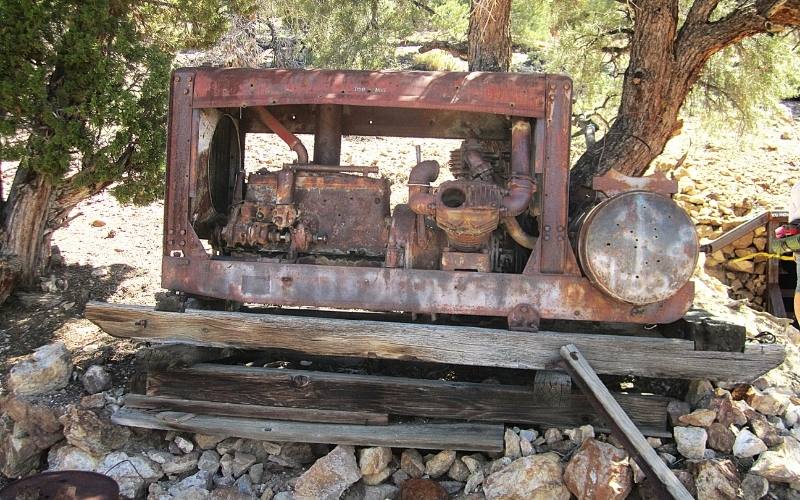
Abandoned Worthington steam pump along the Grandview Mine Trail
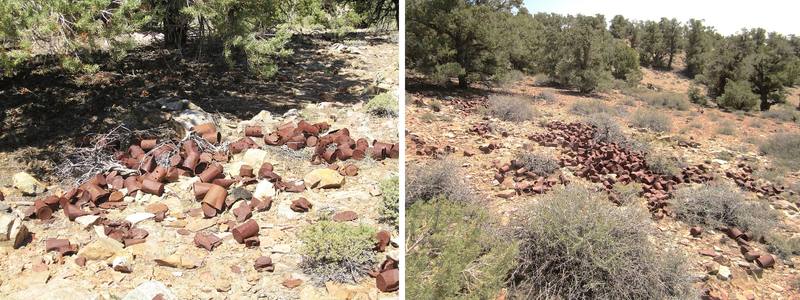
Donna: Mines were often reworked multiple times as better techniques allowed more gold to be extracted from the same site. Heaping piles of cans left behind by the miners give a visual history.
What do these details, like a pile of cans, mean to you?
Donna: When looking at the can piles, for example, we examine the shape and the varying methods used to manufacture and open the cans. The layout of the abandoned equipment, combined with the dumps, reveals a visible record of the technology of the time.
Paul: We’ve also found full-fledged abandoned buildings. Of course, we never go inside because they can be very dangerous, but we peek in windows and take photos so that we can research later.
Paul: We once peeked through an abandoned bathroom window and sitting next to the toilet was a National Geographic from the 1950s. It was a fascinating clue to the last time the building was actually used. That’s the kind of odd thing that you can’t make up, you just have to stumble upon it.
I understand you’ve both volunteered with the California State Parks Foundation. How has volunteering shaped your journey as campers?
Donna: Because we volunteered and learned about habitat restoration, invasive species, and native plant identification, we now recognize and appreciate ecology more when hiking. Volunteering altered how we see landscapes. That knowledge carried over into our own backyard, where we replaced our garden with native plants. This natural habitat now draws in a remarkable variety of birds and butterflies.
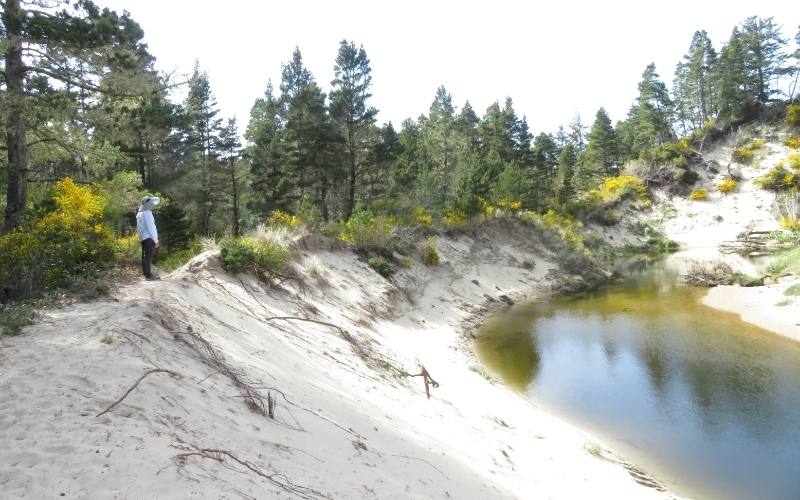
Donna admiring Tahkenitch Dunes in Oregon
Paul: Volunteering also kept us on track to regularly get out and camp. You’re much more likely to get out the door when other people are counting on you.
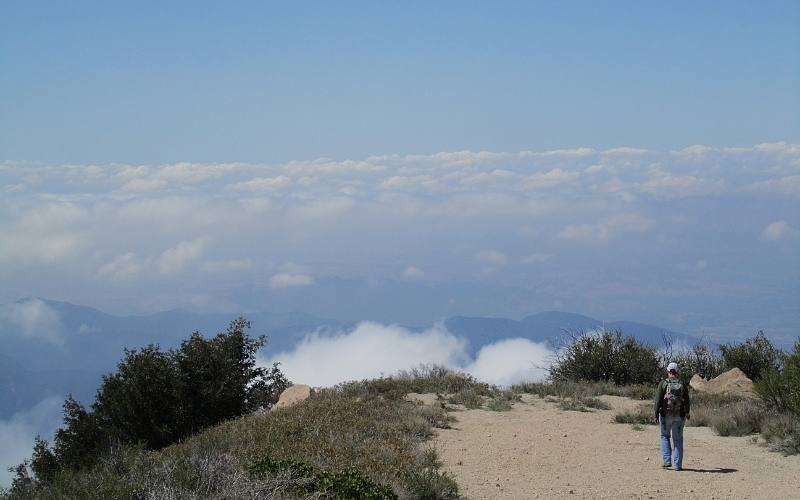
Keller Peak, San Bernardino National Forest
Donna: We found ourselves camping and learning about locations we wouldn’t have otherwise. Picacho State Recreation Area is a good example. Weekend volunteering introduced us to that hidden gem. We enjoyed hiking the Ice Cream Trail, which is named after the beautiful pastel colors in the volcanic rocks created by mineral deposits like oxides and manganese. We also hiked to the top of Rojo Grande Peak overlooking the Colorado River.
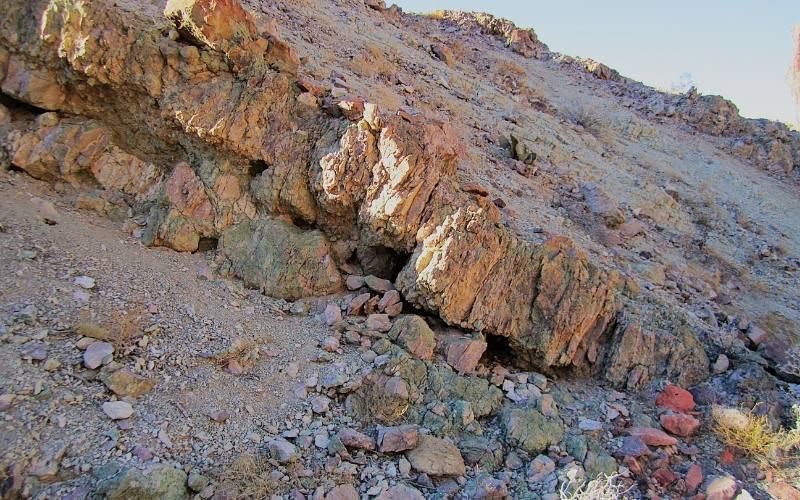
Picacho State Park volcanic rocks
Paul: Beyond new locations, it also exposed us to harsher conditions. One weekend at Picacho, we had a very clear night, and temperatures dipped down to 17°F. Experiences like that have continuously pushed us to refine our camping gear and setup over the years.
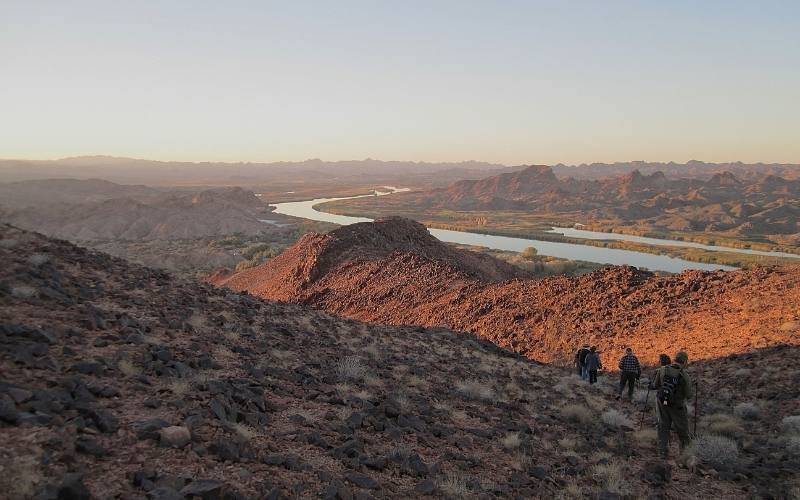
Rojo Grand Peak overlooking the Colorado River
What was it that led you to choose truck camping over other options?
Donna: We started with a tent and got really tired of pitching it and taking it down. We resented the wasted time that we could have spent actually enjoying the sunsets. We already had a 2007 Toyota Tundra with four-wheel drive and a truck cap. We started sleeping in the bed of the truck, which was a step in the right direction, but only part way there.
Paul: The truck cap worked great until it didn’t. Heavy rain revealed its limitations and soaked all of our gear and bedding. We realized we needed something fully sealed. After researching all of our options, we landed on the Hawk slide-in by Four Wheel Campers.
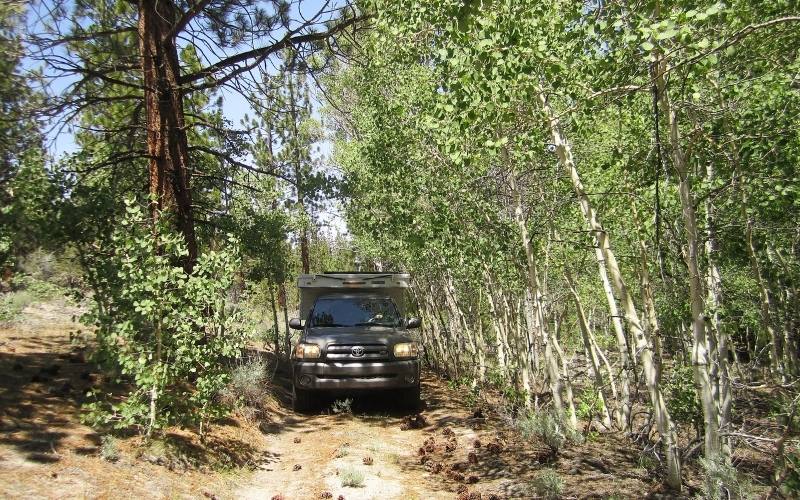
Donna and Paul off-roading with their Four Wheel Camper and Tundra
Paul: The pop-up design gave us the best of both worlds—lightweight with a compact footprint, and low clearance. It felt like the right balance for our needs.
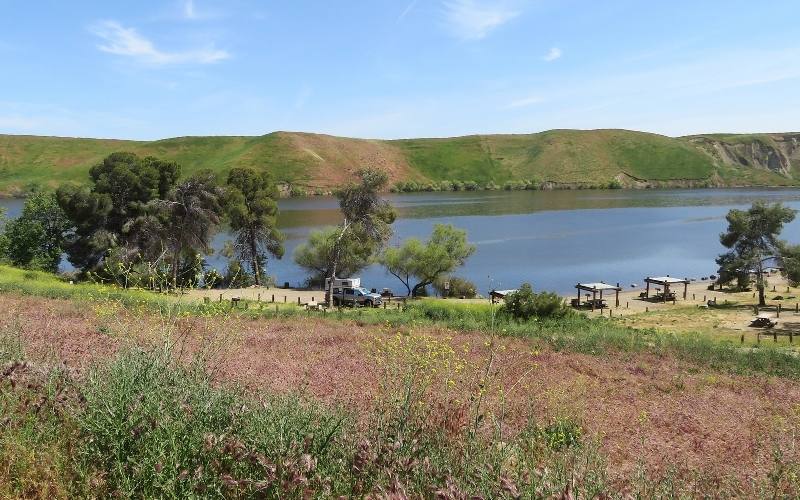
San Luis Reservoir State Recreation Area
Staying light and prepared sounds like a non-negotiable for you two. How did you set up and modify your camper over the years to support that?
Donna: We keep our rig ready to roll. Our camping gear and supplies stay organized which cuts down on packing fatigue and gets us out the door more often. When we first got our FWC Hawk base, we incorporated storage using plastic drawer units framed with aluminum and plastic bins to keep our gear and food tidy.
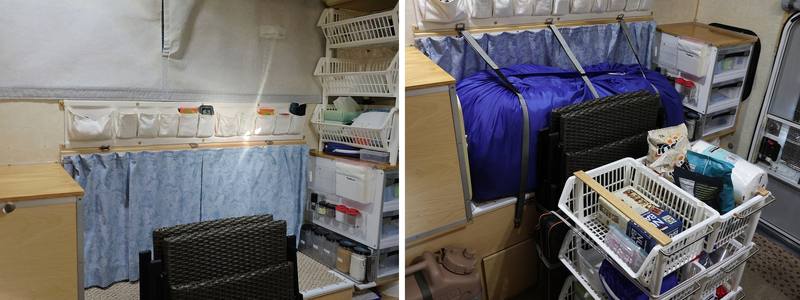
Interior passenger side of Donna and Paul’s Hawk Base by Four Wheel Campers
“STAPLL caught our attention online because it offered a solution that didn’t require drilling into our camper or removing the camper from the truck.”
Paul: We’ve added other amenities over the years like a propane locker and heat, but our basic design has remained the same. We replaced our Tundra with a 2022 Ford F-250 with four-wheel drive when we both retired a few years ago. We have more payload margin now but no plans to replace our trusty Hawk camper.
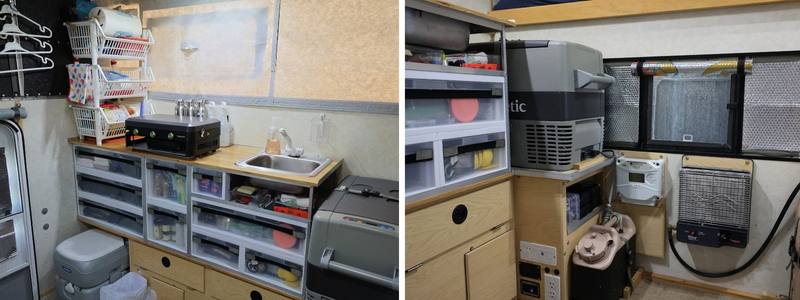
Interior drivers’ side of Donna and Paul’s Hawk Base by Four Wheel Campers
Donna: Gray water collection was a challenge that we put off solving for too long. We originally drained water from our sink into a covered 3-gallon bucket stored in the camper. After a messy multi-week trip, we knew it was time for an upgrade. STAPLL caught our attention online because it offered a solution that didn’t require drilling into our camper or removing the camper from the truck.
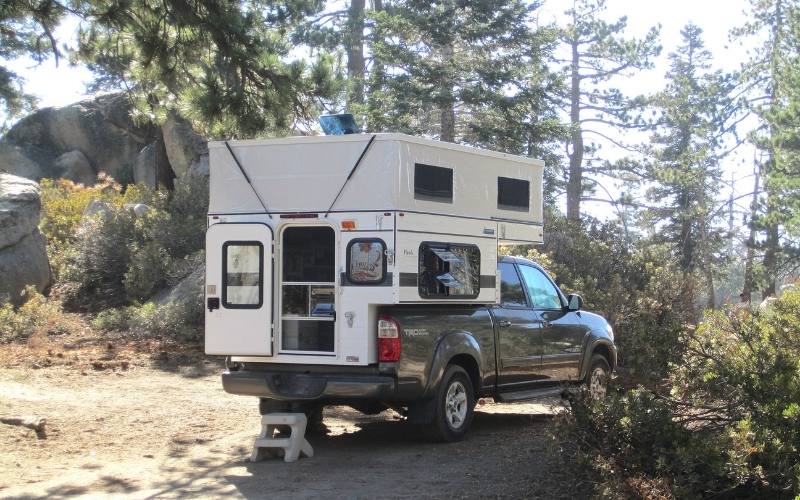
2014 Hawk Base by Four Wheel Campers
How does your gray water system work, and how did you install it without taking your camper off the truck?
Paul: We started with a consultation with Charlie Hoch at STAPLL. Then we mounted the MOLLE panel brackets through the turnbuckle doors of our Hawk. Small hands and long arms are an advantage to this approach, but it is doable.
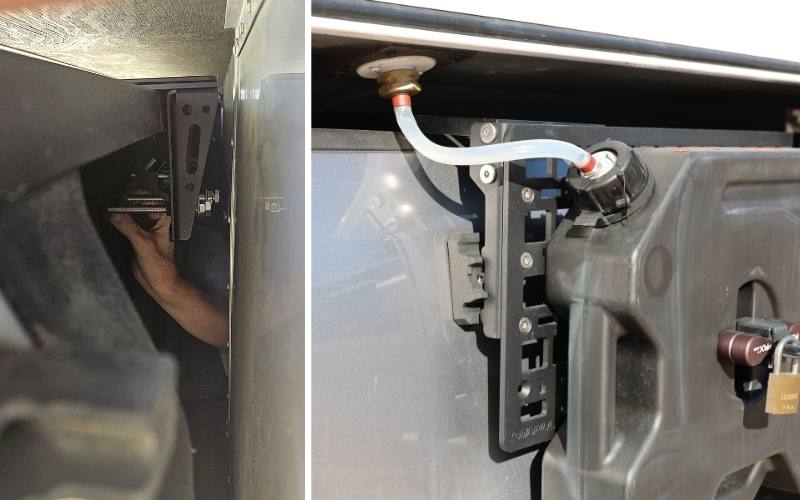
Gray water solution: STAPLL installation process and finished product.
Paul: Our STAPLL setup consists of the 48×10” Fender Rack: two brackets connected by a 48-inch by 10-inch MOLLE panel mounted to the driver’s side truck bed. We attached two 1.75-gallon RotopaX containers for gray water collection and a hard case for gear storage. All of our wet stuff stays outside.
Donna: The sink drains through an adapter with a 3/8 inch barb into a silicone hose secured with spring clamps. On the RotopaX side, the hose runs to a 3/8 inch bulkhead fitting mounted in a 3D-printed disk with a small vent hole.
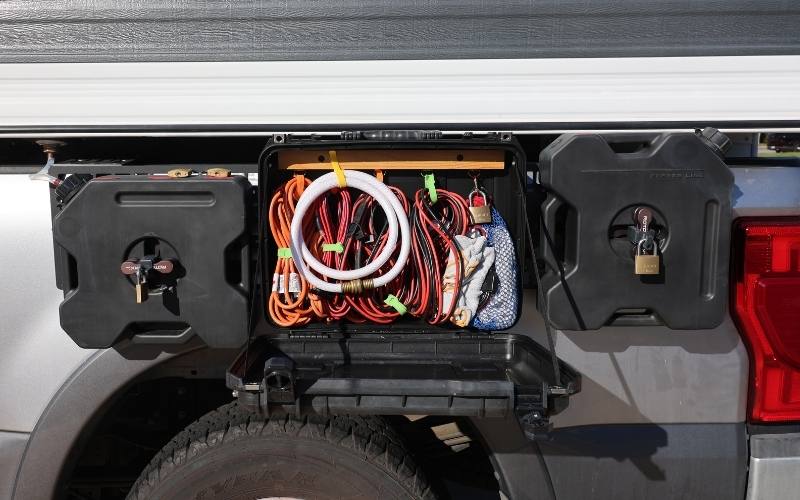
STAPLL fender rack with Donna and Paul’s gray water solution and organized hard case
Paul: Installing the first Fender Rack quickly led us to adding a second one on the passenger side. We discovered how much potential the STAPLL system has for storage and decided to add their 56L hard case to organize more gear. The hard case gives us quick access to smaller items and less frequently used gear that are important in a pinch.
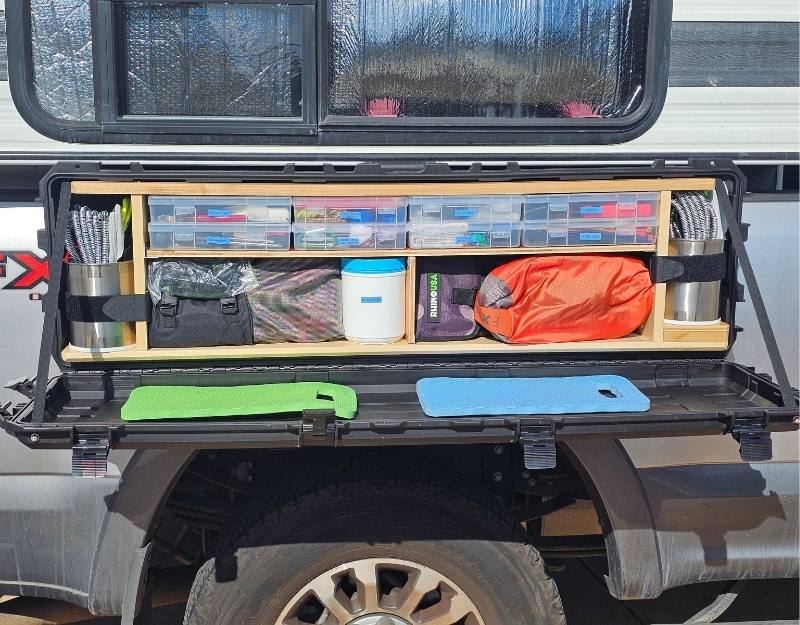
Donna: We built shelves inside the long case to hold small plastic boxes containing tools and repair supplies. Our tire snow cables are on either side of the shelves along with gloves and kneeling pads. In the lower left cubicle, there’s an air compressor, jumper cables, and bungee cords. The lower right cubicle holds a tow rope, shovel and axe.
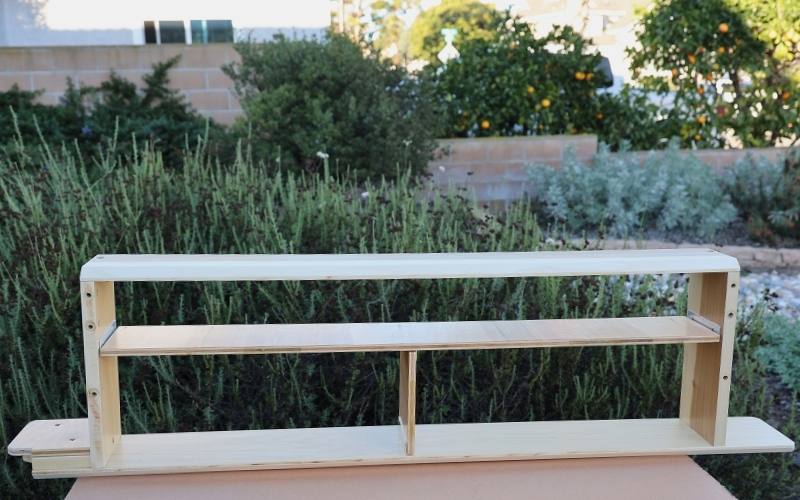
Paul: The payoff of the hard case is being able to find things quickly. On a recent trip, we found fuses we needed from their labeled compartment immediately.
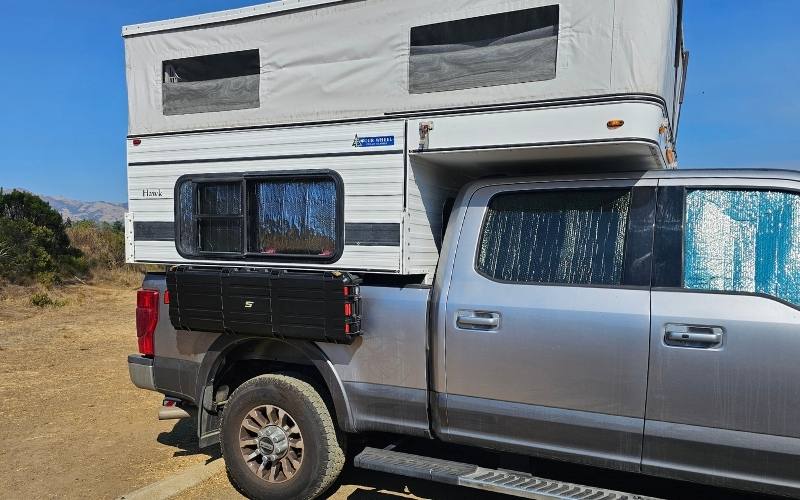
STAPLL long hard case and fender rack on the passenger side
You’ve come a long way from your tenting days to the finely tuned setup you have today. What advice would you give to newbies who are just beginning their camping journey?
Donna: A little preparation goes a long way. Make-ahead meals like soups, stews, and skillet dinners keep things stress-free at camp. Simple tricks like a soap-and-water spray bottle for dishes and a separate rinse spray can make a surprising difference in water conservation. Keep it simple and start small.
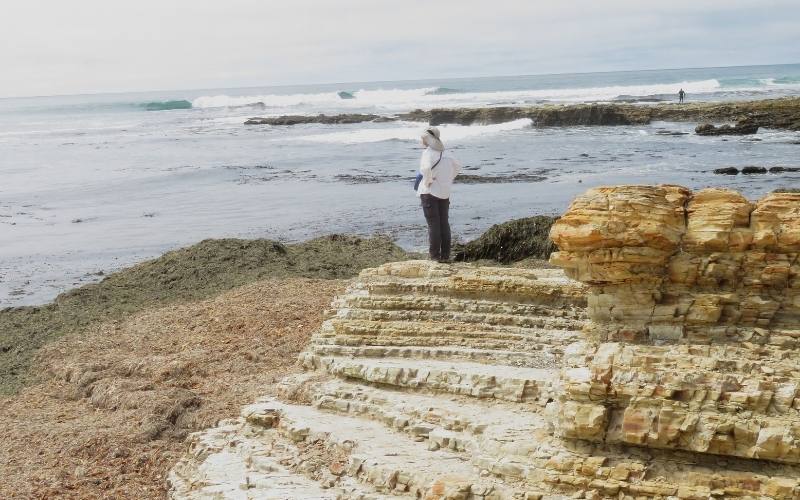
Hazard Canyon Trail in Montana de Oro
Paul: You don’t need to invest in the biggest gear right out of the gate. Let your experiences and gear evolve as you develop your own camping style and interests. Most importantly, be patient. The best experiences rarely come from rushing toward a destination.
“Most importantly, be patient. The best experiences rarely come from rushing toward a destination.”
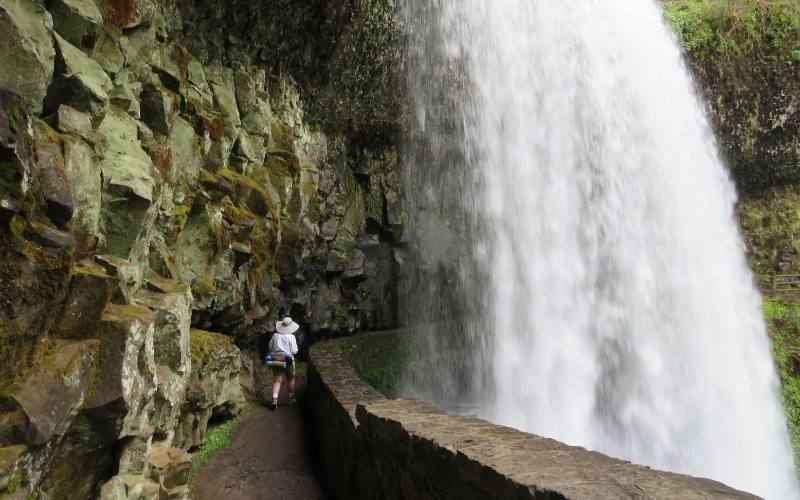
Trail of Ten Falls in Silver Falls State Park
Donna: Stay organized and observe. The world is full of hidden gems just waiting for someone to notice them.
Donna and Paul’s Rig
Truck: 2022 Ford F-250
Camper: 2014 Hawk Base by Four Wheel Campers
Gear: STAPLL Fender Racks and Hard Case