Meet the ToteMotel—the strange 1960s cousin of the truck camper you’re driving today. How strange? We’re talking about a fiberglass camper built for the family station wagon. The platform didn’t stick. The DNA did. Land yacht ho!
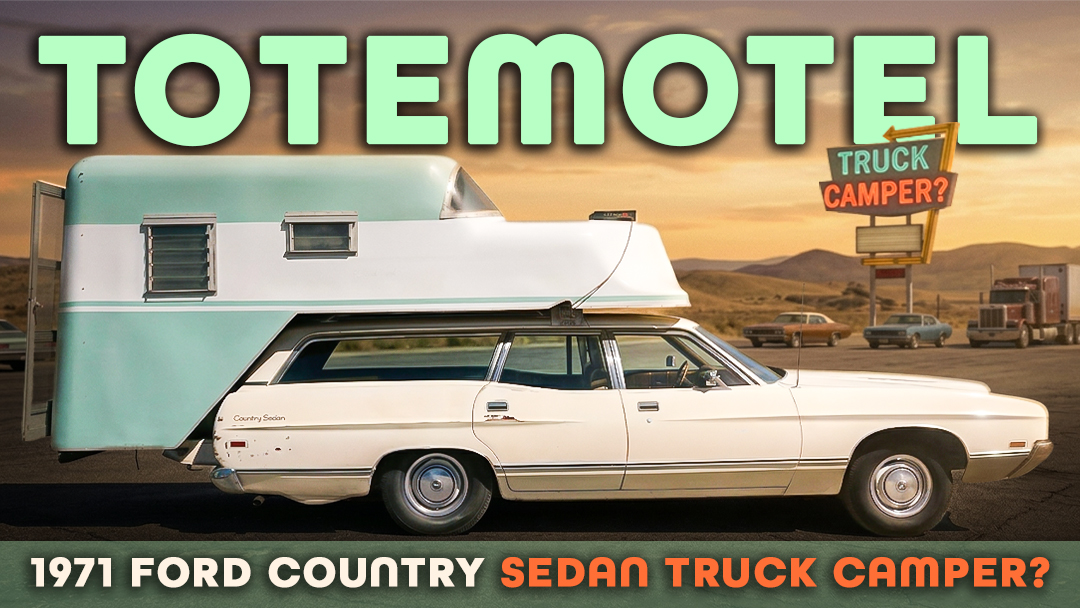
The ToteMotel is so out of place with modern campers, it’s impossible to ignore. It came from a time when the RV industry hadn’t yet standardized around pickup trucks, and station wagons were the dominant family vehicle of the era. Instead of requiring a truck or towing a trailer, the ToteMotel was an attempt to use the vehicle many families already owned—a concept we value about truck campers to this day.
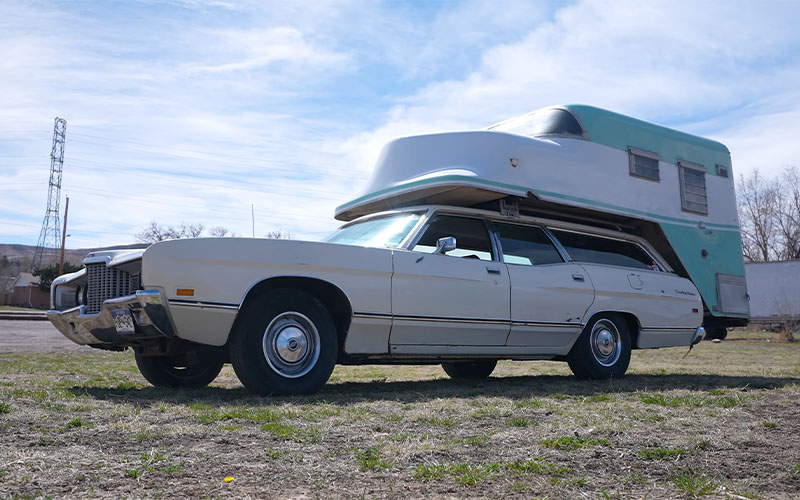
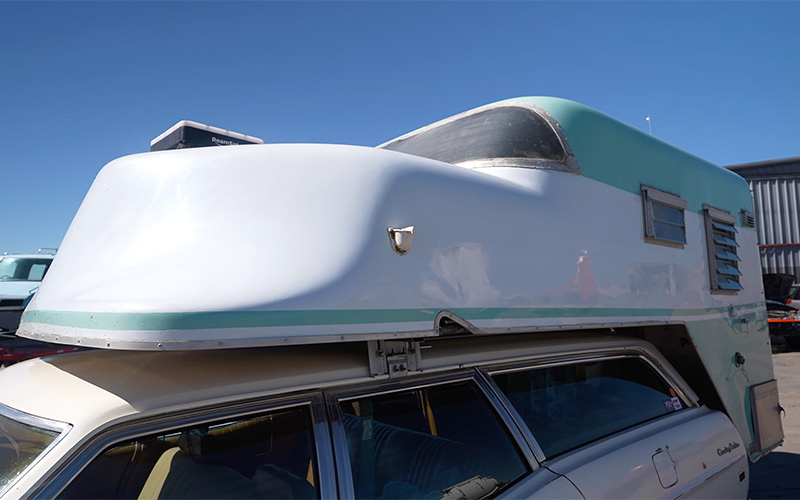
From the front, this 1971 Ford Country Sedan station wagon screams family hauler built for road trips. As your eye moves back, this smooth rider quite literally goes over the top. Perched above the roofline is a fiberglass pod, complete with rounded corners and a cabover window. It looks less like a camper and more like a 1960s vision of the future. The smooth shape, paired with the two-tone mint and white color scheme, gives it an unmistakable Jetsons aesthetic.
Interest in this particular ToteMotel resurfaced when it was listed for sale on Bring a Trailer. Not long after, David Sparks purchased the rig and documented the entire experience. On his YouTube channel, HeavyDSparks, we get to witness everything from the first look to a 500 mile road trip home. Like many others, I was captivated and had to know as much as possible. Was it a car camper? Was it a truck camper? What the heck was it?
Through further research and David’s video, I noticed that the ToteMotel had concepts that may impact modern truck campers to this day. This is more than a funky old camper. It’s a time machine, and a reminder of the wild experimentation that led to the modern truck campers we know today.
What could have been a quiet transaction became a widely shared rediscovery. The seller is a passionate classic car collector who has restored over 150 vehicles in his lifetime. He knew exactly what he had, saying, “I didn’t want to let this one go because I know I’ll never find another one.” He’s probably right.
Screenshot from YouTube video by HeavyDSparks
ToteMotel, Inc., a division of Fiberglass Fabricators based in Phoenix, Arizona, built these campers in the mid-1960s. The camper is fastened to the roof rack, drip rails, and tailgate of the station wagon—yes, you read that correctly.
Screenshot from YouTube video by HeavyDSparks
It was advertised as fully removable, thanks to built-in hydraulic jacks that folded along the sides. Call me crazy, but the only thing that keeps this from being officially classified as a demountable truck camper is the vehicle underneath it.
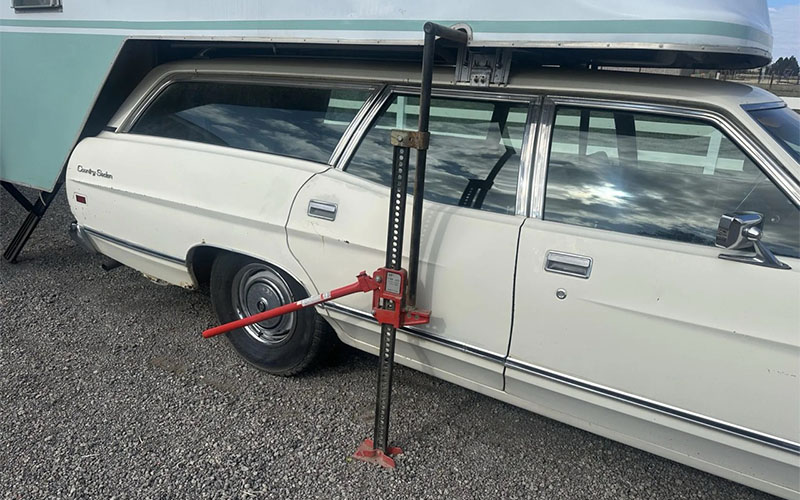
Photo courtesy of Bring A Trailer
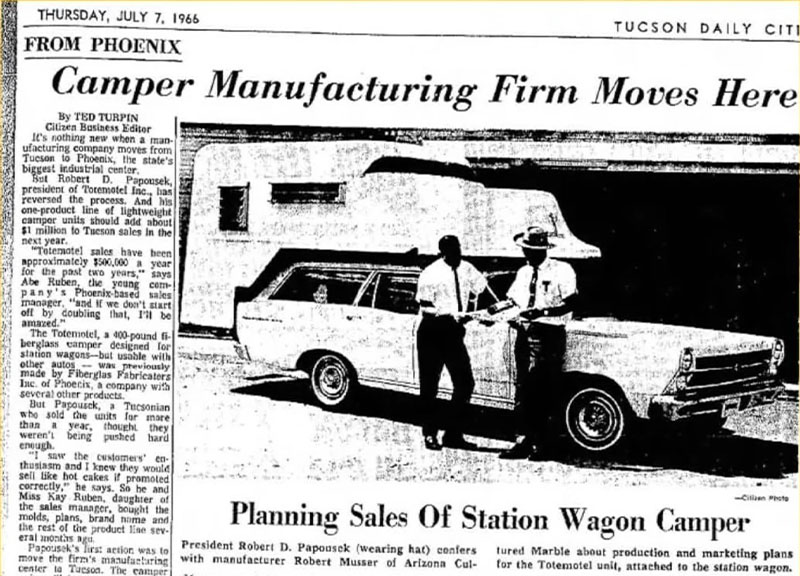
Fiberglass construction was state-of-the art in the 1960s, and is still a proven manufacturing method used to this day. According to a 1966 story from the Tucson Daily Citizen, fiberglass construction kept the weight under 400 pounds. That’s light enough, at least in theory, for a passenger car to carry. According to our research, a 1971 Ford Country Sedan station wagon had between 1,200 and 1,400 pounds of payload. That’s half-ton territory.
Newspaper clipping from the Tuscon Daily Citizen
ToteMotel units sold for around $1,500 to $1,700 US, and the company reported over a million dollars in sales during its short run. That suggests over 500 units were built in just a few years.
The 1971 Ford Country Sedan below is in remarkably good condition. Its cream-colored exterior is finished with chrome details like the Country Sedan emblem.
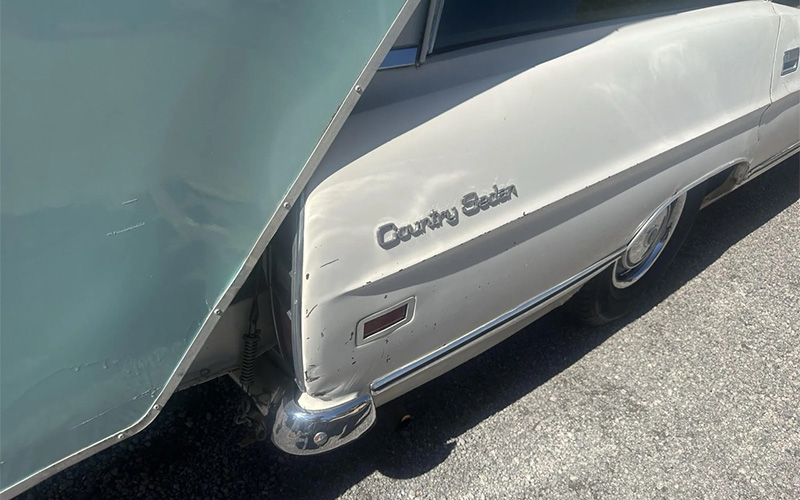
Photo courtesy of Bring A Trailer
The interior is wrapped in rich brown tones, with a mixture of textures and stitching that brings a handcrafted charm. Mirrors, buttons, and switches are mechanical and straightforward, with no electronics to complicate things.
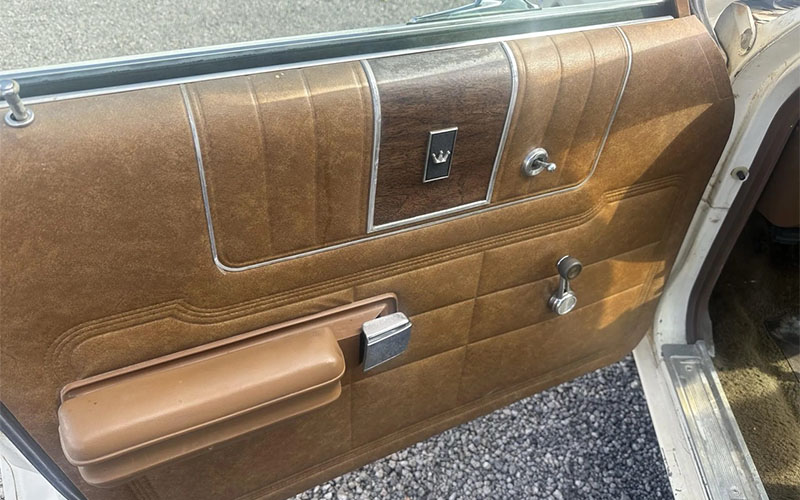
Photo courtesy of Bring A Trailer
The steering wheel is thin and oversized. Three rows of large bench seating remind you exactly what this wagon was built for. In the purchase video, David enthusiastically describes how comfortable it is, saying, “I think I just sank eight inches into this seat.”
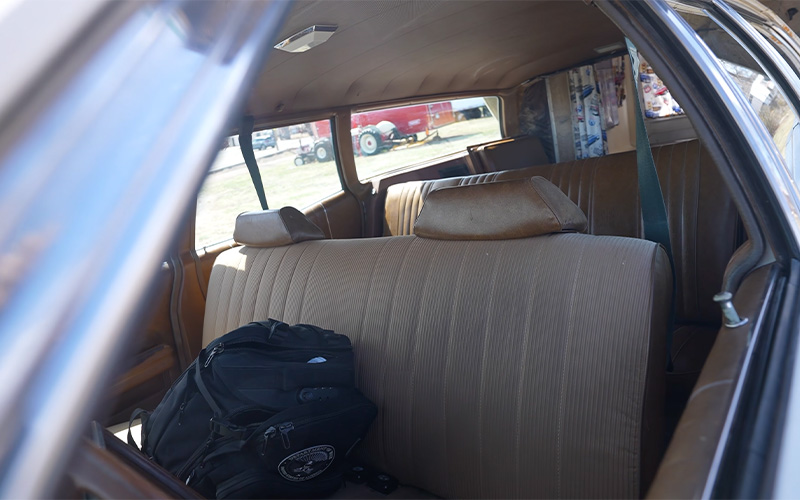
Screenshot from YouTube video by HeavyDSparks
Then you notice the rear suspension. To no one’s surprise, there’s a sag. Add passengers, gear, food, and water, and those rear springs will be crying for mercy over every bump.
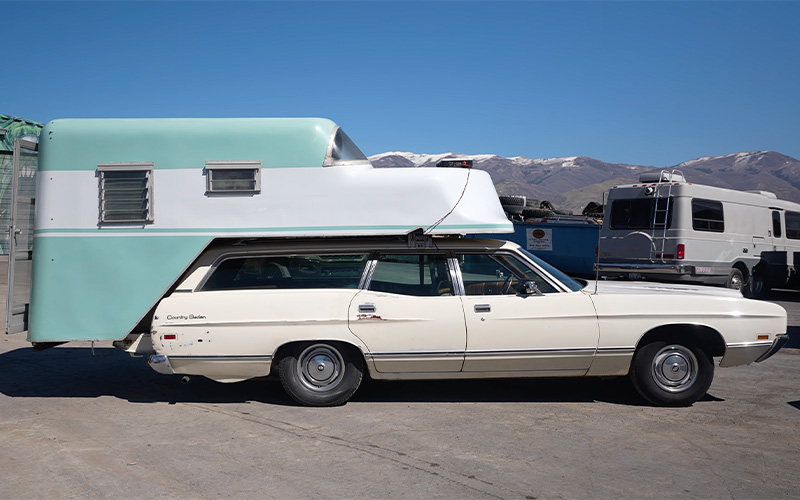
Screenshot from YouTube video by HeavyDSparks
It’s a visual reminder that trucks really are the better camper platform. The ToteMotel is wildly fun, and that’s more than enough to appreciate it exactly as it is.
The camper’s smooth and rounded exterior finish somehow feels retro yet futuristic at the same time. The two-tone white and mint palette rises from the cabover roofline and extends far beyond the rear tailgate.
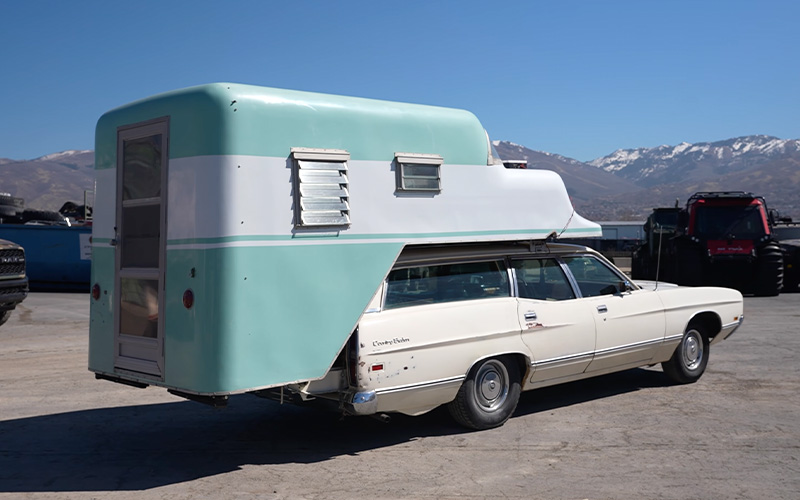
Screenshot from YouTube video by HeavyDSparks
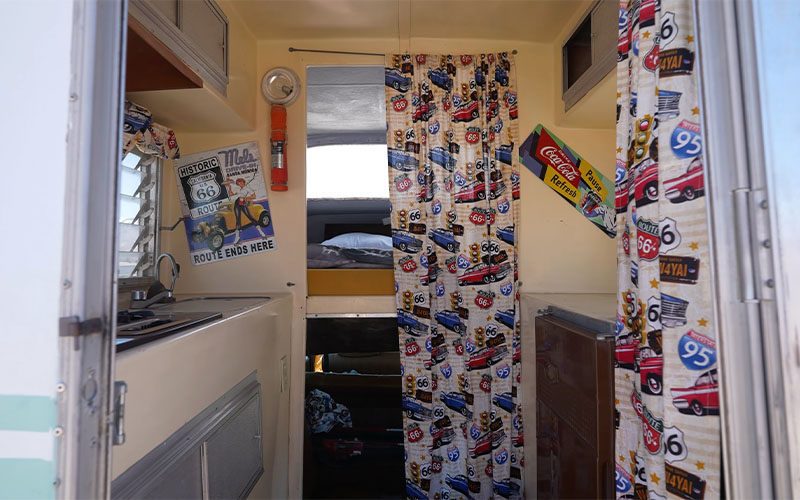
Step through the rear entry door and the ToteMotel reveals only the essentials. There’s no bathroom or dinette—just the basics done well. It’s an example of the weight-saving philosophy of lightweight campers today. That simplicity and intention carry through to the rest of the interior.
Screenshot from YouTube video by HeavyDSparks
The galley features a two-burner stove and an adorable matching hood above. The sink features another potentially original concept—a removable cover to extend the counter space when not in use.
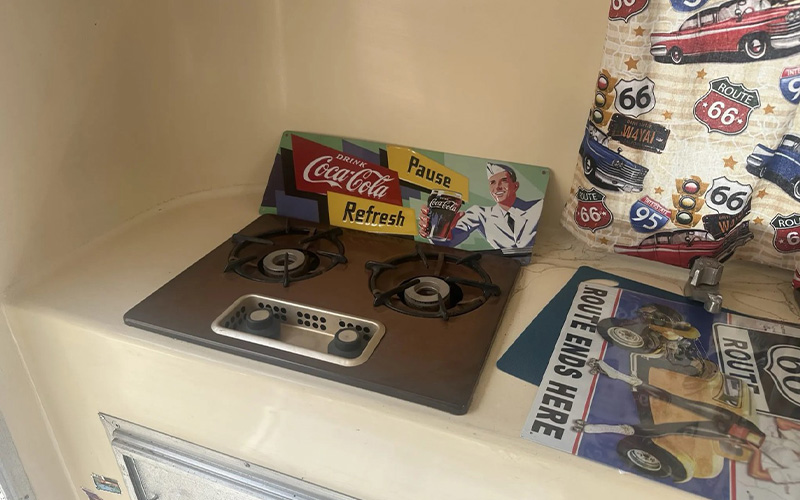
Photo courtesy of Bring A Trailer
The ToteMotel features a ten gallon fresh water tank that sounds small until you do the math.
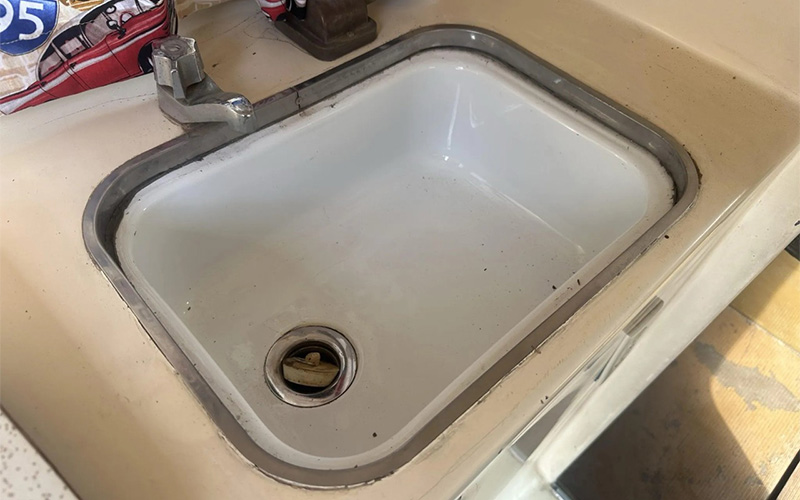
Photo courtesy of Bring A Trailer
At 8.34 pounds per gallon of water, the tank in this camper really shouldn’t be any larger. Rounding out the galley is an icebox ready to keep food cold for as long as your ice holds out.
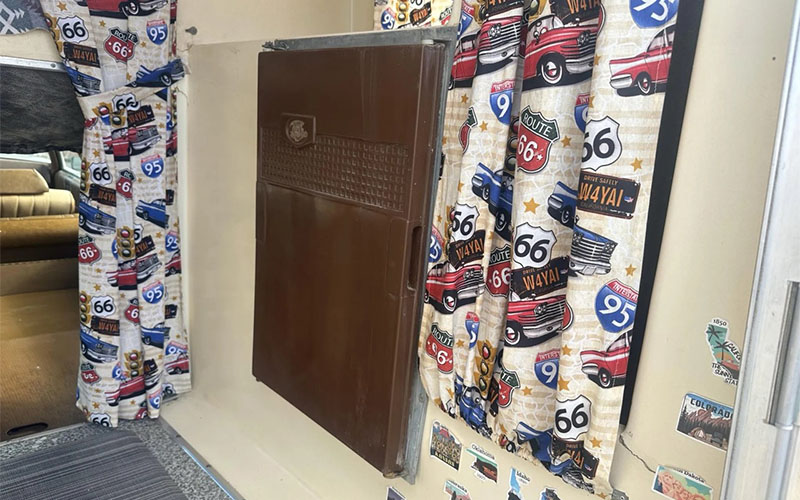
Photo courtesy of Bring A Trailer
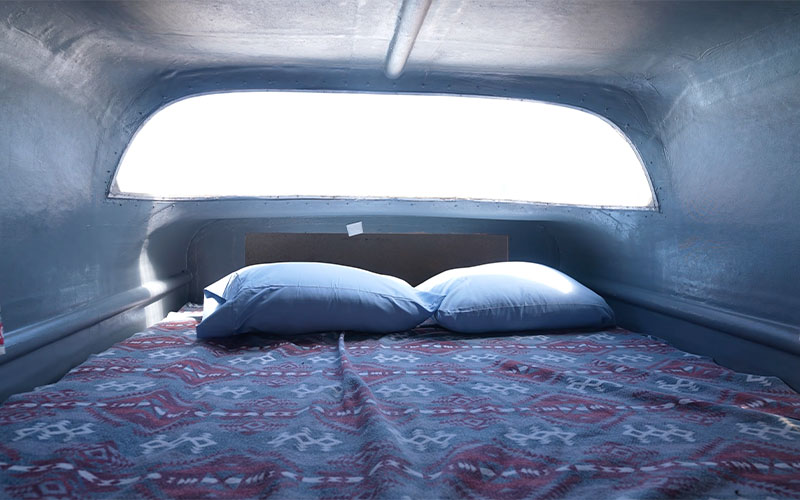
The only other area is the cabover, the feature that makes this unit feel most like a truck camper. The sleeping area stretches over the roofline. Unless you look down, you might never know you’re above a station wagon. The space follows the curve of the fiberglass shell with soft angles tapering to the rounded front window. The design feels aerodynamic, and boy, did it need to be.
Screenshot from YouTube video by HeavyDSparks
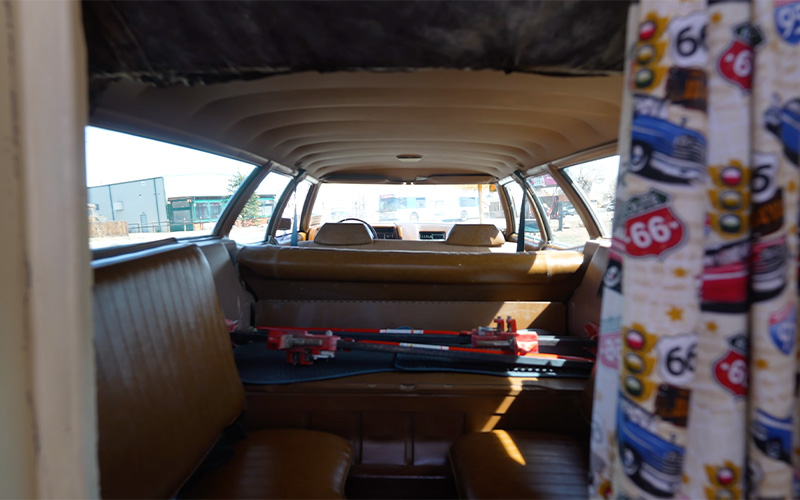
The pass-through into the wagon is a standout feature. When parked, the rear of the wagon becomes part of the living space, with the bench seats doubling as seating, an additional sleeping area, or storage when folded down. I know that’s a feature plenty of truck camper owners would sign up for today.
Screenshot from YouTube video by HeavyDSparks
The pass-through inevitably led to more than a few kids hanging out in the camper while dad cruised highway speeds below. It’s certainly not something anyone would recommend today. However, it was a different era with different rules, and I’m sure it was a great time.
When the ToteMotel was removed from the station wagon, the pass-through unlocked another camping setup. Fiberglass Fabricators, Inc. advertised the ToteMotel as “expandable” and “capable of sleeping eleven adults.” Eleven adults in a 400 pound station wagon truck camper? You better believe it.
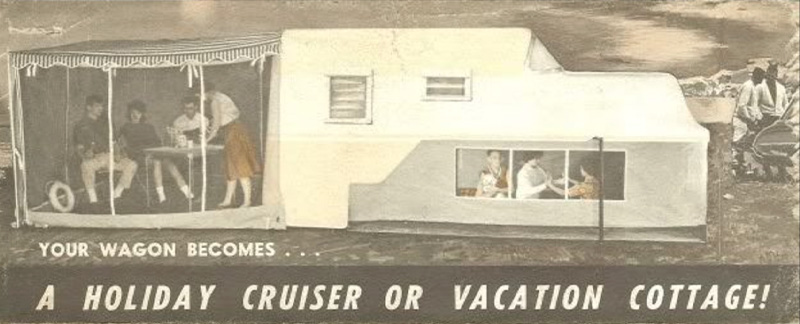
Image courtesy of ToteMotel, Inc.
Fiberglass Fabricators produced two tent-like rooms attached to the camper once it was off the wagon. The “Papoose Room,” took the space of the station wagon and connected the camper through the pass-through. The “Pow-Wow Room” extended off the rear door, creating a covered patio-style gathering space. Remove the camper, attach the rooms, and a compact car camper transformed into a small camping compound. The terminology has aged, but the idea holds up. I can’t help but wonder how well the idea translated to real-world usability.
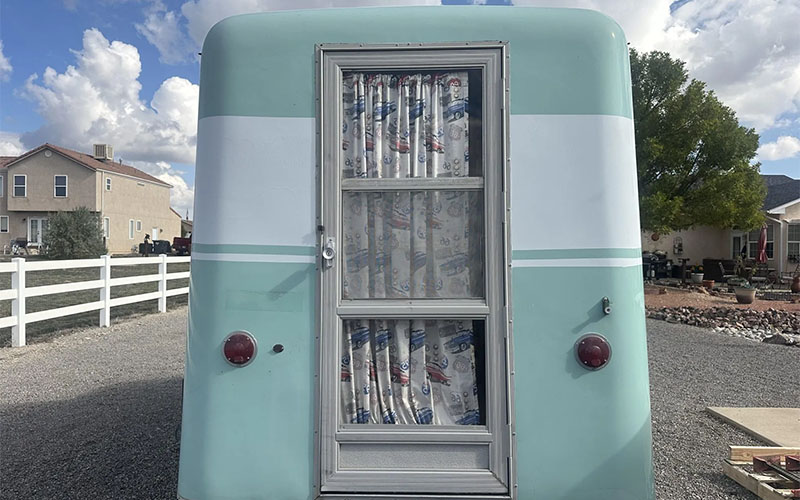
Photo courtesy of Bring A Trailer
The ToteMotel and cabover car campers in general emerged and faded in the blink of an eye. Trucks quickly captured the camping market as the most capable platforms and station wagons quietly faded into the margins of RV history. Still, this short-lived engineering experiment may have played a bigger role in truck camper history than we can ever know. After all, many of the concepts brought to life in the ToteMotel are still seen in truck campers today.
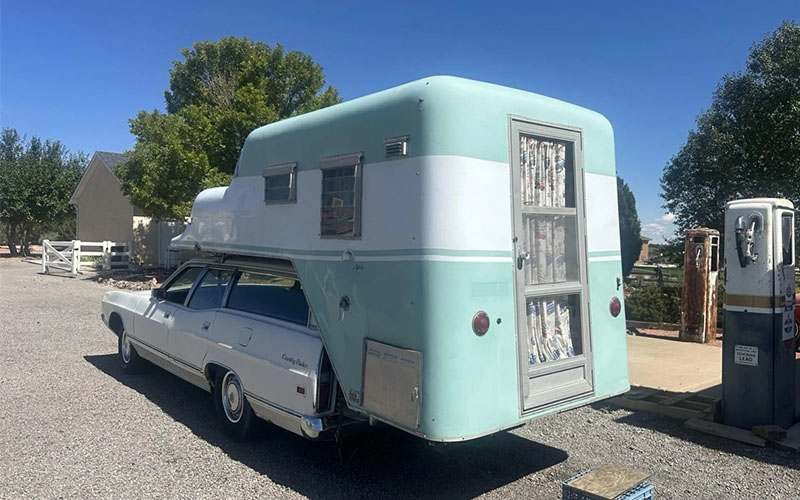
Photo courtesy of Bring A Trailer
Thanks to TCM reader, Lloyd Thomure, for sending in the video of the ToteMotel Camper and 1971 Ford Country Sedan, and thanks to the HeavyDSparks YouTube crew for taking us along for the purchase of a lifetime.