|
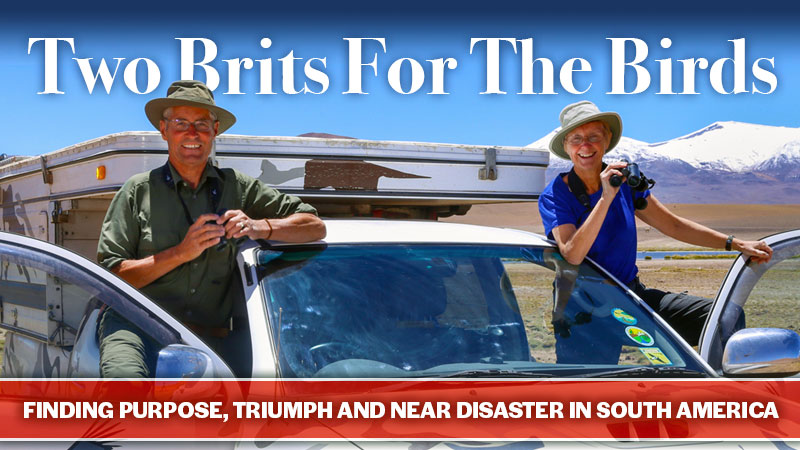
After a three year truck camping trek across North, Central, and South America, we talk to Australian couple, Sharon and Juergen, about their expedition. ...  Sharon and Juergen's incredible story exemplifies our "Go Anywhere, Camp Anywhere" motto and further proves that truck campers are an affordable and versitile solution for off-road and expedition travel. While there are examples of exotic and extremely expensive overland vehicles that could challenge a truck camper's off-road and expedition capabilities, no other solution can challenge the capability of a truck camper anywhere near the price of a truck camper rig. Sharon and Juergen's three year truck camping expedition across North, Central, and South America is the stuff dreams are made of. While we wanted to know all about their trip, we also wanted to know how they did it and what they could share with us should we want to retrace their tire tracks. What follows is the kind of insight and wisdom you only gather with experience. Grab your passport and spare tire. It's time to trek across the Americas.  Juergen and Sharon at the Iguazu Falls at the border of Brazil and Argentina. TCM: What led to your decision to go on a world-wide truck camping tour? Sharon: Our dream was to travel to South America. We wanted to go there while we were still young enough to do it. We needed a small vehicle with four wheel drive and plenty of ground clearance. After ten months of research, we purchased a truck and camper. Juergen: Four wheel drive was less important than ground clearance. We didn’t want to be confined to the main highways. Latin American countries spend only five to seven percent of their local GDP on road works. Western countries typically spend twelve to fifteen percent of their GDP. Hence the roads in Latin America are in bad condition compared to ours. TCM: How did you go about buying your truck and camper? Juergen: We found everything on the internet. The truck we found on eBay in Oklahoma. It had a manual gearbox which was our preference. We found our camper in California through the Bigfoot Owners forum. We needed the camper to be as light and compact as possible. With our weight and size considerations, the small Bigfoot camper was a good solution for us. TCM: Where did you find clearance to be an issue? Juergen: I would not want to drive a truck camper with a long overhang in the back, so having ground clearance was important. In Latin America, everyone has a gated entry with an arch. With our rig, we often got through these entry arches with only an inch or so clearance. If we had a taller camper, it might have cut out twenty to thirty percent of the places we could stay overnight. In Honduras, we had to manually lift up power lines so we could clear them. At one point there was about twenty meters of road with about fifty to sixty power and phone lines that we had to move. People don’t consider height obstructions in Latin America. Sharon: In Guatemala, many of their buildings have a concrete second story that comes out more than the first story. We were watching out all the time to make sure we were not knocking into balconies and signs. It was a matter of an inch to get through some of these villages because the main roads go through the villages. Height and width was a major concern. TCM: Why didn’t you choose a pop-up camper? Then height clearance wouldn’t have been as much of an issue. Juergen: I read your article with Colin and Liz Watson who went to South America with a Hallmark pop-up camper. As they showed, small pop-up campers fit into a container well. Our hard-side camper was two inches too wide to get into a container gate, which triples the shipping expenses. Sharon: Personally, I would not want a pop-up camper in Central or South America because of security. The soft wall can be slit with a knife and your camper could be broken into. There was only one way into our camper, the back door. We were never broken into or had anything stolen. Juergen: We met Europeans with pop-up campers and they couldn’t open their camper in Patagonia because the winds were around sixty miles per hour. It’s really flat there and there aren’t buildings or trees to cut the wind. We were very thankful we had a hard-side in Patagonia.
Rancho San Nicolas, San Cristobal de las Casas, Mexico
|
Semuc Champey to Lanquin, Guatemala
|
Getting the camper in California
|
TCM: Overall, did you feel you made the right decision about taking a truck camper to South America? Sharon: Our truck camper was a good home. It had a really comfortable bed that we slept in for three years. I also loved that we had a bathroom with a shower. And it had a really good refrigerator. We had no trouble with it. We are vegetarians, so we cooked for ourselves most of the time. Our freezer was full of spare vegetables, cheese, butter, and bread. In the south of South America, where the road in Chile ends several times and you have to go back into Argentina, you are not allowed to take fresh produce across the Argentina and Chile border, but you can if it’s frozen. So naturally we kept frozen vegetables in the freezer. Plus, many small towns along the way don't offer much, so you are happy to be able to stock up in larger centers. TCM: What advice would you give someone who wants to ship their truck camper to different countries? Juergen: We have a shipping page on our website with a lot of information. There are a lot of details and I just updated the information this past December. http://www.dare2go.com/shippinginfo1.shtml I collected most of the general information and contacts before we left Australia, which was about a year and a half ahead of time. It’s a lot less for the RORO, or roll-on/roll-off services, which is best for a hard-side truck camper. RORO is a lot cheaper and safer than LOLO, or lift-on/lift-off. LOLO is on a flat rack which is very high risk because the camper is out in the open. All outside compartments were opened when I received the camper in Cartagena. We took everything out of our truck and put it into the locked camper. The truck key is required to stay in the ignition the whole time it’s traveling over the ocean. So, people can get into your truck. Sharon: Unfortunately, you can't trust people working on the ships and in the harbors. Juergen: It costs about $2,800, which is including port charges and everything. Once the truck camper made it to Colombia, I got it back fairly quickly. Picking it up took only one full day. I started early in the morning and got out before they were closing the gates at six at night. There was a lot of running around. In Cartagena, Colombia, they are used to the process, so it’s not too difficult. That was from Panama in Central America to Colombia in South America.
El Mangler lagoon, Zihuatanejo, Mexico
|
Yaxchilan, Mexico
|
Temple of the Great Jaguar, Tikal, Guatemala
|
TCM: That’s quite the process. What were some of the highlights of your trip? Sharon: The Galapagos Islands were the most unique experience. We left the camper in Quito, Ecuador in a guarded parking lot and traveled with a Swiss owned travel agent. We got on a plane, flew out to the Galapagos, and stayed on a boat. Then we flew back to the camper. It was a wonderful experience! The Iguazu Falls on the border of Argentina and Brazil were one highlight of our trip. They are the most amazing waterfalls. They were way more impressive than Niagara Falls. I would go back in an instant just to stand in front of those waterfalls again. Central American places that stood out were the Mayan ruins in Mexico and, in Guatemala, Tikal. It managed to impress us over and above all the Mayan sites in Mexico.
The Cathedral and the Bishops House, Granada, Nicaragua
|
Morrill Trailer Park, Guanajuato, Mexico
|
San Cristobal de las Casas, Santo Domingo, Mexico
|
TCM: Did you boondock in South or Central America? Sharon: In Argentina, we chose not to camp in campgrounds because the locals live at night and make a lot of noise with their music and parties. We had to go out into the wild somewhere to sleep. That’s the only way. We used so-called balnearios a lot; these are basically privately owned swimming pools, often with a restaurant and bar. They are great because they usually have some facilities, we were often able to plug into power, they didn't charge much, and best of all, they are closed over night so they were mostly quiet. Here’s a link our camping lists: http://dare2go.com/campingCA.html and http://dare2go.com/campingSA.html. Except for Costa Rica and Panama, you wouldn’t boondock in Central America. Most people are poor in Central America, meaning that there’s a lot of crime. Stay in privately owned places that have a guard at night for a couple of dollars. Those are safe places to stay. TCM: Did you ever feel like you were in danger during your trip? Sharon: No. If you do stupid things, you are going to be in trouble. You have to be sensible and aware of what’s going on around you. In Granada, Nicaragua, we camped beside the lake one night and the people living there said make sure you are in your camper with your door shut before it gets dark. We listened to them and didn’t have any trouble. If local people gave us advice, we followed it. We felt safe in Colombia and met some of the nicest people we met on our trip there. We’ve met a lot of people who said, “Oh, you went through Colombia!” Colombia gets a lot of bad press. There is a large military and police presence and you need to listen to them. Go where they tell you to go. The recent Colombian President Uribe is paying the military a decent living wage and it seems to have worked. They no longer look for bribes and are there to help and make sure you are safe. Juergen: The Colombian population is so friendly and welcoming, most ordinary people are curious and helpful. They want to tell you about the places in Colombia that are beautiful. We never got away without talking to people. They tried to help us understand their language by speaking more slowly, and often re-phrasing things two or three times. It was really amazing. Sharon: Our truck broke down and we had to have our engine rebuilt while we were in Colombia. We were there so long that a whole family took us in and gave us a place to stay. They even invited us to family occasions and accepted us as a part of their family. They are wonderful people and it was a high point of our whole trip.
Sharon on the Beartooth Highway, Wyoming
|
Baboon Sanctuary, guided nature walk, Belize
|
Toucan at the Belize Zoo
|
TCM: How about campgrounds in Central and South America? Sharon: In general in Central America you cannot find real campgrounds, only safe places to stay, some with basic facilities like toilets and showers. Look for somewhere safe behind a fence, preferably with a guy with a gun at the gate. In Guatemala, we found a wonderful place for camping in the garden of a hotel. We were on the edge of Lago Atitlan. Every morning we would walk out and look at the beautiful view. We were there for almost two months. It was really fabulous! Juergen: The view would change three times a day. The color changed or there was mist or we couldn’t see the lake for heavy rain. Sometimes there was a rainbow and sometimes it was as smooth as a sheet of glass. It was always different, always amazing. Sharon: In South America many countries do have campgrounds. Brazil is the only country where you can find real RV parks with full hook-ups. They build a lot of RVs in Brazil. We stayed in Cusco in Peru. There’s a nice campground there that’s run by a Dutch couple. It is a meeting point for overland travelers and we met people from other countries. That was a nice place to stay. It gets a bit lonely when you don’t meet other travelers. We liked meeting people who were having similar experiences so we could share our stories. Juergen: Everyone goes there in Cusco because it’s near Machu Picchu. That’s a wonderful place and everyone stays longer than they planned to. Sharon: The southern tip of South America is a place you meet a lot of travelers because it gets so narrow. There’s a convergence of people like in Cusco. That was really nice, too. TCM: How did you learn Spanish for your trip? Sharon: Our first Spanish school was in San Miguel de Allende. We had more lessons in Guatemala. Just find Spanish schools along the way. It was enough for us to get through. TCM: Have you stayed in touch with people you met during your trip? Sharon: There are lots of people that we’ve stayed in touch with. Some are in close contact and are dear friends.
Santuario Historico Bosque de Pomac, Ferrenafe, Peru
|
The Border at Ecuador and Peru
|
Chuquicara to Yuracmarca, Peru
|
TCM: What was it like to cross borders in South and Central America? Juergen: The most difficult borders to cross were in Central America. South America is a lot easier. There were minor problems. You shouldn’t need, as long as you understand some Spanish, the guides, who offer their services on every Central American border. But, we were at the border for Honduras and Nicaragua for five hours, and that time we were glad to have one. Sharon: In Central America it will take you a few hours to cross a border. You have to be patient and willing to run from office to office to photocopy things and get signatures. The running back and forth can be annoying if you aren’t patient. Juergen: Our advice is to get there in the morning to have enough time and patience to cross the border before the evening. That way you can find a place to camp for the night on the other side of the border before it gets dark. If you start early and go with the flow, you will be okay. Wherever they try to throw a stone in your way, be pushy. Sharon: But not too pushy.
PanAm to El Tambo, Ecuador
|
Bucaramanga to San Gil, Rio Chicamocha Canyon, Colombia
|
PanAm to Nazca, Peru
|
TCM: What was it like to travel on the roads in South America? Sharon: In Costa Rica, the roads were really bad. There were places we didn’t go more than eight miles per hour. It would take us ages to get anywhere. If we went any faster, it felt like we were going to shake to pieces. TCM: Did you get any flat tires? Sharon: We had three flat tires on the whole trip; in the United States soon after we got our rig, in Panama, and in southern Chile. Juergen: You don’t find tires the right size in Latin America. In Panama they import eight ply tires, and in some parts of southern South America, in Chile and Argentina, you get them, because in Brazil they produce eight and ten ply tires. In between you don’t get any, especially nowhere in Central America. TCM: Any other truck troubles along the way? Sharon: Like I said earlier, we had to have our truck engine rebuilt in Colombia. We had to have all the parts shipped over because they don’t have that motor anywhere in South America. Juergen: With our Ford, they don’t use the International engine there. In South America, they use Cummins engines in Ford trucks. If you’re going with a Ford truck, take a 5.4 gas engine, not the larger 7.5 liter engine. You find gas everywhere in South America. Or, take a Dodge Cummins diesel. The Cummins engine is fairly popular, so you can get the basic parts. Be very careful with new engines which rely on low sulphur diesel. You cannot find it anywhere! Sharon: We had friends with a Chevrolet Diesel who were delayed for four weeks because of not being able to get parts. Prior to going on our trip, we did lots of research and thought we got the right vehicle. It’s hard to predict these things when you start.
Dempster Highway, from Arctic Circle, Canada
|
Dempster Highway, Tombstone Park Overlook, Canada
|
Dempster Highway, Arctic Circle, Canada
|
TCM: If you go to South America again in a truck camper, what would you have that you didn’t have on this past trip? Sharon: Solar panels. We had so much difficulty because we only had one battery and no place for a spare one. You can’t always find a place to plug in. We thought about solar panels and should have bought them when we were in Arizona. We went to Germany and borrowed our friend’s camper and they had solar panels. We didn’t have to plug in once in six weeks. I would never go to South America again without solar electricity. Juergen: Propane gas supply can be a big issue. Propane tanks are a lot more trouble than cylinders. You can get your propane cylinders filled when you find a propane supply, but they won’t fill built-in propane tanks. Sharon: We didn’t have much trouble because we had two small propane cylinders. It was the people with fixed tanks that had trouble. They had to get propane from a filling truck rather than a gas place. In Brazil, no one would fill our cylinders. They said, “No, we don’t do them”. They have different types of cylinders in each country, so you might need adaptors. We received one from a couple going north. A list of propane filling stations are on our camping list. TCM: How did you go about selling your camper? Sharon: We sold our camper in Santiago, Chile. The family we sold the camper to invited us into their home as we got our flight plans settled. They treated us like a part of their family. In fact we just got a whole stack of photos from them that they took with our camper in new places. They had eighty some photos in six weeks of camping. They did take our “Australia” letters off. We wanted to sell our truck camper in South America and Chile was the best place to do it. Juergen: You are allowed to sell it in Chile or Paraguay. Chile has a number of American made campers. They also import used campers from the United States. Sharon: We had a friend in Argentina who really wanted to buy it. There was a lot of bureaucracy and he couldn’t find a way to legally buy it. TCM: Any more advice for a truck camper who wants to travel to South America for the first time? Juergen: You have to be aware of the power current changing along the way and the frequency of the power. Your microwave can burn out with thirty seconds of use if you plug into any current with the wrong frequency. We bought a transformer in Ecuador, but transformers don't change the frequency. In the United States it’s 60 Hz, whereas almost the entire rest of the world is 50 Hertz. Sharon: That’s another reason why it’s important to have solar power. Juergen: If you can’t find spare parts for your camper, go find an international yachting marina. Boats are similar to campers, even the fridges are similar. Sharon: Deep cycle batteries are easy to find at marinas. They had a boating shop in Mexico that was able to check a problem with our electrics since the camper's inverter was familiar to them. They provided us with a new battery. We also camped at some marinas. They’re good because they’re used to dealing with boats, and campers aren’t that different in their needs. Juergen: My final advice is to do it! You will not regret it. TCM: Thank you Juergen and Sharon for making our first Skype interview a big success and for your incredible insights into truck camping in the Americas. Juergen and Sharon: You’re welcome.
| SHARON AND JUERGEN'S TRUCK CAMPER RIG |
| Truck: 1995 Ford F-250, extended cab, single rear wheel, long bed, 4x4, diesel |
| Camper: Bigfoot 1500 9.5 FS |
| Tie-downs and Turnbuckles: Happijac |
Suspension Enhancements: Rancho 9000 shocks, Extra spring leaves on rear axle |
Gear: Bridgestone Dueler tires, Honda 2000 generator, solar panel, MaxAir roof vent, spare oil filters (difficult to find in some places), fan belts, and spare sensors (at least for Ford the camshaft position sensor) |
To learn more about Sharon and Juergen's trip, visit their website, dare2go.com.
|